Direct OEM Catalog Selections
Precision Flow Control: Engineered Valves & Pipeline Accessories
Explore high-integrity isolation and filtration valves manufactured under strict CE and ISO 9001 certified protocols for international municipal, HVAC, and industrial projects.
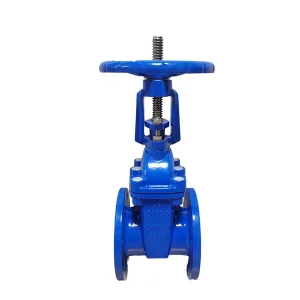
China F4 Bolted Bonnet Soft Sealing Rising Stem OSY Gate Valve Factory, Exporters
Explore Product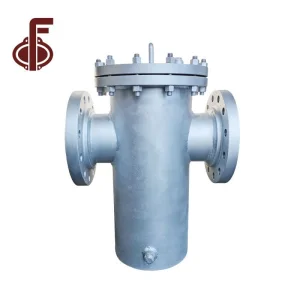
China PN10/16 150LB DN50-600 Basket Strainer Manufacturers, Exporters
Explore Product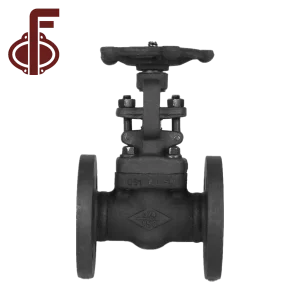
OEM Class1200 Forged Gate Valve Manufacturer, Factories
Explore Product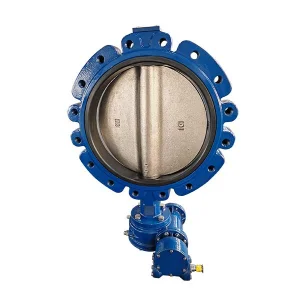
OEM 18" Hard Back Seat Lug Butterfly Valve with Pin DN450 PN10 Manufacturer, Exporters
Explore Product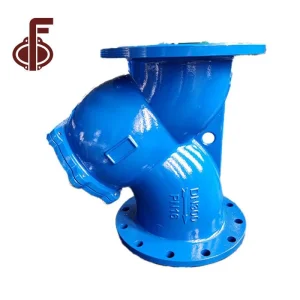
China DI CI SS304 Flange Connection Y Strainer Manufacturer, Exporter
Explore Product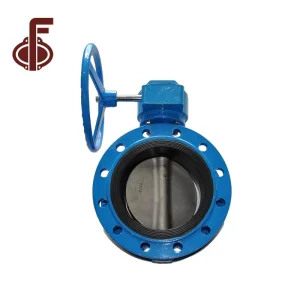
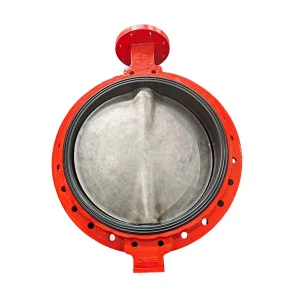
China DI SS304 PN10/16 CL150 Double Flange Butterfly Valve Factories, Exporters
Explore Product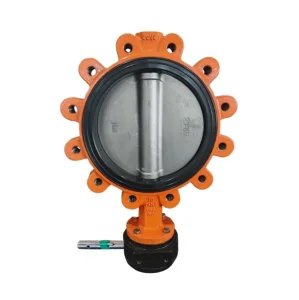
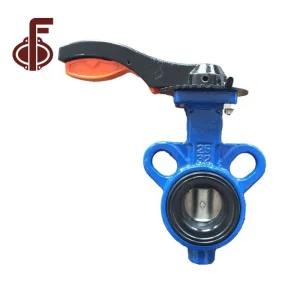
OEM Replaceable Seat CF8M Disc Lug Butterfly Valve DN250 PN10 10Inch Manufacturer, Factories
Explore Product
Industry Intelligence 2026–2032
Global Water Ball Valve Market Trends & Industrial Demand Dynamics
Strategic shift toward automated flow management, cavitation mitigation, and decarbonized utility infrastructure.
6.8%
Global Ball Valve Market CAGR (2024–2030)
100%
Hydrostatic & Pneumatic Test Verification
50,000+
Life-Cycle Actuation Fatigue Rating
< 0.05%
Non-Conformance Yield Rate in Tier-1 Hubs
The worldwide expansion of high-efficiency water handling systems—spanning high-pressure seawater reverse osmosis (SWRO) desalination, modern district heating and cooling (DHC), tertiary wastewater reuse facilities, and urban municipal supply networks—has fundamentally altered procurement metrics for water ball valves. Historically treated as commoditized quarter-turn shutoff elements, industrial water ball valves are now evaluated as mission-critical assets directly tied to plant energy consumption, non-revenue water (NRW) reduction, and fugitive emissions control.
International infrastructure contractors (EPCs), water authorities, and plant utility engineers are transitioning away from sacrificial, low-cost gate assemblies toward high-performance, full-bore floating and trunnion-mounted ball valves. In contrast to multi-turn designs where turbulent flow paths and packing gland deterioration precipitate systemic friction loss and stem leakage, modernized water ball valves present an unencumbered spherical waterway with a friction loss coefficient (Cv) virtually identical to that of an unbroken conduit. This hydraulic efficiency yields substantial pumping power savings across 24/7 continuous duty cycles.
Hydraulic Optimization
Full-port spherical bores minimize head loss and turbulence, drastically curtailing energy consumption across municipal booster stations and district chilled water loops.
Advanced Metallurgical Integrity
Widespread migration from basic cast iron to Ductile Iron (ASTM A536), CF8/CF8M stainless steels, and Nickel-Aluminum Bronze alloys designed to survive corrosive brine and aggressive chemical sanitization.
IoT & SCADA Remote Automation
Standardization of ISO 5211 top mounting pads enables seamless plug-and-play mounting of intelligent electric, electro-hydraulic, and pneumatic actuators fitted with Modbus and Profibus telemetries.
Manufacturing Paradigm
China Factory 4.0: Supply Chain Resilience, Automation & Scale
How concentrated valve clusters in Tianjin, Zhejiang, and Jiangsu transform global industrial valve procurement through digital automation and vertical integration.
The Competitive Edge of Digital Casting & CNC Machining
China’s tier-one valve manufacturing facilities have evolved far beyond conventional manual fabrication. The modern Chinese industrial valve landscape is anchored by Industry 4.0 smart foundries utilizing automatic sand molding (DISA lines), induction melting, and continuous vacuum degassing. This virtually eliminates casting porosity, micro-cracking, and non-metallic inclusions in valve bodies.
- Multi-Axis CNC Machining Centers: Sphericity tolerances within ±0.01 mm, drastically lowering operating torque and wear.
- Robotized Seat Vulcanization & Lapping: Ensures mirror-finish Ra < 0.2 µm sealing surfaces for bubble-tight bi-directional shutoff.
- Spectrometric Material Verification: Optical Emission Spectrometry (OES) guarantees chemistry conforming strictly to ASTM specifications.
Supply Chain Resilience & Export Scalability
Supply chain vulnerability has surfaced as a leading risk factor for international infrastructure development. Chinese exporters offer unparalleled buffer capacity due to localized industrial density: foundries, forged component suppliers, polymer formulators (PTFE/EPDM), fastener producers, and testing laboratories coexist within short logistical radii.
- Lead Time Compression: Reduced standard production cycles by 35% compared to fragmented western supply chains.
- End-to-End Traceability: Heat-number tracking stamped on all castings and documented via EN 10204 3.1 Material Test Reports.
- Complete Testing Regimes: Automated hydro-testing benches conform to ISO 5208, API 598, and EN 12266-1 standards without exception.
Engineering Matrix
Comprehensive Technical Specification & International Standards Alignment
A detailed engineering reference for procurement engineers, MEP consultants, and technical auditors.
| Valve Design Parameter | American Standards (API/ANSI/AWWA) | European Standards (EN/DIN/BS) | Asian Standards (ISO/JIS/GB) | Common Materials & Ratings |
|---|---|---|---|---|
| Nominal Size Range | 1/2" up to 48" (NPS) | DN15 up to DN1200 | DN15 up to DN1200 | Full Port & Reduced Port Options |
| Design & Manufacture | API 6D, ASME B16.34, AWWA C507 | EN 1983, EN 12516, BS 5351 | ISO 17292, JIS B2071, GB/T 12237 | Floating Ball / Trunnion Mounted |
| Flange Connection Dimensions | ASME B16.5, ASME B16.47 Series A/B | EN 1092-1, DIN 2501, BS 4504 | ISO 7005-1, JIS B2220, GB/T 9113 | Flat Face (FF), Raised Face (RF) |
| Face-to-Face Dimensions | ASME B16.10 | EN 558-1 / DIN 3202 (F1, F4, F5) | ISO 5752, JIS B2002 | Interchangeable Global Lengths |
| Pressure Rating Class | Class 150, 300, 600, 900 | PN10, PN16, PN25, PN40, PN64 | 10K, 16K, 20K / PN1.0–PN6.4 MPa | Hydrostatic shell: 1.5x PN; Seat: 1.1x PN |
| Pressure & Leakage Testing | API 598, API 6D (Zero Leakage) | EN 12266-1 (Rate A) | ISO 5208 (Rate A), GB/T 13927 | 100% Factory Pressure Checked |
| Top Mounting Flange | ISO 5211 (Universal) | ISO 5211 / EN ISO 5211 | ISO 5211 Direct Mount | F03 to F35 for Direct Actuation |
| Fire Safety Compliance | API 607, API 6FA | ISO 10497 | JB/T 6899 | Secondary metal-to-metal sealing |
Metallurgical Selection: Balancing Chemical Resistance and Tensile Integrity
Selecting the appropriate metallurgy governs both the capital cost and the operational lifespan of the installation. For standard potable water networks and centralized HVAC chilled water distribution, Ductile Iron (ASTM A536 65-45-12) coated with electrostatically applied fusion bonded epoxy (FBE) minimum 250 µm thickness provides robust mechanical resilience against water hammer and external pipe stress. When service conditions involve aggressive dissolved solids, such as in reverse osmosis feed water or industrial mineral processing, Cast Carbon Steel (WCB) or Austenitic Stainless Steel (CF8/SS304 and CF8M/SS316) is mandated. For marine environments and seawater intakes, Duplex (2205) and Super Duplex (2507) stainless steels prevent localized pitting and crevice corrosion under high chlorination levels.
Procurement Strategy
Global Procurement Intelligence: Decoding Total Cost of Ownership (TCO)
Beyond initial purchase price: evaluating lifecycle maintenance, actuator compatibility, and non-revenue water risks.
Hidden Operational Costs in Sub-Standard Valves
Procurement decisions influenced solely by the lowest EXW unit price frequently incur severe financial penalties over a 15-to-25-year operational lifecycle. Sub-standard casting chemistry, inadequate wall thicknesses below ASME B16.34 minimums, and improperly sintered PTFE seats lead directly to:
- Excessive Actuator Sizing: Irregular sphericity elevates operating torque, requiring oversized and costlier actuators.
- Unplanned Line Shutdowns: Premature seat degradation causes downstream leakage, requiring system-wide draining and massive civil costs.
- Non-Revenue Water Losses: Micro-leakage through stem packings represents recurring municipal revenue loss and environmental non-compliance.
The Tier-1 China Sourcing Framework
Experienced international buyers mitigate sourcing risks by implementing a multi-stage vendor evaluation process when contracting with Chinese manufacturers:
- Audit Factory-Owned Foundries: Prioritize suppliers maintaining direct control over melting and pouring processes to eliminate batch-to-batch deviations.
- Demand EN 10204 Type 3.1 Certification: Require verified chemical and mechanical inspection certificates linked via heat numbers to physical castings.
- Verify Direct ISO 5211 Mounts: Ensure drive stems feature standardized double-D or keyed geometries for bracketless automation.
Application Engineering
Mission-Critical Application Scenarios: Field Performance Profiles
Specific operational criteria across core municipal, commercial, and heavy industrial water infrastructure.
Municipal Potable Water Distribution
Demands compliant non-toxic polymers (NSF/ANSI 61, WRAS, ACS) and heavy-duty epoxy liners (minimum 250 µm). Full-port water ball valves eliminate debris entrapment recesses and ensure minimal pumping head loss across cross-city distribution arteries.
HVAC & District Cooling Energy Centers
Chilled water networks running at 4°C to 12°C require high-cycle reliability with zero condensation penetration into the stem packing. Direct-mount automated ball valves interface with centralized Building Management Systems (BMS) for dynamic load balancing.
Desalination (SWRO) & Brine Recovery
High-pressure membrane lines operate between 60 bar and 85 bar with intense sodium chloride concentrations. Specially formulated Super Duplex (2507) and Nickel-Aluminum Bronze trunnion ball valves resist catastrophic pitting and cavitation erosion.
Industrial Wastewater & Chemical Effluent
Biological sludge and acidic/alkaline wash solutions degrade standard soft seals. Virgin PTFE or glass-reinforced R-PTFE seats coupled with SS316 mirror-ground balls prevent chemical leaching and premature galling in aggressive process effluent lines.
Fire Protection & Suppression Mains
UL-listed and FM-approved water ball valves provide reliable immediate-quarter-turn operation under emergency standpipe pressures. Supervised position limit switches ensure remote control monitoring at master emergency response panels.
Procurement & Technical FAQ
Frequently Asked Questions: Sourcing Water Ball Valves from China
Authoritative answers addressing engineering tolerances, quality certifications, actuator sizing, and import logistics.
What are the key engineering differences between floating and trunnion-mounted water ball valves? +
In a floating ball valve (commonly specified up to DN200 or lower pressure PN16/Class 150), the ball is suspended between two elastomeric or polymer seats. Upstream fluid pressure displaces the ball downstream, pushing it firmly into the downstream seat to create a tight mechanical seal. As valve bore and operating pressure rise, the operating torque expands dramatically.
In a trunnion-mounted ball valve (typical for large diameters ≥ DN200 or high pressure ≥ PN40/Class 300), the ball is mechanically anchored by upper and lower trunnion shafts. Spring-energized floating seats move against the stationary ball. This architecture dramatically cuts required operating torque, reduces actuator costs, and ensures long-term seat life in large municipal water mains.
In a trunnion-mounted ball valve (typical for large diameters ≥ DN200 or high pressure ≥ PN40/Class 300), the ball is mechanically anchored by upper and lower trunnion shafts. Spring-energized floating seats move against the stationary ball. This architecture dramatically cuts required operating torque, reduces actuator costs, and ensures long-term seat life in large municipal water mains.
How do Chinese valve factories guarantee zero leakage during high-volume export orders? +
Tier-one Chinese exporters enforce 100% factory hydrostatic and pneumatic testing in strict compliance with ISO 5208 (Rate A) and API 598. Testing procedures incorporate high-pressure shell tests at 1.5 times nominal pressure and high-pressure/low-pressure seat tightness tests at 1.1 times nominal pressure using clean water and compressed air (6 bar). Testing benches are equipped with digital pressure transducers and automated logging systems that record pressure curves, holding durations, and gauge stability to prevent human falsification.
What documentation must international EPCs request to ensure material authenticity? +
To ensure complete metallurgical verification, buyers must request an EN 10204 Type 3.1 Inspection Certificate for every production heat number. This document must state:
- Chemical composition analyzed via Optical Emission Spectrometry (C, Si, Mn, P, S, Cr, Ni, Mo).
- Mechanical tensile strength, yield strength, elongation, and Charpy impact values.
- Non-Destructive Testing (NDT) reports including Radiographic Testing (RT) or Ultrasonic Testing (UT) for critical cast sections.
- Pressure test charts confirming hold durations and zero visible seepage.
Why is ISO 5211 direct mounting critical for automated water ball valves? +
Valves built with integrated ISO 5211 top flanges allow electric, pneumatic, or electro-hydraulic actuators to bolt directly to the valve body without intermediary brackets or couplings. This eliminates side-load deflection, minimizes backlash, protects the stem seals from uneven wear, and significantly reduces installation height and overall actuation package costs.
How do seat material choices (EPDM, PTFE, R-PTFE) affect valve longevity in water lines? +
Virgin PTFE exhibits near-zero friction and universal chemical resistance from -20°C to +180°C, making it the standard choice for treated industrial water and chemical handling.
Reinforced PTFE (R-PTFE with 15% glass fiber or carbon) increases compressive strength and wear resistance under pulsating flow or high pressure drops.
EPDM seats offer superior elasticity, excellent resilience against particulate abrasion in raw river water networks, and superior sealing at lower pressures, operating between -20°C and +120°C.
What are the typical lead times and MOQ requirements for custom OEM valve manufacturing in China? +
For standard valve configurations (Ductile Iron, WCB, SS316 in standard flange drillings), lead times generally range between 20 to 35 days for 20-foot full container loads (FCL). Custom OEM requirements—including custom brand casting logos, special face-to-face dimensions, or specialized high-build coatings (e.g., 300 µm drinking-water approved epoxy)—typically require 35 to 45 days. Minimum Order Quantities (MOQs) depend on body size: standard small-bore valves typically require 50–100 pieces per size, while large bore valves (≥ DN300) have an MOQ of just 1 to 2 units.
Engineering Sourcing Desk
Need Technical Datasheets or an Immediate Factory Quote?
Our Tianjin engineering and quotation team delivers full dimensional drawings, valve sizing calculations, torque curves, and project pricing within 24 hours.
Submit Valve Specification & RFQ
Comprehensive Valve Portfolio
Specialized Isolation, Check & Severe-Duty Butterfly Valves
Engineered fluid control solutions for high-temperature steam, corrosive chemical media, slurries, and severe hydraulic backflow prevention.
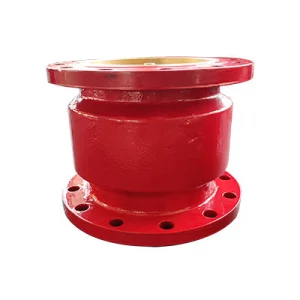
China Silencing Check Valve Non Return Valve Manufacturers, Factory
Explore Product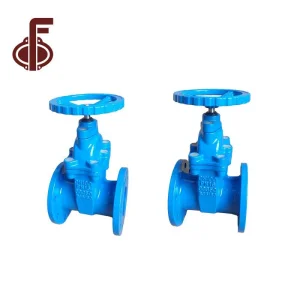
OEM DI PN10/16 Class150 Soft Sealing Gate Valve for Water Pipe Factory, Exporters
Explore Product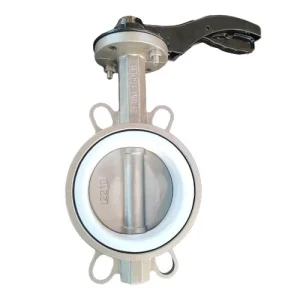
China CF8M Body/Disc PTFE Seat Wafer Butterfly Valve Manufacturer, Exporter
Explore Product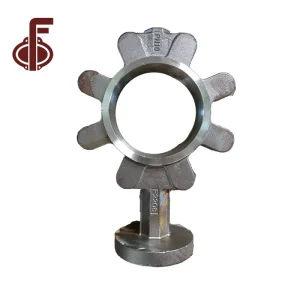
OEM Lug Type Butterfly Valve with Body Factory, Exporter
Explore Product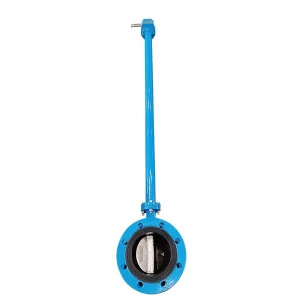
China Vulcanized Seat Flanged Long Stem Butterfly Valve Factory, Factories
Explore Product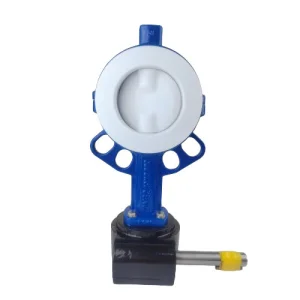
China DN80 Split Body PTFE Full Lined Wafer Butterfly Valve Manufacturers, Factory
Explore Product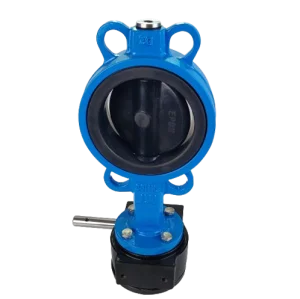
OEM EPDM Fully Lined Seat Disc Wafer Butterfly Valve Exporter, Exporters
Explore Product