Featured Industrial Valve Line · Direct OEM Production
Fully compliant with AWWA, ASME/ANSI, DIN/EN, and BS standards. Custom castings, resilient seals, and smart positioners.
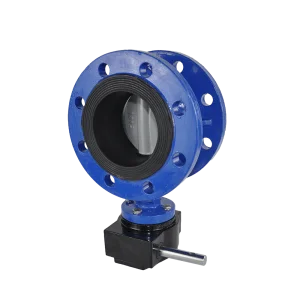
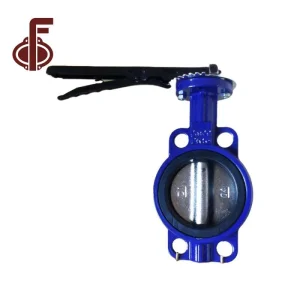
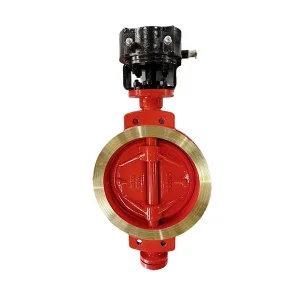
OEM Nylon Disc Wafer Type Honeywell Electric Butterfly Valve Manufacturer, Exporters
View Technical Data
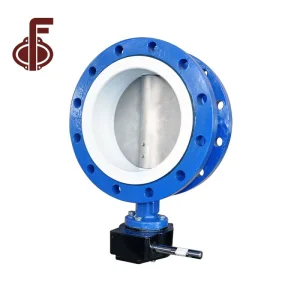
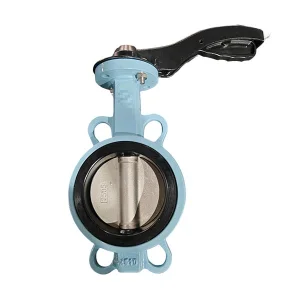
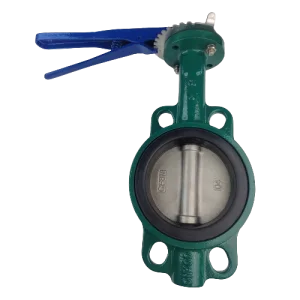
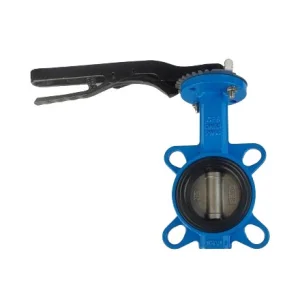
OEM Lever CF8 Disc Soft Seat Wafer Butterfly Valve DN100 PN16 Manufacturer, Manufacturers
View Technical Data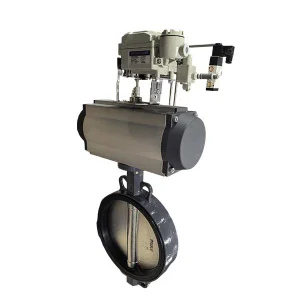
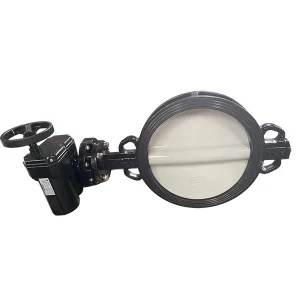
OEM DN100 PN16 E/P Positioner Pneumatic Wafer Butterfly Valves Exporter, Exporters
View Technical DataIndustrial Status: The Critical Evolution of Full Lug Butterfly Architecture
Why modern process engineers choose threaded full lug bodies over wafer clamping for high-safety fluid containment.
Uncompromised Dead-End Service
Unlike standard wafer valves that depend on equalized clamping torque from opposing pipeline flanges, full lug butterfly valves feature precision-tapped, threaded eyelet lugs flanking the perimeter. This mechanical design permits downstream piping disconnection, pump rebuilds, and line drainage while retaining line pressure upstream up to 16/25 bar without catastrophic seat blowouts.
Differential Pressure Integrity
Thermal excursions, plant ground settlement, and hydraulic transients exert uneven bending moments on pipeline flanges. Full lug bodies distribute mechanical loads independently across separate sets of stud bolts. This eliminates disc pinching, preserves radial concentricity, and maintains ISO 5208 Rate A / API 598 zero-leakage bubble-tight sealing under rigorous conditions.
Universal Global Flange Compliance
Modern international EPC contracting demands valves drilled and tapped precisely to local standards without field redrilling. Our OEM manufacturing center produces fully mapped lug patterns according to ASME B16.5 Class 150/300, EN 1092-1 PN10/PN16/PN25, JIS B2239 10K/16K, AS 2129 Table E, and GOST 12820, ensuring plug-and-play installation across global projects.
Material Science, Seat Chemistry & Mechanical Tribology
Engineering the optimal metallurgy and elastomer pairing to prevent galvanic attack, cavitation degradation, and thermal deformation.
Advanced Casting Metallurgy: From DI to Super Duplex
For municipal, HVAC, and light industrial tasks, high-grade spheroidal graphite Ductile Iron (EN-GJS-400-15 / ASTM A536 65-45-12) delivers elevated tensile yield strength exceeding 310 MPa, resisting piping deflection. In severe chemical, offshore, and marine environments, our foundry casts ASTM A216 WCB cast steel, CF8 (304), CF8M (316), and 2507 Super Duplex discs. Every batch undergoes strict spectral chemical analysis and microstructure metallographic verification to ensure nodularity and corrosion immunity.
Elastomeric & Thermoplastic Seat Formulations
The core of resilient centerline performance relies on seat compounding. Our proprietary EPDM seats achieve NSF-61 certified potability and withstand continuous 120°C steam washdowns. Nitrile (NBR) compounds deliver zero swelling in aliphatic hydrocarbon and fuel manifolds. For chemically aggressive pickling lines, high-purity virgin PTFE and carbon-filled reinforced RTFE liners encapsulate the disc path, offering universal chemical inertness across pH 0–14.
| Component | Standard Material Options | Operational Temperature | Applicable Industrial Media |
|---|---|---|---|
| Valve Body | Ductile Iron GGG40/GGG50, Cast Steel WCB, Stainless SS304/SS316, Duplex 2205 | -29°C to +425°C (Configuration Dependent) | Potable water, sewage, marine brine, hydrocarbons, acidic slurries |
| Disc Profiles | CF8, CF8M, Aluminium Bronze C95800, Nylon-11 Coated DI, Hastelloy C | -40°C to +300°C | Seawater cooling loops, deionized water, pulp slurry, corrosive gases |
| Stem / Shaft | SS410, SS416, SS420, 17-4PH Precipitation Hardened, Monel K-500 | -50°C to +500°C | High torque pneumatic/electric actuation stems with anti-blowout design |
| Elastomeric Seats | EPDM (Food Grade), NBR (Buna-N), Viton (FKM), PTFE / Virgin Teflon | EPDM: -20°C~+120°C | NBR: -10°C~+85°C | PTFE: -20°C~+180°C | HVAC hydronics, petroleum fuels, industrial acids, pharmaceutical media |
Localized Application Scenarios: Cross-Industry Deployments
How global EPC firms and industrial operators incorporate ZFA full lug butterfly valves into mission-critical systems.
District HVAC & Megawatt Chiller Plants
Installed directly on condenser isolation manifolds, evaporator isolation circuits, and cooling tower headers. Full lug architecture allows seasonal maintenance of individual heat exchangers while adjacent loops remain pressurized at full head.
RO Desalination & Seawater Intake
Seawater desalination plants require valves impervious to chloride stress corrosion cracking. We deploy nickel aluminium bronze (C95800) and super duplex CF3M discs paired with vulcanized bonded rubber liners, preventing seawater ingress into the body housing.
Thermal Power & Flue Gas Scrubber Loops
For wet limestone flue gas desulfurization (FGD), high-velocity abrasive gypsum slurries cause rapid seat washout. ZFA manufactures hard-back phenolic seated lug valves that eliminate axial elastomer stretching and seat dislocation under turbulent velocity.
Marine Ballast Water Management (BWMS)
Modern ships utilize space-saving lug valves in narrow machinery spaces. Compliant with IMO guidelines and class society regulations, our valves control automated ballasting sequences with bi-directional shutoff and emergency manual overrides.
OEM/ODM Technical Roadmap & Quality Governance
A rigorous 5-stage manufacturing methodology delivering total traceability from ingot to export dock.
Finite Element & CFD Analysis
Hydrodynamic modeling of disc contours minimizes cavitation coefficients (Cv optimization), reducing head loss and turbulence-induced seat chatter under high flow velocities.
Robotic CNC Machining
High-precision multi-axis machining centers tap threaded lugs and polish shaft boreways with tolerances within ±0.01 mm, guaranteeing concentric shaft alignment and low breakaway torque.
Automated Fusion Coating
Valves receive shot-blasting to Sa 2.5 profile followed by 250μm electrostatic fusion-bonded epoxy (FBE) powder coating, providing saltwater and subterranean chemical resistance.
Bidirectional Hydro Testing
Each unit undergoes 1.5x working pressure shell testing and 1.1x high/low-pressure seat testing per API 598 and EN 12266-1 with digital recording before custom export crating.
Macro Technical Engineering Solutions: Overcoming Plant Challenges
Addressing the top root-cause failures in large-scale piping systems through specialized design adaptations.
Mitigating Water Hammer & Line Surge
Sudden valve closure in pump discharge headers triggers destructive water hammer pressure waves. ZFA matches full lug butterfly valves with slow-closing worm gears, hydraulic snubber dampers, or programmable modulating electric actuators, extending the closure curve to safely dissipate kinetic hydraulic shockwaves.
Fugitive Emissions Control (ISO 15848-1)
Volatile organic compounds (VOC) and toxic fumes leaking via the valve gland represent environmental hazards and financial fines. Our lug valves feature multi-tier O-ring secondary seals, Belleville live-loaded packing washers, and PTFE thrust bearings that maintain zero stem leakage across thousands of thermal cycles.
Automation Ready: Direct ISO 5211 Mounting
Retrofitting actuators in the field often introduces stem play and bracket flex. All ZFA lug bodies are cast with integral ISO 5211 mounting top pads, allowing immediate direct mounting of pneumatic rack-and-pinion actuators, electric quarter-turn positioners, or manual declutchable overrides without external brackets.
Technical FAQ: Valve Specification & Procurement
Clear answers to complex technical questions encountered by piping designers, EPC buyers, and facility managers.
What is the key functional difference between a Wafer and a Full Lug butterfly valve?
Wafer valves have smooth or centering bolt holes and are sandwiched between flanges using long through-bolts. If piping on one side is disconnected, the wafer valve falls out. A full lug valve features tapped, threaded eyelets all around the body. Each pipe flange attaches independently with short machine bolts, enabling downstream piping disassembly while maintaining pressure on the upstream side (dead-end isolation).
Can ZFA full lug butterfly valves operate at full pressure rating in dead-end service?
Yes. Our heavy-duty lugged bodies are specifically designed for dead-end terminal service. In standard configurations, they are rated for bidirectional shutoff up to 16 bar (PN16 / Class 150), and for high-pressure classes up to 25 bar (PN25 / Class 300) without requiring a downstream companion blind flange.
How do you prevent galling between stainless steel bolts and threaded ductile iron lugs?
Our machining department inspects threaded hole depth and pitch tolerances per ASME B1.1 or ISO metric standards. We recommend anti-seize lubricants with nickel or copper base during assembly, or we supply precision-machined blind-tapped holes with corrosion-inhibiting epoxy coating on the thread surface.
How does disc material selection impact the operating torque of lug butterfly valves?
Surface friction coefficient significantly impacts dynamic and seating torque. Mirror-polished stainless steel (CF8M) or Nylon-coated ductile iron discs yield lowest breakout torque, which allows downsized actuators. Conversely, bronze or rough-cast discs in abrasive or scaling slurries exhibit higher friction and require a 25-30% actuator torque safety margin.
What testing documentation is delivered with OEM export orders?
Every shipment includes an EN 10204 Type 3.1 Material Test Certificate covering spectral chemical analysis and mechanical pull tests, alongside pressure test inspection certificates (shell hydrostatic, seat air bubble), coating thickness verification, and CE conformity declarations.
Can you provide custom drilling for hybrid flange systems (e.g. ANSI 150 to PN16 transition)?
Yes. As an OEM manufacturer, our multi-axis CNC tooling can produce hybrid drilled bodies with ANSI 150 on one face and DIN PN16 on the opposing face, solving cross-standard interface challenges on overseas skid modules and retrofitted equipment.
Comprehensive Plant Equipment: Butterfly, Gate & Check Series
Engineered for seamless integration with our lug valves across municipal waterworks, industrial process loops, and overseas utilities.
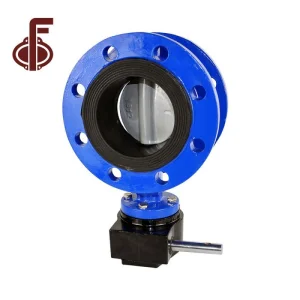
China Ductile Iron Body Worm Gear Flange Type Butterfly Valve Manufacturers, Exporters
View Technical Data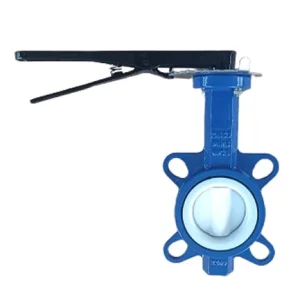
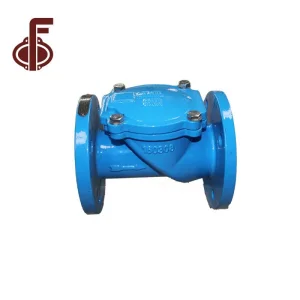
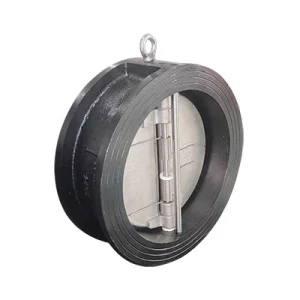
China Ductile Iron Body CF8M Disc Dual Plate Check Valve Manufacturer, Factories
View Technical Data