OEM Gate Valve For Water Line Manufacturers & Factories
Engineered infrastructure solutions for municipal distribution, industrial transmission, and global bulk procurement networks designed to AWWA, DIN, BS, and ISO precision specifications.
Critical Pipeline Flow Control & OEM Water Line Assemblies
Factory-direct OEM valve architectures manufactured with ductile iron, WCB, and high-performance elastomers for high-demand municipal and industrial networks.
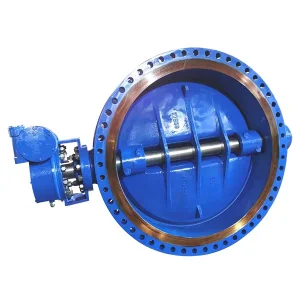
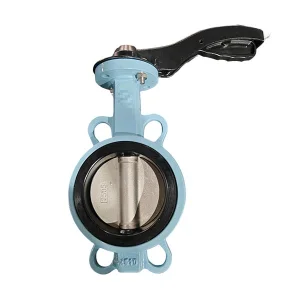
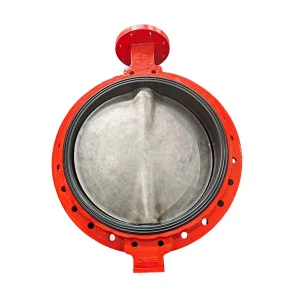
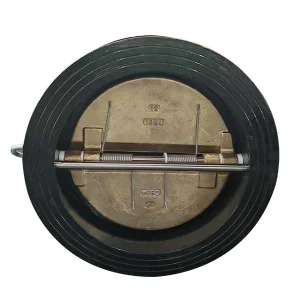
Macro Trends Transforming Water Pipeline Infrastructure
Modern water supply systems require strict pressure integrity, zero fugitive emissions, and non-revenue water (NRW) mitigation across international civil and industrial water works.
Mitigating Non-Revenue Water (NRW)
Civil utilities worldwide lose up to 30% of treated drinking water via line breaks and gland packing leaks. OEM resilient seated gate valves (RSGV) eliminate seat recess sediment cavities, maintaining complete bi-directional bubble-tight shutoff (Class A zero-leakage) to safeguard pumped assets.
Electrification & SCADA Actuation
Automation demands are shifting municipal plants away from purely manual wheels. Valve bonnets engineered under ISO 5211 direct-mount standards enable plug-and-play installation of intelligent multi-turn electric or electro-hydraulic actuators for smart-grid telemetry.
Total Cost of Ownership (TCO)
Asset managers now calculate life-cycle expenses rather than upfront piece price. Investment in fusion-bonded epoxy (FBE) coats exceeding 250 µm with wedge cores vulcanized in EPDM drastically reduces pipeline excavation interruptions over a 50-year design horizon.
Resilient Seated vs. Metal Seated Gate Valves for Water Lines
Selecting the appropriate valve configuration directly correlates with line media, operating cycles, working pressures, and soil/fluid corrosivity profiles.
| Evaluation Parameter | Resilient Seated Gate Valves (Soft Seal) | Metal-to-Metal Seated Gate Valves |
|---|---|---|
| Primary Application | Potable drinking water, clean distribution, secondary wastewater lines. | Raw untreated water, industrial effluent, thermal lines, slurries. |
| Wedge / Disc Architecture | Ductile iron core encapsulated in fully vulcanized EPDM or NBR rubber. | Solid bronze/stainless steel trim rings pressed onto cast ductile/iron wedge. |
| Bore Cavity / Bottom Profile | Straight-through smooth bore; no bottom groove to collect solids or grit. | Slight collection well required to receive the bottom guide wedge rail. |
| Leakage Rate | Zero Leakage (ISO 5208 Rate A / EN 12266-1 Rate A). | ISO 5208 Rate C / Rate D (Allowable mechanical drip under line pressure). |
| Working Pressure Limits | PN10, PN16, PN25, ANSI Class 125/150 (Up to 2.5 MPa standard). | PN10 to PN64, ANSI Class 150 to Class 600 for high-stress conduits. |
| Operating Temperature | -10°C to +80°C (EPDM up to 120°C for mild thermal services). | Up to 200°C+ continuous service depending on packing stem configuration. |
End-to-End Application Matrices for Water Infrastructure
Optimized fluid isolation configurations custom designed for mission-critical industrial and urban settings.
Municipal Potable Transmission
Ensuring water safety requires toxic-free barrier materials. Our OEM water line valves utilize WRAS- and NSF/ANSI 61-compliant electrostatic non-toxic FBE internal linings, paired with food-grade vulcanized EPDM wedges. Non-rising stem (NRS) designs preserve vertical clearance within compact roadway chambers.
Desalination & Coastal Plants
Seawater intake presents aggressive chloride and galvanic corrosion hazards. We engineer customized body and disc configurations using Nickel-Aluminum Bronze (C95800), Duplex Stainless Steel (2205 / 2507), or specialized high-build synthetic coatings to ensure durability under harsh salinity profiles.
High-Pressure Industrial Wastewater
Where heavy biological matter, suspended grit, and harsh chemical treatments cause gate jamming, we supply Rising Stem (OS&Y) gate units with 316SS stems and precision-ground wedge rails, providing operational visibility and frictionless clearance through suspended slurries.
Rigorous Factory Testing & Global Compliance Assurance
Traceable metallurgical integrity, hydro-testing verification, and internationally aligned certification suites back every unit exported from our Tianjin facility.
EN 10204 3.1 Traceability
Chemical composition and mechanical pull testing are archived for every heat number. Complete material test reports (MTR) are attached to shipping documentation.
100% Dual Hydro-Testing
Every valve undergoes shell proof tests at 1.5x nominal pressure and bilateral seat isolation tests at 1.1x rating per ISO 5208 standards prior to release.
Multi-Standard Tooling
Flange drillings conform precisely to AWWA C509/C515, EN 1092-2 (PN10/16/25), BS 5163, DIN 3352, AS 2638.2, and JIS B2062 for seamless regional field integration.
Localized OEM Labeling
Complete custom branding services, including cast-in logo tooling, anodized client nameplates, tailored export crating, and direct pallet dropshipping for EPC accounts.
Technology Roadmap: Intelligent Flow Infrastructure
Anticipating regulatory updates and operational challenges with next-generation manufacturing processes and predictive telemetry.
Phase I: Low-Lead & Zero-Cavity Castings
Advancing beyond standard ductile metallurgy toward refined QT450-10 formulations that eliminate lead leaching and microporosity, achieving compliance with rigorous European drinking water directives (EU 2020/2184).
Phase II: Embedded IoT Acoustic Sensors
Integrating low-power wireless acoustic and cavitation sensors directly into bonnet cavities. These smart modules monitor wedge seating micro-vibrations, allowing maintenance teams to identify water hammer and sediment buildup early.
Phase III: Nanocomposite Self-Healing Linings
Testing next-generation hybrid ceramic-epoxy coatings that resist mechanical scratch abrasions during underground utility installations, ensuring over 50 years of corrosion-free barrier protection without sacrificial zinc anodes.
Frequently Asked Technical & Sourcing Questions
Key engineering and commercial insights to help clarify your project datasheets and supply agreements.
Which international valve standards do ZFA water line gate valves support?
What is the key advantage of an NRS gate valve over an OS&Y design?
How do you prevent rubber peeling or delamination on the resilient wedge?
What is your standard production lead time for OEM pipeline tenders?
Extended Export Line: Heavy-Duty Process & Water Assemblies
Reliable fluid management systems tested against harsh working conditions, backed by our international distribution network.