
Precision Engineered Valves for Water & Wastewater Infrastructure
Factory-direct OEM manufacturing engineered to ASTM, DIN, JIS, and BS standards. Browse our primary production lines featuring resilient and metal-seated industrial valve assemblies.
Fluid Dynamics & Solids-Handling Architecture in Modern Wastewater Check Valves
An authoritative engineering analysis on mitigating hydraulic shock, stringy solid clogging, and abrasive cavitation in raw sewage pump discharge stations.
Non-Clog Waterway Geometry
Raw sewage, unscreened wastewater, and municipal sludge carry severe concentrations of rags, wipes, stringy plastics, and biological matter. Standard water check valves featuring internal hinge pins, support ribs, or complex body pockets immediately collect fibrous debris, leading to valve seizure.
ZFA OEM sewage check valves feature smooth, full-diameter unrestricted waterways. With internal components completely cleared from the flow path when fully open, head loss coefficients ($K_v$) remain optimal, preventing clogging and operational downtime.
Dynamic Slam Suppression
Upon pump trip or motor cutoff, rapid reverse deceleration occurs. If the check valve closure lags behind fluid deceleration, destructive high-pressure waves (Joukowsky water hammer) propagate through the discharge manifold, cracking iron pipe headers and destroying impellers.
Our OEM manufacturing integrates balanced swing mechanisms, external counterweights, mechanical oil dashpots, or resilient flex disc geometry with short 35° stroke travel to guarantee immediate closure before reverse flow reaches critical kinetic velocity.
Biogenic $H_2S$ & Sand Abrasion Protection
Septic sewage undergoes anaerobic digestion, releasing hydrogen sulfide gas ($H_2S$) that transforms into corrosive sulfuric acid along upper pipe crowns. Simultaneously, urban storm runoffs wash heavy grit, quartz sand, and road silt into the collection network.
We cast bodies from high-grade Ductile Iron (EN-GJS-500-7 / ASTM A536 65-45-12) paired with fusion-bonded epoxy (FBE) powder coatings applied electrostatically to ≥250 μm thickness, tested to zero pinhole defect via 5kV spark holiday detectors.
Information Gain: Hydraulic Shock Formula & Disc Response Dynamics
In municipal sewage pump station design, transient surges are calculated via the Joukowsky Equation: ΔP = ρ × c × Δv, where ΔP is surge pressure, ρ is fluid density, c is acoustic wave velocity (~1000-1200 m/s in ductile iron piping), and Δv is the change in fluid reverse velocity at the moment of valve closure. If a valve allows a reverse velocity of just 1.5 m/s before closure, an instantaneous surge of over 1.5 MPa (15 bar) is generated, exceeding pump casing ratings. ZFA's short-stroke flex discs and damped counterweight mechanisms ensure Δv ≈ 0 m/s at closure, effectively eliminating destructive transients.
Sewage Pump Check Valve Classifications & Mechanical Comparison
Selecting the ideal non-return configuration based on system head, allowable pressure drop, solids profile, and spatial footprint.
Resilient Hinge Flex Check
Features a 45-degree angled seat and an integral molded elastomer disc embedded with high-tensile nylon reinforcement. Eliminates mechanical hinge pins, bushings, and maintenance wear points.
- Disc Stroke: 35° minimal travel path
- Solids Capability: Up to 75mm spherical solids
- Advantage: Self-flushing, zero lubrication required
Non-Clog Ball Check Valve
Utilizes an elastomer-encapsulated phenolic core ball that lifts cleanly into an offset recess chamber during forward pump flow, guaranteeing 100% full-bore passage without obstruction.
- Flow Orientation: Vertical up or horizontal
- Self-Cleaning: Constant rotating ball prevents flat spots
- Seat Type: Replaceable vulcanized NBR/EPDM
Lever & Dashpot Swing Check
Heavy-duty AWWA C508 swing check equipped with an external stainless steel shaft, adjustable counterweight, and enclosed hydraulic oil or air dashpot to calibrate closure speed.
- Water Hammer Control: 2-stage closure damping
- Shaft Seal: Double O-ring zero leakage glands
- Service: High-head municipal effluent pumping
Dual Plate Wafer Non-Slam
Compact wafer-style check valve with dual spring-assisted D-shaped plates. Designed for wastewater skids and plant retrofits with severe space or pipeline weight constraints.
- Spring Material: Inconel X-750 / Hastelloy-C
- Weight Saving: Up to 80% lighter than flanged valves
- Requirement: Best for pre-screened effluent lines
| Valve Type | Typical Size (DN) | Solids Handling Capability | Anti-Slam Performance | Head Loss ($K_v$ Efficiency) | Recommended Sewage Media |
|---|---|---|---|---|---|
| Resilient Flex Disc Check | DN50 – DN900 | High Fibrous rags, slurries | Excellent (Short 35° stroke) | Moderate ($K \approx 1.8 - 2.2$) | Raw unscreened municipal wastewater, wet wells |
| Non-Clog Ball Check Valve | DN40 – DN600 | Very High Silt, viscous sludge | Good (Gravity / spring return) | High Full Bore ($K \approx 1.1 - 1.4$) | Digester sludge, pump stations with grit/sand |
| Swing Check with Lever & Dashpot | DN80 – DN1200 | Medium Screened wastewater | Superior (Hydraulic oil dampened) | High ($K \approx 1.3 - 1.6$) | High-pressure trunk discharge, multi-pump arrays |
| Dual Plate Spring Wafer | DN50 – DN800 | Low-Medium Fine particulates | Excellent (Torsion spring closure) | Moderate ($K \approx 2.0 - 2.5$) | Tertiary treated effluent, plant reclamation, skids |
China OEM Foundry & Advanced Precision Manufacturing Hub
Integrating raw metallurgical casting, 5-axis CNC machining, automated FBE coatings, and complete digital quality control in Tianjin.
Integrated Foundry & Metallurgy
Our Tianjin manufacturing center operates automated green sand and resin sand casting lines capable of pouring Ductile Iron (QT450-10, QT500-7), Cast Steel (WCB), and Stainless Steels (CF8, CF8M, Duplex 2205).
Every furnace melt undergoes optical emission spectrometer testing before pouring to guarantee magnesium spheroidization ratings above 90%, preventing brittle valve shell failures under sudden transient pressure spikes.
CNC Machining & Coaxial Accuracy
Check valve hinge pins and disc sealing angles demand micro-millimeter precision. Our horizontal machining centers execute flange facing, pin hole boring, and bronze/stainless seat ring press-fitting in single clamping setups.
This eliminates angular runout, guaranteeing exact disc alignment against resilient elastomer seats and preventing micro-gaps that cause seal degradation in low-pressure gravity lines.
Global Cost & Scale Efficiency
By operating directly from China's industrial valve hub in Tianjin, ZFA consolidates foundry raw materials, elastomer vulcanization tooling, and high-capacity pressure testing under one roof.
Global EPC contractors and OEM brand holders achieve 30% to 45% capital expenditure optimization without sacrificing metallurgical certifications, supported by ISO 9001 and CE compliance.
Global Regulatory Compliance & Engineering Standards
Our wastewater flow control equipment is manufactured to inter-compatible international benchmarks, ensuring seamless integration into municipal tenders.
Design & Dimensions
Compliant with AWWA C508 for swing check valves, EN 1074-3 (Water supply check valves), BS EN 12334, and API 594 for wafer dual plate. Face-to-face dimensions strictly follow ASME B16.10, ISO 5752, and EN 558-1 Series 10/48.
Pressure Testing & Tightness
100% factory hydrostatic and pneumatic testing conducted strictly per ISO 5208 and EN 12266-1. Shell strength tested at 1.5× nominal pressure (PN10/16/25). Seat tightness tested at 1.1× PN with low-pressure air sealing at 0.6 bar for zero bubble Rate A sealing.
Traceability Dossier (3.1 MTR)
Full material traceability provided under EN 10204 Type 3.1 inspection certificates. Complete chemical melt analysis, tensile strength, yield elongation, charpy impact, and coating thickness holiday test records included with every container shipment.
Localized Application Scenarios & System Integration
From submerged coastal wet wells to high-altitude mine tailing decant headers, our check valves are tailored to severe localized hydraulic challenges.
Municipal Lift Stations
Installed immediately downstream of submersible sewage pumps in wet and dry pit stations. Prevents reverse rotation of idle pumps and withstands frequent start-stop duty cycles up to 30 cycles per hour without pin wear.
Wastewater Treatment (WWTP)
Deployed on Return Activated Sludge (RAS), Waste Activated Sludge (WAS), and primary clarifier scum lines where heavy solids, biological grease, and low fluid velocities challenge traditional check valves.
Industrial Effluent Plants
Engineered for textile dye effluent, pulp and paper black liquor, chemical washdown sumps, and food processing waste where hot wash fluids and fluctuating pH require customized NBR, EPDM, or Viton elastomer trims.
Stormwater Detention & CSO
Protects combined sewer overflow (CSO) pumping facilities and deep urban flood mitigation vaults from sea water backflow, tidal infiltration, and urban storm debris washed through high-capacity axial pumps.
OEM Brand Customization & Engineering Localization
Empowering international distributors, valve brands, and EPC contractors with private labeling, bespoke flange drilling, and certified packaging.
Custom Mold & Brand Casting
We cast your proprietary brand logo, pressure class, nominal size, and material designation directly onto valve bodies. Custom mold tooling is manufactured in-house with rapid turnaround times for private label distributors.
Multi-Standard Flange Drilling
Our automated CNC drilling lines machine bolt holes to any international standard without tooling delays: ASME B16.1 Class 125, ASME B16.5 Class 150, EN 1092-2 PN10/PN16, AS 4087 Table D/E, and JIS 10K/16K.
Maritime Protective Export Packaging
Heavy ductile iron valves are packed inside fumigated, solid plywood crates with interior vapor corrosion inhibitor (VCI) bags, flanged rubber protective covers, and desiccant packs to withstand long ocean transits without surface oxidation.
Frequently Asked Questions for Valve Procurement & Engineering
Clear, authoritative technical answers addressing common engineering inquiries regarding sewage pump check valve specification and selection.
Why are ball check valves often preferred over standard swing check valves in wastewater lift stations?
Ball check valves are engineered specifically for media containing viscous sludge, heavy sand, and fibrous rag debris. Unlike conventional swing check valves where solids accumulate behind the hinge pin or hang on internal shafts, a ball check valve pushes an elastomer-coated sphere into an offset side chamber entirely out of the flow path. This provides an unobstructed, full-bore diameter that virtually eliminates ragging.
Furthermore, because the vulcanized ball rotates slightly during each stroke, wear is distributed evenly across its entire 360-degree spherical surface rather than repeatedly battering a single seating point, significantly extending service intervals in municipal lift stations.
How does an external lever and counterweight mitigate water hammer in municipal sewage pumping lines?
When high-volume sewage pumps stop, the column of pumped liquid rapidly decelerates and attempts to reverse back into the wet well. A standard free-swinging check valve may linger open until reverse flow forcefully drives it shut, generating a violent hydraulic shock (slam) that can rupture pipes and headers.
An external lever with an adjustable counterweight assists gravity by creating an immediate closing bias, forcing the disc to track fluid deceleration and reach the seat precisely at zero forward flow. When paired with an enclosed hydraulic dashpot, the valve provides cushioned two-stage closure: closing rapidly for 90% of travel and gently cushioning the final 10% to eliminate mechanical and hydraulic noise.
What is the recommended elastomer seat material for raw sewage containing biological oils and traces of hydrocarbons?
While standard EPDM (Ethylene Propylene Diene Monomer) provides excellent chemical resistance against polar media, mild acids, and standard municipal wastewater up to 120°C, it swells and degrades rapidly when exposed to hydrocarbons, mineral oils, petroleum greases, and fuels commonly found in urban street runoff and industrial effluents.
For unscreened wastewater and combined stormwater containing petroleum or animal fats, NBR (Nitrile Butadiene Rubber) is strongly recommended. For aggressive chemical processing or high-temperature industrial effluents, Viton (FKM) or PTFE seat inserts should be specified.
What minimum flow velocity is required to ensure check valves remain fully open and stable?
To avoid "disc flutter"—a destructive condition where an insufficiently lifted disc oscillates in the flow stream, accelerating hinge pin and bushing wear—the pipeline velocity must produce enough dynamic pressure to hold the disc firmly against its open stop. For resilient flex check and swing check valves, a minimum velocity of 1.5 m/s (5 ft/s) is typically required for full stroke opening.
For ball check valves in vertical upward pipelines, a minimum velocity of 1.0 m/s to 1.2 m/s is sufficient to suspend the ball in the upper cavity. Over-sizing check valves in low-velocity systems is a primary cause of premature valve failure.
Can sewage pump check valves be installed in both vertical and horizontal pipelines?
Yes, but installation depends on the specific valve design:
- Ball Check Valves: Can be installed horizontally or vertically with upward flow. Never install with vertical downward flow, as gravity will prevent the ball from sealing.
- Resilient Flex Disc Valves: Operate smoothly in horizontal lines and vertical upward pipelines because the 45-degree seating angle and internal rubber memory provide positive closure regardless of line orientation.
- Swing Check Valves with Levers: Generally designed for horizontal runs. When used in vertical lines, the lever arm and counterweight must be re-indexed at the factory to account for gravity assisting or opposing disc travel.
How does ZFA Valve guarantee zero holiday porosity in electrostatic fusion-bonded epoxy (FBE) coatings?
To resist severe $H_2S$ biogenic corrosion, ductile iron castings undergo automated centrifugal shot-blasting to Sa 2.5 cleanliness, removing all grease, scale, and surface contaminants. The castings are pre-heated in a temperature-controlled induction oven to 200°C–230°C before receiving an automated electrostatic application of non-toxic thermosetting epoxy powder.
After curing to a minimum dry film thickness of 250 μm (up to 350 μm upon specification), every valve shell is 100% inspected using a high-voltage electronic spark detector (holiday test) calibrated to 5kV. Any microscopic pinhole instantly triggers an audible alarm, ensuring that zero bare iron touches wastewater.
What is the typical production lead time for full-container OEM orders from your China factory?
Standard lead times for full container load (FCL) orders of standard ductile iron check and butterfly valves range between 25 to 35 working days from drawing approval and deposit receipt. For orders requiring custom casting patterns (with customer brand logos) or specialized metallurgy (CF8M, Hastelloy, Duplex), initial tooling requires 15 additional days.
Our sales engineering team provides full milestone reporting, including raw casting inspection photos, machining updates, coating batch test reports, and final pressure testing videos prior to vessel loading at Tianjin Port.
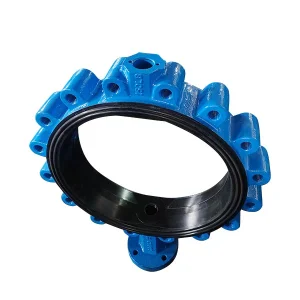
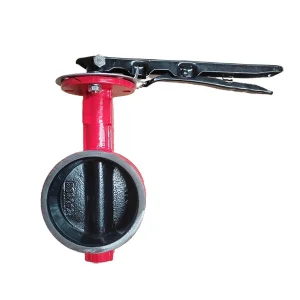
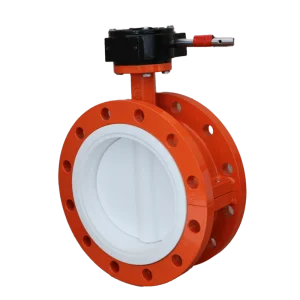
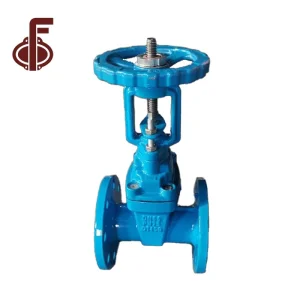
Heavy-Duty Isolation & Infrastructure Valve Products
Pair your check valves with our industrial gate, butterfly, and specialized resilient-seated isolation valves for complete municipal flow control systems.
Accelerate Your Project with Factory-Direct Engineering Support
Whether you require custom OEM valve body casting, project submittal packages, or competitive tender quotes for municipal wastewater stations, our engineering team delivers technical evaluations within 24 hours.
