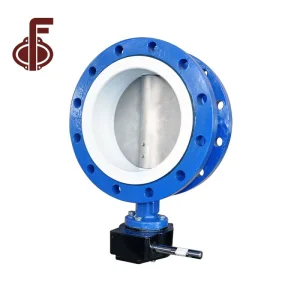
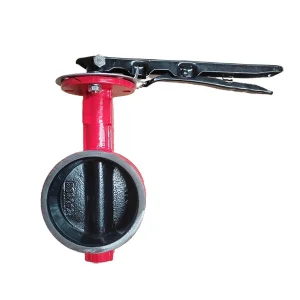
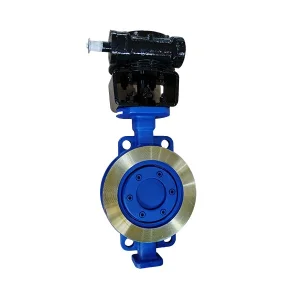
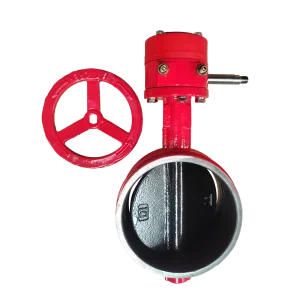
Factory-Direct Precision Flow Control Valves
Tianjin Zhongfa Valve Co., Ltd. (ZFA Valve) manufactures standardized and project-tailored butterfly valve platforms built to ASTM, ANSI, ISO, BS, DIN, and JIS standards.
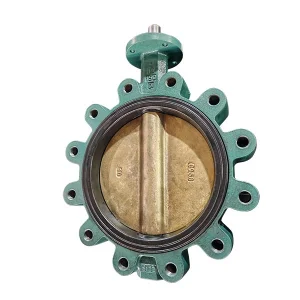
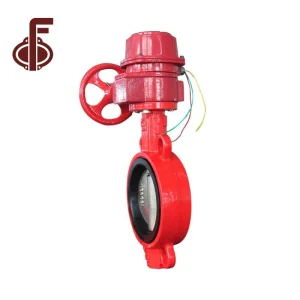
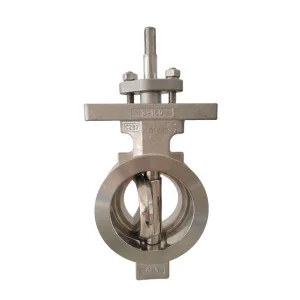
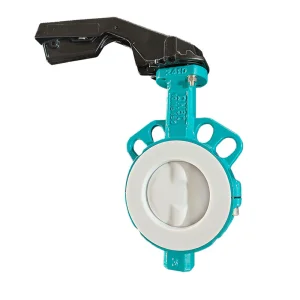
The Triple Offset Kinematic Geometry: Why Frictionless Sealing Creates Latent Engineering Drawbacks
In high-integrity petrochemical, cryogenic LNG, and power generation piping networks, the Triple Offset Butterfly Valve (TOBV)—also classified under API 609 Category B—is celebrated for zero-leakage, non-rubbing closure. However, industrial piping engineers and global procurement officers frequently encounter critical failure modes when specifying TOBVs without accounting for their inherent geometric constraints.
The tri-concentric geometry is defined by three precise spatial offsets: Offset 1 places the shaft axis behind the sealing plane; Offset 2 displaces the shaft horizontally from the pipeline center bore; and Offset 3 tilts the conical axis of the seat machining away from the pipe axis by an angled cone apex (typically 15° to 25°). While this complex profile ensures that the metal-to-metal or laminated seal ring contacts the seat only at the final point of shut-off (camming action), it simultaneously alters the hydrodynamics, dynamic operating torque, and susceptibility to thermal and particulate damage.
When OEM valve factories market TOBVs as a universal substitute for gate valves, trunnion ball valves, or double-eccentric valves, they often downplay critical engineering compromises. Below, our technical engineering team details the operational realities, mechanical limitations, and macroeconomic costs of specifying triple offset butterfly valves.
Crucial Engineering Takeaway: A TOBV is a torque-seated valve, not a position-seated valve. Inaccurate pneumatic, electric, or gear actuator torque calibration directly triggers either seat extrusion damage or chronic downstream bypass leakage.
6 Critical Mechanical & Operational Disadvantages of Triple Offset Butterfly Valves
Before issuing procurement RFQs, process piping engineers must evaluate these operational bottlenecks against alternative flow control geometries.
1. Asymmetric Sealing & Reverse Flow De-Rating
Unlike bi-directional concentric valves or trunnion ball valves, a TOBV is inherently asymmetric. In the preferred flow direction (shaft downstream), process pressure pushes the disc cone into the seat, assisting shut-off. In the reverse direction, fluid pressure acts to push the disc away from the seat cone. To achieve zero leakage in reverse flow, the actuator must supply immense seating torque without media assistance, frequently resulting in de-rated differential pressure ratings (e.g., from CL300 down to 60% of rating) unless massive actuators are budgeted.
2. Severe Breakaway Torque & Actuator Sizing Inflation
Because the triple offset mechanism relies strictly on mechanical torque contact between high-hardness alloy surfaces (e.g., Stellite Gr. 6 against 316L/Graphite lamina), the breakaway torque required to unseat the valve is drastically higher than soft-seated or double-eccentric valves. Furthermore, dynamic fluid impingement on the offset disc creates an unbalanced hydro-torque curve. EPC project managers routinely find that the required pneumatic or quarter-turn electric actuator costs double the valve body itself.
3. Extreme Vulnerability to Particulate Entrainment
The laminated seal ring on a triple offset disc consists of alternating micro-layers of stainless steel and flexible graphite or PTFE. If the fluid medium contains suspended catalyst fines, scale, weld slag, or mineral sand, these solids lodge into the microscopic voids between the metal laminations. Over repeated quarter-turn cycles, trapped grit scours the body seat cone, carving micro-grooves that permanently destroy ASME Section VIII bubble-tight isolation.
4. Thermal Expansion Gradient & Seat Jamming
In rapid thermal cycling applications—such as steam headers fluctuating from 120°C to 450°C, or cryogenic cooldowns to -196°C in LNG liquefaction—the rate of thermal expansion between the cast body and the forged disc differs significantly. If a TOBV is closed while hot, the surrounding thick-walled valve body shrinks faster during cooldown than the disc assembly, mechanically crushing the laminated seal or permanently seizing the valve in the seat cone, rendering it inoperable without thermal pre-heating.
5. Inferior Low-Opening Throttling & Cavitation Risk
Marketing brochures often claim TOBVs offer 100:1 rangeability for control and isolation duty. In real-world fluid dynamics, the elliptical opening clearance of the conical disc generates non-uniform high-velocity fluid jets when opened between 5° and 18°. These localized high-velocity streams trigger cavitation, severe hydrodynamic flutter, acoustic noise exceeding 95 dBA, and localized erosion on the downstream pipe wall. TOBVs cannot match equal-percentage globe valves for precision low-end flow regulation.
6. Complex Field Maintenance & Machining Tolerance Rigidity
Unlike resilient-seated concentric valves where an EPDM sleeve is replaced in minutes without specialized tools, replacing a TOBV laminated seal ring requires micron-level positioning. If the disc retainer bolts are torqued unevenly by even 3–5 Nm, the cone alignment skews, producing localized pinch-points and through-leakage. Once the integral body seat is eroded by scouring, it cannot be refaced in the field; the entire valve must be extracted from the line and remachined on a 5-axis CNC center.
Commercial Realities Across Global Sectors: Energy, LNG, and Petrochemical Markets
A rigorous economic review of where international EPCs deploy TOBVs and where traditional gate or double-offset configurations remain mandatory.
Over the past decade, international valve markets across North America, Europe, the Gulf Cooperation Council (GCC), and East Asia have witnessed aggressive promotion of triple offset designs. Driven by plant decarbonization and ISO 15848-1 Class AH / API 641 fugitive emission regulations, operators seek compact alternatives to rising-stem gate valves. Because TOBVs feature rotary stems that exert pure rotary friction on the packing stack rather than linear shearing, they offer superior fugitive emission containment.
However, commercial data reveals distinct boundary limits:
- LNG Terminals & Cryogenics: In -196°C methane vapor lines, TOBVs with extended bonnets provide exceptional fire-safe isolation. Yet, if piping systems experience two-phase flashing liquid, cavitation at the seat edge rapidly destroys laminated graphite rings. Many facilities have returned to cryogenic ball valves with PCTFE lip seals for liquid headers.
- Petroleum Refining & FCC Units: In catalytic cracking units handling 650°C catalyst dust, standard TOBVs suffer cat-fines entrapment within the seat pocket within 60 to 90 days. Solid metal-to-metal seats without graphite laminations are required, pushing unit pricing 300% higher.
- District Heating & Combined Cycle Power Plants: For saturated steam below 200°C, triple offset valves frequently present an over-engineered CAPEX burden. OEM double eccentric valves with RTFE or devlon seats offer equivalent bubble-tight sealing at 40% lower equipment cost and with smaller actuator profiles.
| Flow Technology Criteria | Triple Offset Butterfly (TOBV) | Double Eccentric High-Perf | Cast Steel Wedge Gate Valve | Trunnion Mounted Ball Valve |
|---|---|---|---|---|
| Sealing Principle | Conical Metal Camming / Frictionless | Spherical Offset / Resilient Contact | Linear Wedge Mechanical Jam | Floating Spring-Energized Seats |
| Bi-directional Shut-Off | Limited (Requires heavy torque) | High (With PEEK / RTFE seats) | Standard Bi-directional | Excellent (True Bi-directional) |
| Operating Torque | Very High (Breakaway torque) | Moderate | Low linear / Multi-turn | High (Consistent dynamic) |
| Abrasive Media Handling | Poor (Laminations capture grit) | Poor to Fair | Moderate to High | Fair (Special tungsten coatings) |
| Fugitive Emissions | Excellent (ISO 15848-1 Rotary) | Excellent (Rotary stem) | Poor (Rising stem packing wear) | Good (Rotary stem) |
| Weight & Face-to-Face | Ultra-compact (API 609 short) | Compact (API 609 short) | Extremely heavy & tall | Heavy, long face-to-face |
How ZFA Valve Overcomes Inherent Triple Offset Disadvantages
Tianjin Zhongfa Valve Co., Ltd. (ZFA Valve) applies advanced precision machining, metallurgy, and automated testing to eliminate common market failures.
5-Axis Conical Profile CNC Milling
To eliminate reverse flow leakage, ZFA machining centers execute simultaneous 5-axis continuous tool-path grinding on body seat cones, ensuring surface roughness within Ra 0.4 µm for 100% full-circumference contact.
Stellite Plasma Hard-Facing Overlays
Instead of carbon steel base metal contact, our factory deposits a minimum 2.5 mm Stellite Grade 6 or Grade 21 robotic plasma hard-facing layer onto the body seat, providing scratch resistance up to 42 HRC against debris.
FEA Hydro-Torque Balancing & Testing
We run transient Computational Fluid Dynamics (CFD) modeling to compute exact dynamic closing torques, preventing undersized actuator deliveries and eliminating breakaway torque stalls under maximum delta-P.
Dual-Key Independent Anti-Blowout Stems
Engineered per API 609 and ASME B16.34, our one-piece 17-4PH or Inconel 718 heavy-duty splined stems feature dual retained blowout collars to ensure zero stem ejection even under critical over-pressurization events.
Technology Roadmap (2025–2035): Next-Generation Metallurgies & Smart Actuation
As global energy systems transition to green hydrogen, high-temperature carbon capture (CCUS), and supercritical CO2 loops, the operational demands placed on triple offset butterfly valves are escalating. OEM factories are pioneering several breakthrough technological avenues:
- Laser Powder Bed Fusion (LPBF) Bimetallic Discs: Utilizing additive manufacturing to deposit high-nickel Inconel alloys solely at the conical sealing edge while maintaining a lightweight ductile iron or carbon steel structural core, reducing valve disc weight and inertia by 35%.
- Acoustic & Vibration Digital Twin Diagnostics: Integrating piezoelectric high-frequency acoustic emission sensors directly into the valve packing box to monitor micro-leakage and particulate cavitation long before catastrophic seat destruction occurs.
- Nanostructured High-Entropy Alloy (HEA) Coatings: Replacing conventional laminated graphite discs with nanostructured carbide-reinforced metallic matrices that withstand abrasive 500°C flue gas scouring without degradation.
- Self-Regulating Bi-Directional Torque Compensators: Proprietary Belleville-disc loaded seat retainer assemblies that automatically adjust for thermal shrinkage across fluctuating cryogenic-to-ambient cycles, effectively solving cold-seizure failure modes.
Frequently Asked Questions on Triple Offset Valve Disadvantages
Answers to real-world engineering queries raised by procurement teams, piping designers, and maintenance superintendents.
Engineered OEM Flow Control Solutions
Explore ZFA Valve's diverse product catalog for municipal water systems, petrochemical refineries, chemical processing, and fire safety networks.