
Heavy-Duty Process Valves
Featured Industrial Valve Portfolio · Selection 01
Engineered to international standards with rigorous foundry traceability, precision CNC machining, and hydrostatic pressure testing for extreme operating safety.
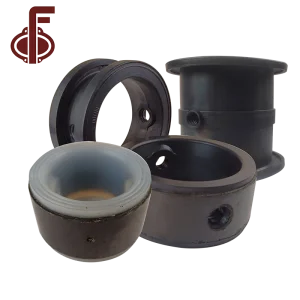
OEM Soft/Hard Back Seat Butterfly Valve Seat
View Specifications & RFQ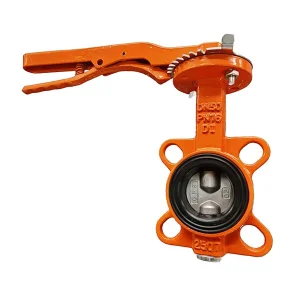
DN50 Dovetail Seat Double Shaft Wafer Butterfly Valve PN16
View Specifications & RFQ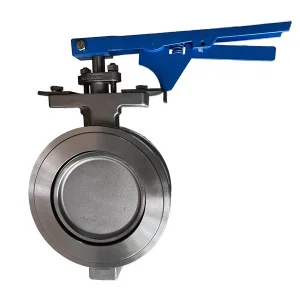
Lever OP Wafer High Performance Butterfly Valve HP BFV
View Specifications & RFQ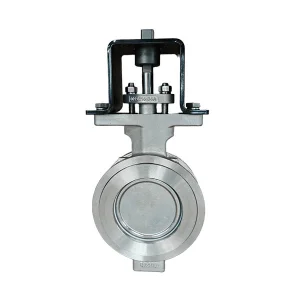
CF8 Wafer High Performance Butterfly Valve with Support
View Specifications & RFQ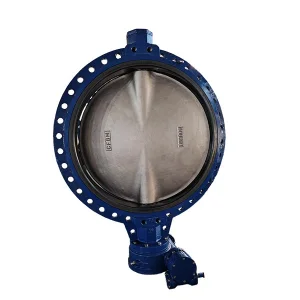
DN1000 DI Hard Back Seat Mono Flange Butterfly Valve
View Specifications & RFQ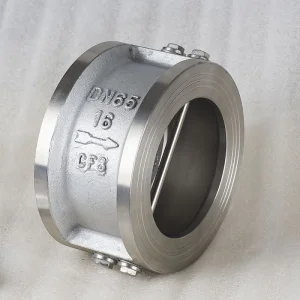
OEM SS2205 Duplex Stainless Steel Dual Plate Check Valve
View Specifications & RFQ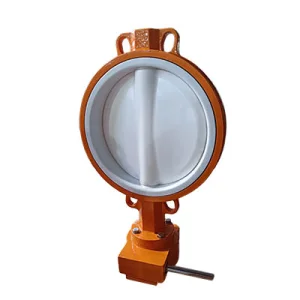
PTFE Lined Disc & Seat Corrosion-Resistant Wafer Valve
View Specifications & RFQ
Engineering Excellence
Triple Offset Kinematics: Eliminating Seat Friction & Wear
An in-depth metallurgical and mechanical breakdown of how true non-rubbing triple eccentric geometry achieves bi-directional zero-leakage shutoff in severe service conditions.
Offset 1: Shaft Axis Shift
The valve stem centerline is moved behind the seat sealing plane. This initial offset allows the disc uninterrupted 360-degree contact with the body seat ring, eliminating the troublesome stem-to-disc pinch points commonly found in concentric elastomeric lined butterfly valves.
- Eliminates penetration wear through the primary seat ring
- Enables a solid, continuous metallic seal face
- Allows heavy wall thickness around the pressure-retaining stem housing
Offset 2: Pipe Centerline Shift
The shaft center is positioned eccentrically away from the pipeline's hydraulic bore centerline. As the valve initiates rotation, the disc immediately cams away from the seat, breaking contact across 95% of the perimeter during opening.
- Prevents seat rubbing and galling during valve cycling
- Dramatically reduces mechanical break-away opening torque
- Extends seat cycle life beyond 50,000 continuous full-stroke operations
Offset 3: Conical Axis Angle
The sealing cone's geometry is angled obliquely to the pipeline flow axis. This creates an inclined cone shape where the seat and disc only make physical contact at the final closing angle (at approximately 89° to 90° of travel), acting like a plug wedging into a socket.
- Yields pure torque-seated wedging action without sliding friction
- Enables true bi-directional bubble-tight isolation (API 598 Rate A)
- Inherently compensates for thermal piping growth and contraction
Why Metal-to-Metal Seated TOVs Supersede Traditional Gate & Ball Valves
Unlike expanding wedge gate valves which suffer from sticking at elevated temperatures and cavity over-pressurization, Triple Offset Valves (TOVs) feature no internal trapped body cavities. Compared to large bore metal-seated ball valves, TOVs reduce procurement weight by up to 70%, lower operational torque requirements by 50%, and eliminate expensive, oversized multi-turn gearboxes or gigantic actuators.
-196°C ~ +650°C
Temperature Range
Zero Leakage
API 598 / ISO 5208 Rate A
CL150 ~ CL900
ASME Pressure Rating
100,000+ Cycles
Wear-Free Seating Life
Standardization Matrix
ZFA Triple Offset Valve Engineering Specifications
Comprehensive design parameters adhering strictly to American, European, and International petrochemical engineering benchmarks.
| Engineering Parameter | Standard Specification | Advanced / Severe Service Options |
|---|---|---|
| Nominal Diameters | DN50 – DN1800 (2" to 72") | Custom Large Bore up to DN2400 (96") upon EPC request |
| Pressure Classes | ASME Class 150, 300, 600; PN10, PN16, PN25, PN40, PN64, PN100 | ASME Class 900 / PN160 with forged body constructions |
| Body Geometries | Wafer, Lug (Full Lugged), Double Flanged (Short & Long Pattern) | Butt-Weld (BW) Ends for high-temperature steam lines |
| Design & Valve Standards | API 609 Category B, ASME B16.34, EN 593, ISO 10631 | AWWA C504, DIN EN 12516, JIS B2002 |
| Body & Disc Materials | WCB, LCC, CF8 (304), CF8M (316), CF3M (316L), Ductile Iron QT450 | Duplex 2205, Super Duplex 2507, Monel 400, Hastelloy C276, Inconel 625 |
| Seat & Seal Ring Construction | Laminated 316SS + Flexible Graphite / Pure Expanded Graphite | Solid Hardfaced Stellite Gr. 6, Inconel 718, Solid PTFE for chemical duty |
| Stem / Shaft Material | ASTM A564 Gr. 630 (17-4PH), SS316, SS410, SS420 | Inconel 718, Nitronic 50, Monel K-500 (anti-blowout design) |
| Testing & Fugitive Emissions | API 598, ISO 5208 Rate A (Bubble Tight), EN 12266-1 | ISO 15848-1 Class AH/BH, TA-Luft, API 607 / ISO 10497 7th Ed Fire Safe |
Manufacturing Infrastructure
China Factory Supply Chain & OEM Scalability
Combining world-class metallurgy, automated multi-axis CNC cells, and cluster supply-chain efficiencies in Tianjin, China to deliver unmatched total cost of ownership (TCO).
Direct Metallurgical Control
Our Tianjin and Bohai Rim foundry network enforces continuous spectrographic melt monitoring. Every heat code is permanently cast onto valve bodies, accompanied by EN 10204 Type 3.1 chemical and mechanical inspection certificates.
- In-house OES optical emission spectrometers
- Charpy V-Notch impact testing down to -196°C
- NDT non-destructive testing: RT, UT, PT, and MPI
High-Precision CNC Machining
The specialized conical angle of the third offset demands micron-level tolerances. Our factory deploys synchronized 5-axis horizontal machining centers to machine the conical seat and disc seal retainers in a single clamping pass.
- Eliminates cumulative kinematic tolerances
- Guarantees 100% field interchangeability of parts
- Consistent sealing torques across all manufacturing lots
Aggressive Lead Time Reductions
By maintaining vast stockpiles of cast bodies, forged high-strength stems, and precision-cut laminated stainless/graphite seal rings, ZFA delivers emergency project orders within 2 to 4 weeks—significantly outpacing Western OEMs that quote 24 to 36 weeks.
- Standardized modular components in stock
- Rapid casting pattern creation via 3D simulation
- Proximity to Tianjin International Port for swift sea freight
Full OEM & Private Label Support
We serve leading multinational valve brands with comprehensive white-label and contract manufacturing services, encompassing custom cast trademarks, client tag plates, specific RAL industrial coatings, and tailored actuation packages.
- Customized drawings (SolidWorks, AutoCAD, STEP)
- Full documentation dossiers conforming to EPC specs
- Bespoke packaging with fumigation-free wooden cases
Quality Assurance & Compliance
Global Engineering Compliance & EPC Audit Readiness
Stringent compliance frameworks tailored to the exacting demands of international procurement officers, safety directors, and plant operators.
Localization Support & Jurisdictional Certificates
International infrastructure projects require more than standard documentation; they demand certified adherence to regional statutory pressure equipment regulations:
- European Union: Pressure Equipment Directive (PED 2014/68/EU) CE mark compliance under Module H full quality assurance.
- North America: CRN (Canadian Registration Numbers) across all provinces, ASME B16.34 design calculation reports, and ANSI/FCI 70-2 Class VI shutoff verification.
- Eurasia: EAC TR CU 010 (Machinery Safety) and TR CU 032 (Pressure Equipment Safety) certifications for Russian/CIS pipelines.
- Functional Safety: IEC 61508 / IEC 61511 SIL 3 certified capability for safety instrumented systems (SIS) and emergency shutdown valves (ESD).
EPC Procurement & Vendor Qualification Package
We eliminate supply chain friction by providing turn-key quality dossier submissions to EPC engineering procurement contractors during the technical bidding phase:
- Material Traceability: EN 10204 3.1 / 3.2 Inspection Certificates for pressure-containing castings, discs, bolting, and packing rings.
- Positive Material Identification (PMI): 100% handheld XRF verification prior to painting and final shipment.
- Testing Protocols: High-pressure hydrostatic shell & seat tests, low-pressure gas testing (6 bar nitrogen), torque hysteresis curves, and cryogenic leak testing at -196°C in liquid nitrogen baths.
- Third-Party Witness: Routine customer or independent inspection agency acceptance (DNV, Lloyd's Register, BV, TÜV, SGS).
Emerging Technology
Next-Generation Industrial Trends in Severe Service Isolation
Addressing the global energy transition with cutting-edge fugitive emission abatement, cryogenic hydrogen containment, and smart digital bus automation.
Fugitive Emission Containment
With aggressive global methane fee regulations and Net-Zero ESG targets, our TOVs integrate live-loaded dual-packing systems qualified under ISO 15848-1 Class AH/BH and TA-Luft, keeping stem leakage below 10 ppmv helium under thermal cycling.
Cryogenic LNG & Liquid Hydrogen
Standard butterfly valves cannot withstand thermal contraction at -196°C or liquid hydrogen temperatures. Our extended bonnet cryogenic TOVs employ low-expansion austenitic 316L/316LN stainless steel and specialized solid metal seating rings to avoid freezing the gland packing.
Intelligent Digital Valve Automation
Seamlessly coupled with multi-turn intelligent electric actuators (Rotork, Auma) or scotch-yoke pneumatic cylinders. Equipped with HART, PROFIBUS, or Foundation Fieldbus positioners for predictive partial stroke testing (PST) in mission-critical petrochemical units.
Field-Proven Deployment
Severe Service Applications Around the World
From deep-sea offshore platforms to high-temperature refining units, our metal-seated butterfly valves protect critical energy and processing operations.
Petrochemical & Hydrocarbon Refining
Installed in FCC catalytic cracking units, hydrogen reformators, steam headers, and bitumen lines where temperatures exceed +450°C. Resists coke accumulation, thermal shocking, and mechanical pipe stress without binding.
Cryogenic LNG Receiving & Regasification
Engineered with extended stem vapor columns per BS 6364 to ensure stem packings remain warm. Used in LNG storage tanks, boil-off gas (BOG) compressors, and subsea loading terminals operating down to -196°C.
Superheated Steam & Power Generation
Serves as turbine bypass, boiler feedwater isolation, and district heating distribution valves where high velocity, water hammer, and thermal cycles rapidly degrade resilient or standard high-performance valves.
Seawater Desalination & Mining Slurry
Equipped with Super Duplex 2507 and Nickel Aluminum Bronze (C95800) trims. Completely resistant to pitting corrosion, crevice erosion, and localized micro-biological attacks in high-chloride reverse osmosis lines.
Engineered Flow Solutions
Featured Industrial Valve Portfolio · Selection 02
Complete flow-control valves built for process lines, waterworks, chemical plants, and heavy engineering networks.
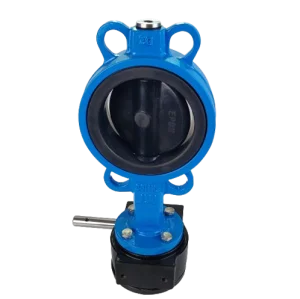
EPDM Fully Lined Seat Disc Wafer Butterfly Valve
View Specifications & RFQ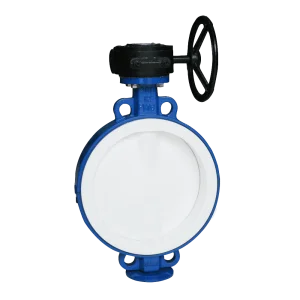
OEM PTFE Full Lined Wafer Acid-Resistant Valve
View Specifications & RFQ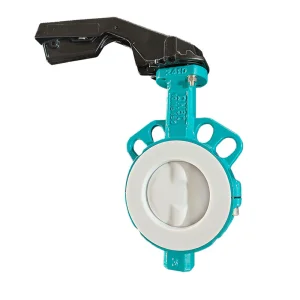
HandLever Operated PTFE Full Lined Butterfly Valve
View Specifications & RFQ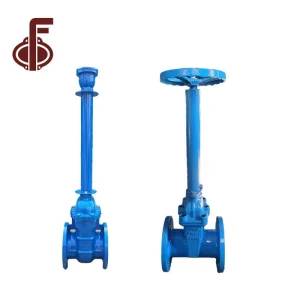
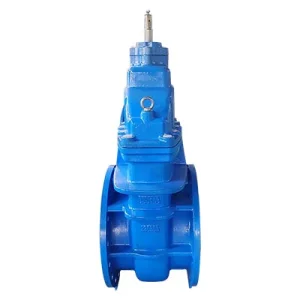
DI PN10/16 Class150 Long Stem Soft Sealing Gate Valve
View Specifications & RFQ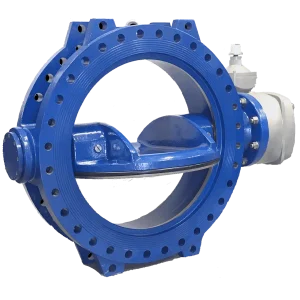
OEM AWWA C504 Double Eccentric Butterfly Valve
View Specifications & RFQ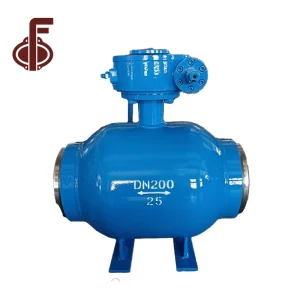
China Fully Welded Steel Underground Ball Valve
View Specifications & RFQ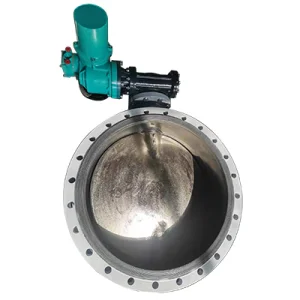
Electric WCB Vulcanized Seat Flanged Butterfly Valve
View Specifications & RFQ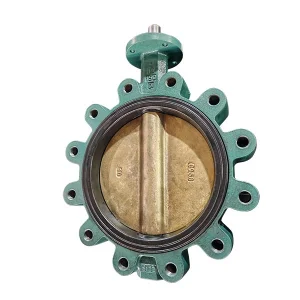
Class 150 C95800 Bronze Disc Lug Butterfly Valve DN250
View Specifications & RFQ
Procurement Knowledge Base
Frequently Asked Questions (FAQ) on Triple Offset Valves
In-depth technical and commercial answers addressing common queries from global procurement managers, mechanical piping engineers, and valve distributors.
What makes a Triple Offset Butterfly Valve truly bi-directional and zero-leakage?
A true triple eccentric metal-seated valve achieves bi-directional zero-leakage through its geometry and torque-activated seating mechanism. The combination of Offset 1 (shaft offset behind seal), Offset 2 (shaft offset from pipeline centerline), and Offset 3 (conical seating angle inclined to flow) ensures the disc contacts the seat only at the final closing point. Because there is zero rubbing during travel, sealing load is generated purely by actuator torque wedging the laminated metallic seal ring against the conical body seat. This mechanical wedging functions identically in both normal and reverse flow directions, meeting API 598 and ISO 5208 Rate A (zero visible bubbles) even under full differential pressure.
How does the laminated seat design compare to a solid metal seat in high-temperature lines?
A laminated seal ring typically consists of alternating layers of stainless steel (such as 316SS) and flexible expanded graphite. The metallic layers supply mechanical strength, elasticity, and pressure retention, while the graphite layers fill micro-imperfections in the body seat, providing bubble-tight shutoff up to +425°C. For severe services above +450°C, highly abrasive particulate slurry, or corrosive catalyst handling, a solid metal seat—such as solid Inconel 718 or a body seat hardfaced with Stellite Grade 6 or Grade 21—is preferred. Solid metal seats resist thermal decomposition and erosion, maintaining tight shutoff up to +650°C.
What international testing standards and quality inspection dossiers does ZFA provide?
Every triple offset valve manufactured by ZFA in Tianjin undergoes 100% factory acceptance pressure testing per API 598 and EN 12266-1 prior to release. Our standard documentation dossier includes EN 10204 Type 3.1 Material Test Reports (MTRs) certifying chemical composition and mechanical properties, non-destructive testing reports (Radiographic Testing RT, Ultrasonic Testing UT, Liquid Penetrant PT, or Magnetic Particle MT per ASME B16.34), Positive Material Identification (PMI) records, paint thickness reports, torque test certificates, and CE / PED Declaration of Conformity. Type 3.2 inspection witnessed by SGS, TÜV, BV, or Lloyd's Register is readily accommodated.
Can Triple Offset Valves be used for throttling as well as positive on/off isolation?
Yes. The third offset geometry makes TOVs exceptionally effective control valves. Because the disc cams out of the seat immediately upon opening, there is zero seat contact between 5° and 90° of rotation. This eliminates seal erosion during throttling. Furthermore, the inherent flow characteristic of a triple offset butterfly valve closely approximates an equal percentage curve across 15° to 75° of rotation, offering excellent controllability and high flow capacity (Cv) compared to globe valves of equivalent nominal size.
What are your OEM private labeling terms and manufacturing lead times for overseas distributors?
As a direct factory manufacturer founded in 2006, Tianjin Zhongfa Valve supports full OEM branding. We provide customized casting patterns with your brand logo, bespoke 304/316 stainless steel nameplates, customized actuator mounting brackets per ISO 5211, and specific customer coating specifications (including NORSOK M-501 offshore epoxy systems). Standard sizes (DN50 to DN600) built from our raw casting inventory typically ship within 20 to 30 days, while large-diameter or exotic alloy valves (Duplex, Hastelloy, Monel) are delivered within 45 to 60 days.
How do you ensure fire safety compliance and prevent fugitive emissions?
Our valves are fire tested and certified to API 607 and ISO 10497 standards. In the event of a plant fire, even if secondary soft gaskets decompose, the primary metal-to-metal contact prevents through-valve leakage and external blowouts. For fugitive emission mitigation, our stuffing boxes utilize precision CNC burnished stem finishes (Ra < 0.4 µm), high-density die-formed graphite rings with anti-extrusion braided carbon end rings, and live-loaded Belleville disc springs. This design meets the highest ISO 15848-1 Class AH/BH and TA-Luft tightness criteria.
