Featured Flow Control & Butterfly Valve Portfolio (Part I)
Direct OEM & exporter production lines supporting ANSI, DIN, JIS, and BS standards with certified zero leakage integrity.
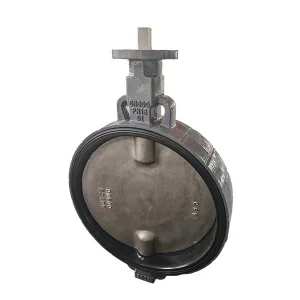
China DN100 EPDM Fully Lined Wafer Butterfly Valve Multi-standard Manufacturer, Factories
View Specification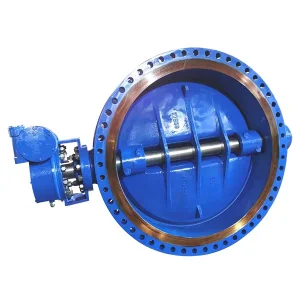
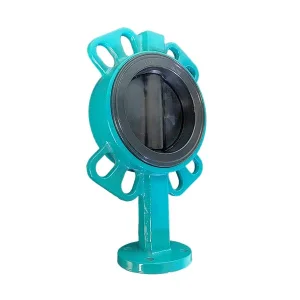
OEM Short Pattern U Shape Double Eccentric Butterfly Valve Factories, Exporters
View Specification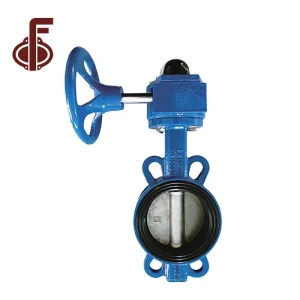
OEM Worm Gear Wafer Butterfly Valve Manufacturer, Factory
View Specification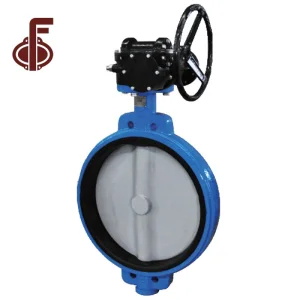
OEM Worm Gear Wafer Butterfly Valve with Nylon Covered Disc Manufacturers, Factory
View Specification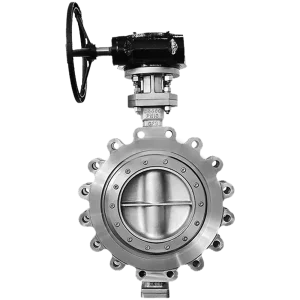
OEM Lug Type Triple Offset Butterfly Valve Factories, Exporters
View Specification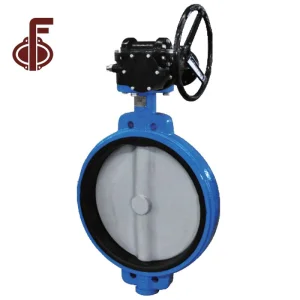
China Worm Gear Operated Wafer Type Butterfly Valves Factories, Exporters
View Specification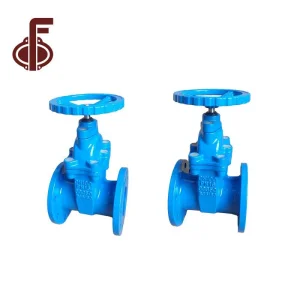
OEM DI PN10/16 Class150 Soft Sealing Gate Valve for Water Pipe Factory, Exporters
View Specification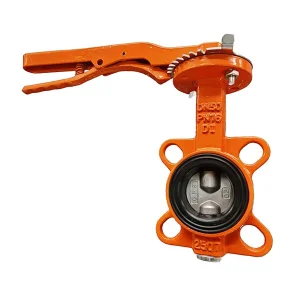
OEM DN50 Dovetail Seat Double Shaft Wafer Butterfly Valve PN16 Factory, Exporters
View SpecificationThe Industrial Transition to Triple Offset Isolation Technology
Global heavy industry is systematically replacing legacy gate, globe, and traditional ball valves with Triple Offset Valves (TOVs), driven by fugitive emissions reduction, operational life-cycle cost (LCC), and torque efficiency.
First Offset: Shaft Displacement
The shaft axis is placed behind the sealing plane. This structural offset converts the sealing profile from standard radial interference into an uninterrupted 360-degree continuous boundary, eliminating common leakage pinch points located at the stem penetration zone.
Second Offset: Centerline Eccentricity
The stem centerline is positioned laterally offset from the pipe center bore. During disc rotation, the disc profile immediately pulls away from the seat ring within the first few degrees of opening, dramatically reducing mechanical friction and extending seat service life.
Third Offset: Conical Seat Geometry
The sealing cone axis is tilted away from the valve bore axis. This creates an elliptical sealing geometry where seating contact occurs strictly at the final closing point. Rubbing, sliding, and galling are completely eliminated, enabling true metal-to-metal bubble-tight sealing.
Critical Application Environments & Macro Solutions
Tailored OEM manufacturing solutions engineered to withstand extreme thermal gradients, erosive multiphase media, and severe cavitation across specialized regional facilities.
LNG & Cryogenic Terminals
For regasification trains and liquefied natural gas processing (-162°C to -196°C), extended bonnets keep stem packing above freezing while non-rubbing laminated stainless steel / graphite seal rings prevent thermal contraction binding and catastrophic boil-off leakage.
Petrochemical & High-Temp Steam
Superheated steam circuits and catalytic cracking units running up to +650°C demand stellite hardfaced seat matrices. The triple offset design avoids mechanical jamming from rapid pipe thermal expansion where conventional wedge gate valves typically bind.
District Heating & Municipal Lines
Metropolitan district energy and chilled water distribution systems require low pumping power loss and minimal maintenance. High flow coefficient (Cv) TOVs deliver optimal fluid dynamic passage with compact installation dimensions.
Offshore FPSO & Desalination
Marine environments characterized by chlorides and sour gases (H2S) utilize duplex stainless steel (SS2205/2507) and nickel-aluminum bronze (NAB) valve bodies. Engineered corrosion barriers guarantee operational readiness without routine line lubrication.
Comprehensive Valve Technology Comparison Matrix
Reviewing physical architecture, weight load footprint, maintenance cycles, and fire-safety compliance across flow isolation systems.
| Performance Parameter | Concentric Butterfly Valve | High-Performance Double Offset | Triple Offset Butterfly Valve (TOV) | Flexible Wedge Gate Valve |
|---|---|---|---|---|
| Sealing Mechanism | Elastomer Interference (EPDM/NBR) | PTFE / R-PTFE Dynamic Deflection | Torque-Seated Metal-to-Metal / Laminate | Wedge Friction Wedging |
| Operating Temperature | -20°C to +120°C | -40°C to +200°C | -196°C to +650°C (Cryo to High Temp) | Up to +450°C (Risk of Thermal Binding) |
| Pressure Rating | PN10 / PN16 / Class 150 | Class 150 / Class 300 | Class 150 up to Class 1500 (PN250) | Class 150 to Class 2500 |
| Seat Rubbing / Wear | Continuous across 90° travel | First 15°–20° of stroke | 0° Friction (Only contacts at 90° shut) | High friction on guide rails |
| Fire Safety Compliance | Non-Fire Safe (Elastomer melts) | Requires secondary fire lip (API 607) | Inherent Fire Safe (All-metal construction) | API 600 / API 6D qualified |
| Weight & Envelope | Extremely Compact (1.0x baseline) | Compact (1.2x baseline) | Lightweight (1.3x baseline; -70% vs Gate) | Bulky, heavy structural deadweight (4x) |
Engineering Roadmaps & Autonomous Valve Intelligence
Leading the transformation in industrial valve automation with digital positioners, continuous partial stroke testing (PST), and fugitive emissions integrity.
Direct OEM Custom Casting & Machining
Utilizing 5-axis CNC multi-tasking centers to machine conical profiles with single-micron repeatability. Every heat batch undergoes chemical composition spectrometry, Charpy V-notch impact, and ultrasonic non-destructive examination (NDE).
Smart Sensor & Predictive Analytics
Next-generation TOVs feature IoT-connected strain gauges and thermal sensors embedded near the stem packing. Real-time torque monitoring detects line scaling, warns of abnormal resistance, and schedules predictive maintenance prior to seal breakdown.
Zero Methane Fugitive Emission Packing
Meeting EPA regulations and ISO 15848 Class AH protocols via live-loaded Belleville spring packing glands with flexible graphite and die-formed carbon barriers, guaranteeing negligible emissions throughout hundreds of thousands of duty cycles.
Frequently Asked Questions: Triple Offset Engineering
Expert technical insights answering common engineering, procurement, and specification inquiries.
What differentiates a Triple Offset Butterfly Valve from a Double Offset (High-Performance) Valve?
While double offset valves displace the shaft away from the seat plane and body centerline to reduce disc rubbing, they still employ a spherical disc profile which requires either an elastomer or thermoplastic (PTFE/PEEK) seal ring to achieve tightness. This limits their operational temperatures to under 200°C. In contrast, the Triple Offset Valve introduces a third conical angle offset, eliminating all contact until the mechanical stop point. This permits all-metal and laminated graphite construction capable of handling severe temperatures (-196°C to +650°C) with zero leakage.
Can Triple Offset Butterfly Valves provide bidirectional bubble-tight isolation?
Yes. Properly engineered TOVs meet ISO 5208 Rate A and API 598 zero visible leakage standards in both flow directions. In the preferred direction, line pressure supplements the actuator seating torque, enhancing sealing contact. In the reverse direction, our reinforced shaft geometry, oversized bearings, and calculated disc cone design prevent seat deflection, ensuring complete shut-off up to full design differential pressure.
How does weight and space saving translate to direct project Capex reductions?
A DN600 (24-inch) Class 300 wedge gate valve can weigh upwards of 2,400 kg and stand over 3 meters tall, demanding specialized structural supports, heavy pipe racks, and massive actuators. A triple offset butterfly valve of identical bore and pressure rating weighs approximately 450 kg—an over 75% mass reduction. This cuts shipping costs, eases installation handling, avoids auxiliary structural bracing, and allows smaller pneumatic or electric actuator packages.
Which test procedures and international certifications govern ZFA OEM exports?
Our OEM manufacturing facility operates under certified ISO 9001 and CE compliance. Valve pressure testing is carried out per API 598, ISO 5208, and EN 12266-1. Fire-safe configurations are designed to meet API 607 and ISO 10497 standards, while body dimensions strictly adhere to ASME B16.10, API 609, DIN EN 558, and ISO 5752 series to guarantee direct global interchangeability.
What custom options are available for severe or corrosive service media?
We provide body and trim configurations spanning Carbon Steel (WCB/LCB), Austenitic Stainless Steel (CF8/CF8M), Duplex & Super Duplex Alloys (SS2205/SS2507), Monel, and Inconel. Hardfacing on the valve seat can be specified with Stellite Gr. 6 or Gr. 21, and disc seals can be chosen between solid metal rings for erosive fluids or multi-layer stainless steel/graphite laminates for clean cryogenic and gaseous lines.
Featured Flow Control & Butterfly Valve Portfolio (Part II)
High-performance industrial valve assemblies ready for global infrastructure, water treatment, and pipeline projects.
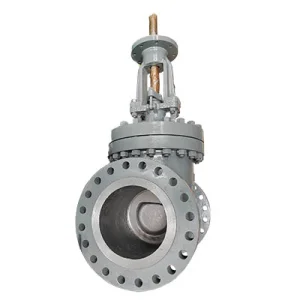
China DN600 WCB OS&Y Rising Stem Gate Valve Manufacturer, Exporter
View Specification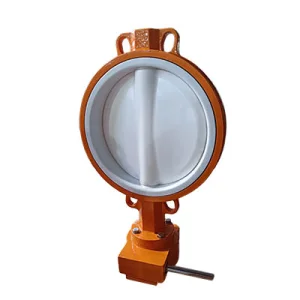
China PTFE Lined Disc & Seat Wafer Butterfly Valve Manufacturers, Factories
View Specification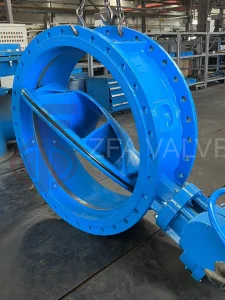
OEM Flange Type Double Offset Butterfly Valve Factory, Factories
View Specification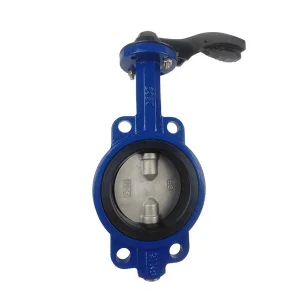
China DN100 4inch Hard Back Seat Wafer body Butterfly Valve Exporter, Exporters
View Specification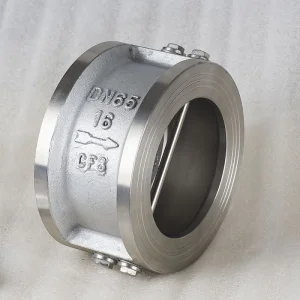
OEM SS2205 Dual Plate Check Valve Exporter, Exporters
View Specification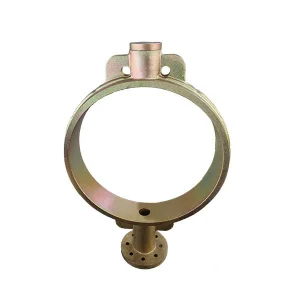
OEM Hot-dip Galvanized Wafer Butterfly Valve Body Manufacturer, Manufacturers
View Specification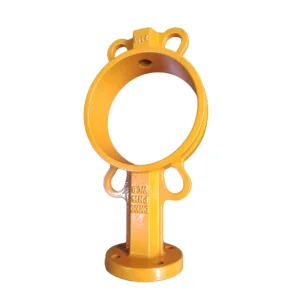
China DN100 PN16 Wafer Butterfly Valve WCB Body Factory, Exporter
View Specification