
Direct Supply Infrastructure
Precision Flow-Control Valve Lines for Houston Projects
From high-pressure pipeline transmission to corrosive processing terminals, review our core API and ASME certified units configured for North American industrial facilities.
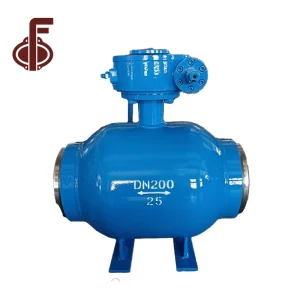
High-Pressure Fully Welded Steel Ball Valve for Pipeline Transport
View Specifications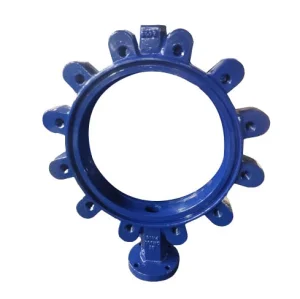
OEM Fully Lug Body Butterfly Valve for Modular Skids
View Specifications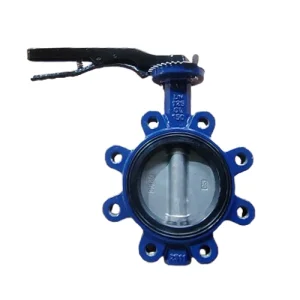
Houston Spec OEM CF8M Disc Dovetail Lug Valve CL150
View Specifications
Energy Capital Analysis
Industrial Context: Why Houston Demands Resilient Ball Valve Systems
As the epicentre of the international energy transition, the Greater Houston region represents the world’s dense concentration of oil refining, ethylene cracking, and cryogenic export capacity.
Houston Ship Channel Corrosive Realities
Plants along the Houston Ship Channel operate under aggressive ambient humidity coupled with high sulfur and volatile chemical atmospheres. Ball valves deployed here must utilize NACE MR0175/ISO 15156 compliant metallurgical trims, such as Inconel overlay or 316SS floating/trunnion cores, to avoid catastrophic hydrogen embrittlement and stress cracking.
Severe Cycling & Pressure Surges
Upstream gathering networks routing Permian and Eagle Ford crude down to Baytown and Texas City demand full-bore API 6D pipeline ball valves. Valves must sustain repetitive cycling and rapid emergency shutdown (ESD) situations without seat degradation or runaway actuator torques under ASME Class 600, 900, and 1500 ratings.
Fugitive Emission Directives (API 641)
Tighter EPA emission enforcement across Texas refineries makes stem packing leakage intolerable. Our export valves are qualified to ISO 15848-1 and API 641 fugitive emission regulations, maintaining helium/methane mechanical seal tightness through thousands of mechanical strokes.
100%
Hydrostatic Tested
API 6D
Design Standard Alignment
< 20 ppm
Fugitive Emission Stem Limit
45 Days
Average Delivery to Houston Port
Manufacturing & Supply Chain Depth
Leveraging Advanced Chinese Manufacturing Efficiency for US Projects
How ZFA Valve bridges modern CNC fabrication capacity with strict Western engineering validation standards to offer Houston operators unmatched value.
The Modern Factory Advantage: Speed, Capacity & Metallurgy
Procurement bottlenecks in the Gulf of Mexico basin often stem from lengthy lead times for forged valve bodies and specialized alloys. Tianjin Zhongfa Valve operates vertically integrated manufacturing lines spanning pattern design, automated shell-mold casting, multi-axis machining, and computerized hydrostatic stress testing.
By procuring direct from our factory, engineering houses bypass secondary distributor markups while securing comprehensive positive material identification (PMI) data, spectrographic melt reports, and mill test certificates (MTR) meeting EN 10204 3.1 standards.
| Factor | Standard US Distribution | ZFA Direct Factory Supply |
|---|---|---|
| Lead Time | 16–28 Weeks (Backordered) | 4–8 Weeks Fabrication |
| Custom Trim Options | High surcharge / Limited | In-house Stellite, Hastelloy, Monel |
| Testing Transparency | Aggregated batches | Serialized testing video & 100% trace |
| Actuation Compatibility | Requires adapter plates | Direct-mount ISO 5211 integral pads |
Engineering Applications
Houston Application Scenarios & Engineering Configurations
Targeted engineering configurations designed to solve specific fluid handling challenges across Texas operating corridors.
LNG Liquefaction & Bunkering Facilities
Export terminals near Freeport and Sabine Pass handle liquefied methane at -162°C. Ball valves deployed on cryogenic circuits integrate extended bonnets with vapor column seals, PCTFE or modified TFM soft seats, and pressure relief vents on the upstream sphere to prevent explosive expansion cavities.
Crude Oil Refining & Fluid Catalytic Cracking
Downstream processors operating in Pasadena and Deer Park face slurry streams with abrasive catalyst fines. We configure metal-seated ball valves coated with high-velocity oxygen fuel (HVOF) applied Tungsten Carbide (WC-Co-Cr), preserving Class VI bi-directional shutoff under extreme wear conditions.
Produced Water & Salt Dome Storage Caverns
Salt caverns near Mont Belvieu used for hydrocarbon storage require valves resistant to super-saturated brine. Ductile iron or carbon steel with nickel plating often fails prematurely; our duplex stainless (2205) and aluminum bronze trim configurations permanently isolate high-chloride brine lines without pitting.
Market Evolution
Technological Trajectories Shaping Flow Control
The industrial valve ecosystem is transitioning toward lower carbon emissions, digital monitoring, and aggressive cycle lifespans.
The Hydrogen Economy & Carbon Capture (CCUS)
With massive CCUS hubs funded along the Texas Gulf Coast, valve sealing physics require modernization. Supercritical CO2 exhibits unique phase change characteristics, leading to explosive decompression in standard elastomer O-rings. Our factory provides specialized Lip-Seal energized polymer configurations and API 607 fire-safe graphite layers capable of enduring sudden pressure drops without material blowout.
- Explosion-proof energized polymer seal stacks
- Zero-leakage metal-to-metal seating for micro-molecule hydrogen
- Ultra-low torque stem interfaces enabling compact pneumatic actuation
Smart Valve Actuation & Predictive Telemetry
Modern plants demand intelligent integration. Our ball and butterfly valves feature standardized ISO 5211 top mounting patterns that effortlessly accommodate digital positioners, HART-compatible smart actuators, and diagnostic sensors tracking opening torque curves to forecast maintenance before line downtime occurs.
- Integral direct mount patterns eliminating bracket deflection
- Continuous acoustic leakage detection readiness
- Factory tested with pneumatic, electric, and electro-hydraulic actuators
Comprehensive Catalogue
Full-Line Valve Inventory for Global Energy & Industrial Facilities
Explore our broader industrial flow control catalog engineered to identical testing, metallurgical, and certification thresholds.
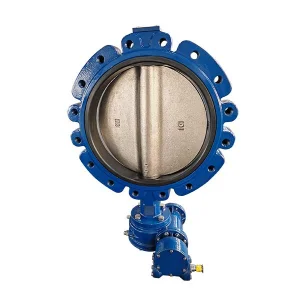
Houston Utility 18" Hard Back Seat Lug Butterfly Valve DN450
View Specifications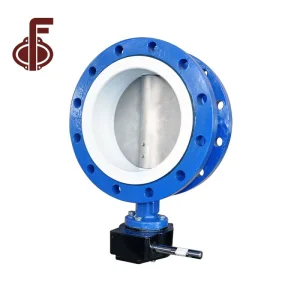
Corrosive Chemical OEM PTFE Seat Flange Butterfly Valve
View Specifications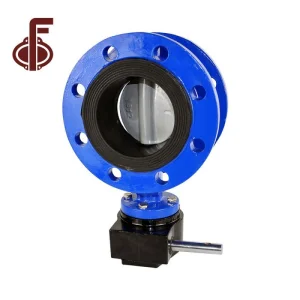
Cooling Loop Ductile Iron Body Worm Gear Flange Valve
View Specifications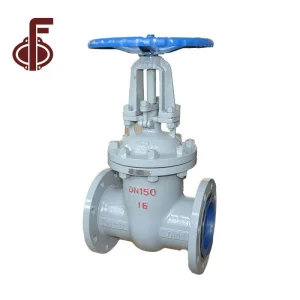
Houston Spec 150LB/300LB WCB Cast Steel Gate Valve
View Specifications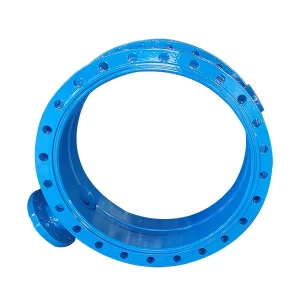
Double Flanged Butterfly Body with Field Replaceable Seat
View Specifications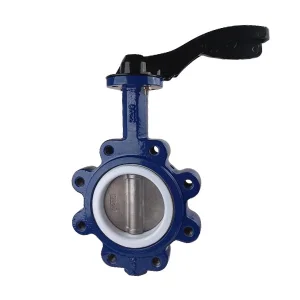
Houston Petrochem CF8M Disc PTFE Seat Lug Butterfly Valve
View Specifications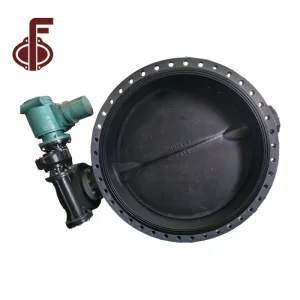
Automated Electric Rubber Fully Lined Flange Butterfly Valve
View Specifications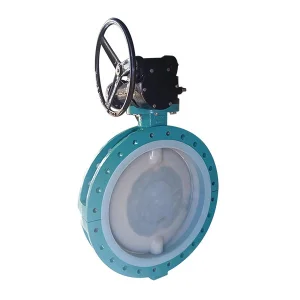
U-Type Two-Piece Body Silicon Rubber Disc & Seat Valve
View Specifications
Technical Knowledge Hub
Frequently Asked Technical & Procurement Questions
Answers curated by senior flow control engineers to streamline specification reviews and vendor evaluations.
What is the functional difference between Floating and Trunnion-Mounted Ball Valves?
In floating ball designs, the ball is held solely by two elastomeric/metallic seats. Upstream fluid pressure pushes the ball against the downstream seat to establish sealing, making them highly economical for DN15 to DN200 (Class 150-300). For larger diameters or higher pressures (Class 600+), excessive seat load creates unwieldy torque. Trunnion designs lock the sphere along an upper and lower mechanical shaft; spring-loaded seat assemblies are pushed against the stationary sphere, drastically cutting operating torque and seat wear.
How do you guarantee compliance with Houston project fire-safe standards?
Our ball valves are built and verified strictly under API 607 (fire test for quarter-turn valves) and API 6FA. During an inferno simulation where primary polymer soft seats vaporize, our secondary metal lip seal engages the stainless sphere under line pressure, stopping uncontrolled internal blowouts. Auxiliary graphite stem packaging rings and spiral-wound body gaskets restrict atmospheric containment loss.
Can you provide custom metallurgy for sour gas handling under NACE standards?
Yes. For offshore upstream tie-ins and sour natural gas processing containing H2S, standard carbon steel experiences rapid sulfide stress cracking. We supply full NACE MR0175 / ISO 15156 compliant configurations including ASTM A352 LCC, A216 WCB with 316 cladding, Duplex 2205/2507, and solid Inconel 625/718 trim components, verified by certified Charpy V-Notch low-temperature impact tests down to -46°C.
What documentation accompanies an export consignment to Port Houston?
Every shipment is packed in ISPM-15 heat-treated export crates and supplied with complete dossier documentation: EN 10204 Type 3.1 Material Test Reports (MTRs), hydrostatic pressure shell and seat test logs per API 598, wall thickness verification surveys, NDE/NDT reports (radiographic, magnetic particle, dye penetrant), and Certificate of Origin documents ready for US customs clearance.
