
Featured Fire Butterfly Valves for Australasian Hydronic Infrastructure
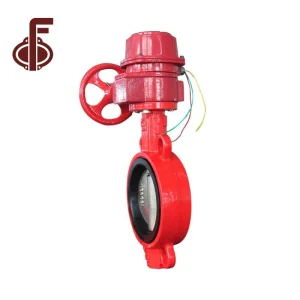
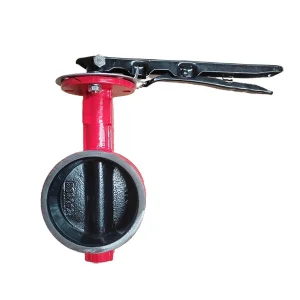
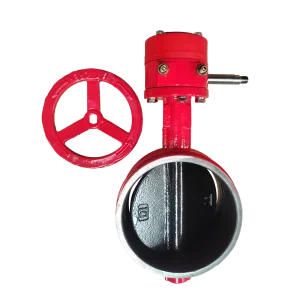
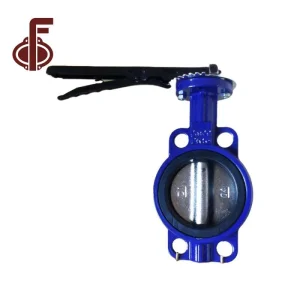
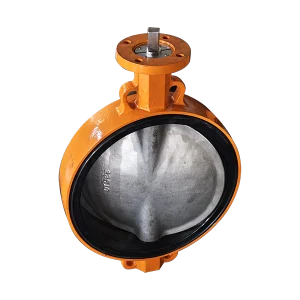
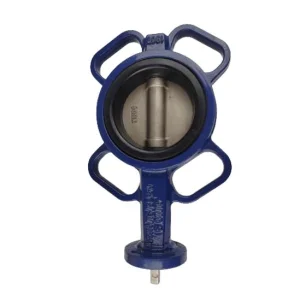
Pre-engineered flow-control and isolation units specifically built with monitored tamper-switch telemetry, factory-integrated supervisory gearboxes, and reinforced ductile iron housings suited for the New Zealand building services sector.
Fire Protection Valves in New Zealand: Commercial Dynamics & Engineering Realities
A rigorous examination of hydraulic design codes, seismic compliance, and severe atmospheric environments governing life safety networks in Aotearoa New Zealand and the wider Asia-Pacific theatre.
1. New Zealand Market Realities: Rigorous Compliance, Geological Dynamism, and Island Climatology
The specification, sourcing, and deployment of fire butterfly valves in New Zealand operates within one of the world's most demanding regulatory and geophysical environments. Unlike continental markets characterized by uniform seismic parameters and predictable interior environments, New Zealand's fire engineering sector—governed by the New Zealand Building Code (NZBC Clauses C1–C6 Protection from Fire, and B1 Structure)—demands mechanical fluid control solutions capable of enduring high mechanical stress, sustained vibrational resonance, and intense coastal corrosive degradation.
Central to fire protection engineering in New Zealand is the comprehensive application of NZS 4541:2020 (Automatic fire sprinkler systems) alongside NZS 4510 (Fire hydrants). In standard wet and dry riser installations, sectional control valves and fire pump discharge manifolds cannot simply be generic industrial water valves. They must feature UL-listed and FM-approved supervisory limit switches that integrate seamlessly into local Building Management Systems (BMS) and Fire Indicator Panels (FIP). When an emergency isolation occurs or tampering happens, dual microswitches must transmit electrical telemetry before the valve disc travels through more than 20% of its stroke.
Furthermore, New Zealand's unique location along the Pacific Ring of Fire requires every valve installed in multi-story infrastructure—such as the commercial towers along Auckland's Queen Street, high-density residential developments in Wellington, or logistics warehouses in Christchurch—to conform to NZS 4219:2009 (Seismic performance of engineering systems in buildings). Fire protection valves must withstand severe peak ground accelerations (PGA) without disc dislodgement, body fracture, or packing seal failure. Grooved-end butterfly valves have largely replaced traditional flanged configurations in these applications due to their ability to accommodate angular deflection and thermal expansion while maintaining pressure integrity under dynamic seismic shear forces.
2. Global Industrial Architecture & The Evolution of Quarter-Turn Fire Isolation
Globally, fire suppression methodology has transitioned decisively from legacy Outside Screw and Yoke (OS&Y) gate valves toward high-performance, resilient-seated fire butterfly valves. The physical foot-print of a DN150 gate valve often exceeds 45 kilograms with a vertical clearance profile in excess of 700 mm. In modern prefabricated skids, modular ceiling plenums, and compact urban risers, this profile imposes extreme spatial and structural loads. Conversely, a high-integrity concentric fire butterfly valve reduces physical weight by more than 65%, features superior flow coefficients ($K_v$ and $C_v$), and incorporates factory-calibrated worm gear actuators that eliminate rapid closure water-hammer—a catastrophic failure mechanism that can shatter sprinkler heads and rupture pipe couplings.
The global manufacturing benchmark is anchored on rigorous testing protocols, notably UL 1091 (Standard for Butterfly Valves for Fire-Protection Service) and FM Class 1111/1112. These standards dictate that fire butterfly valves must maintain hydraulic sealing at up to twice their rated working pressure (typically rated for 175 psi, 300 psi, or PN16/PN25), resist thermal shock, and demonstrate zero degradation of the encapsulated elastomer disc after thousands of dry and wet operational cycles.
Hydraulic Hammer Mitigation
Engineered slow-closing worm gear operators require a minimum of 5 complete handwheel turns (taking over 16 seconds) to transition from fully open to drop-tight shutoff, eradicating pressure surges across fire pump discharge lines.
Integrated Supervised Telemetry
Dual internal micro-switch assemblies sealed to IP67/NEMA 4X transmit open, closed, or tampered signals directly to building alarm panels and remote SCADA monitoring units in mission-critical facilities.
Corrosion Barrier Protection
Internally and externally electrostatically applied Fusion-Bonded Epoxy (FBE) powder coating at ≥250 μm according to AS/NZS 4158 resists hyper-saline oceanic mist and geothermal sulfide vapor corrosion.
Key Application Scenarios Across New Zealand Industry
How specialized valve design parameters address distinct commercial, agro-industrial, and infrastructure environments across the North and South Islands.
| NZ Industrial Sector | Geographical Hubs | Operating Challenges | ZFA Engineered Valve Configuration |
|---|---|---|---|
| Dairy & Agricultural Processing | Waikato, Taranaki, Canterbury (e.g., Fonterra processing skids) | Clean-in-place steam washdown, wash chemical splash, constant cycling vibration. | Ductile iron body with vulcanized high-grade EPDM encapsulated disc, SS316 stem, IP67 supervisory gear switch. |
| Commercial High-Rise & Mixed Use | Auckland CBD, Wellington Waterfront, Christchurch Centre | Seismic sway under NZS 4219, space constraints in mechanical risers, FIP telemetry. | Grooved-end fire butterfly valve with integral tamper switch, rated for 300 psi (2.07 MPa), low friction loss. |
| Geothermal Energy & Heavy Pulp/Paper | Bay of Plenty, Rotorua, Taupo (Kawerau pulp mills) | Ambient hydrogen sulfide ($H_2S$) gas, acidic moisture, high ground temperature fluctuations. | Heavy-duty CF8M / 316 Stainless Steel disc, RPTFE or specialized fluoroelastomer seating with C5-M epoxy coating. |
| Cold Storage & Port Logistics | Port of Tauranga, Lyttelton Port, Napier Harbour | Sub-zero temperature embrittlement, high atmospheric chloride marine salinity. | Low-temperature ductile iron (impact-tested at -20°C), electrostatically coated, stainless hardware. |
| Data Centres & Telecommunication Hubs | North Shore, Silverdale, Hobsonville (Auckland hyperscale) | Zero-tolerance for water leakage, mission-critical integration with aspirating smoke detection (VESDA). | Worm gear supervised wafer butterfly valve with bi-directional zero-bubble drop-tight seal and dual auxiliary contacts. |
3. Future Trends: The Technological Roadmap of Fire Protection Valves
The fire protection valve industry is experiencing a profound paradigm shift driven by digitalization, smart infrastructure, and decarbonization. In the New Zealand market, where labor costs for site inspection and regulatory compliance testing are substantial, asset managers and facility engineers are demanding more than passive mechanical components. The roadmap for next-generation fire butterfly valves focuses on four key pillars:
- IoT-Integrated Intelligent Supervisory Systems: Traditional limit switches verify basic contact closure. Emerging smart valve actuators incorporate continuous position sensors, temperature telemetry, and vibration accelerometers. These sensors connect via LoRaWAN or Modbus protocols to provide predictive maintenance alerts before a valve becomes stiff or seized due to mineral scale buildup.
- Hydrodynamically Optimized Discs for Reduced Pumping Energy: Fire pump systems are sized based on cumulative friction losses across valves, fittings, and pipe runs. Advanced computational fluid dynamics (CFD) disc contouring reduces hydraulic turbulence, raising the flow coefficient ($C_v$) by up to 14% compared to traditional flat-plate designs. This allows engineers to optimize pump motor kilowatts and minimize riser pipe sizing.
- Eco-Responsible Fluoropolymer Sealing: As global regulations such as REACH and PFAS restrictions tighten, valve manufacturers are developing advanced cross-linked, lead-free EPDM compounds and biosourced polymer coatings that provide extreme durability without environmental persistence.
- Seismic Digital Twin Modeling: Pre-testing valves under finite element analysis (FEA) simulating real-world New Zealand earthquake acceleration spectrums (Alpine Fault and Wellington Fault scenarios) ensures valves maintain absolute containment during structural drift and floor displacement.
Technical & Procurement FAQ for Fire Butterfly Valves
Expert answers to the most common engineering, compliance, and material selection questions asked by New Zealand hydraulic consultants and MEP contractors.
How do ZFA Fire Butterfly Valves comply with New Zealand standard NZS 4541:2020?
NZS 4541:2020 mandates that all isolating valves in fire sprinkler systems must be of an indicated, supervised type that clearly communicates valve position to the fire monitoring panel. ZFA fire butterfly valves feature integrated, factory-fitted dual microswitch assemblies that provide immediate electrical supervisory feedback if the valve handle or handwheel is moved from the fully open position. Furthermore, the slow-acting worm gear drive prevents rapid quarter-turn closure, meeting the water hammer mitigation guidelines established in Section 8 of the standard.
Why are grooved butterfly valves preferred over wafer or flanged valves in seismic regions?
Under NZS 4219 (Seismic performance of engineering systems in buildings), piping systems must accommodate differential building movement and ground acceleration without catastrophic rupture. Grooved butterfly valves connect to the pipeline using mechanical flexible couplings that permit controlled angular deflection, axial movement, and rotational flexibility. Unlike rigid flanged connections that transfer shear loads directly to the valve neck and mounting bolts, grooved connections isolate the valve from seismic strain, significantly reducing the probability of casting fracture or flange joint leakage.
What coating protection is recommended for coastal facilities in Auckland, Tauranga, or Napier?
For installations within 5 kilometers of the open ocean or within industrial coastal ports, we recommend our electrostatically applied Fusion-Bonded Epoxy (FBE) coating system with a minimum dry film thickness of 250 μm, tested in accordance with AS/NZS 4158 and ISO 12944-6 for C4 (High) or C5-M (Very High Marine) corrosivity categories. For environments exposed to geothermal hydrogen sulfide, CF8M (316 stainless steel) internal trim with special 316SS fasteners should be specified.
What is the functional difference between EPDM, NBR, and PTFE seats in fire protection systems?
EPDM (Ethylene Propylene Diene Monomer) is the standard industry selection for fire protection wet pipe, dry pipe, and deluge systems operating with clean potable water, glycol antifreezes, and treated reservoir water (-20°C to +120°C). NBR (Nitrile) is utilized when fire systems protect petroleum storage, diesel fuel pump skids, or contain hydrocarbons that cause EPDM to swell. PTFE is utilized in corrosive industrial processing facilities, chemical plants, or foam concentrate (AFFF) delivery manifolds where aggressive synthetic chemicals demand inert sealing.
Can ZFA support OEM manufacturing, custom branding, and project documentation for New Zealand contractors?
Yes. As an ISO 9001 and CE certified manufacturer with extensive casting, machining, assembly, and testing facilities in Tianjin, China, ZFA provides complete OEM services. We can supply valves with customer-specific branding, customized gear operator tags, personalized packaging, and complete compliance documentation dossiers—including 3.1 Material Test Reports (MTR), hydrostatic pressure test certificates, and coating thickness verification sheets.
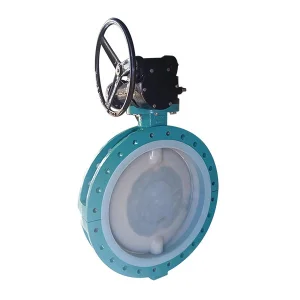
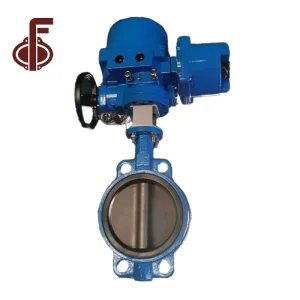
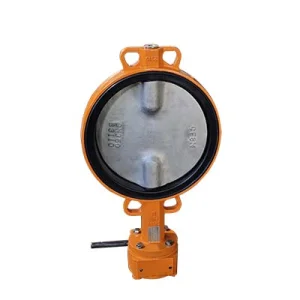
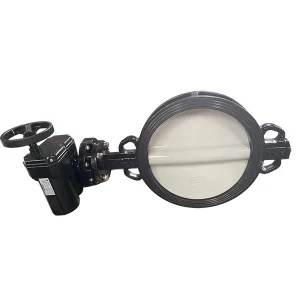
Complete High-Performance Butterfly Valve Series
Explore our wider range of resilient seated, flanged, actuated, and specialized metallurgy butterfly valves engineered for water treatment, HVAC plant rooms, industrial processing, and dual-purpose fire water pipelines across Australasia.
Partner with an Established Valve Manufacturer for Your NZ Projects
Direct factory sourcing, competitive OEM pricing, full compliance assurance, and rapid dispatch across Auckland, Wellington, Christchurch, and regional distribution centers.
Send Inquiry Now