
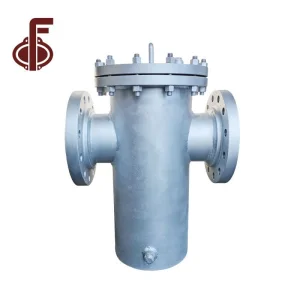
Saudi Arabia Spec PN10/16 150LB DN50-600 Heavy-Duty Basket Strainer
- Sizes: DN50 to DN600 (2" – 24")
- Rating: ASME Class 150 / PN10 / PN16
- Materials: WCB, CF8M, Ductile Iron
Engineered for extreme desert environments, heavy particulate loads, and high-salinity seawater applications across the Eastern and Western Provinces.
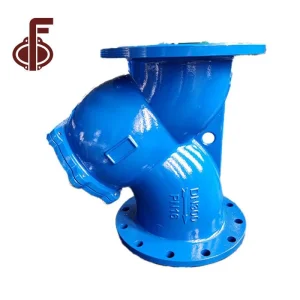
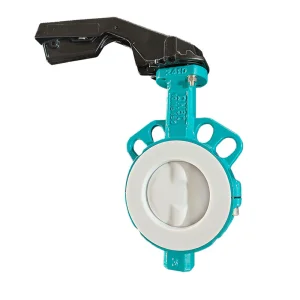
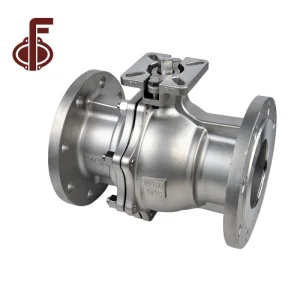
Pipeline strainers play an unheralded yet indispensable role in safeguarding multi-billion-dollar downstream facilities, thermal/reverse-osmosis desalination complexes, and massive district cooling plants across the Kingdom.
Gigaprojects including NEOM (Oxagon & Sindalah), The Red Sea Development, Qiddiya, and King Salman Energy Park (SPARK) demand massive flow-control infrastructure. Mechanical specifications mandate high durability, lifecycle traceability, and extreme sand/particulate filtration resilience at high flow velocities.
Saudi Arabia is the world's largest producer of desalinated water via the Saline Water Conversion Corporation (SWCC). Persian Gulf and Red Sea intake waters exhibit elevated salinity (up to 45,000 ppm TDS) and high temperatures (exceeding 38°C), causing aggressive pitting, crevice corrosion, and heavy biofouling in untreated piping.
Hydrocarbon transport throughout Jubail, Yanbu, and the Eastern Province requires strainers conforming strictly to NACE MR0175/ISO 15156 for sour gas (H2S) exposure. Pipeline debris, mill scale, and welding slag must be captured upstream of critical fiscal metering skids, pumps, and automated control valves.
Off-the-shelf industrial strainers inevitably fail when subjected to desert heat, saline sea water, fine airborne quartz sand, and continuous operational cycles. Our engineering modifications match exact localized duty cycles.
In SWRO plants along the Red Sea (e.g., Yanbu, Rabigh, Shoaiba), raw seawater contains macro-algae, shell fragments, and suspended solids. Standard carbon steel or 304 stainless steel experiences rapid localized perforation. We engineer duplex stainless steel (2205 / 2507) and Nickel Aluminum Bronze (C95800) basket strainers featuring heavy-gauge perforated baskets lined with fine 50-to-100-micron mesh to protect high-pressure positive displacement pumps and delicate polyamide membrane elements.
District Cooling Plants (DCP) operated by providers such as Marafiq and Tabreed require monumental volumes of chilled water circulated continuously to mitigate 50°C summer ambients. Open-loop evaporative cooling towers ingest airborne silica sand particles during "Shamal" dust storms. We supply ductile iron (GGG50) and fusion-bonded epoxy (FBE) coated basket strainers with differential pressure transmitters to ensure uninterrupted chiller condenser efficiency without system throttling.
Within SABIC ethylene crackers and Aramco refineries, heavy cracking feedstocks, condensate recovery, and amine treating systems require Class 300 and Class 600 ASME B16.34 cast carbon steel (ASTM A216 WCB/WCC) and 316L stainless Y-strainers. Configured with precision-machined RTJ flanged ends, graphite-spiral wound gaskets, and blow-off drain ball valves, these units guarantee fugitive emissions control under stringent environmental protocols.
Phosphate and gold beneficiation plants managed by the Saudi Arabian Mining Company (Ma’aden) operate abrasive process slurries. Here, standard basket screens erode in days. We fabricate heavy-wall carbon steel bodies lined with abrasion-resistant vulcanized natural rubber or polyurethane, paired with heavy wedge-wire screen baskets capable of capturing abrasive stone particles without basket collapse.
Bridging the gap between strict Western engineering standards and aggressive project delivery milestones across the Middle East through integrated supply chain superiority.
We manage direct electric induction melting and automated sand-molding foundries in Tianjin, executing stringent optical spectrometry on every heat. Our foundries pour Ductile Iron (EN-GJS-400-15 / 500-7), Cast Carbon Steel (ASTM A216 WCB), Stainless Steels (CF8, CF8M, CF3M), and specialized Super Duplex alloys with documented ferrite-austenite balance verification.
Every single strainer housing is pressure tested in accordance with API 598 and EN 12266-1 standards (1.5x shell test, 1.1x seat/closure test). Positive Material Identification (PMI) is carried out via handheld XRF analyzers prior to machining, preventing accidental material grade cross-contamination.
While European manufacturers quote 26–40 weeks lead times for large-bore basket strainers, our optimized production scheduling delivers complete factory-tested valve and strainer lots within 4–8 weeks. Direct maritime routes from Tianjin Port reach King Abdulaziz Port (Dammam) and Jeddah Islamic Port in just 22 to 28 days.
Our specialized Middle East export department handles SASO Technical Regulations, Saber platform registration, and third-party inspections (SGS, TÜV, Bureau Veritas) seamlessly.
As digital transformation sweeps through Saudi Arabia's industrial corridors under the National Industrial Development and Logistics Program (NIDLP), passive piping components are evolving into intelligent data assets.
Traditional brass pressure gauges fail in desert UV exposure. Our smart strainers feature integrated 4–20 mA or Modbus differential pressure (DP) smart sensors, communicating continuous clogging data directly to remote SCADA rooms to trigger timely maintenance before cavitation starves downstream booster pumps.
For high-turbidity water intake skids where manual basket cleaning disrupts continuous plant uptime, we supply motorized self-cleaning backwash strainers. Rotating suction scanners purge trapped sand particles using less than 1% of the system flow, eliminating manual labor in hazardous plant zones.
Leveraging Computational Fluid Dynamics (CFD), our latest strainer chamber geometries expand internal flow volumes to achieve an impressive 6:1 Net Free Straining Area Ratio. This slashes turbulent drag, reducing pumping energy consumption across mega-distance water transmission pipelines.
Matching body metallurgy, screen perforation, and operational architecture to project parameters:
| Strainer Configuration | Nominal Size (DN) | Pressure Class | Standard Body Alloys | Screen Mesh Range | Optimal Saudi Arabia Application |
|---|---|---|---|---|---|
| Flanged Y-Type Strainer | DN15 – DN400 (½" – 16") | PN16 – PN64 / Class 150 – 600 | Ductile Iron, WCB, CF8M | 20 Mesh to 200 Mesh | Steam lines, HVAC closed loops, Petrochemical dosing skids |
| Simplex Basket Strainer | DN50 – DN1200 (2" – 48") | PN10 – PN25 / Class 150 – 300 | WCB, Carbon Steel, 316SS | 1 mm – 6 mm Perforated + Mesh | SWRO seawater pre-treatment, Chilled water supply trunks |
| Duplex (Twin) Strainer | DN25 – DN300 (1" – 12") | PN16 – PN40 / Class 150 – 300 | Cast Iron, WCB, Bronze, Duplex | 40 Mesh to 100 Mesh | Continuous oil lubrication systems, Uninterrupted fuel lines |
| Temporary Conical Strainer | DN50 – DN600 (2" – 24") | Class 150 – Class 900 | Stainless Steel 304 / 316 | 10 Mesh to 60 Mesh | Commissioning & initial start-up line flushing in new refineries |
| Rubber Lined Slurry Strainer | DN80 – DN500 (3" – 20") | PN10 – PN16 / Class 150 | Fabricated Steel + Ebonite | Heavy Wedge Wire Baskets | Ma'aden Phosphate processing & mining wastewater treatment |
Before issuing Letters of Credit (LC) or Purchase Orders for industrial strainers entering the GCC market, engineering procurement teams should verify these critical compliance benchmarks:
Ensure the vendor supplies 100% PMI testing reports confirming Chromium, Nickel, and Molybdenum content in stainless/duplex bodies, guaranteeing they will not crack in high-chloride Saudi groundwater.
Demand mathematical proof that the total open basket area is at least 4 to 6 times the internal pipe area, preventing premature clogging and excessive head loss across the pumping station.
For cast iron and ductile iron bodies, specify high-build Fusion Bonded Epoxy (FBE) with minimum 250–300 microns Dry Film Thickness (DFT), tested for holiday pinholes per NACE SP0188.
Audit how the fine mesh is fastened to the perforated backup cylinder. Spot welding must be continuous with no loose wire edges that could detach and ruin downstream turbine impellers.
Detailed technical and commercial answers addressing common procurement inquiries, standard compliances, and site installation questions.
We provide complete product conformity documentation including SABER platform registration, Certificate of Conformity (CoC), Shipment Conformity Certificates (SCoC), factory ISO 9001:2015 accreditation, and Mill Test Certificates (MTC) conforming to EN 10204 Type 3.1. All physical shipments feature barcode labeling matching SABER clearance records.
For open cooling tower circuits and raw water intakes exposed to desert dust storms, typical atmospheric sand grains range from 50 to 250 microns. We recommend a dual-layer basket design: a rugged 3mm perforated stainless plate providing structural rigidity against high differential pressures, lined internally with a 60-mesh to 100-mesh (250 to 150 micron) woven 316 stainless screen.
Yes. We manufacture Y-type, basket, and T-type strainers built in strict alignment with Saudi Aramco Standard Drawing and 9-COM catalog items, respecting ASME B16.34 wall thicknesses, NACE MR0175 sour service hardness limits (HRC ≤ 22 for carbon steels), full radiography testing (RT) of butt-weld ends, and 100% wet magnetic particle examination (MPI) on critical cast sections.
Duplex strainers must be installed wherever flow cannot be stopped for maintenance without shutting down the entire plant. Common examples include turbine lube oil lines, continuous furnace fuel feed systems, and cooling loops for critical power generation equipment. The integrated diverter valve enables operators to switch flow smoothly to the clean basket while washing the clogged chamber.
Standard SS316 will suffer pitting corrosion in untreated Arabian Gulf seawater (TDS > 40,000 ppm, temperatures > 35°C). We strongly recommend either Super Duplex Stainless Steel (ASTM A890 Grade 5A / 2507) with a Pitting Resistance Equivalent Number (PREN) ≥ 42, or Nickel Aluminum Bronze (ASTM B148 C95800), which demonstrates natural biofouling resistance and superior immunity to warm chloride attack.
Standard ductile iron and cast steel strainers (DN50 – DN300) are typically manufactured within 20 to 30 days. Custom large-diameter or specialized alloy castings require 40 to 50 days. Direct container freight transit from Tianjin Port to Dammam or Jeddah takes approximately 22 to 26 days, giving you an end-to-end turnaround that easily outperforms European and American manufacturers.
Absolutely. We routinely facilitate inspections by internationally accredited third-party inspection agencies including SGS, TÜV Rheinland, Bureau Veritas, DNV, and Lloyd's Register. Our QA lab supports witnessing of shell hydrotests, air seat leak tests, dimensional checks, PMI chemical verification, and coating thickness holiday inspections.
When installing stainless steel baskets within carbon steel or ductile iron bodies, dielectric isolation or precision-machined non-conductive PTFE seating rings are utilized. Furthermore, internal surfaces can be lined with Fusion Bonded Epoxy (FBE) or high-grade Ebonite rubber to isolate different metallic potentials from the electrolyte solution.
Yes. We supply turnkey factory assemblies fitted with explosion-proof (ATEX / IECEx certified) differential pressure transmitters from brands such as Yokogawa, Rosemount, or high-tier domestic options, complete with 3-valve or 5-valve isolation manifolds and pre-calibrated alarm setpoints.
We provide comprehensive OEM services for Middle Eastern valve distributors and EPC contractors. This includes custom body casting logos, standardized SS316 riveted nameplates displaying project-specific tag numbers, KKS codes, design pressure/temperature metrics, and export crating marked strictly to EPC vendor packing guidelines.
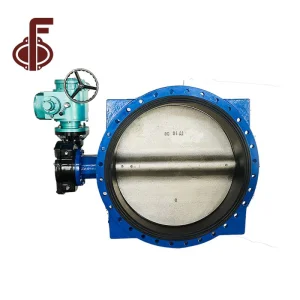
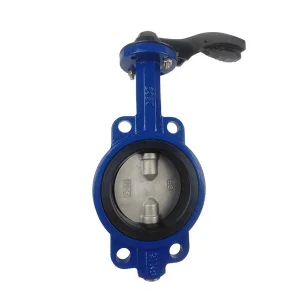
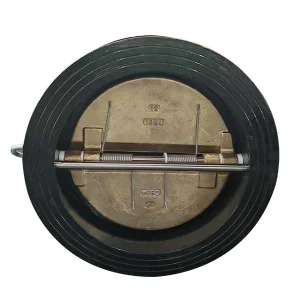
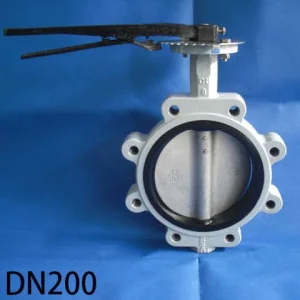
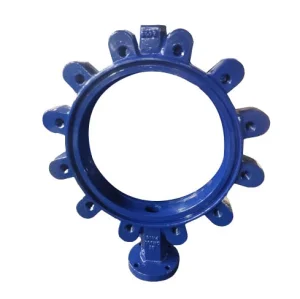
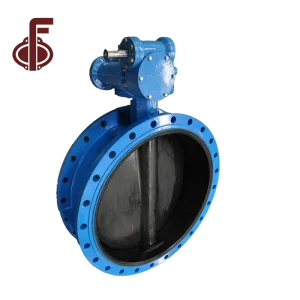
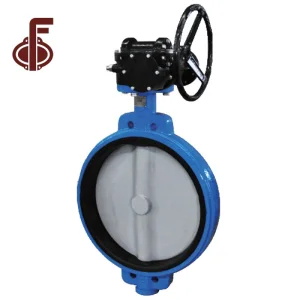
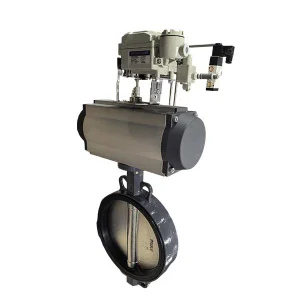
Full pipeline compatibility: Complement your strainer installations with high-performance butterfly valves, non-slam check valves, and resilient gate valves engineered in the same production facility.
Connect directly with our engineering sales team for rapid BOM takeoffs, custom CAD/BIM dimensional drawings, SABER compliance validation, and factory-direct competitive quotation within 24 hours.
