
Precision Hardware Portfolio
Primary Throttling & Isolation Assemblies
Standardized and custom engineered butterfly valves, check mechanisms, and component castings manufactured under strict ISO 9001 quality audits.
Global Industrial Landscape
Macro Procurement Dynamics in Flow Control Automation
Modern industrial plants require increasingly rigorous fluid management solutions. The transition toward smart piping networks, zero-fugitive-emission protocols, and ultra-durable pipeline assets has transformed the global butterfly valve sourcing market. Engineering procurement managers balance structural integrity, actuation compatibility, chemical resistance, and total cost of ownership (TCO).
15+
Valve Core Categories
8
Global Standards Covered
100%
Hydrostatic Tested
24h
Engineering Response
Total Cost of Ownership (TCO)
Industrial operators increasingly prioritize streamline valve design that reduces hydrodynamic resistance and torque overhead. This lowers operational actuation power requirements while mitigating cavitation damage over high-duty cycles.
- Low initial investment compared to ball/gate valves
- Compact envelope minimizing pipeline structural reinforcement
- Extended MTBF with replaceable resilient seat liners
Fugitive Emissions Control
Stringent environmental regulations, including ISO 15848-1 and TA-Luft compliance, mandate superior stem seal designs. Dual O-ring stem packings, live-loaded PTFE seals, and blow-out proof stems eliminate atmospheric fugitive leakage in chemical lines.
- Precision machined stem engagement zones
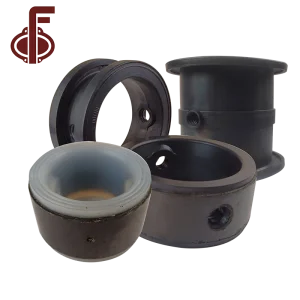
- High-integrity vulcanized and bonded seat liners
- Elimination of micro-leak pathways around pin shafts
Automation Ready Architectures
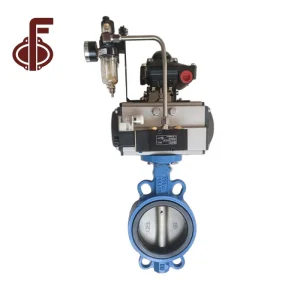
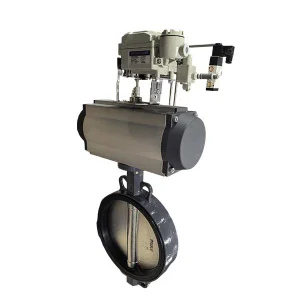
Modern SCADA systems dictate seamless mechanical-electrical coupling. Direct-mount ISO 5211 top flanges enable immediate field or factory integration with pneumatic cylinder racks, smart electro-pneumatic positioners, and modulating electric gear motors.
- Direct ISO 5211 interface without bracket play
- Predictable linear throttling curves (30° to 70° travel)
- Modbus, HART, and 4-20mA smart signal feedback compatibility
Engineering Metallurgy & Polymerics
Comprehensive Media Suitability & Valve Specification Matrix
Selecting the appropriate butterfly valve configuration requires precision alignment between fluid chemistry, dynamic line velocity, and thermal cycling parameters. Our factory in Tianjin engineers wafer, lug, and double-flanged bodies matched with application-specific trim and elastomer chemistry.
| Seat Material | Typical Working Media | Temperature Envelope | Corrosion & Wear Resistance | Primary Industrial Use Case |
|---|---|---|---|---|
| EPDM (Ethylene Propylene) | Potable water, wastewater, chilled/hot loop HVAC, low-concentration alkalis | -20°C to +120°C | Resistant to ozone, ketones, and weather aging. Avoid hydrocarbons. | Municipal water supply, HVAC district cooling, fire suppression systems |
| NBR (Nitrile Rubber) | Petroleum fuels, lubricating oils, hydraulic fluid, LPG, compressed air | -10°C to +82°C | Superior aliphatic hydrocarbon and abrasion resistance. Avoid strong oxidizers. | Fuel depots, oil & gas auxiliary skids, marine bilge and ballast piping |
| PTFE / PFA (Fluoropolymer) | Aggressive acids, chlorinated reagents, solvents, bio-pharmaceutical fluids | -20°C to +180°C | Near-universal chemical inertness; mirror smooth non-wetting surface. | Chemical manufacturing, semiconductor slurry, food & beverage processing |
| FKM / Viton (Fluoroelastomer) | High-temperature mineral acids, aromatic hydrocarbons, fuel oils | -20°C to +200°C | Immunity to severe atmospheric degradation, oils, and thermal softening. | Petrochemical refining, exhaust gas scrubbing, power generation |
| Metal-to-Metal / Stellite | Superheated steam, thermal oil, abrasive slurries, high-pressure gases | -50°C to +425°C+ | Hardfaced Stellite alloy seating handles high velocity and abrasive particles. | Triple eccentric isolation, heavy steam headers, power plant bypass lines |
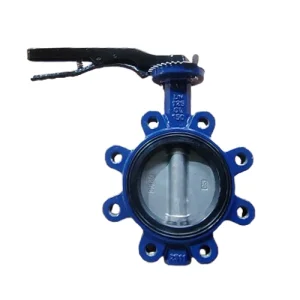
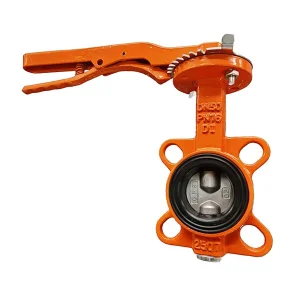
Concentric (Resilient Seated)
The shaft passes through the center line of the disc and seat bore. Perfect for low to medium pressure water, HVAC, and generic chemical processing requiring bi-directional zero-leak shutoff (Bubble Tight Leakage Class VI).
- Economical, low-weight cast or ductile iron construction
- Dovetail or bonded rubber seats resisting dynamic displacement
- Sizes from DN40 to DN1200, pressure ratings up to PN16 / Class 150
Double Eccentric (High Performance)
The shaft is offset from the valve center line and seat seal plane. The disc cams off the seat within degrees of rotation, drastically eliminating seat friction, prolonging elastomer/PTFE life, and reducing operational break-away torque.
- WCB, CF8, or CF8M precision cast bodies
- Ideal for high-cycle industrial automation & modulating services
- Pressure capabilities extending up to PN25 / Class 300
Triple Eccentric (Metal-Seated)
Adds a third offset consisting of an angled conical sealing profile. Achieves completely friction-free travel until final mechanical wedging. Fire-safe, zero cavity accumulation, and impervious to thermal binding.
- Laminated stainless steel & graphite or solid Stellite seats
- Bi-directional zero-leakage shutoff per API 598 standard
- Critical applications in refinery flare lines and high-pressure steam
Sector Solutions
Engineering Turnkey Flow Control Across Critical Verticals
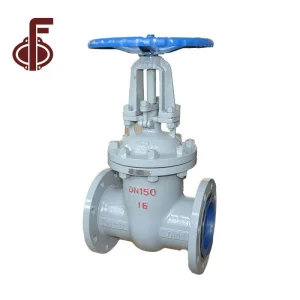
As a premier China butterfly valve exporter, Tianjin Zhongfa Valve Co., Ltd. (ZFA Valve) configures complete multi-valve packages integrating check valves, strainers, and gate valves to satisfy specialized global industry specifications.
Municipal & Desalination
Large bore butterfly valves equipped with internal epoxy coatings (WRAS compliant) and nickel-aluminum bronze or duplex stainless steel discs resisting saline pitting and cavitation.
Chemical & Petrochemical
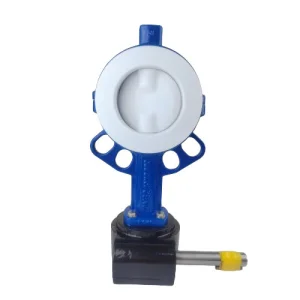
PTFE full-lined split body and lugged valves designed to withstand aggressive acid pickling, solvent transfer lines, and hazardous vapor recovery without casing degradation.
HVAC District Energy
Modulating electric wafer butterfly valves engineered for variable water volume (VWV) chillers and cooling towers, ensuring micro-level dynamic flow balancing and minimal thermal loss.
Fire Protection Networks
UL/FM compliant supervised butterfly valves fitted with tamper switches and visual indicator flags, providing high flow coefficients (Cv) and fail-safe reliable standby operation.
R&D Roadmap
Technology Roadmap: The Future of Smart Throttling Systems
Flow control valves are evolving from static mechanical pipeline fixtures into intelligent, self-diagnosing cyber-physical assets. Our Tianjin engineering department is actively integrating advanced telemetry, additive component manufacturing, and smart flow models.
Phase 1: CFD Optimization
Full-spectrum computational fluid dynamics modeling to sculpt disc hydrodynamics, reducing turbulence by 18% and substantially increasing Cv ratings across all nominal diameters.
Phase 2: IoT Sensor Integration
Embedding wireless piezoelectric vibration sensors, ultrasonic leakage detectors, and temperature probes directly into the packing gland box for real-time SCADA telemetry.
Phase 3: Predictive Lifecycle AI
Developing digital twin algorithms comparing actuator torque curves against historical degradation patterns, enabling maintenance teams to replace seats prior to catastrophic downtime.
Phase 4: Advanced Material Hybrids
Incorporating graphene-reinforced elastomer matrices and titanium carbonitride PVD coatings on discs to extend erosive slurry lifespan by 300% in extreme mining operations.
Factory Audit & Reliability Assurance
Precision OEM Production & Stringent International Compliance
Tianjin Zhongfa Valve Co., Ltd. (ZFA) operates an integrated manufacturing ecosystem from ductile iron and stainless steel metallurgy to computer numerical control (CNC) finish machining, automated electrostatic powder coating, and computerized hydrostatic leakage verification.
Hydrostatic & Pneumatic Testing
Every valve undergoes shell strength pressure testing at 1.5x nominal rating and seat tightness testing at 1.1x nominal pressure in strict accordance with EN 12266-1 and API 598. Zero allowable leakage on resilient seat variants.
Metallurgical Traceability (3.1 MTR)
Complete material heat verification via optical emission spectrometers. Chemical composition and mechanical tensile properties are certified to ASTM A536, ASTM A351 CF8/CF8M, and ASTM A216 WCB with EN 10204 3.1 certification.
OEM Branding & Custom Packaging
Tailored engineering support for overseas valve manufacturers and EPC brands. Includes custom mold casting of corporate logos, specialized epoxy coating RAL codes, laser-etched stainless steel tags, and fumigated export crating.
Specialized Product Matrix
Actuated, Lined & Auxiliary Flow Regulators
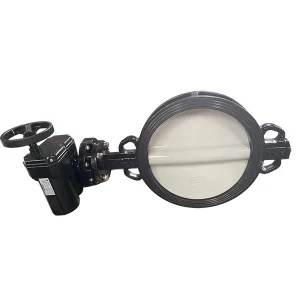
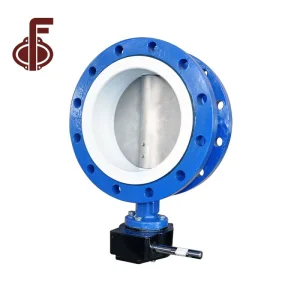
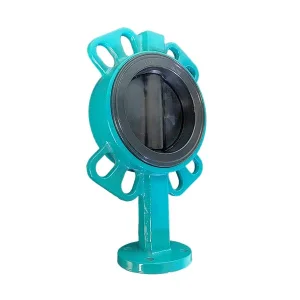
High-specification wafer, lug, and flanged configurations designed for corrosive fluids, automated flow positioning, and high-pressure steam distribution.
Technical & Commercial FAQ
Frequently Asked Questions by Valve Engineers & Procurement Specialists
Direct answers to technical queries regarding butterfly valve flow characteristics, connection geometry, actuation sizing, and export compliance protocols.
What makes butterfly valves superior for dynamic flow control compared to gate and globe valves?
Butterfly valves offer exceptional flow regulation within 30° to 70° disc opening angles with an inherent equal-percentage or linear flow profile. Compared to bulky gate valves (which are strictly isolation assets prone to seat chatter when partially opened) and heavy globe valves, butterfly valves present a lightweight profile, lower structural foot-print, fast quarter-turn actuation, and substantially reduced procurement and installation costs.
How do I prevent cavitation and aerodynamic noise in throttling butterfly valves?
Cavitation occurs when localized static line pressure drops below fluid vapor pressure due to flow constriction past the disc edge, then collapses downstream. To prevent cavitation, engineers calculate the valve cavitation index (σ), select perforated trim discs or anti-cavitation baffle plates, stage pressure drops across multiple valves, or transition to double/triple eccentric architectures that optimize pressure recovery profiles.
What is the technical difference between wafer, lug, and double-flanged end connections?
Wafer types fit compactly between pipe flanges using continuous through-studs; they are light and economical but cannot provide dead-end isolation. Lug types feature threaded bolt lugs on the perimeter, allowing independent pipe bolting for downstream pipeline dismantling under working pressure. Double-flanged valves feature structural flange faces at both valve openings, providing superior structural rigidity for large-diameter lines (DN300 to DN2000+) and high seismic or thermal pipe stress zones.
How does Tianjin Zhongfa Valve guarantee valve quality and international standard compliance?
Tianjin Zhongfa Valve Co., Ltd. (ZFA) operates an ISO 9001 certified quality system and holds CE certification. Our products comply with ASME B16.34, API 609, DIN EN 593, BS 5155, JIS B2032, and GOST standards. Raw castings receive chemical and physical spectrometer audits, and 100% of finished assemblies undergo shell hydrostatic and bi-directional seat testing before packing. Comprehensive EN 10204 3.1 inspection certificates are provided with every shipment.
What factors determine the required actuator sizing safety factor?
When pairing pneumatic, electric, or hydraulic actuators, dynamic operating torque is governed by differential line pressure (ΔP), fluid viscosity, media lubricity, and seat elastomer coefficient of friction. For clean lubricating fluids (e.g., light oils), a safety margin of 20% to 25% over break-away torque is standard. For dry gas, slurry, powder lines, or infrequently cycled safety shutoff valves, engineering standards recommend applying a 30% to 50% safety torque margin.
