
High-Performance Non-Return & Flow Control Assemblies
Engineered to international standards including ASTM, ANSI, BS, DIN, ISO, and JIS for severe industrial, municipal, and process duties.
Engineering Paradigms: The Evolution of Industrial Check Valves
From passive backflow barriers to responsive, transient-damping flow protection devices across critical continuous infrastructure.
Dynamic Water Hammer Mitigation
Modern fluid transport installations require check valves that react prior to flow reversal. Utilizing the Joukowsky equation ΔP = ρ · c · Δv, our dual-plate and axial nozzle geometries ensure disc closure at zero velocity, extinguishing cavitation pockets and destructive acoustic pressure spikes in high-lift pumping systems.
Advanced Metallurgy & Tribology
Harsh operating conditions demand metallurgy that exceeds base iron casting. We integrate ductile iron GGG40/50, ASTM A216 WCB carbon steel, duplex stainless steel UNS S31803 / S32750, and nickel-aluminum bronze. Seating surfaces feature robotic Stellite 6 weld overlays providing hardness ratings exceeding HRC 42 for non-galling endurance.
Decarbonization & Low-LCC Architecture
Continuous flow systems consume gigawatt-hours annually overcoming internal valve friction. By optimizing flow discharge coefficients (Cv / Kv) through CFD-refined disc contours, our check valves minimize parasitic headloss, lowering the Total Cost of Ownership (TCO) across 30+ year design life cycles.
Comprehensive Non-Return Valve Architecture Matrix
A rigorous engineering comparison between primary non-return mechanisms for global procurement specialists and piping engineers.
Selecting an industrial non-return valve requires balancing crack opening pressure, disc inertia, sealing elasticity, and mechanical damping against pipeline fluid parameters. As an elite China check valve manufacturer and exporter, our Tianjin and Zhejiang production facilities build and verify four core architectural categories compliant with API 594, ASME B16.34, BS EN 12334, and ISO 5208 specifications:
| Valve Type | Design Standard | Size Range | Pressure Class | Primary Seating Mechanism | Slam Risk Index |
|---|---|---|---|---|---|
| Dual-Plate Wafer Check | API 594 / EN 12334 | DN50 – DN1200 (2"–48") | PN10 – PN40 / CL150 – CL300 | Resilient (EPDM/NBR/FKM) or Stellite Metal-to-Metal | Very Low (Spring-Assisted) |
| Axial Flow / Nozzle Non-Slam | API 6D / ASME B16.34 | DN50 – DN1600 (2"–64") | PN16 – PN100 / CL150 – CL600 | Precision Lapped Metal-to-Metal / PEEK | Negligible (<0.10s Closure) |
| Resilient Swing Check | BS EN 12334 / AWWA C508 | DN50 – DN800 (2"–32") | PN10 – PN25 / CL125 – CL150 | Fully Encapsulated Vulcanized EPDM Disc | Moderate (Depends on Flow Deceleration) |
| Tilting Disc Check (Damped) | ASME B16.34 / BS 1868 | DN150 – DN2000 (6"–80") | PN16 – PN64 / CL150 – CL600 | Eccentric Pivot Hardfaced Monel / Stainless | Low (Hydraulic Dashpot Controlled) |
| Ball Check Valve (Wastewater) | EN 12050-4 | DN32 – DN600 (1.25"–24") | PN10 – PN16 / CL125 – CL150 | NBR / Polyurethane Coated Metal Sphere | Very Low (Self-Cleaning Vortex Flow) |
Dual-Plate Wafer Dynamics (API 594)
Dual-plate wafer check valves utilize two semicircular D-shaped plates hinged along a central stop pin and hinge shaft. Torsion springs fabricated from Inconel X-750 or 17-7PH stainless steel initiate rapid closure prior to reverse velocity vectors establishing within the pipeline. This compact wafer configuration eliminates conventional counterweights, reducing line-mounted valve weight by up to 80% compared to bulky flanged swing valves.
- Zero pipe line flange overhang; easily fits between ASME B16.5 and EN 1092-1 mating flanges.
- Elastic spring pre-tensioning minimizes mechanical flutter at boundary flow rates.
- Available with retainerless body design, eliminating body penetration leak paths.
Nozzle Axial Flow Critical Response
Engineered specifically for multi-pump transmission manifolds, compressor stations, and high-head desalination booster lines. The venturi-shaped annular passage maintains uninterrupted, boundary-layer stream contours. As pump motors trip, the single disc translates along a central guide rail against a heavy-duty compression spring, closing across a brief stroke distance in milliseconds with zero slamming shock.
- Dynamic response verified through computational pressure wave velocity matching.
- Frictionless guided stem bushings in aluminum-bronze or PTFE-composite.
- Pressure recovery zone yields dynamic head recovery exceeding 90%.
China Factory 4.0: Resilient Valve Production & Precision Logistics
Harnessing automated foundry engineering, 5-axis CNC machining, and automated quality testing to deliver uncompromising repeatability.
Automated Lost-Foam & Resin Sand Casting
Sub-standard valve bodies often fail due to subsurface blowholes, gas inclusion, and wall thinning. Our modernized foundry partners execute lost-foam and continuous furan resin sand casting controlled by optical pyrometers and thermal analysis computers. Castings maintain uniform nodularity (>85% per ISO 1083 for ductile iron) and defect-free density.
Simultaneous Multi-Axis Machining
Hinge pin bore alignment and disc seat concentricity are critical to prevent uneven seat wear. Machining is conducted in standardized CNC machining cells within a single clamp setting. Pin-to-body perpendicularity tolerances are maintained within ±0.012 mm, assuring friction-free disc swing and total seat sealing alignment.
Digital QA & 100% Automated Pressure Testing
Every single valve is hydrostatically and pneumatically tested per API 598 and EN 12266-1. Automated test benches log shell integrity at 1.5× nominal rating and seat closure at 1.1× working pressure. Sensor data logs are archived in cloud ERP systems, linked to heat numbers stamped permanently on valve bodies.
Enterprise Sourcing: Navigating TCO, Lead Time & Compliance
A vendor qualification guide for international EPCs, water utilities, and petrochemical procurement directors.
De-risking the Global Valve Supply Chain
Procuring industrial valves from China has evolved from transactional, price-driven brokering to integrated OEM/ODM manufacturing partnerships. International procurement engineers must manage risk across three primary axes: metallurgical veracity, design documentation conformance, and schedule adherence.
Tianjin Zhongfa Valve Co., Ltd. (ZFA) addresses these challenges directly. We provide complete material traceability per EN 10204 Type 3.1 mill test certificates detailing chemical compositions via optical emission spectrometry and mechanical tensile/impact testing.
- Third-Party Inspection Coordination: Seamless on-site FAT with SGS, TÜV Rheinland, Bureau Veritas, and DNV.
- International Design Conformance: Dual-drilled multi-standard flanges matching DIN PN10/16, ASME Class 150, and JIS 10K/16K.
- Protective Coating Technology: Fusion-bonded epoxy (FBE) electrostatic coatings exceeding 250μm thickness, WRAS and NSF-61 certified for potable water services.
Procurement Checklist for Industrial Check Valves
Verify the following parameters before submitting your RFQ / Valve Data Sheet:
- Installation Orientation: Specify horizontal, vertical-upward, or inclined piping runs to select appropriate spring torque ratings.
- Media Chemistry & Solids: Provide chloride concentration, dissolved gases, suspended solids percentage, and operating temperature.
- Minimum Flow Velocity: Confirm normal fluid velocity exceeds the minimum required velocity (Vmin) to hold the disc fully open without chattering.
- Surge Pressure Amplitude: Model system pump trip scenarios to identify potential slam severity and select appropriate non-slam nozzle designs.
- Documentation & Markings: Ensure cast markings reflect heat batch, body material, nominal size, pressure rating, and flow direction arrow per MSS SP-25.
Engineered for Demanding Industrial Environments
Field-proven performance across major global infrastructure installations, extreme chemical environments, and high-pressure transmission networks.
Seawater Desalination (SWRO)
Reverse osmosis plants operate in aggressive brine conditions with chloride concentrations exceeding 35,000 ppm. Our check valves for SWRO applications feature Super Duplex 2507 (UNS S32750) or 254 SMO discs with Pitting Resistance Equivalent Number (PREN ≥ 42), eliminating crevice corrosion at hinge points.
HVAC & District Energy Cooling
Chilled water circulation networks require low headloss dual-plate wafer check valves to prevent backflow through standby parallel pump banks. Micro-machined EPDM rubber seat rings provide zero-leakage closure (ISO 5208 Rate A) even at nominal differential pressures below 0.2 bar.
Mining Tailings & Slurry Pumping
Highly abrasive iron ore and copper tailings rapidly erode conventional valve seating. We engineer ball check valves and swing valves lined with 5mm+ sacrificial polyurethane or natural rubber, equipped with hard chrome alloy internal components to endure heavy scouring.
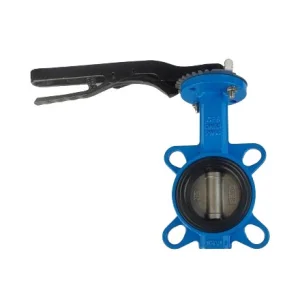
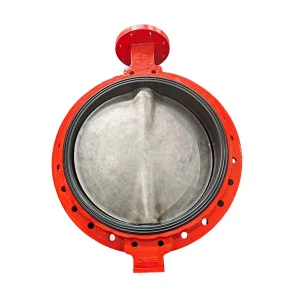
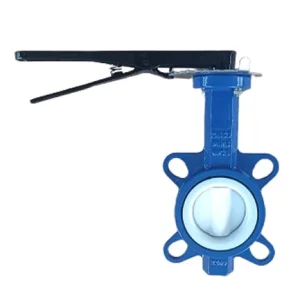
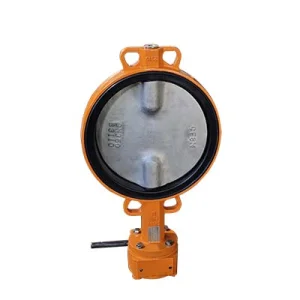
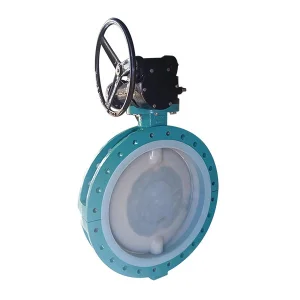
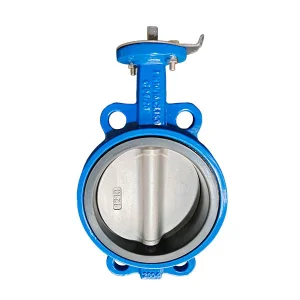
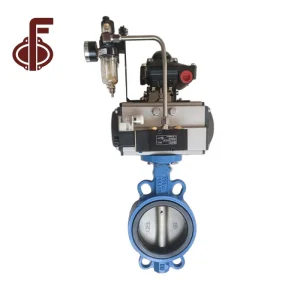
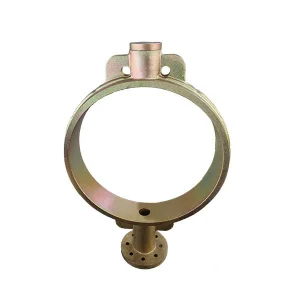
Specialized Isolation, Control & Check Valve Systems
Comprehensive valve configurations supporting global power generation, municipal treatment, and pipeline engineering projects.
Frequently Asked Questions: Industrial Check Valve Sourcing
Expert engineering insights covering fluid transient prevention, metallurgical standards, test protocols, and OEM procurement.
How do dual-plate check valves prevent water hammer compared to standard swing check valves?
Standard swing check valves rely on gravity and reverse fluid velocity to push the heavy disc back into the seat. In rapid pump trip situations, the reverse flow accelerates before the disc swings shut, resulting in severe dynamic impact (slamming) and massive acoustic pressure waves. Dual-plate check valves use internal torsion springs that apply continuous closing torque. As forward fluid velocity decelerates toward zero, the spring begins closing the dual plates beforehand, achieving closure precisely at or before the zero-velocity point, preventing reverse flow slam.
What is the difference between a wafer check valve and a retainerless check valve?
Standard wafer check valves feature exterior holes drilled through the body to insert the hinge pin and stop pin, which are then sealed using threaded plugs. In high-pressure, hazardous, or fugitive emission services, these plugs represent potential leak paths. A retainerless check valve design secures the hinge and stop pins internally within the valve body cavity using precision-machined blind pockets or internal inserts. This results in a completely solid body without external penetrations, meeting stringent API 594 and low-fugitive-emission criteria.
Can check valves be mounted in vertical pipelines with downward flow?
Standard gravity-assisted check valves (swing, tilting disc, ball check) cannot be installed in vertical downward piping because gravity prevents the disc from sealing properly against reverse flow. Spring-assisted dual-plate check valves or axial nozzle non-slam check valves can be used in vertical downward piping only if specifically engineered with heavy-duty springs whose closing force overcomes the gravitational weight of the disc plates and any static column head. Always specify flow direction and mounting orientation during RFQ submission.
What are the minimum fluid velocity guidelines to prevent check valve chattering?
Check valve chattering occurs when line fluid velocity is insufficient to hold the disc fully open against its seating springs or gravity. The disc repeatedly oscillates between open and partially closed positions, leading to rapid wear on hinge pins and spring fatigue. For water systems, dual-plate check valves typically require a minimum continuous velocity of 1.5 to 2.5 m/s (5 to 8 ft/s) to achieve full disc stabilization. Piping designers should consult our Cv flow curves and minimum velocity calculations prior to selecting line size.
How does ZFA Valve guarantee zero leakage (ISO 5208 Rate A) on check valve seats?
For resilient seated check valves, zero leakage (ISO 5208 Rate A / API 598 zero visible bubbles) is achieved by precision vulcanizing high-grade synthetic elastomers (EPDM, NBR, or FKM) onto a dovetail body groove or disc perimeter, ensuring uniform sealing under both low and high backpressure. For metal-seated check valves handling high temperatures, we execute CNC robotic Stellite weld deposition on both body and disc surfaces, followed by micro-lapping down to Ra 0.2μm surface roughness, reaching API 598 metal-to-metal leakage limits.
What documentation and test certificates accompany export valve shipments?
Every export shipment includes a comprehensive Project Quality Dossier consisting of: EN 10204 Type 3.1 Inspection Certificates for chemical and mechanical properties, hydrostatic and pneumatic test charts per API 598 / EN 12266-1, wall thickness dimensional inspection reports, coating thickness and holiday spark test reports, and Certificate of Conformance (CoC). When required, we provide full Non-Destructive Testing (NDT) documentation including Radiographic (RT), Ultrasonic (UT), and Magnetic Particle (MPI) testing records.
Accelerate Your Valve Procurement with Direct Engineering Support
Connect directly with Tianjin Zhongfa Valve's senior application engineers. Receive detailed 2D/3D CAD drawings, Cv sizing data, material compatibility matrices, and factory-direct commercial tenders within 24 hours.
