
High-Integrity Valve Lines Engineered for Critical Infrastructure
Direct from China's premier manufacturing base in Tianjin—manufactured under strict ISO 9001 and CE directives, ensuring seamless interchangeability and standard compliance worldwide.
Engineering Anatomy of the China Fully Welded Ball Valve
Eliminating fugitive atmospheric emissions and flanged joint creep in critical underground energy conduits through monolithic forging and robotic submerged arc welding.
Monolithic Forged Cylindrical Body
Unlike bolted two-piece or three-piece valves that rely on elastomeric bonnet gaskets vulnerable to thermal cycling, soil stress, and ground water permeation, our all-welded valves utilize ASTM A105, A350 LF2, or ASTM A694 forged steel bodies. Seamless circumferential welding eliminates any potential external leak path, providing maximum bending moment resistance in direct-buried pipeline installations.
- High yield strength for seismic and soil settling loads
- Eliminates underground valve vaults and inspection pits
- Compact footprint drastically reduces civil excavation costs
Advanced Sealing Dynamics (DBB & DIB)
Equipped with floating spring-energized seats with pre-compressed Belleville washers or helical springs, ensuring tight bi-directional shutoff even at near-zero delta pressure. Configurable in Double Block and Bleed (DBB) or Double Isolation and Bleed (DIB-1 / DIB-2) specifications. Primary metal-to-metal contact protects downstream soft secondary seals (PTFE, Devlon, or PEEK) against particulate scouring.
- Automatic cavity relief venting overpressure to pipeline
- Emergency secondary sealant injection ports for seats and stem
- Low breakaway torque with PTFE-impregnated steel bushings
Robotic Narrow-Gap SAW & Ultrasonic Testing
Valve girth seams are completed using multi-pass robotic Submerged Arc Welding (SAW) and automated Gas Tungsten Arc Welding (GTAW). Continuous heat input monitoring ensures heat-affected zone (HAZ) grain refinement, preserving Charpy V-Notch impact properties down to -46°C (-50°F). Every finished weld undergoes Phased Array Ultrasonic Testing (PAUT) and Magnetic Particle Inspection (MPI).
- 100% volumetric and surface non-destructive examination
- Qualified per ASME Section IX and EN ISO 15614-1 standards
- Zero burn-through guarantee during pipe end welding
Why Tier-1 EPC Contractors Source Welded Ball Valves from China
Capitalizing on industrial clustering in Tianjin, fully integrated raw material forging plants, precision 5-axis CNC capacity, and automated hydro-testing cells for unmatched lead time and Total Cost of Ownership (TCO) efficiency.
Vertical Forging & Sourcing Control
Our Tianjin industrial base operates in close synergy with regional heavy forging mills. Direct allocation of vacuum-degassed steel billets (ASTM A350 LF2 Cl.1, A105, F316L, 16Mo3) guarantees metallurgical traceability from melt heat to finished forged shell, reducing raw material procurement cycles by 35% compared to Western European mills.
Compressed Project Lead Times
Equipped with dual-spindle horizontal boring machines and specialized robotic spherical grinding stations capable of finishing ball spheres up to DN1400 (56") to mirror tolerances (Ra < 0.2 µm). Standard lead times for large-diameter project batches are routinely kept within 8–12 weeks, with expedited emergency runs available for pipeline shut-down turnarounds.
30%–45% CAPEX Optimization
By leveraging high-throughput automated welding cells, automated blasting and 3-layer PE/PUR external coating applications under one roof, our China manufacturing facility cuts pipeline procurement budgets by 30% to 45% without compromising ASME B16.34, API 6D, or EN 12266-1 pressure envelope requirements.
Port Proximity & Global Logistics
Situated within 45 km of Tianjin Port (Xingang)—the largest maritime gateway in Northern China. Heavy-lift sea cargo, break-bulk vessels, and overland rail freight to Central Asia, Eastern Europe, and Russia (Trans-Eurasia Logistics) depart daily, equipped with custom shock-absorbing timber cradles and nitrogen-purged hermetic packing.
Full Weld Ball Valve vs. Alternative Pipeline Isolation Technologies
A rigorous engineering benchmark assessing mechanical risk profiles, external leakage vulnerabilities, maintenance frequency, and civil infrastructure costs for energy pipelines.
| Evaluation Parameter | China Full Weld Ball Valve | 3-Piece Bolted Trunnion Ball | Top-Entry Cast Ball Valve | Triple Offset Butterfly Valve | Wedge Gate Valve |
|---|---|---|---|---|---|
| Body Joint Construction | 100% Monolithic Welded | Bolted Body-to-Flange Joint | Bolted Top Bonnet Cover | Wafer / Lug / Double Flanged | Bolted Bonnet / Pressure Seal |
| External Leakage Risk | Zero Leak Paths (Hermetic) | High (Gasket Creep Under Soil) | Moderate (Bonnet Gasket Stress) | Moderate (Flange Gaskets) | High (Packing Box & Bonnet) |
| Buried Service Viability | Direct Buried (No Manhole) | Requires Concrete Vault | Requires Reinforced Chamber | Restricted to Accessible Pits | Requires Deep Access Vault |
| Soil Bending Resistance | Equal to Adjacent Pipe | Subject to Bolt Shear & Yaw | Rigid Cast (Susceptible to Cracks) | Vulnerable to Flange Misalignment | Poor Resistance to Soil Shearing |
| Maintenance Lifecycle | 30+ Years Maintenance-Free | Gasket Replacement 3–5 Yrs | Periodic Top-Entry Packing Service | Seat Wear / Disc Pin Corrosion | Frequent Stem Lubrication/Packing |
| Cavity Self-Relief | Standard Automatic Relief | Standard Cavity Relief | Standard Cavity Relief | Not Applicable (Non-Cavity) | Vulnerable to Thermal Locking |
| Pigging Capability | Full Bore (PIG / Scraper OK) | Full Bore Available | Full Bore Available | Obstructed Flow (Disc in Path) | Full Bore (Cavity Debris Trap) |
| Relative 30-Year TCO | Lowest (Zero Pit / Civil Cost) | High (Inspection Pit Maintenance) | Very High Initial CAPEX | Moderate (Frequent Re-sealing) | Extremely High OPEX & Pumping Loss |
Stringent International Standards and On-Site Engineering Support
Every fully welded ball valve manufactured in our facility is cross-certified for international jurisdiction requirements, ensuring flawless third-party audit acceptance across the Americas, Europe, Central Asia, and the Middle East.
API 6D & ISO 14313 Monogram Ready
Full design compliance with American Petroleum Institute (API) Specification 6D and ISO 14313 for pipeline transportation systems. Shell wall thickness meets or exceeds ASME B16.34 requirements, with bore dimensions adhering to ASME B16.25 butt-weld ends customized to the mating pipe's specific Schedule (SCH 40, 80, 120, XXS) and Grade (API 5L X52, X60, X65, X70).
European District Energy: EN 488 & EN 13941
Specifically engineered for pre-insulated bonded district heating networks conforming to European Standard EN 488 (District heating pipes - Preinsulated bonded pipe assembly for directly buried hot water networks). The design incorporates polyurethane rigid foam insulation jacket interfaces, high-density polyethylene (HDPE) outer casing casings, and embedded electrical leak-detection surveillance wires.
Severe Sour Gas & Fugitive Emission Control
For H2S-bearing sour oil and gas transmission, all wetted components comply with NACE MR0175 / ISO 15156 metallurgy (hardness < 22 HRC, heat treatment per normative annexes). Stem packings are certified to ISO 15848-1 Class AH / BH and Shell MESC SPE 77/312, featuring chevron PTFE or live-loaded graphite rings guaranteed down to < 10 ppmv helium leakage.
Weld Procedure Specs (WPS/PQR)
Comprehensive welding books validated by DNV / Lloyd's Register per ASME Sec IX and EN ISO 15614-1.
EN 10204 3.1 & 3.2 Traceability
Original Mill Test Certificates (MTC) detailing chemical spectroscopy, yield strength, and impact tests at -46°C.
Third-Party FAT Testing
Dedicated inspection bays for SGS, TÜV Rheinland, Bureau Veritas, and Intertek witnessing of API 598 hydrostatic testing.
High-Pressure Helium Gas Test
Optional pneumatic high-pressure gas testing per API 6D Annex B to detect sub-microscopic crystal lattice voids.
Global Field Engineering
Bilingual commissioning engineers for on-site weld alignment supervision, purge supervision, and actuator calibration.
Engineered for Extreme Operational Environments Across the Globe
From deep-buried sub-zero permafrost installations to high-density municipal thermal networks, our valves operate unfailingly under punishing cyclical loads.
Municipal District Heating & Cooling (HVAC)
Integrated into urban superheated water transmission lines up to 200°C (392°F). The direct-buried configuration eliminates urban surface disruption, roadway manholes, and annual inspection pumping costs, while PTFE+Carbon composite seats resist continuous thermal expansion and rust scaling.
Cross-Country Natural Gas Trunklines
Installed at sectionalizing block valve stations (BVS) and pipeline pig-launching facilities. Full-bore design allows smooth transit of intelligent inline inspection (ILI) tools and scrapers. Factory-extended stem stems ensure actuator controls remain easily operable 2 to 5 meters above ground grade.
Crude Oil Distribution & Refinery Terminals
Class 150 through Class 1500 fully welded trunnion-mounted valves handle dense crude, kerosene, and gas condensate. Equipped with anti-static grounding springs per API 6D and firesafe certification to API 607 / ISO 10497 to withstand external infernos of 1000°C without loss of containment.
Hydrogen Infrastructure & Blended Gas
Pioneering high-integrity hydrogen transport through specialized low-porosity forging, micro-alloyed carbon-manganese steels resisting hydrogen embrittlement (HE), and customized polymeric stem dynamic seals preventing helium/hydrogen permeation through molecular boundaries.
Emerging Trends Reshaping Welded Valve Engineering & Procurement
From smart pipeline diagnostics to decarbonization initiatives, procurement guidelines are adapting to higher safety margins and automated lifecycle analytics.
Smart IoT Telemetry & Partial Stroke Testing (PST)
Modern EPC procurement mandates integration with pipeline SCADA systems. We supply fully welded valves pre-fitted with electro-hydraulic or gas-over-oil actuators capable of automated Partial Stroke Testing (PST), verifying safety-instrumented system (SIS) responsiveness to SIL 3 levels without interrupting ongoing pipeline transmission flow.
Anti-Corrosive High-Build Polyurethane & 3LPE
Corrosion mitigation is critical for buried valves in wet, acidic, or saline coastal soils. Our automated coating lines apply external high-build Solvent-Free Polyurethane (PUR per EN 10290) or 3-Layer Polyethylene (3LPE per DIN 30670) tested to 25 kV high-voltage spark holiday detectors, delivering complete cathodic disbondment resistance.
Standardized RFQ Checklist for Global Buyers
To eliminate design revisions and expedite manufacturing clearance, procurement teams should specify: nominal bore and design code (API 6D vs. EN 488), design pressure/class, media chemical composition (including H2S/CO2 ppm), burial depth (centerline to ground level), mating pipe OD & WT, and required valve NDE level.
Frequently Asked Questions by Valve Engineers & Supply Chain Directors
Comprehensive technical answers directly from our chief engineering team regarding manufacturing specifications, materials, field maintenance, and project compliance.
What specific advantages does a fully welded ball valve have over a 3-piece bolted valve for underground burial?
In buried pipeline installations, bolted valve bodies represent a catastrophic risk vector. Soil movement, ground settling, seismic vibrations, and thermal expansion impose tremendous external bending moments on the valve body. In bolted valves, this localized stress causes gasket micro-creep, resulting in fugitive emissions or severe media leakage into the soil, requiring expensive concrete vaults and perpetual monitoring. A fully welded ball valve features a monolithic forged steel body with zero external flange connections or bonnet joints. The valve body possesses mechanical tensile and bending strength equal to or exceeding the adjacent pipeline itself, allowing direct burial without maintenance vaults and delivering a guaranteed 30+ year maintenance-free operating lifecycle.
How do you ensure the internal soft seals are not damaged during circumferential body welding?
Thermal control during circumferential welding is one of our primary core competencies. We employ automated narrow-gap robotic Gas Tungsten Arc Welding (GTAW) for root passes followed by automated Submerged Arc Welding (SAW) with closed-loop computerized heat input regulation. During the welding process, continuous internal water-cooling heat sinks are deployed within the bore, and the seat ring pockets are shielded by ceramic thermal barriers. Infrared pyrometers continuously log localized temperatures adjacent to the elastomeric/polymeric seat rings, ensuring temperatures never exceed 80°C (176°F)—well below the 200°C+ thermal deflection threshold of our PTFE, Devlon, or PEEK seat inserts.
What standards govern the stem extension design for buried valves?
Stem extensions are custom-engineered per project elevation drawings in compliance with API 6D, EN 488, and ASME B31.4 / B31.8. The extension column consists of an outer structural steel casing matching the valve's anti-corrosion coating system, an inner torque transmission shaft supported by self-lubricating PTFE-lined bronze guide bushings, and stainless steel secondary sealant injection lines running from the valve body seats and stem packing up to an above-ground service junction. Additionally, emergency cavity vent and drain piping are extended to the surface terminal, allowing full DBB verification and pipeline bleeding without excavating the valve.
What are the differences between Double Block and Bleed (DBB) and Double Isolation and Bleed (DIB)?
Per API 6D terminology, DBB (Double Block and Bleed) consists of two bidirectional sealing surfaces that, when in the closed position, seal against pressure from both ends of the valve with a means of venting/bleeding the cavity between the seats. DBB standard valves typically utilize self-relieving single-piston effect (SPE) seats where body cavity overpressure automatically pushes the seat away from the ball to vent back into the line. DIB-1 (Double Isolation and Bleed, Option 1) features two double-piston effect (DPE) seats providing bi-directional sealing in both the upstream and downstream directions; if the upstream seat fails, the downstream seat seals under cavity pressure. DIB-1 requires an external mechanical pressure relief valve on the body cavity. DIB-2 combines one SPE seat and one DPE seat, combining automatic relief with secondary downstream containment.
Which seat material should be specified for superheated district heating versus sour natural gas?
For municipal district heating networks conforming to EN 488 (operating with superheated treated water from 110°C up to 180°C), virgin PTFE is inadequate due to cold-flow deformation. We specify 25% Carbon-Filled PTFE or Metal-to-Metal hard-faced seats (Stellite or Tungsten Carbide HVOF coating) backed with high-elasticity stainless steel or Inconel disc springs. For high-pressure sour natural gas containing H2S and CO2, we specify Devlon V-API, PEEK, or virgin PTFE paired with HNBR or Viton GLT O-rings, strictly adhering to NACE MR0175 / ISO 15156 hardness and micro-structure requirements to prevent Rapid Gas Decompression (RGD) and Sulfide Stress Cracking (SSC).
Can our engineering team or nominated third-party inspector (TUV, DNV, SGS) witness shop testing?
Absolutely. We regularly host third-party inspection agencies including TÜV Rheinland, DNV, SGS, Bureau Veritas, and Velosi at our Tianjin manufacturing plant. Standard Inspection and Test Plans (ITP) include witnessing raw material chemical verification, positive material identification (PMI), ultrasonic examination of body forgings, dimensional inspection of welding preps, hydrostatic shell test at 1.5× PN, low-pressure gas seat test at 6 bar, high-pressure hydrostatic seat test at 1.1× PN per API 598 / EN 12266-1, and high-voltage spark testing of external PUR/3LPE coatings. Full 3.1 or 3.2 documentation packages are compiled prior to final dispatch.
What is your production capacity and typical delivery timeframe for large-diameter project orders?
Our Tianjin plant is equipped with multiple dedicated full-weld production lines capable of manufacturing valves from DN15 (1/2") up to DN1400 (56"). Annual fully welded valve output exceeds 25,000 units. For standard project packages (e.g., DN50 to DN300, Class 150/300/600 or PN16/25/40), delivery is typically executed in 4 to 6 weeks. For custom-engineered large-bore trunkline valves (DN400 to DN1200) requiring extended stems, customized pup pipes, and specialty metallurgy, production schedules range between 8 and 12 weeks, with expedited 6-week fast-track slots available for critical municipal heating deadlines.
Do you manufacture matching welding pup pieces (transition pieces) to match our pipe schedule?
Yes. To completely eliminate field welding defects on the heavy valve body forging, we factory-weld matching pipe transition pups (typically 200 mm to 500 mm in length) directly to both ends of the valve prior to final hydrostatic testing. These pups are manufactured from precisely matched pipe material (e.g., API 5L Grade B, X52, X60, X65, or P235GH / 16Mo3) with customized beveling per ASME B16.25, ensuring your pipeline welders execute standard pipe-to-pipe butt welds in the trench without requiring pre-heat treatments or exotic filler wire.
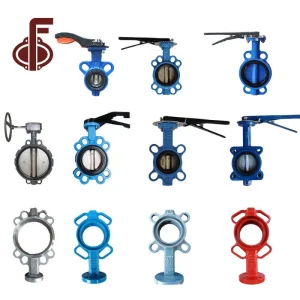
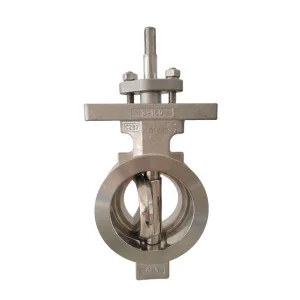
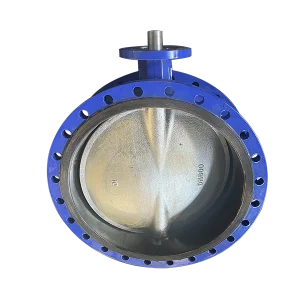
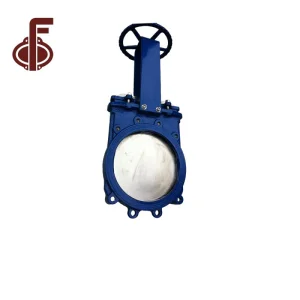
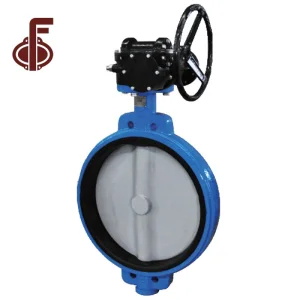
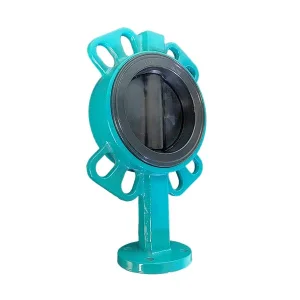
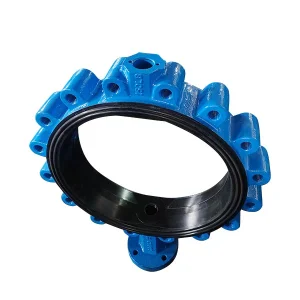
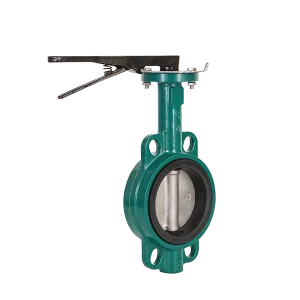
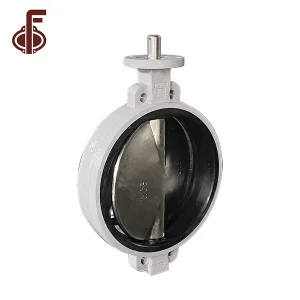
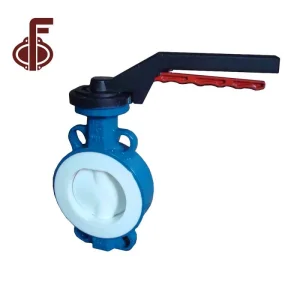
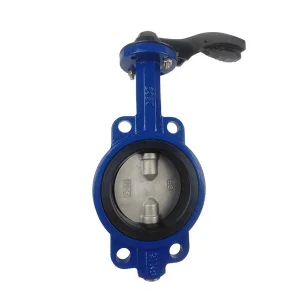
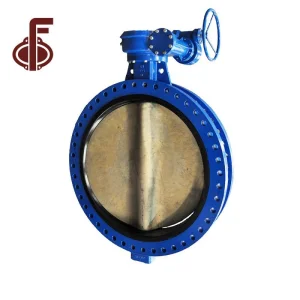
Advanced Butterfly & Gate Solutions for Plant Integration
Explore our specialized industrial valve models deployed globally across power generation plants, water treatment complexes, chemical facilities, and marine installations.
Equip Your Next Pipeline Tender with China's Premier Valve Manufacturer
Contact our senior sales engineering team in Tianjin for complete technical datasheets, 3D CAD/BIM models, material certification dossiers, and transparent direct-from-factory project quotations.
