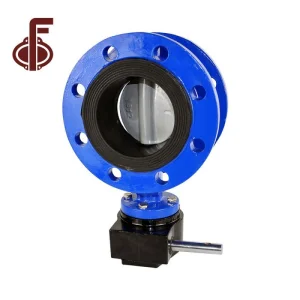
Featured Industrial Gear & Specialized Quarter-Turn Valves
Precision-machined resilient seated, metal seated, and high-performance isolation valves engineered for power, municipal water networks, HVAC skids, and heavy process infrastructure.
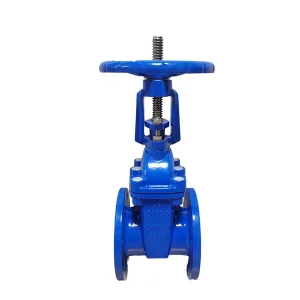
China F4 Bolted Bonnet Soft Sealing Rising Stem OSY Gate Valve
View Product Details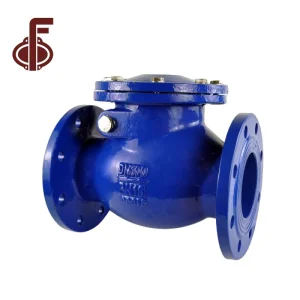
OEM Ductile Iron SS304 SS316 Non-return Swing Check Valve
View Product Details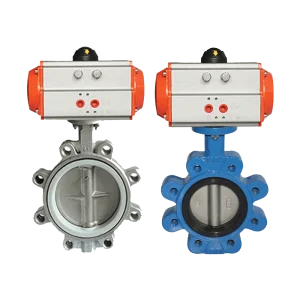
China Pneumatic Soft Seal Lug Butterfly Valve
View Product Details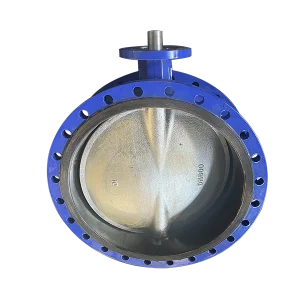
OEM Bare Shaft Vulcanized Seat Flanged Butterfly Valve
View Product Details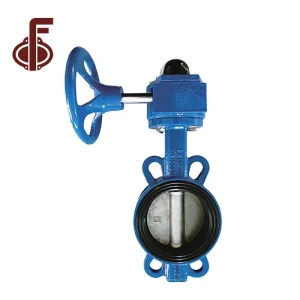
OEM Worm Gear Wafer Butterfly Valve
View Product Details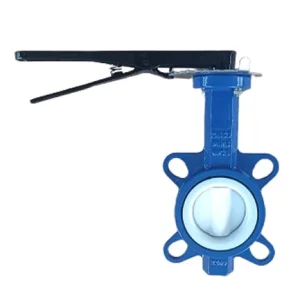
OEM PTFE Seat & Disc Wafer Centerline Butterfly Valve
View Product Details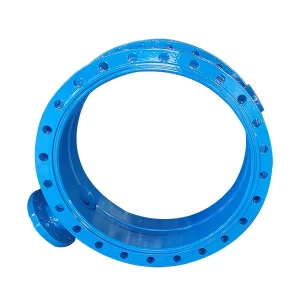
OEM Double Flanged Butterfly Valve Body Replaceable Seat
View Product Details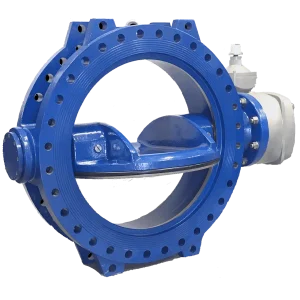
OEM AWWA C504 Double Eccentric Butterfly Valve
View Product DetailsWhy Gear-Operated Butterfly Valves Outperform Lever Isolation
Analyzing mechanical advantage, self-locking worm kinematics, and hydrodynamic torque mitigation in high-velocity piping infrastructures.
Max Gear Reduction Ratio
Human Handwheel Rim Pull (EN 12570)
Anti-Backdrive Self-Locking Rate
API 598 Rate A Bubble-Tight Sealing
Mechanical Force Multiplication
Manual lever operators are physically limited by human torque capacity, restricting their safe application to nominal bores below DN150 (6") under low differential pressures. Beyond this threshold, hydrodynamic dynamic torque and seat interference friction require heavy-duty manual worm gear actuators. High-precision gearboxes incorporate high-tensile manganese or aluminum bronze worm wheels and hardened 40Cr alloy steel worms, providing mechanical advantage ratios from 24:1 up to 300:1 to smoothly rotate discs under differential pressures up to 25 bar (PN25 / Class 300).
Torque MultiplicationSelf-Locking & Water Hammer Prevention
A primary cause of pipeline catastrophic failure is hydraulic transient pressure spikes (water hammer) induced by rapid valve closure. Gearboxes inherently possess a low lead angle on the worm gear thread, generating mechanical self-locking behavior. Media flow pressure pushing against the valve disc cannot back-drive the handwheel. Furthermore, because a worm gear operator requires multiple full revolutions (typically 10 to 45 handwheel turns) to achieve a complete 90-degree quarter-turn cycle, it enforces controlled, slow closing profiles that disperse kinetic fluid shocks safely.
Hydraulic SafetyAccurate Flow Throttling Modulations
Lever handles typically offer coarse 10-degree notch plate positioning, leading to cavitation, hunting, and seat erosion when applied in throttling conditions. Worm gear assemblies incorporate continuous micro-adjustment capabilities with integrated mechanical position pointers graduated from 0° (fully closed) to 90° (fully open). This allows process engineers to tune balancing flow coefficients (Cv and Kv values) with repeatable accuracy, critical in HVAC chilled water loops, industrial cooling towers, and aeration splitters.
Fine ControlWhen engineering quarter-turn butterfly valve actuation, total calculated torque ($T_t$) represents the composite summation: $T_t = T_s + T_b + T_d + T_h$, where $T_s$ is seat interference breakaway torque, $T_b$ is bearing bushing friction torque, $T_d$ is hydrodynamic dynamic flow torque acting off-center on the disc, and $T_h$ represents stem hydrostatic stuffing box friction. For butterfly valves operated beyond DN200 or 1.0 MPa, dynamic torque easily exceeds human direct operating ability, making engineered worm gearboxes mandatory according to EN 12570 safety guidelines.
The Strategic Dominance of China’s Valve Industrial Cluster
How advanced metallurgy, precision CNC horizontal boring, automated electrostatic epoxy coating, and complete supply-chain integration deliver unmatched total lifecycle value to global EPC contractors.
Full Foundry Vertical Integration
Chinese manufacturing centers (specifically in Tianjin and the coastal metallurgical clusters) benefit from localized resin sand and automatic DISA molding lines. Casting foundries maintain direct in-house spectral metallurgy analyzers (OES) ensuring ductile iron grades (EN-GJS-400-15 / GGG40, EN-GJS-500-7 / GGG50, ASTM A536 65-45-12) strictly comply with microstructural nodularity (>85%) and elongation metrics. This vertical control prevents internal shrinkage cavities, cold shuts, and porosity that compromise valve pressure containment shells.
Precision CNC Multi-Axis Machining
Dimensional stability directly dictates sealing lifecycle. Specialized Chinese valve producers deploy multi-axis CNC machining centers to process valve body seat grooves, top mounting flanges, and stem bores in single-clamping operations. This achieves concentricity tolerances within ±0.02 mm between the upper and lower shaft bearings, reducing operational breakaway torque, eliminating asymmetric seat pinch, and extending the operational cycles of vulcanized or replaceable EPDM/NBR/PTFE liners.
Advanced Automated Polymer Coatings
Industrial longevity requires superior barrier protection against atmospheric and galvanic corrosion. Facilities utilize automated fluidized-bed or electrostatic thermal fusion bonded epoxy (FBE) coating lines. Bodies undergo automated pre-heating to 200°C followed by electrostatic deposition to maintain consistent coating thickness of 250 μm to 300 μm, qualified via 3000V non-destructive holiday spark testing and 1000-hour salt spray ASTM B117 standards for aggressive coastal or buried soil installations.
Multi-Standard Universal Compatibility
Chinese valve factories engineer dual and multi-standard flange mating profiles directly into universal wafer, semi-lug, and full-lug bodies. Single valve castings can effortlessly integrate into ANSI/ASME B16.5 Class 150, EN 1092-2 PN10/PN16, BS 4504, and JIS B2239 10K/16K pipeline interfaces. This multi-standard capability minimizes international stock-keeping unit (SKU) proliferation for global distributors and simplifies on-site assembly for multinational EPC contractors.
In-House Gearbox Foundry & Weatherproofing
Unlike Western assemblers that outsource gear mechanisms to distant third parties, leading Chinese valve enterprises fabricate their own IP65, IP67, and IP68 submersible worm gearboxes. Cast ductile iron casings house O-ring sealed input shafts, grease-packed lubrication chambers filled with high-temperature synthetic grease, stainless steel fasteners, and polycarbonate visual position indicators, ensuring maintenance-free performance under outdoor UV radiation, heavy rainfall, and flooded pit situations.
Agile OEM/ODM Engineering Specialization
From CAD/CAM 3D finite element stress analysis (FEA) to rapid prototyping of extended stem extensions for cryogenic or deep underground district heating networks, Chinese manufacturers support customized branding, specific face-to-face dimensions (ISO 5752 series 13, 14, 16, or 20), specialized elastomer compounds (Viton, peroxide-cured EPDM, CSM Hypalon), and comprehensive documentation packages within condensed project timelines.
Engineering Specification & Materials Selection Matrix
Compare mechanical integrity, chemical compatibility, and design boundaries across international standards to ensure optimal field deployment.
| Valve Component | Standard Material Grades | International Standard Equivalent | Operating Temp Range | Recommended Applications & Fluid Media |
|---|---|---|---|---|
| Valve Body | Ductile Iron (GGG40 / GGG50) Carbon Steel (WCB) Stainless Steel (CF8M) |
EN-GJS-400-15 / ASTM A536 ASTM A216 WCB ASTM A351 CF8M (SS316) |
-20°C to +150°C -29°C to +425°C -40°C to +550°C |
Potable water, wastewater, fire protection, HVAC. Steam, hydrocarbons, high-pressure industrial lines. Corrosive chemicals, offshore brine, pharma pipelines. |
| Valve Disc | DI Nickel Plated / Nylon Coated Stainless Steel SS304 / SS316 Al-Bronze (C95800 / C95400) |
QT450-10 + Rilsan PA11 EN 1.4301 / EN 1.4408 ASTM B148 C95800 |
-10°C to +120°C -40°C to +300°C -20°C to +260°C |
General HVAC, irrigation, demineralized water. Food & beverage, corrosive chemicals, clean water. Seawater intake, reverse osmosis desalination, marine ballast. |
| Resilient Seat | EPDM (Drinking Water Grade) NBR (Nitrile Butadiene) PTFE / PFA Teflon Lined |
WRAS / NSF-61 Certified Buna-N Industrial Grade Virgin PTFE / Food Grade FDA |
-20°C to +120°C -10°C to +85°C -30°C to +180°C |
Municipal water, chilled/hot water systems, air lines. Oils, petroleum distillates, gas lines, animal fats. Concentrated inorganic acids, caustic alkalis, solvents. |
| Stem / Shaft | Stainless Steel 416 (SS416) Stainless Steel 316 (SS316) Duplex Stainless (17-4PH) |
AISI 416 / EN 1.4005 AISI 316 / EN 1.4401 ASTM A564 Grade 630 |
-29°C to +400°C -50°C to +450°C -40°C to +450°C |
Standard general duty, clean water flow services. Chemical processing, marine spray exposure. High dynamic torque lines, large diameter heavy-duty discs. |
| Worm Gearbox | Ductile Iron Body + Bronze Wheel Hardened 40Cr Worm Shaft |
IP65 / IP67 / IP68 Sealed Enclosure ISO 5211 Direct Flange Mount |
-30°C to +100°C | Quarter-turn manual actuation, emergency manual override for pneumatic or electric actuated valve skids. |
Design Code Standardization
Production complies strictly with international governing codes: API 609 (Category A and B design thresholds), EN 593 (Industrial valves - Metallic butterfly valves), AWWA C504 (Rubber-Seated Butterfly Valves for Waterworks Service), and ISO 10631. Hydrostatic pressure testing adheres without exception to API 598, EN 12266-1, and ISO 5208.
ISO 5211 Standardized Mounting
All gear-operated valve bodies incorporate standardized ISO 5211 mounting flanges (F05, F07, F10, F14, F16, up to F30) and standardized drive shaft profiles (double-D, square, or keyway). This interchangeability guarantees that a manual worm gearbox can be effortlessly unbolted and upgraded in-situ to an electric intelligent actuator or pneumatic scotch-yoke system without line disruption.
Pressure & Temperature Boundaries
Resilient seated concentric valves are engineered for bidirectional bubble-tight isolation up to PN16 / PN25 at ambient conditions. For extreme operating envelopes (superheated steam, thermal oil, cryogenic LNG), Chinese manufacturers supply high-performance double eccentric and metal-seated triple eccentric butterfly valves capable of handling up to Class 600 (100 bar) and 600°C.
Global Industrial Solutions & Application Scenarios
From underground district heating arteries to offshore seawater desalination facilities, gear-operated butterfly valves serve as the linchpin for stable fluid isolation.
Municipal Water & Desalination
In municipal trunk distribution, large-bore double flanged gear butterfly valves (DN800 to DN2400) maintain isolation across regional pumping networks. Utilizing WRAS/NSF certified EPDM seats and high-integrity vulcanized rubber lining, these valves resist biological film and chloramine oxidation. In SWRO (Seawater Reverse Osmosis) desalination plants, Super Duplex (2507) and Nickel Aluminum Bronze (C95800) discs prevent pitting and crevice corrosion under high salinity conditions.
AWWA C504 WaterworksDistrict Energy & Large HVAC Central Plants
Modern data center cooling systems, skyscraper chilled-water risers, and district heating networks depend on tight shutoff to preserve thermodynamic plant efficiency. Gear-operated wafer and lug butterfly valves eliminate leak-by in central chiller rooms, cooling tower header manifolds, and heat exchanger loops. Extended bonnet options allow insulated pipelines to accommodate up to 100 mm of outer lagging without obstructing gear handwheel operation.
Thermal EfficiencyChemical, Mining Slurry & Industrial Effluent
For corrosive acid processing, chemical dosing skids, and mineral extraction slurry circuits, fully PTFE/PFA-lined split-body butterfly valves deliver total chemical inertness. The thick, high-density fluoropolymer lining completely encapsulates the wetted body bore and disc edge, isolating metallic ductile iron shells from aggressive process fluids such as hydrochloric acid, sulfuric acid solutions, and reactive bio-sludge waste streams.
Corrosive ProcessFuture Trends: Smart Actuation, Low Emissions & Green Foundries
Discover how the next generation of gear-operated butterfly valves incorporates IoT telemetry, fugitive emission abatement, and carbon-neutral foundry practices.
Smart IoT-Enabled Gearboxes
The boundary between manual operation and automation is dissolving. Modern China-engineered gear operators are increasingly integrating low-power non-intrusive position sensors, continuous 4-20mA / Modbus position transmitters, and micro torque sensors directly within the gear casing. Plant technicians can monitor handwheel position, opening percentage, and stem torque anomalies remotely on centralized SCADA systems to detect line scale build-up before jamming occurs.
Fugitive Emission Compliance (ISO 15848-1)
Global decarbonization mandates require industrial flow systems to prevent volatile organic chemical (VOC) and gas atmospheric leakage. Advanced Chinese valve designs incorporate live-loaded stem packing configurations, dual-stage redundant O-rings, and secondary graphite seals qualified under ISO 15848-1 Class AH/BH and TA-Luft criteria, preventing trace greenhouse gas losses through the valve neck.
Electric Induction Melting & Sand Reclamation
Complying with ESG and international sustainability audits, modern Chinese valve production bases have replaced legacy coke cupola melting with high-efficiency medium-frequency electric induction furnaces. Automated thermal sand regeneration systems reclaim up to 95% of casting sand, significantly shrinking embodied carbon footprints and providing verifiable Environmental Product Declarations (EPD) for certified sustainable construction projects.
Global Procurement Checklist: Auditing a Chinese Valve Manufacturer
What international EPC procurement managers, quality assurance auditors, and piping engineers must verify to eliminate supply chain risks.
EN 10204 3.1 Traceability
Demand certified Material Test Reports (MTR) tracing heat numbers directly to each cast valve body, disc, and stem shaft. Verified chemical compositions (C, Si, Mn, P, S, Cr, Ni, Mo) and mechanical tensile testing guarantee pressure envelope compliance.
100% Factory Pressure Testing
Verify that the plant performs 100% shell hydrostatic testing at 1.5x PN and bidirectional seat tightness testing at 1.1x PN in accordance with API 598 or EN 12266-1 Rate A (zero visible leakage) before painting and final crating.
Gearbox Torque Safety Margin
Audit gearbox calculation sheets. High-quality manufacturers size worm gear operators with at least a 1.3x to 1.5x safety factor over the maximum calculated breakaway torque to prevent mechanical gear jamming during emergency operations.
Export Preservation Packing
Ensure valve bodies feature protective end flange covers to shield precision seat faces from transit impact, desiccant bags within poly-wrap barriers to prevent sea freight condensation rust, and reinforced fumigated plywood export crating (ISPM 15).
Frequently Asked Technical & Procurement Questions
Authoritative answers to the most common engineering and sourcing questions regarding gear-operated quarter-turn valves.
According to engineering best practices and EN 12570 norms, manual levers should generally be restricted to sizes up to DN150 (6") for water and clean fluids at nominal pressures. For butterfly valves DN200 (8") and above—or smaller valves operating under high differential pressures (>16 bar) or viscous media—dynamic torque exceeds manual safety limits (typically 360 N rim pull force). Gearboxes are mandatory in these regimes to prevent pipe water hammer and provide safe, controlled quarter-turn isolation.
A Wafer valve is designed to be clamped between two pipe flanges using long stud bolts; it is lightweight, cost-effective, but cannot be used for dead-end pipe termination. A Lug valve features threaded threaded eyelets that bolt directly to individual companion flanges, allowing downstream pipe disconnection for maintenance while keeping the upstream side pressurized. A Double Flanged valve features integral flanges on both body faces, providing the most rigid mechanical connection, highly preferred for large diameters (DN300 to DN2400) and underground water mains.
Standard industrial gearboxes provide IP65 ingress protection. For outdoor installations exposed to tropical rain or valve vaults susceptible to periodic flooding, procurement specifications should explicitly require IP67 (immersion up to 1 meter for 30 minutes) or IP68 (continuous immersion under hydrostatic head) enclosures. IP67/IP68 worm gearboxes incorporate dual O-ring shaft seals, sealed position indicators with impact-resistant tempered glass or polycarbonate, and corrosion-resistant stainless steel fasteners.
Cast Gray Iron (GG25) possesses flake graphite geometry, making it inherently brittle and vulnerable to mechanical fracture under thermal shock, pipeline misalignment stress, or water hammer pressure surges. Ductile Iron (GGG40 / GGG50 / ASTM A536) features spherical (nodular) graphite structures, yielding a tensile strength of 400–500 MPa and elongation properties over 12–15%, comparable to carbon steel. This ductility prevents catastrophic shell rupture in critical industrial plants.
Yes, provided the valve is manufactured with an ISO 5211 top mounting flange and standard stem drive dimensioning. Retrofitting involves unbolting the four or eight mounting bolts securing the worm gearbox to the top flange, lifting the gearbox off the shaft, and installing a direct-mount multi-turn or quarter-turn electric/pneumatic actuator with an appropriate ISO 5211 drive sleeve adapter. No disassembly of the valve body from the pressurized pipeline is required.
Elastomer hardness (durometer shore A), compression set, and frictional coefficient significantly alter valve breakaway torque. PTFE seats possess a very low dynamic coefficient of friction, but virgin PTFE cold flows under compression, requiring higher mechanical pre-loading that increases breakaway seating torque. EPDM and NBR provide softer elastic deformation with lower initial seating torque, but swelling caused by medium incompatibility (e.g., EPDM in oil lines or NBR in ozone) can cause severe seat binding and gearbox failure.
Engineered Large-Bore, Triple Offset & Slurry Isolation Range
Discover high-pressure triple offset valves, mono-flange large diameter water valves, axial silent check valves, and full PTFE fluoropolymer lines.
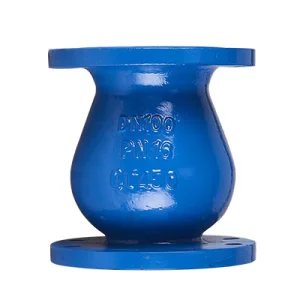
OEM Axial Flow Silent Non Return Check Valve
View Product Details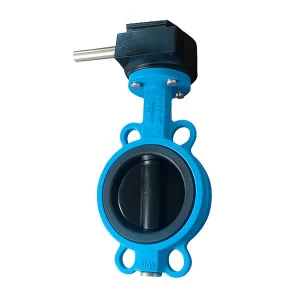
OEM Multy Standard Body Rubber Lined Disc Wafer Butterfly Valve
View Product Details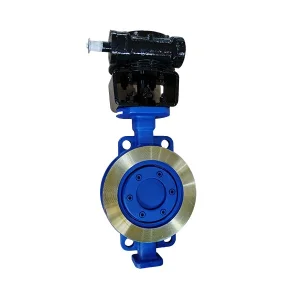
China DN200 WCB Wafer Triple Offset Butterfly Valve with Worm Gear
View Product Details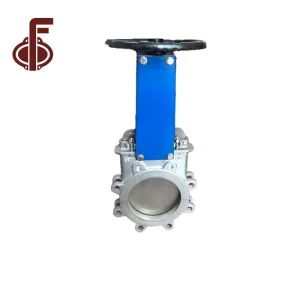
OEM SS PN10/16 Class150 Lug Knife Gate Valve
View Product Details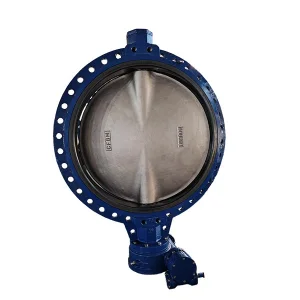
China DN1000 DI Hard Back Seat Mono Flange Butterfly Valve with Worm Gear
View Product Details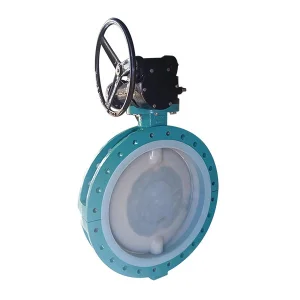
China U Type Two-piece Silicon Rubber Flange Butterfly Valve
View Product Details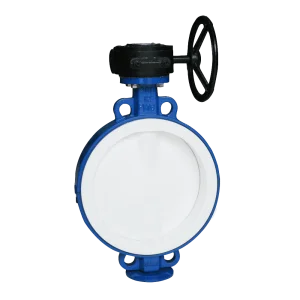
OEM PTFE Full Lined Wafer Butterfly Valve
View Product Details