
Featured Valve Series: Wafer, Lug & Flanged Systems
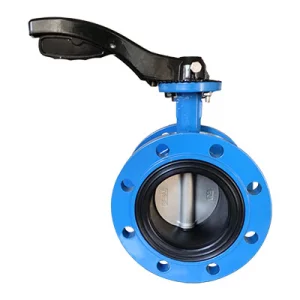
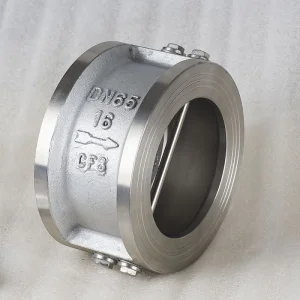
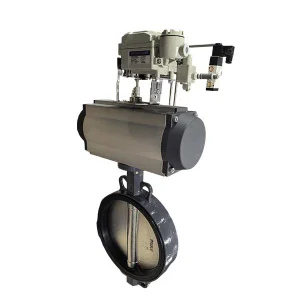
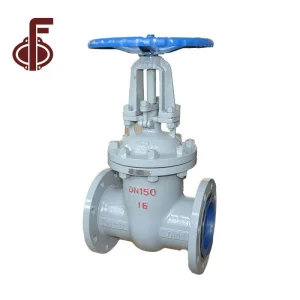
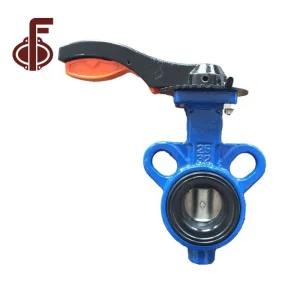
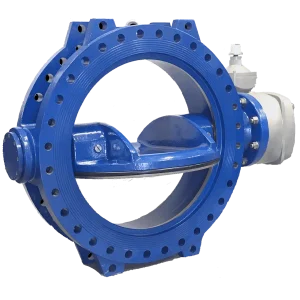
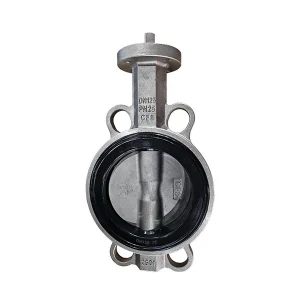
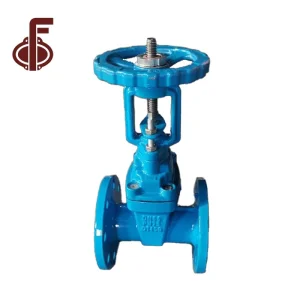
Explore our primary export catalog manufactured to ASTM, ANSI, DIN, BS, and JIS standards. Every valve undergoes hydrostatic shell and high-pressure seat leakage audits.
The Commercial Landscape of PTFE Seated Butterfly Valves
Why critical process industries are moving away from traditional rubber liners toward high-integrity fluoropolymer sealing systems for severe fluid handling.
Corrosion Immunity in Severe Media
Unlike elastomer seats (such as standard EPDM or Nitrile) which swell, crack, or degrade in the presence of aggressive acids, hydrocarbons, and halogenated compounds, virgin Polytetrafluoroethylene (PTFE) exhibits almost universal chemical inertness across pH 0 through 14.
- Zero contamination in high-purity microelectronics
- Hydrofluoric, hydrochloric, and nitric acid resilience
- Non-stick surface prevents crystallization and media buildup
Total Cost of Ownership (TCO)
Modern petrochemical and processing facilities calculate equipment procurement on lifecycle longevity rather than initial acquisition cost. PTFE seated valves eliminate unexpected line shutdowns caused by seat erosion, saving millions in unplanned plant outages.
- Extended MTBF (Mean Time Between Failures)
- Substantially lower dynamic torque friction coefficient
- Downsized actuators lead to reduced operational energy
Fugitive Emissions Compliance
Global environmental accords (EPA Clean Air Act, European TA-Luft, and ISO 15848-1) impose severe penalties on volatile chemical leaks. PTFE and modified fluoropolymers (such as TFM1600) engineered with live-loaded shaft seals guarantee class-leading fugitive emission control.
- Conforms to TA-Luft VDI 2440 stem seal specs
- Belleville disc spring energized shaft packing
- Dual blowout-proof stem retention for plant safety
Chinese Smart Foundry & Machining Efficiency Advantages
How Tianjin Zhongfa Valve combines supply chain clustering, fully integrated casting, and automated CNC sintering to deliver unmatched precision at competitive lead times.
Fully Integrated Supply Ecosystem
Operating out of Tianjin’s advanced industrial valve corridor provides direct proximity to high-grade ductile iron, carbon steel (WCB), and duplex alloy foundries. Raw billets and molded PTFE preforms arrive on-site with certified 3.1 chemical and physical trace logs.
Isostatic PTFE Sintering
Fluoropolymer liners are formed via high-tonnage isostatic compression molding and precision-programmed sintering furnaces. This eliminates micro-porosity, minimizes permeation coefficients, and ensures uniform seat wall thickness exceeding international standards.
Multi-Axis CNC Finishing
Stem shafts, spherical disc edges, and valve body cavity geometries are machined in continuous multi-axis machining centers. Mirror-polished disc edges (Ra < 0.2 μm) dramatically reduce friction against the PTFE seat, multiplying cycle life into hundreds of thousands of operations.
100% Quality Assurance
Beyond standard visual audits, our production lines enforce 20 kV non-destructive electrostatic spark testing for liner breach detection, alongside pneumatic bubble leak testing and bidirectional hydraulic seat tests compliant with API 598 and EN 12266-1.
PTFE / TFM vs. Traditional Resilient Seat Comparison
A definitive engineering guide to evaluating fluoropolymers against standard synthetic elastomers across critical process variables.
| Evaluation Parameter | Virgin PTFE | Modified PTFE (TFM 1600) | Standard EPDM | NBR (Nitrile) |
|---|---|---|---|---|
| Operating Temperature | -30°C to +180°C | -40°C to +200°C | -20°C to +120°C | -10°C to +82°C |
| Acid & Solvent Resistance | Universal (pH 0–14) | Universal / Superior Gas Tightness | Moderate (Poor in Solvents/Oils) | Poor in Acids; Good in Fuel/Oils |
| Permeation Resistance | High | Ultra-High (Dense Molecule) | Low in Corrosives | Moderate |
| Friction Coefficient (μ) | 0.04 - 0.10 (Self-Lubricating) | 0.04 - 0.08 (Lowest Torque) | 0.50 - 0.80 (High Drag) | 0.60 - 0.90 (High Drag) |
| Cold Flow / Deformation | Subject to moderate creep under stress | Significantly reduced cold flow | Elastic recovery (No cold flow) | Elastic recovery |
| Sanitary & FDA Compliance | FDA 21 CFR 177.1550 compliant | FDA, 3-A, USP Class VI | Limited sanitary grades | Non-hygienic industrial grade |
Dual-Layer Energized Seat Architecture
Because fluoropolymers have lower elasticity than synthetic rubbers, our valves utilize an engineered silicone or FKM (Viton) elastomeric energizer positioned directly behind the PTFE seat ring. This resilient energizer maintains constant radial seating pressure against the spherical disc, automatically compensating for thermal expansion, contraction, and mechanical wear over years of duty.
Two-Piece Split Body Design Mechanics
To avoid overstressing the fluoropolymer liner during factory assembly, ZFA Valve employs high-rigidity split-body designs (wafer, lug, or double-flanged). This permits pre-compressed seat insertion without liner tearing or uneven stretching, ensuring uniform 360-degree contact force and preventing premature stem leakage under full pressure ratings.
Mission-Critical Applications Worldwide
Engineered to withstand corrosive chemistries, sterile high-purity pharmaceutical media, and harsh marine scrubber wash water.
Chlor-Alkali & Acid Plants
Wet chlorine gas, concentrated sulfuric acid (98%), and caustic soda quickly oxidize regular metals and degrade nitrile or EPDM liners. Our fully fluoropolymer lined valves provide impenetrable isolation, ensuring no chemical attack reaches the valve casting.
Semiconductor UPW Systems
Fabrication of advanced microchips demands Ultra-Pure Water (UPW) free of ionic leachables, particles, and Total Organic Carbon (TOC). High-purity PFA and virgin PTFE seats guarantee zero trace extraction into the clean supply stream.
Pharmaceuticals & Biotechnology
FDA 21 CFR 177.1550 compliance guarantees that valves maintain sanitary inertness during Clean-in-Place (CIP) and Steam-in-Place (SIP) routines, resisting high-temperature clean steam sterilization without seat deformation.
Marine Exhaust Gas Cleaning (EGCS)
Shipboard SOx scrubbers convert exhaust emissions into high-temperature, low-pH sulfurous and sulfuric wash water slurries. PTFE seated and coated discs prevent rapid hull valve corrosion in harsh oceanic ballast and scrubber lines.
Hydrometallurgy & Mining Leaching
Copper, lithium, and gold extraction employ high-pressure acidic leaching circuits with abrasive mineral salts. PTFE seats paired with Hastelloy or titanium discs resist both severe chemical dissolution and erosion.
Desalination (SWRO Membranes)
Sea Water Reverse Osmosis plants operating at elevated pressures demand zero pitting corrosion from concentrated brine. PTFE lined butterfly valves provide reliable, bubble-tight quarter-turn isolation without expensive exotic alloy housings.
Emerging Trends: Smart Actuation & Decarbonization
How industrial flow control is advancing toward predictive condition monitoring, digital twin integration, and ultra-low emission manufacturing.
IoT-Enabled Smart Positioners
Modern process plants pair PTFE butterfly valves with smart electro-pneumatic positioners using HART, Profibus, or Foundation Fieldbus. Real-time feedback measures seat friction changes, stem torque profiles, and travel speeds to alert plant managers to maintenance requirements weeks before failure occurs.
Modified Fluoropolymer Liners (TFM)
Second-generation PTFE (TFM 1600) exhibits a substantially denser polymer network, reducing gas permeability by up to 50% and improving recovery under cyclic stress. This material advancement bridges the gap between conventional soft seats and expensive metal-to-metal seating for hazardous volatile gases.
Green Valve Manufacturing & Scope 3 Reductions
By utilizing electric induction melting, recycled ductile iron scraps, and closed-loop coolant systems during machining, modern Chinese manufacturers help multinational buyers reduce the embedded Scope 3 carbon footprint across capital infrastructure projects.
Buyer's Engineering Audit & Factory Acceptance Matrix
Essential quality gates and non-destructive verification checklists every procurement engineer should enforce when sourcing butterfly valves from China.
1. Spark Testing (Liner Pinhole Audit)
A high-voltage spark probe (15 to 20 kV) is systematically swept across 100% of the internal fluoropolymer surface. Any microscopic porosity, blister, or crack triggers an instantaneous arc to the metal body, preventing permeable liners from shipping.
2. Hydrostatic & Bubble Leak Testing
Valve shells are pressurized to 1.5× the rated nominal pressure (e.g., 24 bar for PN16), while seat tightness is tested to 1.1× in both flow directions. Zero allowable drops or air bubbles (Rate A tight shutoff under EN 12266-1) must be certified.
3. Material Traceability (EN 10204 3.1)
Every production batch includes full chemical spectrometer heat analysis and mechanical tensile testing logs for ductile iron (QT450-10/GGG40), stainless steel (CF8/CF8M), and virgin fluoropolymer resin lots.
4. Direct ISO 5211 Actuator Sizing
Valves must feature standardized ISO 5211 mounting flanges and double-D or keyed shaft profiles. Torque curves must factor in safety margins (+30% minimum) to accommodate media viscosity and static breakout resistance after extended dwell periods.
Frequently Asked Questions by Global Valve Engineers
Addressing key engineering inquiries regarding valve performance, design limitations, actuator sizing, and fluid compatibility.
Why choose a PTFE seated butterfly valve over an EPDM or NBR seated valve?
How do your valves overcome PTFE "cold flow" or mechanical creep under pressure?
Can PTFE seated butterfly valves handle full vacuum service without liner collapse?
What safety factors should be applied when sizing actuators for PTFE seated valves?
What international manufacturing and testing standards do ZFA valves comply with?
What is the difference between Virgin PTFE, Glass-Filled PTFE, and PFA Lined Discs?
Extended Flow Control & High-Performance Assemblies
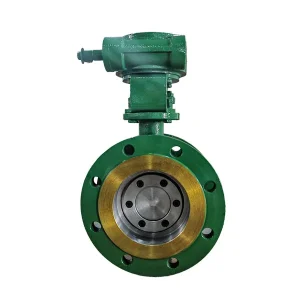
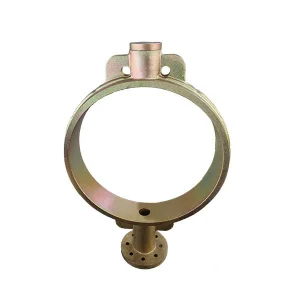
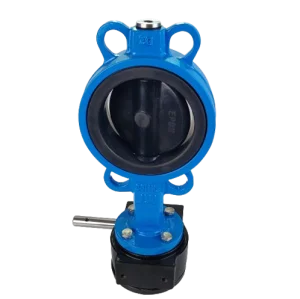
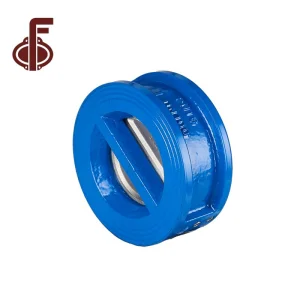
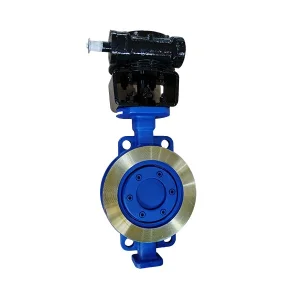
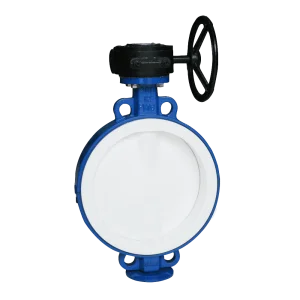
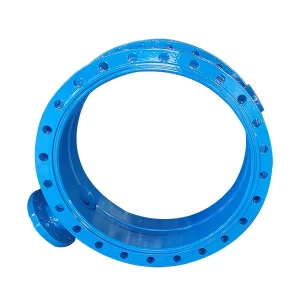
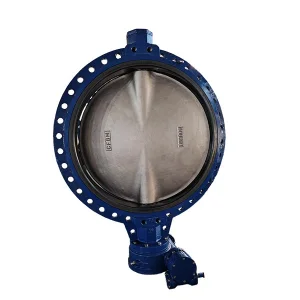
The balance of our engineering portfolio: triple offset metal seated valves, fully lined bodies, large diameter waterworks valves, and ductile iron check valves.
Initiate Your Custom PTFE Valve RFQ With Our Technical Team
Whether your application requires customized face-to-face dimensions, specific fluoropolymer compound formulations (TFM/PFA/PTFE), specialized pneumatic actuator fail-safe loops, or private-label OEM markings, our sales engineering desk delivers compliant technical packages and certified general arrangement (GA) drawings within 24 hours.
