
High-Performance Flow Control & Protective Valve Series
Direct from our Tianjin manufacturing workshops: precision-cast butterfly valves, pneumatic control loops, resilient seats, and check systems optimized to operate downstream of high-capacity T-strainers.
-
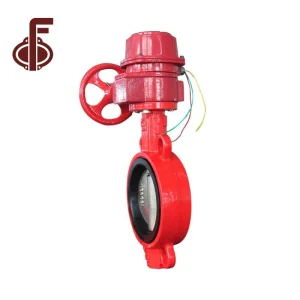 Fire Safety · MonitorChina Wafer Type Fire Signal Butterfly Valve Factory, ExportersView Specifications
-
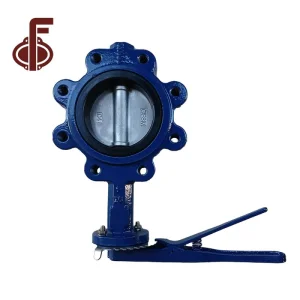 Ductile Iron · Lug TypeChina Hand Lever Actuated Ductile Iron Lug Type Butterfly Valves Manufacturer, ExportersView Specifications
-
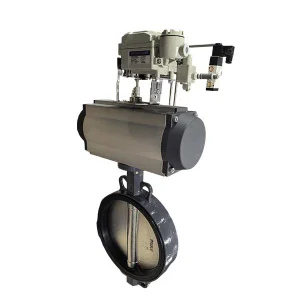 Pneumatic · DN100 PN16OEM DN100 PN16 E/P Positioner Pneumatic Wafer Butterfly Valves Exporter, ExportersView Specifications
-
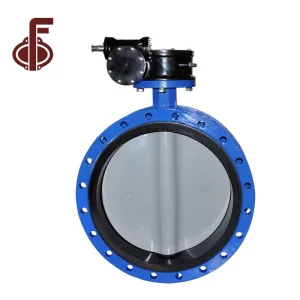
-
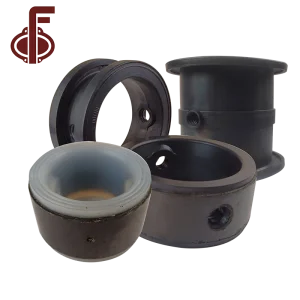 OEM Components · SeatsOEM Soft/Hard Back Seat Butterfly Valve Seat Exporter, ExportersView Specifications
-
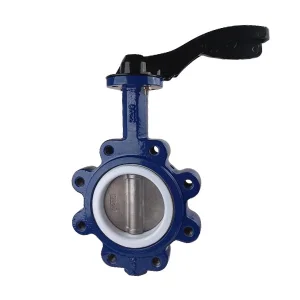 Corrosion Proof · CF8M/PTFEChina CF8M Disc PTFE Seat Lug Butterfly Valve Factories, ExportersView Specifications
-
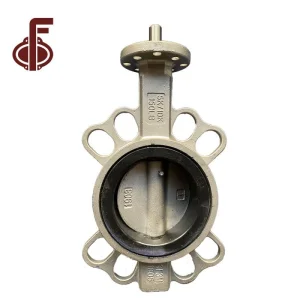 Multi-Standard · WaferOEM 5k 10k 150LB PN10 PN16 Wafer Butterfly Valve Exporter, ExportersView Specifications
-
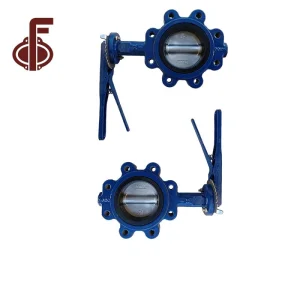 Lug Type · SS304 DiscChina Ductile Iron SS304 Disc Lug Type Butterfly Valves Manufacturers, ExportersView Specifications
Global Enterprise Procurement Dynamics for China T Strainer Systems
In modern industrial infrastructure—encompassing petrochemical refining, supercritical power plants, cryogenic LNG bunkering, and district cooling loops—unplanned pipeline downtime generates astronomical financial losses. Global engineering procurement and construction (EPC) conglomerates are increasingly re-evaluating mechanical filtration specifications. Historically treated as incidental piping commodities, T-type strainers (tee strainers) have emerged as critical primary defense mechanisms designed to shield multi-turn control valves, rotating turbomachinery, flowmeters, and triple eccentric butterfly valves from devastating particulate abrasion, construction debris, and weld slag.
Procuring industrial T-strainers from verified Chinese manufacturing hubs such as Tianjin, Zhejiang, and Jiangsu offers profound strategic advantages when aligned with international engineering standards. Tier-one Chinese manufacturers operate comprehensive foundries and precision CNC machine shops capable of fabricating both standardized cast bodies and bespoke welded tee strainers up to 48 inches (DN1200) and pressure classes up to ASME Class 2500 (PN420). However, achieving optimal return on investment requires procurement directors to scrutinize technical variables: the Open Area Ratio (OAR), metallurgical microstructures, non-destructive testing (NDT) qualifications, and long-term basket serviceability under dynamic differential pressure loads ($\Delta P$).
Tianjin Factory Established
Minimum Screen Open Area (OAR)
Maximum Bore Diameter (DN1200)
Technical Engineering Response
Structural Taxonomy: Cast vs. Fabricated T-Type Strainers
Selecting the optimal tee strainer configuration dictates pipeline layout efficiency, structural weight budgets, and scheduled maintenance cycle durations across process skids.
Cast Iron & Cast Steel Tee Strainers
Engineered via precision green-sand or investment casting processes, monolithic cast bodies eliminate longitudinal weld seams, offering exceptional hoop stress resilience and smooth internal surface profiles that mitigate fluid turbulence.
- Standard sizes: DN50 to DN300 (2" to 12")
- Materials: ASTM A216 WCB, A351 CF8M, ductile iron GGG40
- Optimized wall thicknesses per ASME B16.34
- Compact footprint for tight valve skids
Custom Fabricated (Welded) T-Strainers
Constructed utilizing wrought pipe tees, forged weld flanges, and reinforced cover assemblies. Fabricated designs afford complete geometric freedom for specialized face-to-face dimensions and integrated bypass manifolds.
- Heavy-bore sizes: DN350 to DN1200 (14" to 48"+)
- Pressure ratings: ASME Class 150 to Class 2500
- Weld procedures qualified to ASME Section IX
- 100% RT/UT volumetric seam inspection
Quick-Opening Closure (QOC) Systems
For operations demanding rapid basket decontamination without protracted bolting downtime. Chinese advanced factories integrate quick-actuating davit assemblies, clamp-ring closures, or bayonet-style bonnet locks.
- Davit-arm assistance for heavy covers (>25 kg)
- Integrated mechanical safety interlock pins
- Secondary zero-pressure vent plugs
- Reduces maintenance labor windows by 75%
Hydraulic Calculations, Open Area Ratios (OAR) & Mesh Sizing
The primary hydraulic function of a T-strainer is to capture particulates while introducing the absolute lowest possible net permanent pressure drop ($\Delta P_{net}$) into the pumping circuit. Unlike Y-strainers where media enters an angled diagonal pocket, a T-strainer directs flow through a perpendicular or inline flow path. Computational Fluid Dynamics (CFD) modeling performed at our Tianjin research center confirms that poorly proportioned internal baskets generate violent toroidal vortexes, accelerating screen erosion and driving up system parasitic pump loads.
The Engineering Equation of Screen Open Area Ratio
The Open Area Ratio (OAR) is the fundamental benchmark evaluating strainer flow capacity before particulate blinding occurs. It is expressed mathematically as:
While inferior commercial strainers operate at marginal OARs of 100% to 150%, heavy-industry specifications mandate a minimum clean OAR $\ge$ 300% to 400%. This generous ratio guarantees that even when the perforated basket is 50% clogged with pipeline debris, the net operational flow cross-section still exceeds the inlet pipe area, preventing flow starvation to downstream equipment.
| Mesh Size / Perforation | Aperture (Microns / Inches) | Free Area (%) | Typical Media Application | Standard Screen Material |
|---|---|---|---|---|
| 1/2" (12.7 mm) Perf | 12,700 μm / 0.500" | 48% | Raw seawater intakes, heavy debris coarse trapping | SS304 / Duplex 2205 |
| 1/8" (3.2 mm) Perf | 3,175 μm / 0.125" | 40% | Pump suction lines, general industrial water supply | SS304 / SS316 |
| 20 Mesh Lined | 840 μm / 0.033" | 46.2% | Fuel oil lines, boiler feed pumps, cooling towers | SS316 / Hastelloy C |
| 60 Mesh Lined | 250 μm / 0.0098" | 30.5% | Hydraulic lube skids, spray nozzles, chemical feed | SS316L Wire Cloth |
| 100 Mesh Lined | 149 μm / 0.0059" | 30.3% | High-pressure gas metering, instrumentation skids | SS316L Monofilament |
| 200 Mesh Lined | 74 μm / 0.0029" | 33.6% | Cryogenic LNG fuel lines, turbine seal oil protection | Monel 400 / Inconel 625 |
Comprehensive Application Blueprints Across Global Sectors
Engineered T-strainers manufactured under rigorous Chinese factory oversight fulfill vital protective responsibilities across major global engineering landscapes.
Hydrocarbon Processing & Refining
Refineries operating fluid catalytic cracking (FCC) and atmospheric distillation columns demand ASTM A216 WCB or alloy steel T-strainers with NACE MR0175 compliance to withstand sour crude service, preventing catalyst fines from migrating into downstream centrifugal pumps.
- ASME Class 300 to 1500 ratings
- H2S-resistant metallurgical chemistry
- Reinforced heavy-gauge inner support baskets
Desalination & Seawater Reverse Osmosis
High-salinity marine environments induce catastrophic crevice corrosion in standard austenitic steels. ZFA manufactures tee strainers in Duplex 2205, Super Duplex 2507, and rubber-lined ductile iron to shield sensitive high-pressure ceramic plunger pumps.
- PREn > 42 corrosion resistance index
- Non-metallic synthetic interior liners
- Zero-leakage O-ring cover seals
District Energy, HVAC & Hyperscale Data Centers
Cooling loops in modern cloud data centers run continuously at colossal flow volumes. Compact cast ductile iron T-strainers remove scale and biological debris ahead of plate heat exchangers and high-flow wafer butterfly valves without generating acoustic vibration.
- Sizes from DN100 to DN800 in ductile iron
- Epoxy electro-coating per EN 14901
- Low structural profile for modular plant rooms
Metallurgical Controls, Foundry Audits & API 598 Test Protocols
A persistent risk when procuring from tier-two suppliers in Asia involves porosity in pressure castings and deficient scrap-metal smelting. Tianjin Zhongfa Valve Co., Ltd. (ZFA) mitigates this risk by enforcing comprehensive traceability across all raw material ingots, melting batches, and CNC machining lines. Every casting is subjected to Optical Emission Spectrometry (OES) to verify that carbon, sulfur, phosphorus, and nickel content aligns precisely with ASTM specifications.
Hydrostatic Shell Proof Testing
Every T-strainer shell is hydro-tested to 1.5 times nominal cold working pressure (CWP) per API 598 / EN 12266-1 for a minimum holding duration of 180 to 600 seconds with zero structural weeping or pressure decay.
Positive Material Identification (PMI)
Handheld XRF spectrometers authenticate elemental concentrations of chromium, molybdenum, titanium, and nickel on all pressure boundaries, flanges, and screen basket spot welds prior to release.
Volumetric NDT Radiography
High-pressure cast and fabricated shells undergo RT (Radiographic Testing) and UT (Ultrasonic Testing) at high-stress intersection radii to guarantee zero internal hot tears, sand inclusions, or micro-shrinkage voids.
EN 10204 3.1 / 3.2 Documentation
Full documentation dossiers including heat numbers, Charpy V-notch impact test values at low temperatures, tensile test curves, and CE-PED Module H certificates are systematically bound with each export crate.
Synergistic Flow Control: Pairing T-Strainers with Industrial Valve Networks
In process plant design, strainers do not operate in a vacuum; they exist to safeguard precision valve mechanisms downstream. Contaminants such as abrasive mill scale, construction pebbles, or oxidized pipeline flakes entering an unprotected control valve cause severe seat scoring, elastomer tear, stem galling, and catastrophic valve lockup. Tianjin Zhongfa Valve Co., Ltd. architects comprehensive, synchronized piping loops where our rugged T-strainers are precisely paired with our core valve families:
Triple Offset Butterfly Protection
Triple eccentric metal-seated butterfly valves achieve tight shutoff via micro-machined Stellite sealing rings. Placing a 40-to-60 mesh T-strainer upstream guarantees the precision seat remains free of scratching particles, maintaining Class VI bi-directional shutoff integrity.
Dual Plate Check Valve Protection
Reverse-flow dual plate wafer check valves rely on low-friction torsion springs and smooth hinge-pin rotation. Upstream T-strainers prevent stringy debris and grit from wedging between the twin plates, eliminating backflow water hammer catastrophes.
Pneumatic & Motorized Control Loops
Automated valves operating with electro-pneumatic positioners modulate continuously. Debris-laden streams erode control plugs and cause hunting instability. Upstream T-filtration ensures uniform velocity profiles and laminar entrance conditions.
Technology Roadmap: Smart Differential Pressure IoT & Additive Meshes
The manufacturing paradigm for industrial filtration is undergoing rapid technological convergence. China's top valve and strainer engineering hubs are moving beyond passive mechanical containment into intelligent, condition-monitored fluid nodes. At ZFA Valve, our technical roadmap targets four key transformation sectors:
Wireless $\Delta P$ Telemetry Sensors
Integrated self-powered differential pressure transmitters communicate via LoRaWAN or WirelessHART directly to DCS control rooms, issuing predictive maintenance alerts before critical cake formation causes screen collapse.
Additive 3D Slotted Filter Cartridges
Selective Laser Melting (SLM) additive manufacturing produces boundary-layer perforated baskets with hydro-dynamically curved entry apertures, reducing baseline clean pressure drop by up to 28% compared to standard punch-holes.
Digital Twin Parametric CFD Analysis
Every custom fabricated T-strainer order is simulated inside ANSYS Fluent using client-specific viscosity, flow rate, and particle density metrics to eliminate localized cavitation vortices and ensure zero resonance frequencies.
Hydrogen-Enriched & Cryogenic Sealing
Developing specialized flexible graphite and spiral-wound gaskets wrapped with Inconel 625, verified under fugitive emission testing (ISO 15848-1) to handle sub-zero LNG (-196 °C) and emerging high-pressure hydrogen pipelines.
Tianjin Port Hub Advantages & Project Logistics Execution
Supply chain predictability is paramount for major engineering contracts. Situated in Tianjin—North China’s maritime shipping nexus—Tianjin Zhongfa Valve Co., Ltd. leverages world-class container terminal infrastructure directly connecting to European, Middle Eastern, North American, and Southeast Asian primary ports. Our specialized export packing protocols ensure valves and T-strainers arrive free of salt-fog oxidation, flange face brinelling, or transit shock damage:
Maritime Export Packaging Standards
Every T-strainer and valve is sealed in heavy-duty vapor-corrosion-inhibitor (VCI) foil, outfitted with heavy flange protector discs, and secured in fumigated solid-timber crates conforming to ISPM-15 international phytosanitary rules.
OEM, ODM & Brand Private-Labeling
We provide global brand owners full engineering support: custom 3D casting patterns, embossed or laser-engraved corporate branding, specialized anti-corrosive multi-coat paint systems (C5M marine grade), and private-labeled datasheets.
Rapid Engineering RFQ Turnaround
Our bilingual application engineering bureau reviews complex EPC tender schedules, datasheets, and piping isometric drawings, furnishing comprehensive commercial and technical bid packages within 24 hours.
Frequently Asked Questions on China T-Strainer Manufacturing
Authoritative technical answers addressing the core mechanical, compliance, and installation concerns raised by enterprise procurement teams and pipeline integrity engineers.
Advanced Valve Technologies & Critical Downstream Components
Complete your pipeline bill of materials with heavy-duty check valves, fully welded steel ball valves, specialized PTFE-lined units, and replacement bodies precision-engineered to pair with our T-strainers.
-
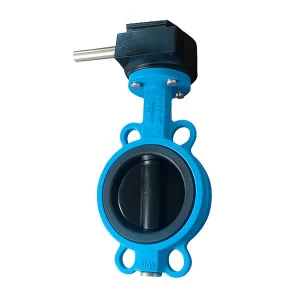 Multi-Standard · Lined DiscOEM Multy Standard Body Rubber Lined Disc Wafer Butterfly Valve Factories, ExportersView Specifications
-
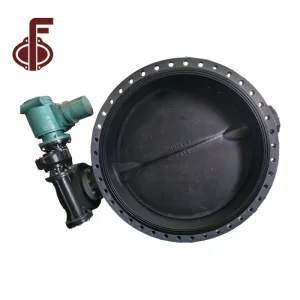 Electric Actuated · Full LinedChina Electric Rubber Full Lined Flange Type Butterfly Valve Manufacturer, FactoryView Specifications
-
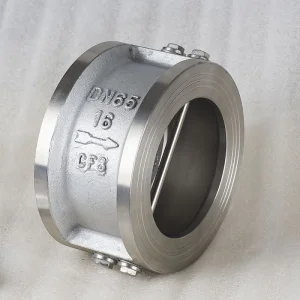
-
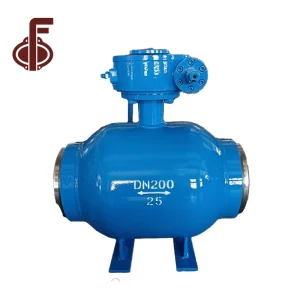 High Pressure · Fully WeldedChina Fully WELDED STEEL BALL VALVE Exporter, ExportersView Specifications
-
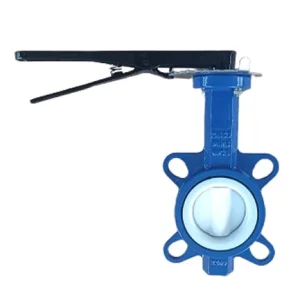 Corrosive Service · PTFEOEM PTFE Seat & Disc Wafer Centerline Butterfly Valve Factory, FactoriesView Specifications
-
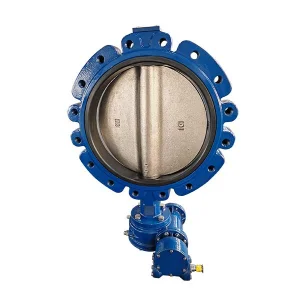 Large Bore · DN450 PN10OEM 18" Hard Back Seat Lug Butterfly Valve with Pin DN450 PN10 Manufacturer, ExportersView Specifications
-
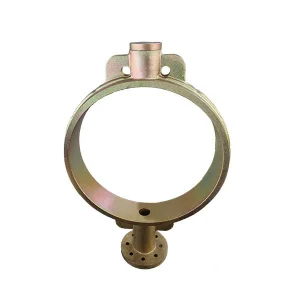 Galvanized · Bare CastingOEM Hot-dip Galvanized Wafer Butterfly Valve Body Manufacturer, ManufacturersView Specifications
-
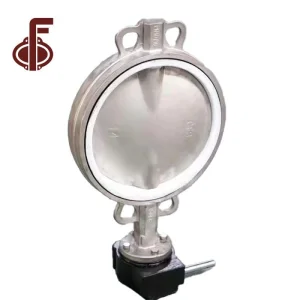 Centerline · Wafer PTFEOEM PTFE Seat Wafer Type Butterfly Valve Manufacturer, ExporterView Specifications
Connect Directly with ZFA Application Engineers
Whether you require standard cast iron T-strainers for HVAC distribution or custom high-pressure fabricated tee filters in Duplex 2205 for offshore skids, our engineering team in Tianjin is equipped to review your piping isometric drawings and furnish comprehensive quotation packages within 24 hours.
