
Featured Heavy-Duty Valves (Batch 01)
Standard and custom manufactured configurations designed for zero seat-rubbing, fire-safe durability, and tight shutoff under severe delta-P dynamics.
-
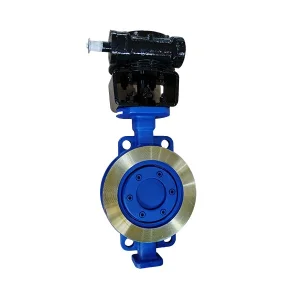
China DN200 WCB Wafer Triple Offset Butterfly Valve with Worm Gear Manufacturers, Exporter
Technical Datasheet -
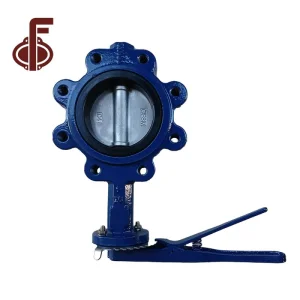
China Hand Lever Actuated Ductile Iron Lug Type Butterfly Valves Manufacturer, Exporters
Technical Datasheet -
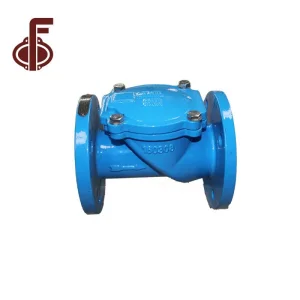
China Ductile Cast Iron Rubber Flap Check Valve Factories, Exporter
Technical Datasheet -
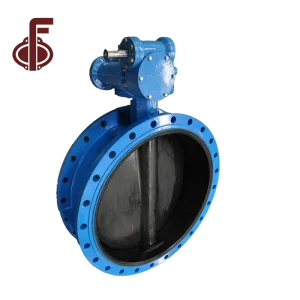
China PN16 CL150 Pressure Flange Type Butterfly Valves Manufacturers, Exporters
Technical Datasheet -
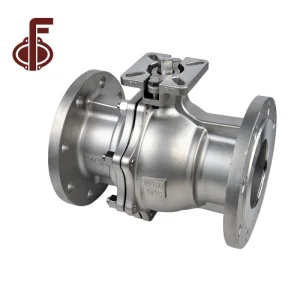
China Stainless Steel Flange Type Floating Ball Valve Factory, Exporter
Technical Datasheet -
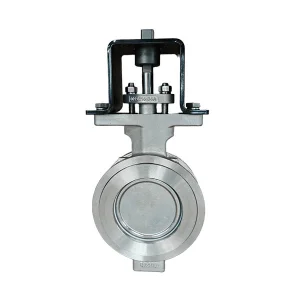
China CF8 Wafer High Performance Butterfly Valve with Support Manufacturers, Factories
Technical Datasheet -
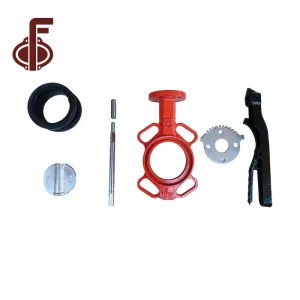
OEM Replacable Seat Aluminum Hand Lever Wafer Butterfly Valve with EPDM Seat Factory, Exporter
Technical Datasheet -
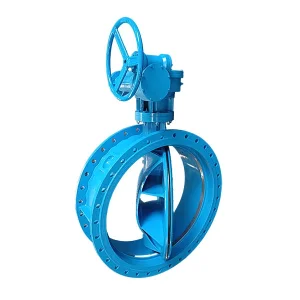
OEM Flange Connection Double Eccentric Butterfly Valve Manufacturers, Exporters
Technical Datasheet
Anatomy of the Triple Offset Geometry (Tricentric)
How the elimination of mechanical friction delivers true bi-directional bubble-tight shutoff (API 598 Rate A) across extreme temperature differentials.
Offset 1: Shaft Position
The valve shaft is offset behind the plane of the sealing seat. This design separates the entire disc seal ring completely from the body seat upon the initial degrees of opening stroke, preventing circumferential scrub, galling, and seat distortion typical in concentric valves.
Offset 2: Centerline Offset
The shaft centerline is laterally offset from the longitudinal centerline of the pipe bore. This introduces a camming action during the quarter-turn travel, which completely disengages the seal from the body seat around the full 360-degree sealing circumference within just 1 to 2 degrees of rotation.
Offset 3: Conical Axis Incline
The seat cone profile axis is tilted away from the pipeline centerline at a precise conical angle. This converts rotational sealing movement into a pure wedging mechanical contact—identical to a tapered plug valve—eliminating rotational friction and binding even during severe thermal expansion.
| Valve Architecture | Sealing Contact Dynamic | Seat Wear Profile | Operating Temp Range | Pressure Class Ceiling | Leakage Classification |
|---|---|---|---|---|---|
| Concentric Butterfly | Continuous interference friction along 100% travel | Rapid elastomeric fatigue / abrasion | -20°C to +120°C (Elastomer) | Class 150 / PN16 | ISO 5208 Rate A (Resilient) |
| Double Offset (High Perf.) | Cam action; disengages after 10°–15° travel | Moderate friction at top & bottom stem pivots | -50°C to +260°C (PTFE / R-PTFE) | Class 300 / PN50 | ANSI / FCI 70-2 Class IV / VI |
| Triple Offset (Tricentric) | Pure wedging contact at 0° closure (Zero-rubbing) | Zero mechanical wear | -196°C to +815°C (Metal-to-Metal) | Class 1500 / PN250 | API 598 Zero Leakage (Bi-dir) |
Strategic Sourcing Requirements for Global Flow Control
Addressing supply chain bottlenecks, total cost of ownership (TCO), and stringent technical audits for mega-infrastructure investments.
Metallurgical Verification
Global operators mandate 100% positive material identification (PMI) via optical emission spectrometry, radiographic testing (RT) of pressure-containing castings, and dye penetrant testing (PT) on Stellite hardfaced seats.
Gate-to-TOBV Replacement
EPCs are aggressively replacing heavy wedge gate and globe valves with flanged and butt-weld triple offset valves. Tricentric valves reduce installation weight by up to 65%, cut pipe rack sizing, and eliminate thermal stem-binding.
Fugitive Emissions Control
With tightening environmental regulations, valve stem packing must conform to ISO 15848-1 Class AH/BH and TA-Luft 2021 specifications, utilizing live-loaded graphite packing systems to stop greenhouse gas fugitive leaks.
Actuation Dynamic Sizing
Because triple offset valves experience variable hydrodynamic torque depending on flow direction, procurement packages require precise breakaway, running, and reseat torque validation across bidirectional differential pressures.
Mission-Critical Process Industry Deployments
Tailored trim metallurgy, extended bonnets, and specialized seat laminations for extreme operational envelopes.
Cryogenic LNG & Ethylene (-196°C)
Equipped with an extended gas column bonnet compliant with BS 6364 / MESC SPE 77/200, isolating the stem packing from cryogenic liquified gas. Trim materials utilize cryogenic-grade CF8M/316L, Kel-F or solid austenitic metal seats, ensuring zero leakage during extreme thermal contraction.
Refining & Hydrocracking (+550°C)
For catalytic cracking, coking, and hydrogen reformer lines, ZFA valves feature solid Stellite Grade 21 body weld overlays with resilient multi-layer laminated SS316 + Flexible Graphite disc seal rings. Inherently fire-safe tested and certified to API 607 / ISO 10497.
Supercritical Steam & Power Generation
Engineered for high-pressure boiler isolation, feedwater piping, and turbine bypass control. Body cast from ASTM A217 WC6 / WC9 alloy steels designed to resist creep deformation, cavitation, and thermal shock during rapid plant startup sequences.
Desalination & Marine (SWRO)
High-salinity brine rejection and seawater intake systems demand premium corrosion resistance. We configure discs and bodies in Duplex 2205 (UNS S31803), Super Duplex 2507 (UNS S32750), and Nickel Aluminum Bronze (C95800) with PREN values exceeding 42.
Clean Hydrogen & CCUS Infrastructure
Supercritical CO2 and hydrogen transmission demand ultra-tight stem sealing and micro-crack-free castings. Our valves pass helium mass spectrometry leak testing at < 1x10^-6 mbar·l/s, preventing fugitive hydrogen embrittlement and catastrophic leakage.
District Energy & Large-Bore Water
Double flanged butterfly valves up to DN2000 (80") installed in massive municipal chilled water pumping stations, deep wastewater tunnels, and district heating grids, replacing legacy gate valves with compact, low-operating-torque quarter-turn efficiency.
ZFA Valve 5-Stage OEM Quality Control Protocol
Founded in 2006 in Tianjin, China, Tianjin Zhongfa Valve Co., Ltd. (ZFA) applies end-to-end digital traceability from raw melt to automated testing.
FEA & CFD Modeling
Every custom bore profile undergoes Finite Element Analysis (FEA) to confirm stem stress distributions and Computational Fluid Dynamics (CFD) to optimize Cv flow coefficients and minimize pressure drop.
Metallurgical Casting
Foundry chemistry is strictly verified via Spectro-chemical analysis. Castings receive ultrasonic testing (UT) and magnetic particle testing (MT) per ASME B16.34 to detect subsurface porosity before cutting chips.
5-Axis CNC Machining
The intricate conical seating profile of the triple offset geometry requires precision 5-axis CNC machining. Tolerances on the conical disc seat and body ring are maintained within ±0.005mm.
API 598 Dual-Pressure Test
Each unit undergoes high-pressure hydrostatic shell testing (1.5x PN), low-pressure pneumatic seat testing (0.6 MPa), and high-pressure bi-directional differential shutoff testing with zero permissible leakage.
Laser Mark & Export Pack
Stainless steel nameplates stamped with heat numbers, design standards, and CE/PED compliance markings. Valves are coated with marine epoxy and secured inside custom IPPC fumigated wooden crates.
International Regulatory Standards & Certifications
Pre-qualified for cross-border infrastructure tenders in North America, the European Union, the Middle East, and Asia-Pacific.
ISO 9001:2015 & CE
Full Quality Management System certified by international notified bodies. CE mark compliance under Pressure Equipment Directive (PED 2014/68/EU Module H) for safe European operations.
Design & Dimensions
Complies with API 609 Category B, ASME B16.34, EN 593, and ISO 10631. Face-to-face dimensions conform to ASME B16.10, ISO 5752 series 13/14/16, and EN 558 standards.
Fire-Safe & SIL 3
Fire tested and certified in accordance with API 607 7th Edition and ISO 10497. Functional safety rated for Safety Instrumented Systems (SIS) up to IEC 61508 SIL-3 loops.
Global Flange Drilling
Full universal tooling capability matching ANSI / ASME Class 150/300/600/900, DIN PN10/PN16/PN25/PN40/PN63, JIS 10K/20K, BS 4504, and AS 2129 drilling patterns.
The Next Frontier: Digital Twins & Intelligent Flow Control
Pioneering Industry 4.0 innovations to transform passive mechanical valves into smart, predictive process-control assets.
Acoustic Sealing Analytics
Embedded high-frequency ultrasonic acoustic emission sensors mounted on the valve exterior provide real-time monitoring of micro-leakage and seat erosion, warning central SCADA control before catastrophic bypass occurs.
Live Packing Torque Feedback
Smart load-cell monitoring washers integrated into the live-loaded gland packing ensure packing load remains perfectly balanced within the ISO 15848 fugitive emission threshold without elevating stem breakaway torque.
Digital Product Passport (DPP)
Every valve features a laser-etched QR code connected to a blockchain-verified cloud database, granting engineers instant field access to 3.1 chemical inspection certificates, hydrotest pressure charts, CAD schematics, and seal overhaul manuals.
Frequently Asked Engineering & Procurement Questions
In-depth technical answers addressing valve physics, metallurgy, installation, and field service.
What specifically distinguishes a "Tricentric" valve from a traditional double-offset high-performance butterfly valve?
While double-offset valves offset the shaft along the axis of flow (Offset 1) and laterally from the pipe centerline (Offset 2), their sealing geometry remains circular, meaning the disc edge rubs against the seat during the final 10° to 15° of closure. This rubbing contact causes elastomeric or polymer seat wear over repetitive cycles.
A Tricentric (triple offset) valve introduces an angular third offset: the conical seat axis is tilted away from the pipe axis. This geometric orientation creates an elliptical cone sealing interface. Sealing is achieved purely by mechanical wedging torque at 0° shutoff rather than rotational interference, eliminating rubbing across 100% of the travel arc. This allows the use of hard, resilient metal-to-metal seating materials that handle abrasive, high-pressure, and high-temperature service without galling.
Is a triple offset butterfly valve truly bi-directional, and does reverse differential pressure affect torque?
Yes, ZFA engineered triple offset butterfly valves deliver true bi-directional bubble-tight shutoff compliant with API 598 Rate A in both flow directions. However, the physical mechanics differ depending on flow orientation:
Shaft Downstream (Preferred Direction): Pipeline pressure acts directly on the back of the disc, naturally pushing the disc seal ring tighter into the body seat cone. This creates a pressure-assisted seal, reducing required seating actuator torque.
Shaft Upstream (Reverse Direction): Process pressure acts to lift the disc away from the seat. To maintain zero leakage, the actuator must provide sufficient torque to overcome line pressure. Our engineering datasheets provide precise "Reverse Delta-P Torque Curves" to ensure electric or pneumatic actuators are sized with appropriate safety margins (typically 25% to 35%).
What are the pros and cons of laminated seal rings versus solid metal-to-metal seats?
Laminated Seal Ring (SS316 + Flexible Graphite): Consists of alternating laminations of stainless steel sheets and high-purity graphite. The graphite provides microscopic resilience to fill irregularities in the seat face, providing zero bubble leakage at lower actuator torques. Ideal for temperatures from -50°C to +450°C in clean hydrocarbons, steam, and water.
Solid Metal Seal Ring: Built entirely from solid hardened alloys (e.g., Inconel 718, Monel, or solid Stellite). While requiring higher seating torque, solid metal seats are mandatory for abrasive media containing catalyst fines, slurry lines, high-velocity throttling, and ultra-high temperatures up to +815°C where graphite would oxidize or wash out.
How does ZFA Valve manage quality control for high-temperature and cryogenic export orders?
Quality begins with base casting integrity. Castings undergo positive material identification (PMI), chemical ladle analysis, and non-destructive examination (RT/UT). For cryogenic service down to -196°C, valves feature an extended column bonnet to keep the packing warm, pass liquid nitrogen (-196°C) cryogenic seat leak testing per BS 6364, and receive Charpy V-notch impact testing on austenitic grades.
For high-temperature service, thermal elongation calculations guide shaft-to-bearing clearance machining, utilizing cobalt-based Stellite sleeve bearings and self-lubricating high-temperature graphite bushings to prevent seizing under extreme thermal expansion.
Can ZFA triple offset valves be installed in vertical piping lines with downward flow?
Yes. Tricentric valves can be installed in vertical, horizontal, or inclined pipelines. However, in lines carrying slurries, solids, or steam condensate, we strongly advise installing the shaft horizontally so that opening the lower portion of the disc sweeps pipeline debris away from the bottom shaft bearing cavity, preventing particulate accumulation.
Featured Heavy-Duty Valves (Batch 02)
Automated, double eccentric, PTFE lined, and large-bore flanged solutions for industrial process plants.
-
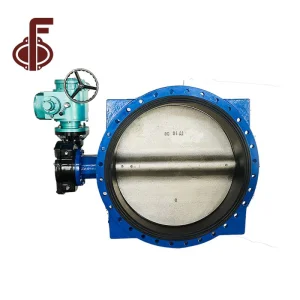
China Large Diameter Electric Flange Butterfly Valves Factories, Exporters
Technical Datasheet -
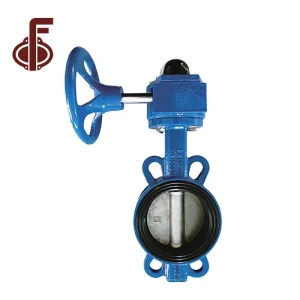
OEM Worm Gear Wafer Butterfly Valve Manufacturer, Factory
Technical Datasheet -
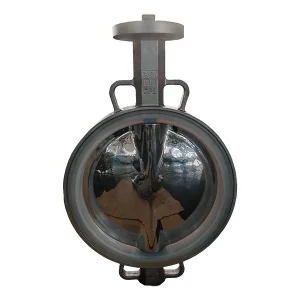
China Double Shaft Polished Disc CF8 Body Silicon Rubber Wafer JIS 10K Butterfly Valve Manufacturer, Factory
Technical Datasheet -
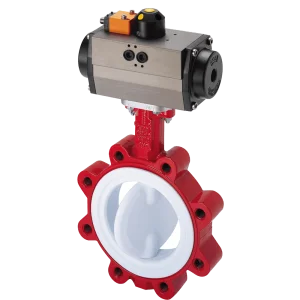
OEM PTFE Full Lined Lug Butterfly Valve Manufacturer, Exporter
Technical Datasheet -
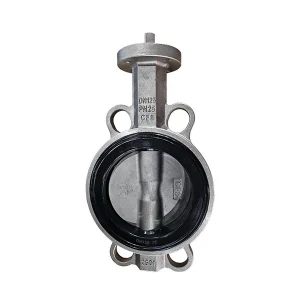
China PN25 DN125 CF8 Wafer Butterfly Valve with Soft Seat Manufacturer, Manufacturers
Technical Datasheet -
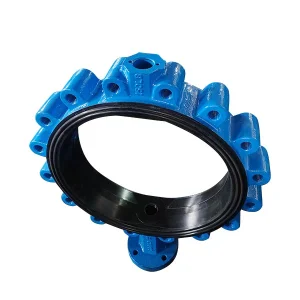
China EPDM Replaceable Seat Ductile Iron Lug Type Butterfly Valve Body Manufacturer, Exporter
Technical Datasheet -
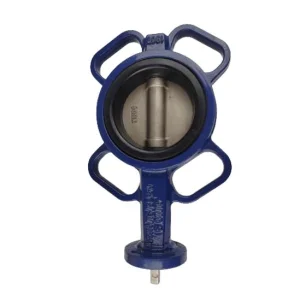
China DN80 PN10/PN16 Ductile Iron Wafer Butterfly Valve Manufacturers, Exporters
Technical Datasheet -
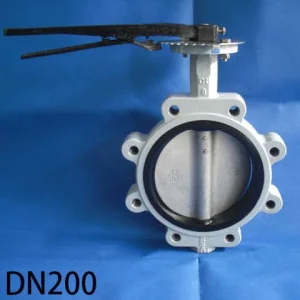
OEM Casting Iron Body CF8 Disc Lug Type Butterfly Valve Manufacturers, Factory
Technical Datasheet
Initiate Your Technical RFQ or Plant Audit
Collaborate directly with our senior valve mechanical engineering team in Tianjin, China. We supply custom 3D CAD models, Cv sizing calculations, EN 10204 3.1 certification dossiers, and tailored actuation packages within 24 hours.
