Precision Engineering Whitepaper
China Triple Offset Butterfly Valve Flow Direction Manufacturer & Exporter
Engineering authoritative zero-leakage bidirectional sealing, hydro-dynamic shaft offset torque analysis, and high-integrity cryogenic/thermal valve systems from Tianjin Zhongfa Valve Co., Ltd. (ZFA Valve).
Precision Flow Inventory
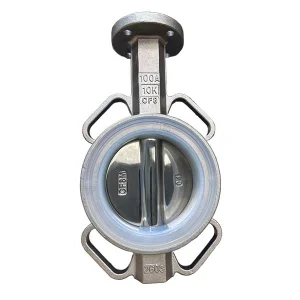
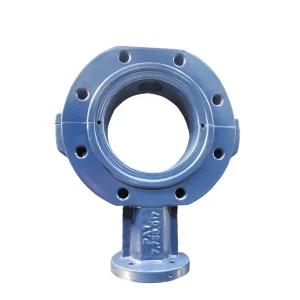
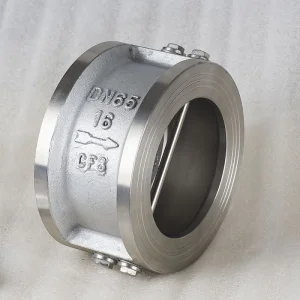
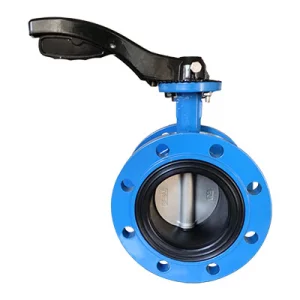
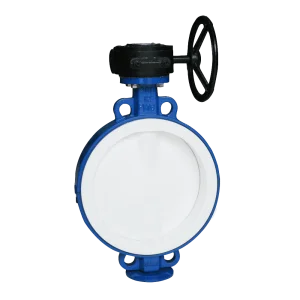
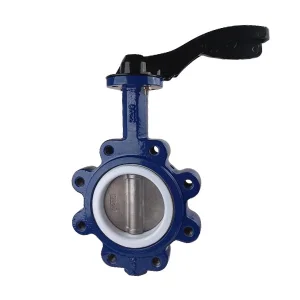
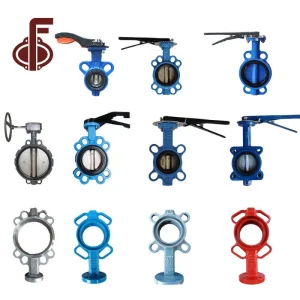
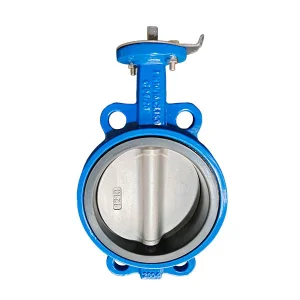
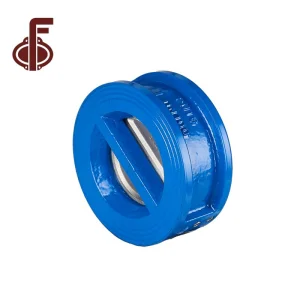
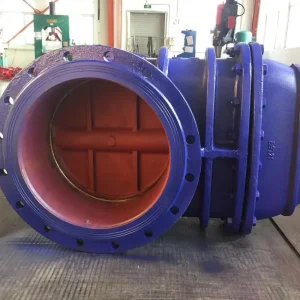
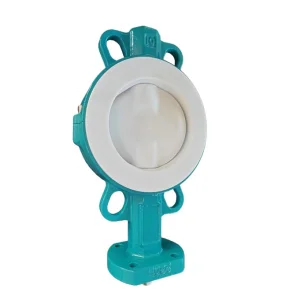
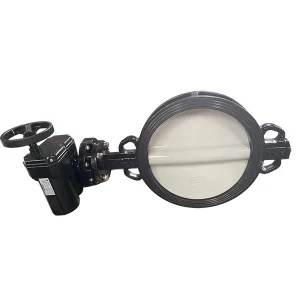
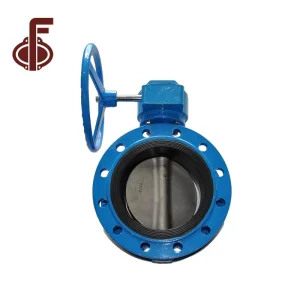
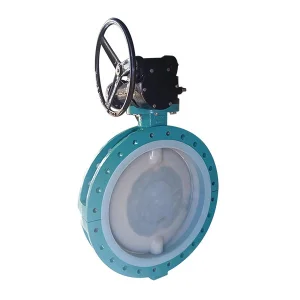
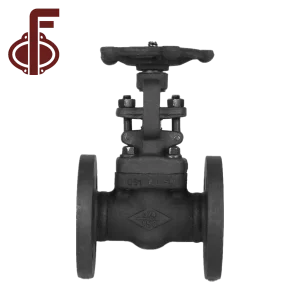
Engineered Butterfly & Check Valve Systems (Series I)
Direct-from-manufacturer heavy-duty industrial valves manufactured strictly to ASME, DIN, and ISO standards for municipal water, marine, and process hydrocarbon isolation.
Kinematics & Sealing Mechanics
Triple Offset Butterfly Valve Flow Direction: The Engineering Imperative
Why understanding Shaft-Downstream vs. Shaft-Upstream configuration dictates valve lifespan, breakout torque, and absolute bubble-tight shutoff under severe cyclic duty.
Preferred Direction (Shaft Upstream)
In standard or "Forward" flow orientation, process medium pressure acts directly onto the back of the disc, mechanically forcing the laminated seat ring against the body conical profile. This creates an in-line pressure-assisted seal, drastically diminishing reliance on actuator seating torque alone to achieve API 598 zero leakage.
Reverse Direction (Shaft Downstream)
Under reverse pressure differential, line pressure pushes the sealing surface away from the seat cone. To maintain bubble-tight containment, the mechanical actuator must supply pure torque to counteract pipeline pushback. This demands specialized disc geometry calculation and calibrated anti-blowout stem design.
True Bidirectional Isolation
Tianjin Zhongfa Valve Co., Ltd. (ZFA Valve) engineers genuine bi-directional TOVs utilizing Stellite 21 hardfaced monolithic body seats coupled with multi-layered graphite and SS316 sealing rings. Our valves undergo bidirectional differential testing up to ASME Class 600 without disc deformation or leakage.
Critical EPC Specification Note: Flow Direction Arrow Indicators
In critical installations such as LNG regasification, steam manifolds, and slurry pipelines, the arrow cast into the triple eccentric valve body does not merely represent pipeline media transit direction; it signifies the direction of higher differential pressure when the valve is fully seated. ZFA Valve clearly distinguishes dynamic process direction from preferential shutoff direction on all stainless-steel nameplates conforming to API 609 Cat B specifications.
| Operating Factor | Shaft Upstream (Preferred Flow) | Shaft Downstream (Reverse Flow) | ZFA Engineered Bidirectional Solution |
|---|---|---|---|
| Sealing Principle | Differential pressure forces disc into seat cone | Torque alone energizes the seat contact force | Optimized cone angle λ ensures dual-direction seat wedging |
| Actuator Torque Sizing | Nominal sizing (Standard gearbox / rack & pinion) | Requires 25% – 45% oversize torque reservation | Calibrated sizing factors for full line DP in both directions |
| Cavity & Slurry Behavior | Zero cavity entrapment; self-cleaning seat profile | Suspended solids sweep past seal edge cleanly | Stellite 21 overlay prevents erosion and particulate galling |
| Service Life Cycle | 50,000+ full-stroke mechanical cycles verified | 35,000+ cycles depending on actuator rigidity | Tested according to ISO 15848-1 Class AH emission tightness |
Real-World Applications
Mission-Critical Deployment Scenarios Across Global Terrains
From District Heating Networks (DHN) in Northern Europe to high-salinity seawater desalination plants in the GCC region, ZFA triple offset valves operate flawlessly.
District Energy & Geothermal Manifolds
Superheated water networks running up to 250°C suffer severe water hammer during pump trips. Preferential flow direction installation preserves seat integrity against hydraulic transients, preventing downstream thermal shocks in urban HVAC grids across Germany, Poland, and Scandinavia.
Refining, Flare Gas & Coking Lines
Petrochemical cracking facilities generate high-temperature dirty vapors laden with carbon fines. Our custom Hardfaced Triple Offset Valves installed in reverse flow orientation utilize stem downstream positioning to safeguard packing rings from extreme abrasive fouling and tar coking.
Cryogenic Air Separation (ASU) & LNG
At temperatures collapsing down to -196°C, conventional resilience disappears. ZFA manufactures extended bonnet, vapor column triple offset valves. Directional calibration guarantees zero seat bind during differential contraction between austenitic SS316 disc rings and Monel seats.
Supply Chain Superiority
China Factory Supply Chain Resilience: The ZFA Advantage
Direct-source metallurgical control, in-house vertical machining, and proximity to major maritime infrastructure deliver unyielding lead-time certainty.
Foundry Traceability
Every heat of WCB, CF8M, CF3M, Duplex 2205, and Monel body castings undergoes spectrometer chemical verification and EN 10204 3.1 certification before machining.
5-Axis CNC Precision
The intricate elliptical cone geometry required for triple eccentric disc profiles is milled using high-precision horizontal and 5-axis machining centers to maintain sub-millimeter tolerances.
Zero Leakage NDT
100% of TOV assemblies pass API 598 low-pressure gas testing and high-pressure water hydrostatic trials. Ultrasonic (UT) and Dye Penetrant (PT) inspections apply across high-spec runs.
Tianjin Port Proximity
Situated within the industrial heartland of Tianjin, ZFA optimizes shipping container consolidation, clearing maritime customs for North America, Europe, the Middle East, and SEA within 48 hours.
Innovation Pipeline
Technology Roadmap: Next-Generation Triple Offset Dynamics
How ZFA Valve engineers digital twin torque simulations, cryogenic polymer matrix materials, and IoT telemetry directly into flow control infrastructure.
CFD Dynamic Flow Modeling
By simulating fluid-structure interactions (FSI) across turbulent transition points, our research labs calculate the exact torque surge during 15° to 35° disc unseating. This mitigates dynamic flutter in rapid closing systems.
Fugitive Emission Elimination
Complying with ambitious global decarbonization initiatives, ZFA’s updated shaft seals implement live-loaded PTFE and pure die-formed flexible graphite rings guaranteeing leakage beneath 50 ppmv, meeting ISO 15848-1 Class A.
Sensory Actuator Integration
Developing embedded Hall-effect stem angle sensors and strain-gauge torque feedback modules. Plants can monitor internal friction anomalies, disc seat erosion, and reverse flow surges remotely via Modbus/Profibus fieldbus.
Global Compliance & Engineering Assurance
Commercial Reality, Audit Compliance & Engineering Governance
Streamlining the procurement path for International EPC Contractors, Engineering Consultants, and Municipal Water Operators through unified certification packs.
Audited Quality Frameworks (ISO 9001 & CE PED)
Tianjin Zhongfa Valve Co., Ltd. operates under rigorous quality gates certified by world-leading classification societies. From initial casting porosity inspection to hydrostatic shell testing at 1.5x design pressure and low-pressure gas testing, our documentation dossiers include fully matched Material Test Reports (MTRs), welding procedure specifications (WPS), and European CE Pressure Equipment Directive (PED 2014/68/EU) certificates.
Localized Engineering Support & OEM Capability
We provide full-spectrum engineering liaison services for project engineers in Frankfurt, Houston, Dubai, and Singapore. Whether translating legacy DIN PN16 specs into ASME Class 150 flanged dimensions, calculating customized Kv and Cv flow metrics, or building complete private-label OEM assemblies with tailored shaft keyway machining, our technical desk responds with submittal packages within 24 hours.
Technical Clarifications
Frequently Asked Technical Questions
In-depth answers addressing flow direction mechanics, installation risks, seat material metallurgy, and global certifications.
What is the difference between Preferred Flow Direction and Reverse Flow Direction in a Triple Offset Butterfly Valve?
Preferred Flow Direction (Shaft Upstream) directs process pressure behind the disc. This pressure energizes the seal by mechanically assisting the laminated seal ring against the conical body seat, resulting in zero leakage (API 598) with minimum actuator torque. Reverse Flow Direction (Shaft Downstream) occurs when line pressure tries to push the disc away from the seat cone; sealing in this orientation is achieved entirely through actuator torque. High-quality TOVs manufactured by ZFA are engineered with robust seat clamp retaining systems and rigid high-tensile stems to achieve bidirectional zero leakage, although torque requirements may be 20% to 40% higher in reverse service.
Does installing a Triple Offset Butterfly Valve backwards cause catastrophic failure?
Installing a valve opposite to the higher shutoff differential direction will not cause immediate catastrophic failure if the actuator has been appropriately sized for bidirectional service. However, if the actuator was sized strictly for "Forward/Preferred" seating torque, it may lack sufficient output to maintain bubble-tight shutoff against maximum rated differential pressure in reverse flow. Furthermore, incorrect orientation in high-velocity slurry media may expose the laminated seal ring to higher impingement erosion. Always confirm system isolation direction prior to installation.
How does the third offset eliminate friction and wear during opening and closing?
The first offset places the shaft axis behind the seating plane; the second offset positions the shaft eccentric to the pipeline center bore; the critical third offset tilts the cone axis of the seating surface away from the pipe centerline. This geometry transforms the circular motion into a camming action. The disc only contacts the seat at the final fraction of a degree of closure (0° to 1°), eliminating rubbing, seat wear, and galling seen in concentric or high-performance double eccentric designs.
Which international design, dimension, and testing standards do ZFA valves comply with?
Tianjin Zhongfa Valve Co., Ltd. (ZFA) designs, machines, and tests its industrial valve product range in strict compliance with ASTM, ANSI/ASME (B16.34, B16.5, B16.10, B16.47), ISO (5752, 5211), BS (EN 593), DIN (EN 558), GOST, JIS, and KS standards. Pressure testing is performed 100% in-house according to API 598, ISO 5208, and EN 12266-1 prior to packaging.
How do I specify seat and disc materials for abrasive or corrosive duties?
For standard water and HVAC duty up to 120°C, ductile iron bodies with EPDM/NBR seats are standard. For aggressive chemical or corrosive media, split-body PTFE-lined or CF8M stainless steel configurations are ideal. In high-temperature steam, hydrocarbon refineries, or cryogenic services, ZFA supplies Triple Offset Metal-to-Metal valves featuring WCB or CF8M bodies, Stellite 21 hardfaced solid seats, and multi-layered Stainless Steel 316 + flexible graphite laminated seal rings capable of withstanding temperatures from -196°C up to +550°C.
Can ZFA manufacture custom OEM valves with private branding and special drilling?
Yes. ZFA Valve has been a premier OEM valve manufacturer since 2006. We provide full drawing reviews, custom pattern making, casting logo engraving, epoxy powder coating in custom RAL colors, and specialized multi-standard drilling (such as universal flanges compatible with PN10, PN16, ASME 150, and JIS 10K). Full 3.1 chemical & physical material certificates and pressure test reports are supplied with every shipment.
Industrial Catalog
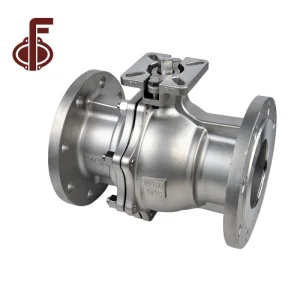
Engineered Butterfly, Ball & Check Valve Systems (Series II)
Explore our proven high-flow isolation range, certified for municipal pumping stations, offshore processing, and global pipeline installations.