Industrial Butterfly & Flow Control Solutions
Explore Tianjin Zhongfa Valve's core high-pressure resilient and metallic seated valves engineered for zero-leakage isolation across municipal, chemical, and offshore pipelines.
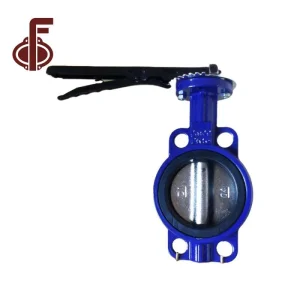
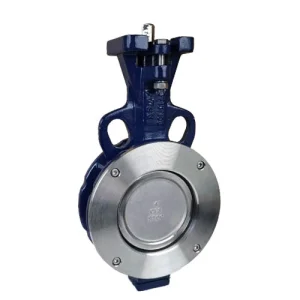
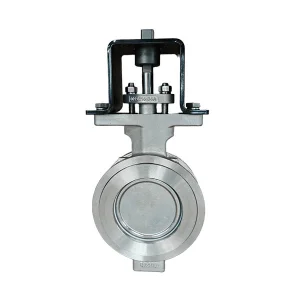
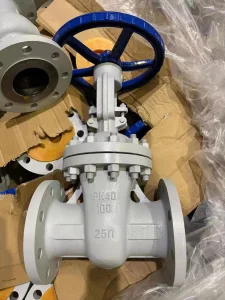
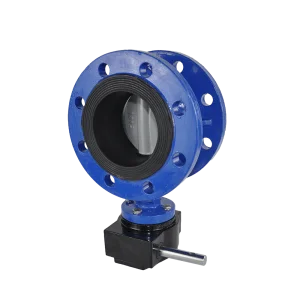
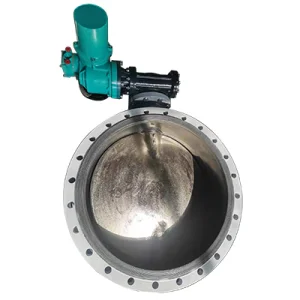
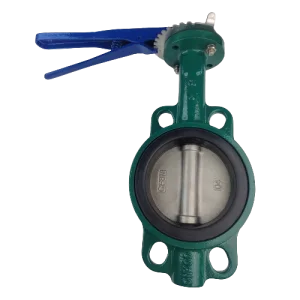
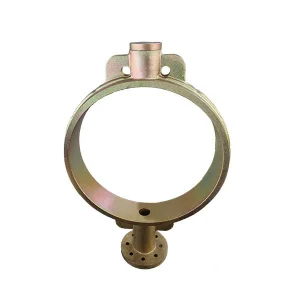
Global Market Dynamics: Wafer vs. Lug Body Selections
Industrial quarter-turn quarter-stroke valves represent over 34% of global fluid mechanics infrastructure. Specifying between wafer and lug patterns defines system longevity, downtime mitigation, and overall project Capex.
Wafer Type: Low Capex & Compact Density
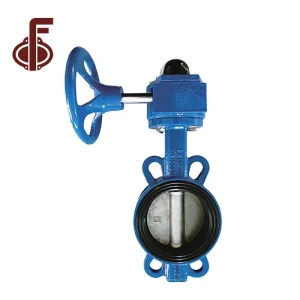
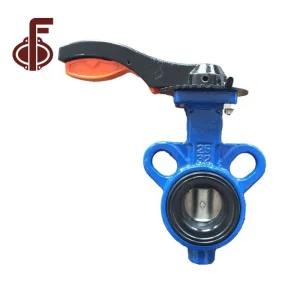
The wafer style butterfly valve utilizes a sandwich architecture clamped between pipeline flanges by long stud bolts. This layout maximizes spatial economy and minimizes raw material tonnage.
- Thermal Gradient Sensitivity: Extended stud bolts undergo thermal elongation at elevated operating temperatures, requiring precise torquing protocols to prevent gasket blowouts.
- Installation Footprint: Ideal for compact mechanical HVAC rooms, maritime ballast systems, and OEM skid manufacturing.
- Maintenance Constraint: Downstream isolation is impossible; lines must be fully depressurized and drained prior to servicing.
Lug Type: Dead-End Isolation & System Safety
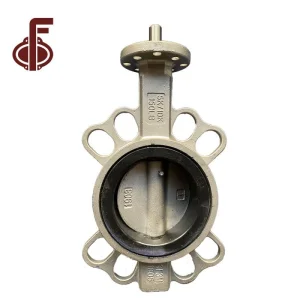
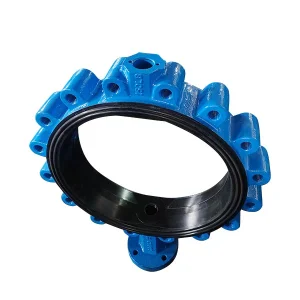
Lugged bodies incorporate precision-tapped female bolt lugs conforming to standard flange drillings (ASME B16.5, EN 1092-1, BS 4504). This configuration enables independent bolting on either pipeline side.
- True Dead-End Service: Permits maintenance or replacement of downstream piping while holding line pressure upstream without catastrophic fluid release.
- Direct Pump & Vessel Terminations: Bolted directly to suction and discharge nozzles of turbines, heat exchangers, and high-pressure pumps.
- Enhanced Structural Rigidity: Solid threaded perimeter provides robust defense against high pipeline water hammer and bending moments.
Engineering Evaluation: Wafer vs. Lugged Architecture
A side-by-side technical evaluation across critical piping design parameters for chemical, process, and EPC consulting engineers.
| Evaluation Parameter | Wafer Type Butterfly Valve | Lugged Type Butterfly Valve | Engineering Impact & Selection Criteria |
|---|---|---|---|
| Dead-End Service Capability | Unusable (Requires downstream containment) | Fully Certified (Rated up to full working class) | Lugged pattern is non-negotiable for system terminations and continuous plant maintenance. |
| Weight & Material Mass | Ultra-light (30% to 45% less casting volume) | Heavier cast body due to perimeter tapped lugs | Wafer design reduces pipeline stress and structural support rigging requirements. |
| Fastener Strategy | Through-bolts spanning entire valve face-to-face | Individual short stud bolts on upstream & downstream | Lugged bolts eliminate thermal expansion bolt-slack across high delta-T thermal cycles. |
| Initial Capital Outlay (Capex) | Lowest procurement and fabrication cost | Marginally higher (+15% to 25% due to machining) | Wafer provides immediate procurement cost savings in large-bore municipal water networks. |
| Bi-Directional Shell Sealing | Class VI or Bubble-Tight via Resilient Seat | Class VI / Fire-Safe Metallic API 607 Compliant | Both architectures support zero-leakage shutoff with proper vulcanized elastomeric liners. |
Critical Specifier Insight: Resilient Seat Selection Factors
The choice between EPDM, NBR, and PTFE dictates valve lifetime far more than body pattern. While EPDM is the industry standard for potable and municipal chilled water (-20°C to +120°C), introducing hydrocarbons or hydraulic oils will induce chemical swell and seat blowout within months. For fuel systems, specify NBR. For aggressive acids, aromatic hydrocarbons, or ultra-pure biopharma media, a pure PTFE / PFA fluoropolymer-lined seat and disc envelope is mandatory.
Why Tier-1 EPCs Source from Tianjin Valve Hubs
Tianjin Zhongfa Valve combines complete foundry automation, automated CNC machining centers, and strict compliance with Western manufacturing standards.
Vertically Integrated Foundries
By controlling electric induction melting, resin-sand molding, and spectrographic chemical analysis in-house, our Tianjin foundry prevents internal blowholes, micro-porosity, and graphite degradation.
- Full traceability with 3.1 EN 10204 Mill Test Certificates.
- Ductile iron grades strictly verified to QT450-10 and ASTM A536 65-45-12.
Precision CNC Stem & Bore Milling
Sealing performance relies on concentric tolerances. Multi-axis CNC centers machine the valve body neck, O-ring groove, and disc edges down to micrometer tolerances.
- Eliminates seat scrub and operating torque spikes.
- Direct ISO 5211 mounting pad integration for actuators.
100% Dual-Direction Pressure Testing
Zero leakage is verified via hydrostatic and pneumatic testing on every serial-numbered unit before packaging, in compliance with API 598 and EN 12266-1.
- Shell testing executed at 1.5× PN nominal pressure.
- Resilient seat back-pressure test executed at 1.1× PN.
Localized Applications & Harsh Environment Deployment
From seawater desalination skids to commercial HVAC district cooling arrays, our wafer and lug butterfly valves are deployed worldwide.
Desalination & Seawater Intake
Standard ductile iron degrades rapidly in high-salinity marine environments. We supply nickel-aluminum bronze (C95800) and Super Duplex (2507) discs with vulcanized hard-backed EPDM seats.
- Guaranteed pitting resistance equivalent number (PREN > 42).
- Electrostatically fused epoxy coating (min. 250 μm).
HVAC & District Energy Networks
Urban high-rise building complexes demand thousands of low-torque wafer butterfly valves for chilled water circuits and hydronic air conditioning balancing.
- Compatible with PN10, PN16, ANSI 150 universals.
- Extended neck body allows full 2-inch pipe lagging without lever obstruction.
Chemical & Corrosive Scrubbers
For flue gas desulfurization, industrial wastewater neutralization, and pharmaceutical fluid routing, ZFA designs high-performance PTFE-lined butterfly valves.
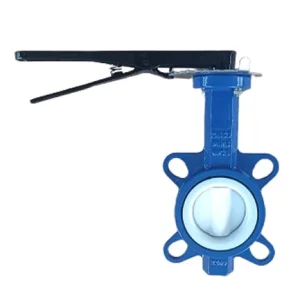
- Chemically inert pure PTFE seats resist severe acid attacks.
- Disc encapsulated with thick PFA/FEP layer protects base metal.
Next-Generation Industry Trends & EPC Sourcing Demands
The global fluid infrastructure sector is undergoing rapid digital modernization. Sourcing teams prioritize integrated actuation, predictive analytics, and end-to-end supply chain transparency.
IoT & Digital Valve Intelligence
Traditional manual gearboxes are being superseded by smart electro-hydraulic and modulating electric actuators linked via Modbus, Profibus, or WirelessHART.
- Predictive Torque Monitoring: Real-time torque signature analysis detects early seat wear and scaling build-up before seal failure occurs.
- Automated Diagnostics: Actuator cycle telemetry informs centralized SCADA systems to schedule preventive maintenance routines without unscheduled plant shutdowns.
Strict ESG, Decarbonization & Low Emission Packing
Global environmental regulations mandate rigorous fugitive emissions control across stem seals, particularly in petrochemical and hazardous liquid processes.
- ISO 15848-1 Compliance: Multi-tiered V-ring chevron stem packing ensures Class AH stem tightness under continuous cyclic operations.
- Sustainable Foundries: Electric arc smelting coupled with fully closed dust extraction cycles minimizes carbon footprint per ton of valve casting produced.
Frequently Answered Technical Questions
Essential guidance for purchasing agents, pipeline designers, and valve distribution buyers.
Can a wafer butterfly valve be installed in dead-end service?
No. Standard wafer valves are held in place by compression between two opposing pipe flanges. If the downstream pipeline is detached, there is no mechanical retention to contain line pressure, which will blow out the valve. A lug type or double-flanged butterfly valve is required for dead-end applications.
What is the standard drill compatibility for ZFA lug bodies?
Our lugged butterfly bodies are precision tapped to universal multi-standard configurations, including ASME B16.1 Class 125, ASME B16.5 Class 150, EN 1092-1 PN10/PN16, and JIS B2238 10K. This versatility allows distributors to fulfill international specifications from a single inventory SKU.
How does disc profile affect hydrodynamic Cv ratings?
A streamlined, contoured thin-disc design minimizes cross-sectional fluid blockage when fully rotated to 90 degrees open. This reduction in profile increases overall flow coefficient (Cv/Kv) and lowers head loss, reducing lifecycle electrical pumping power demands.
What quality documentation accompanies custom OEM export batches?
Every shipment is backed by a full documentation package including EN 10204 3.1 Material Test Reports, Hydrostatic Shell & Seat Test Certificates (API 598), CE Declaration of Conformity, ISO 9001 compliance logs, and custom-branded packaging photos prior to container seal.
Specialized Industrial Valve Solutions
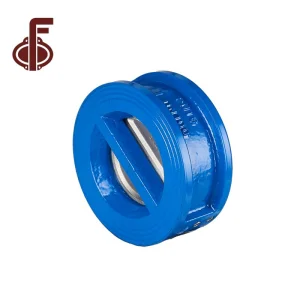
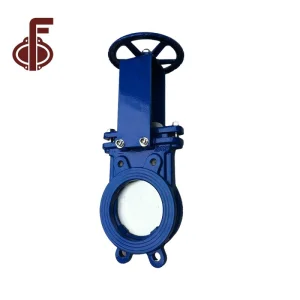
Complete your plant configuration with high-performance wafer, lugged, dual-plate check, and knife gate valves engineered to withstand demanding process conditions.