
Precision Flow Systems & Engineered Valve Assemblies
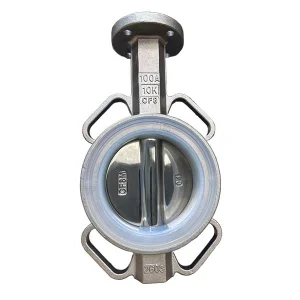
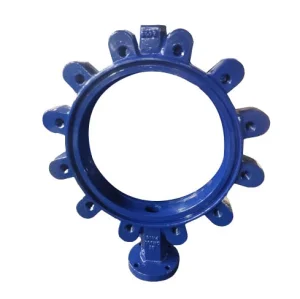
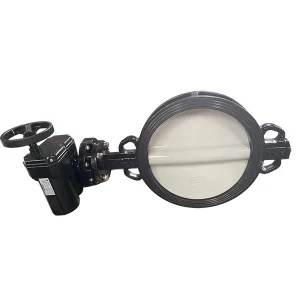
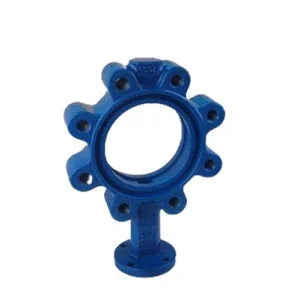
Explore our foundational range of butterfly valves, high-pressure resilient body components, and automated actuation configurations engineered in our Tianjin intelligent manufacturing facility.
Engineering Architecture of Fully Welded Ball Valves
In high-consequence energy transport, district heating networks (DH), and pressurized hydrocarbon pipelines, mechanical flange joints present unacceptable risks of fugitive emissions and stress-induced cracking. Fully welded ball valves solve this structural vulnerability by integrating the body into a monolithic, hermetically sealed pressure vessel.
Monolithic Shell Integrity
By eliminating bolted body splits, our fully welded design withstands severe ground subsidence, thermal cycling, and hydrostatic pipeline surges without joint relaxation or gasket blowout.
- Zero potential fugitive emission leak points
- Forged carbon steel ASTM A105 / A350 LF2 body
- Uniform wall thickness calculated via FEA modeling
Pre-Compressed Spring Sealing
The floating or trunnion-mounted closure system utilizes disc Belleville spring-energized carbon-reinforced PTFE / Devlon seats, guaranteeing Class VI bubble-tight shutoff even at ultra-low differential pressures.
- Automatic cavity relief mechanism (SPE/DPE)
- Bi-directional sealing with dual soft/metal barrier
- Mirror-polished stainless steel ball (Ra < 0.1 µm)
Direct-Buried Maintenance-Free Service
Engineered explicitly for direct underground installation without expensive concrete valve pits. High stem extensions and secondary sealant injection lines allow complete surface operation.
- Corrosion protection to EN 10289 / ISO 21809
- Extended stem heights up to 6 meters customizable
- Integral emergency sealant injection ports
| Design Parameters | Fully Welded Ball Valve (ZFA Core) | 3-Piece Bolted Split Body | Top-Entry Cast Ball Valve |
|---|---|---|---|
| Body Joint Seal | Monolithic Welded (No Gaskets/Bolts) | Elastomeric O-ring + Spiral Wound Gasket | Bolted Bonnet Cover Gasket |
| Direct Buried Capability | Exceptional (Zero maintenance pit required) | Poor (High risk of bolt corrosion & leaks) | Moderate (Requires pit access for maintenance) |
| Fugitive Emissions (ISO 15848-1) | Class AH (< 10⁻⁶ mg·s⁻¹·m⁻¹) | Class BH to CH (Bolted relaxation risk) | Class BH (Bonnet joint maintenance needed) |
| Resistance to Bending Loads | Matches Pipeline Yield Strength (SMYS) | Vulnerable to flange deflection | Rigid, but heavy cast body structures |
| Weight & Envelope Dimensions | Compact, 25–40% lighter than bolted valve | Heavy due to massive flange connections | Extremely heavy cast structure |
| Typical 30-Year TCO | Lowest (Zero overhaul / Zero maintenance) | High (Periodic gasket & bolt tightening) | Moderate (In-line repairable, high initial Capex) |
China Factory 4.0: Supply Chain Resilience & Metallurgical Precision
Tianjin Zhongfa Valve Co., Ltd. (established in 2006) leverages intelligent production clusters, automated Submerged Arc Welding (SAW), robotic narrow-gap welding, and full-spectrum Non-Destructive Testing (NDT) to produce zero-defect welded ball valves.
Metallurgical Forging
100% fine-grain normalized carbon steel (ASTM A105N, A350 LF2) forged billets with ultrasonic volumetric inspection to eliminate inclusions.
CNC Precision Machining
Multi-axis horizontal machining centers turn and grind balls to sphericity tolerances within 0.005 mm and mirror surface finishes (Ra < 0.1 µm).
Automated SAW Welding
Robotic Narrow Gap Submerged Arc Welding (SAW) with controlled heat input, preserving internal PTFE/elastomeric seats from thermal degradation.
100% NDT & Hydro Testing
Phased Array Ultrasonic Testing (PAUT), Radiography (RT), Magnetic Particle (MPI), and high-pressure shell/seat hydrostatic tests to API 598 / API 6D.
Heavy Anti-Corrosion Barrier
Automated blast cleaning to Sa 2.5 followed by solvent-free polyurethane coating (EN 10289) or fusion-bonded epoxy up to 1500 µm dry film thickness.
Controlled Weld Heat Dissipation Technology
The foremost technical hurdle in fully welded ball valve fabrication is shielding resilient polymers (PTFE, PEEK, Devlon) from extreme welding temperatures. ZFA deploys proprietary water-cooled heat-sink collars, pulsed current parameters, and continuous real-time infrared thermal mapping, limiting the seat ring zone strictly below 85°C throughout multi-pass girth welding.
Vertically Integrated Raw Material Supply
Situated within the Bohai Rim industrial cluster, ZFA Valve commands an unyielding supply chain network. Raw forgings, high-strength stems (17-4PH, Inconel 718), and premium elastomers are directly sourced under rigid long-term framework agreements, yielding lead times 35% shorter than Western competitors and ensuring complete batch-level traceability to 3.1 MTR standards.
Macro-Industry Applications & Harsh Environment Deployment
From sub-zero Arctic distribution lines to municipal district heating networks operating at supercritical thermal levels, our fully welded ball valves deliver uncompromised operational safety.
District Heating (DH) & Cooling Grids
Conforming to EN 488 standards, ZFA fully welded ball valves are pre-insulated for direct burial in regional thermal distribution lines. They endure water temperatures up to 200°C, axial pipeline loads from thermal expansion, and aggressive cavitation without maintenance.
- Standard EN 488 / EN 253 pre-insulation compatibility
- Carbon-filled PTFE seals withstand high-temp water & steam
- Integral stem extension with Pur-insulation casing
Natural Gas Transmission Pipelines
Built strictly to API 6D and ISO 14313 specifications, our full-bore welded ball valves support bi-directional pigging operations. Double Block and Bleed (DBB) capabilities allow plant operators to verify seat tightness in-line without service interruption.
- Piggable full-bore interior (API 6D certified)
- Double Block and Bleed (DBB) & DIB-1 / DIB-2 configurations
- Emergency sealant injection for stem and seat rings
Sour Gas (H2S) & Petrochemical Processing
For aggressive environments containing wet hydrogen sulfide, bodies and trim are fabricated in compliance with NACE MR0175 / ISO 15156. Corrosion-resistant alloy cladding (Inconel 625 weld overlay) is applied to seat pockets and stem seal surfaces.
- Full metallurgical compliance with NACE MR0175/ISO 15156
- HIC and SSCC resistant forged steel chemistry
- Inconel 625 / 316L SS laser cladding options
Cryogenic & LNG Liquefaction Service
Operating down to -196°C, specialized welded cryogenic ball valves feature extended bonnets for vapor column thermal insulation, Kel-F / PCTFE lip seals, and engineered cavity pressure relief to protect against sudden LNG vaporization expansion.
- BS 6364 and ISO 28921 cryogenic verification testing
- Engineered vapor column thermal isolation stems
- Automatic cavity relief venting upstream
Worldwide Compliance Assurance & Localized Technical Support
Procuring industrial valves from China requires uncompromised confidence in certification veracity, third-party audit capability, and international codes conformity. ZFA Valve maintains a verified regulatory roadmap.
| Certification / Standard | Governing Agency / Code | Technical Verification Scope | Project Application Region |
|---|---|---|---|
| API 6D / ISO 14313 | American Petroleum Institute | Pipeline and piping systems specification, DBB testing, full bore flow limits | Global / North America / Middle East |
| PED 2014/68/EU Module H | European Pressure Equipment Directive | Full quality assurance with design dossier examination for CE marking | European Union / UK (UKCA) |
| API 607 / ISO 10497 | Fire-Safe Integrity Standard | External burn at 761°C–1000°C for 30 minutes; through-seat leakage verification | Refineries, Chemical Plants, Hydrocarbon |
| ISO 15848-1 AH | Fugitive Emissions Compliance | Helium mass spectrometer sniff testing; zero micro-leakage at stem seals | Clean Energy, Hydrogen, Green Ammonia |
| EN 488 / EN 253 | European District Heating Standard | Steel valves for directly buried hot water networks; bending moment proof | Nordics, Eastern Europe, Central Europe |
| EN 10204 Type 3.1 / 3.2 | Metallurgical Material Certification | Full chemical assay, Charpy impact at sub-zero, tensile and NDT validation | Global EPC Contractors (TÜV, SGS, DNV) |
To eliminate latency in EPC timelines, ZFA Valve pairs every international contract with a dedicated project engineer. We offer complete drawing submittals (3D STEP models, finite element stress reports, seismic calculations) within 48 hours of RFQ. Furthermore, we collaborate seamlessly with worldwide third-party inspection agencies including Bureau Veritas, DNV-GL, Lloyd's Register, SGS, and TÜV Rheinland, facilitating complete witness testing (FAT), PMI material verification, and hydrostatic hold-point sign-offs prior to port departure.
Addressing Global Enterprise Procurement Demands
Tier-1 EPCs and sovereign municipal utility operators do not merely buy metal—they invest in risk mitigation, Total Cost of Ownership (TCO) predictability, and on-schedule commercial operational dates (COD).
Stringent Quality Dossiers (EN 10204 3.1 & 3.2)
Every shipment is accompanied by complete inspection data books, including raw material melt reports, heat treatment charts, weld procedure specifications (WPS/PQR to ASME Sec IX), and calibrated hydrostatic leak logs.
Life-Cycle Cost (LCC) Optimization
Direct burial eliminates civil concrete chambers, cutting civil construction costs by up to 60%. Combined with maintenance-free PTFE/PEEK sealing, fully welded valves yield an operational expenditure advantage that eclipses bolted valves over a 30-year span.
Export-Grade Packing & Ocean Protection
Machined weld bevels are protected with heavy-duty end caps and rust-inhibiting grease. Valves are vacuum-sealed and mounted in IPPC-certified fumigated structural timber crates designed for prolonged tropical or marine transit.
Pioneering the Next Generation of High-Integrity Flow Systems
As global energy transitions accelerate toward hydrogen networks, decarbonized district energy, and digitalized industrial IoT, ZFA Valve continuously updates its core engineering roadmap.
100% Pure Hydrogen & H2-Blend Compatibility
Hydrogen molecules induce severe embrittlement in conventional high-strength steels. Our materials lab has qualified low-carbon micro-alloyed forgings with controlled nickel equivalents and specialized ultra-dense polymeric seating matrices, preventing lattice diffusion and hydrogen-induced cracking (HIC) at pressures exceeding 100 bar.
Smart IoT Health Monitoring for Buried Infrastructure
Excavating a buried valve to inspect wear is cost-prohibitive. ZFA is actively integrating non-intrusive fiber-optic strain gauges, embedded acoustic emission sensors for micro-cavitation detection, and real-time stem torque anomaly monitoring, feeding critical diagnostic data to municipal SCADA grids via low-power wireless protocols.
Sub-Micro Fugitive Emission Engineering
Exceeding current ISO 15848-1 AH tightness specifications, our next-generation stem sealing incorporates energized dynamic graphite packing coupled with dual primary lip seals and live-loaded Belleville washer assemblies. This architecture guarantees zero detectable leakage across 10,000 thermal-mechanical actuation cycles.
Additive Manufacturing & Robotic Laser Cladding
For severe-service abrasive slurry and corrosive sour applications, robotic direct-energy deposition (DED) laser cladding applies pore-free Stellite 6 or Hastelloy C276 layers to dynamic sealing zones, tripling valve lifecycle while minimizing reliance on solid superalloy castings.
Engineering Questions & Procurement FAQ
Comprehensive technical guidance compiled by our lead valve design engineers to assist project estimators, pipeline specifiers, and procurement teams.
Directly buried pipelines undergo continuous geotechnical stress, including soil subsidence, ground freezing, and cyclic thermal expansion. Bolted split-body valves rely on mechanical studs and compressed gaskets, which inevitably suffer from bolt relaxation, galvanic corrosion, and joint weeping over decades. A fully welded ball valve forms a unified, monolithic welded pressure vessel matching the pipe's hoop strength, completely eliminating flanged external leak paths and the necessity of costly concrete inspection chambers.
We utilize Narrow Gap Submerged Arc Welding (SAW) and pulsed GMAW processes with precisely calibrated low heat input parameters. The internal valve cavity is fitted with circulating water cooling jackets or thermal heat sinks that conduct heat rapidly away from the seat pocket. Continuous infrared pyrometry monitors the body temperature adjacent to the seat rings, keeping the critical polymer zone strictly below 85°C to preserve seat elasticity, dimensional tolerances, and Class VI shutoff capability.
Single Piston Effect (SPE) seats are self-relieving: when pipeline pressure enters the valve body cavity and exceeds downstream pressure by approximately 15–20 psi, the seat ring lifts off the ball to automatically discharge excess pressure downstream. Double Piston Effect (DPE) seats utilize line pressure from either the pipeline or the body cavity to push the seat harder against the ball, providing dual mechanical barriers. If DPE seats are specified, an external automatic thermal relief valve (TRV) must be installed on the body cavity to prevent overpressurization caused by fluid thermal expansion.
For directly buried installations, we apply a solvent-free two-component rigid polyurethane coating in accordance with EN 10289 (Class B) or three-layer polyethylene (3LPE) / fusion bonded epoxy (FBE) to ISO 21809. Coating thickness ranges from 1000 µm to 1500 µm dry film thickness (DFT), subjected to a 100% 15 kV spark holiday detection test to verify zero pinholes, guaranteeing 40-year cathodic disbondment resistance.
Yes. ZFA designs customized extended stems up to 6.0 meters in overall height. The extension tube is fabricated from carbon steel protected with the same heavy-duty polyurethane coating as the body. It includes internal stainless steel torque drive shafts, pre-lubricated self-aligning guide bearings, emergency grease sealant lines for both ball seats and stem packings, and a top flange compliant with ISO 5211 for direct mounting of manual bevel gears, portable drive systems, or IP68 submersible electric actuators.
For contracts requiring EN 10204 3.2 inspection certification, we coordinate directly with client-designated independent inspection agencies (e.g., TÜV, DNV, Lloyd's, SGS). The third-party inspector visits our factory to witness raw forging heat-batch identification, mechanical test bar pulls, Charpy impact tests at design minimum temperature, non-destructive volumetric weld examinations (RT/PAUT), and final hydrostatic shell/seat pressure tests before co-signing the release certificates.
Specialized Flow Isolation & Pipeline Control Infrastructure
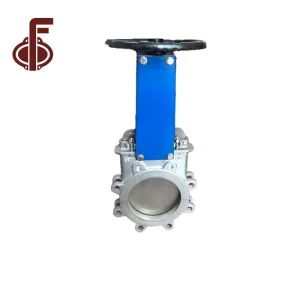
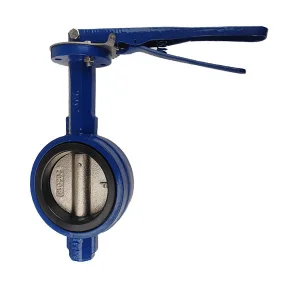
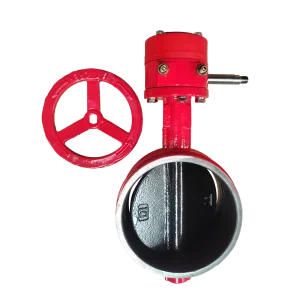
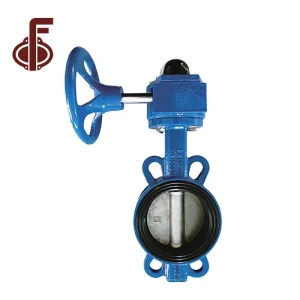
Review our extended valve equipment series, covering knife gate systems, high-integrity grooved fire protection designs, and automated butterfly valves fabricated to global standards.
Request a Comprehensive Engineering Consultation & Quotation
Whether preparing tender documents for municipal district heating, specifying API 6D pipeline ball valves, or procuring large-bore automated butterfly valves, our engineering team in Tianjin is ready to assist with CAD drawings, datasheets, and competitive project estimates.
