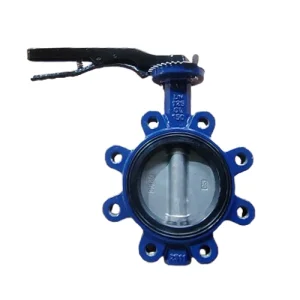
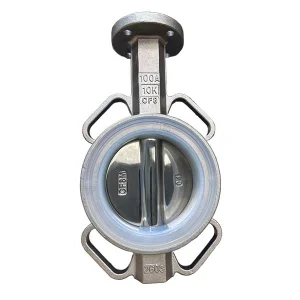
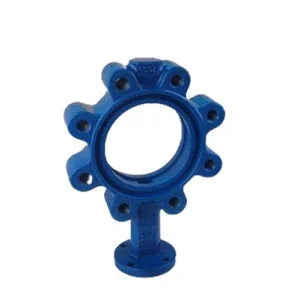
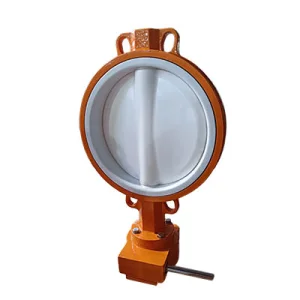
Featured Industrial Flow Portfolio (Part I)
Explore our certified baseline valves designed for resilient isolation, chemical handling, and Municipal water systems under global operational parameters.
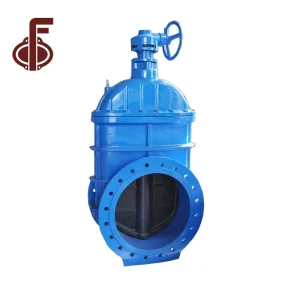
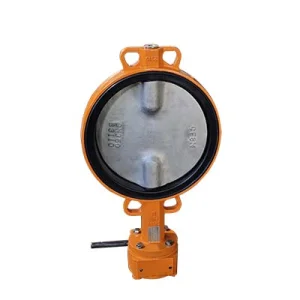
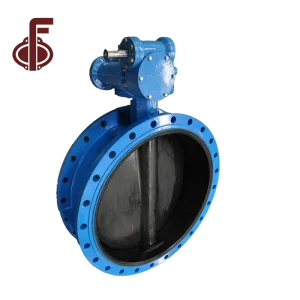
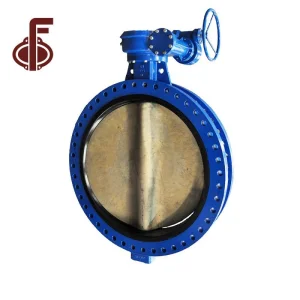
Global Commercial Landscape: The Surge in Large-Bore 30" Butterfly Valve Demand
Decarbonization, cross-border water transmission, and energy transformation projects are reshaping valve infrastructure globally, making OEM 30 butterfly valve procurement critical for engineering reliability.
Municipal Desalination & Water Grid Modernization
Global megacities and arid regions in the Middle East and Southern Europe are constructing massive reverse-osmosis desalination complexes. Large-diameter 30-inch (DN750) resilient-seated butterfly valves serve as the standard backbone for intake header isolation and post-treatment distribution, requiring corrosion-resistant materials like CF8M and duplex disc alloys paired with high-durability EPDM liners.
District Energy & Hyperscale Data Center HVAC
Thermal management for high-density AI data centers and metropolitan central heating systems requires high flow rates with negligible head loss. The 30" butterfly valve delivers hydrodynamic efficiency, minimizing pumping power dissipation across closed-loop cooling towers and chilled water networks while supporting bi-directional, bubble-tight shut-off.
Industrial Decarbonization & Flue Gas Scrubbing
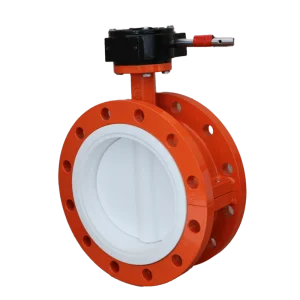
Heavy industry, pulp & paper, and chemical refineries rely heavily on PTFE-lined, triple-offset 30 butterfly valves to regulate corrosive off-gases, acidic flue gases, and scrubber wash slurries. Engineering focus has shifted toward high-integrity stem seals that eliminate fugitive emissions in compliance with stringent global Clean Air targets.
Localized Application Engineering: Context-Specific Valve Solutions
Operating a 30-inch butterfly valve requires deep understanding of localized geotechnical, hydraulic, and environmental forces across varying international operating terrains.
Seismic & Subsea Burial (North America & Japan)
In seismic risk corridors, buried 30" water lines experience soil shear stress and pipeline misalignment. OEM fabrications leverage ductile iron (ASTM A536) bodies with extended stems, IP68 fully submersible worm gearboxes, and reinforced dovetail seat profiles to maintain structural tightness without pipeline stress fracturing.
Thermal Cycling & Cryogenic Media (Northern Europe)
District heating networks subject valves to cyclic thermal gradients up to 120°C and sudden pressure fluctuations. High-precision engineered disc clearances avoid thermal expansion jamming, while double eccentric disc geometry reduces seat contact friction during the critical initial degrees of disc rotation.
Saline & High-Chloride Immersion (Gulf Coast & Australasia)
Marine cooling loops and desalination plants encounter rapid pitting corrosion. We configure customized 30 butterfly valves with hard-vulcanized rubber linings, nickel-aluminum bronze (NAB) discs, or split-body PTFE isolation barriers to withstand extreme chloride degradation without recurring maintenance downtime.
Engineering Matrix: 30" Butterfly Valve Structural Architecture
Specification guidance for selecting appropriate configurations across concentric, double eccentric, and triple offset geometries.
| Architecture Class | Nominal Size | Pressure Classes | Body & Disc Alloys | Seating Interface | Optimal Service Environment |
|---|---|---|---|---|---|
| Concentric Resilient-Seated | 30 Inch (DN750) | PN10, PN16, Class 125/150 | Ductile Iron (GGG40/50), WCB, CF8, CF8M | EPDM, NBR, Viton, Polished Disc Hub | Municipal Potable Water, HVAC Circulation, Low-Head Raw Water |
| Double Offset High Performance | 30 Inch (DN750) | Class 150, Class 300, PN25 | WCB Cast Steel, CF8M Stainless, Duplex 2205 | R-PTFE, Firesafe Dual Seat, Bronze | Petrochemical Utility, Power Generation Steam Condensate, Fuel Lines |
| Triple Offset (TOV) Metal-Seated | 30 Inch (DN750) | Class 150 to Class 600, PN40 | WCB, Low Temp Steel (LCC), CF8M, Monel | Laminated SS/Graphite, Stellite Hardfaced | Superheated Steam, Hydrocarbon Gas Isolation, Cryogenic Systems |
| Full PTFE/PFA Lined | Up to 30" (Special Build) | PN10, Class 150 | Ductile Iron or Carbon Steel Outer Shell | Virgin PTFE, PFA Encapsulated Disc | Aggressive Inorganic Acids, Semiconductor Chemical Feed, Bleaching Agents |
Tianjin Foundry Ecosystem: Supply Chain Resilience & OEM Agility
Combining end-to-end metallurgical control with lean digitalized assembly, Tianjin Zhongfa Valve delivers cost and schedule certainty for massive infrastructure valves.
Integrated Metallurgical Foundries
Tianjin's heavy industrial cluster gives our factory immediate access to world-class precision casting and sand-casting infrastructure capable of pouring 30-inch and larger single-piece ductile iron and cast steel valve bodies. Spectrometric verification ensures nodularity indices >90% and rigorous chemical analysis prior to rough machining, preventing internal shrinkage and microporosity.
CNC Gantry Machining Centers
Machining massive 30" valve bodies requires ultra-stable vertical turning lathes (VTL) and 5-axis horizontal boring mills. Our facility machines critical body bores, stem journals, and flange faces in unified setups, ensuring concentricity tolerances within ±0.03mm. This eliminates stem binding and reduces operating torque demands for actuator sizing.
Accelerated EPC Delivery Timelines
By standardizing large-bore pattern plates, maintaining raw casting buffers, and streamlining ISO 9001 quality inspections, we shorten custom 30" butterfly valve lead times from the typical 24-week industry average down to 8–10 weeks. Our deep-water maritime logistics via Tianjin Port ensure swift deployment worldwide.
Technical Roadmap: Next-Generation Valve Engineering (2025–2030)
How our factory engineers the future of large-scale flow systems with predictive monitoring, zero-emission sealing, and computational fluid dynamics.
CFD Streamlined Discs
Computational Fluid Dynamics redesign of 30-inch discs to reduce turbulence, drop hydrodynamic drag coefficients by 18%, and minimize cavitation at high velocity throttled states.
Graphene-Infused Elastomers
Compounding specialized EPDM and HNBR liners with nano-graphene platelets to drastically raise abrasion resistance and prevent compression-set under continuous mechanical load.
IoT Integrated Torque Nodes
Embedding wireless piezo-electric torque, vibration, and temperature sensors within the 30" valve mounting yoke for real-time predictive wear analytics and SCADA synchronization.
Low-Carbon Green Foundry
Adopting 100% electric induction melting paired with closed-loop green sand regeneration to minimize manufacturing carbon intensity for LEED-certified infrastructure tenders.
Localized Support, Testing & Strict Regulatory Compliance
Every single OEM valve leaving our line undergoes multi-step destructive and non-destructive examination backed by globally aligned documentation packages.
100% Dual-Direction Pressure Proof
In accordance with ISO 5208, API 598, and EN 12266-1 standards, each 30" valve undergoes high-pressure hydrostatic body shell testing at 1.5× PN rating and bidirectional seat tightness tests at 1.1× nominal design pressure with zero allowable leakage (Rate A).
Comprehensive Material Traceability
We supply EN 10204 3.1 inspection certification with every shipment, documenting precise ladle chemical melt analysis, Charpy impact values, tensile yield strength, and non-destructive testing (NDT/RT/UT) records for oil, gas, and energy plant compliance.
Actuation Pairing & Regional Onsite Support
We supply standard ISO 5211 direct-mount flanges compatible with Rotork, Auma, and pneumatic actuators. Our engineers coordinate directly with engineering procurement contractors (EPCs) across North America, Europe, the Middle East, and APAC to verify electrical interlocks and torque safety factors.
Frequently Asked Questions (Technical & Procurement FAQ)
Detailed insights from our engineering desk to guide your specifications, OEM contracts, and qualification audits.
What torque values should be anticipated when sizing actuators for a 30" butterfly valve?
Actuator operating torque on a 30-inch (DN750) valve depends fundamentally on dynamic differential pressure (ΔP), flow velocity, and seat design (concentric resilient versus double/triple offset). For an EPDM resilient-seated 30" concentric valve at 16 bar shutoff, breaking torque typically ranges between 3,800 Nm and 5,500 Nm. We strongly advise applying a minimum 1.25–1.30 safety factor to guarantee reliable actuator operation under dry or degraded line conditions.
What are the key advantages of double flanged vs. wafer end styles in 30-inch valves?
While wafer configurations are lighter and reduce initial procurement costs, a 30-inch double-flanged body is strongly recommended for heavy civil installations and pumping stations. Double flanged designs eliminate through-bolt stretch, handle soil expansion loads without pipeline joint distortion, and allow downstream pipeline disconnection for maintenance under full upstream dead-end pressure.
How does your OEM factory guarantee casting integrity and eliminate porosity in large valve bodies?
We perform 3D casting simulation modeling (MagmaSoft) prior to mold pouring to locate and eliminate cooling hot spots. Our quality team conducts ultrasonic examination (UT) of high-stress neck transitions, hydrostatic testing at 150% rating for 15+ minutes, and metallurgical spectrometry to verify nodularity and elongation in accordance with ASTM A536 and EN-GJS specifications.
Can Tianjin Zhongfa Valve manufacture valves with custom drilling patterns (e.g. AWWA C207, DIN, JIS)?
Yes. Our multi-axis CNC drilling arrays can be programmed to machine flange drilling matching ASME B16.47 Series A or B, AWWA C207 Class D/E, EN 1092-1 PN10/PN16/PN25, or JIS 10K/16K. We also support custom OEM branded casting markings, tag plate engraving, and high-performance multi-coat epoxy systems (up to 300 microns dry film thickness).
What is the recommended seat selection for wastewater pipelines containing suspended grit?
For wastewater containing sand or abrasive slurries, resilient vulcanized EPDM or Abrasion-Resistant NBR liners paired with mirror-polished CF8M stainless steel or nickel-coated ductile iron discs provide outstanding resilience. For corrosive sludge or biogas combinations, we offer PTFE-lined or double eccentric valves with Stellite hard-facing.
What documentation is provided with export shipments of OEM valves?
Standard export deliveries include comprehensive documentation binders containing: EN 10204 Type 3.1 Material Test Reports (MTRs), hydrostatic and pneumatic pressure test certificates, coating thickness dry-film inspection reports, certificate of origin, and certified dimensional outline drawings for your EPC project engineering register.
Featured Industrial Flow Portfolio (Part II)
Engineered valves, specialty corrosion-proof configurations, and critical replacement components for global plant systems and pipeline networks.