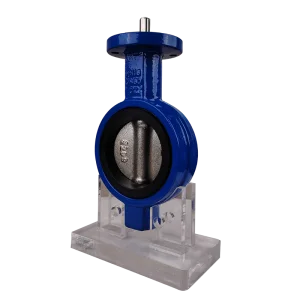
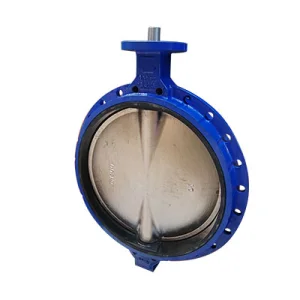
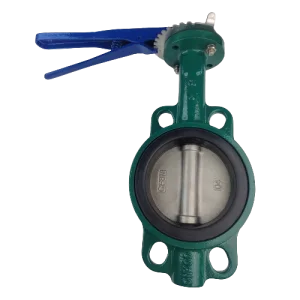
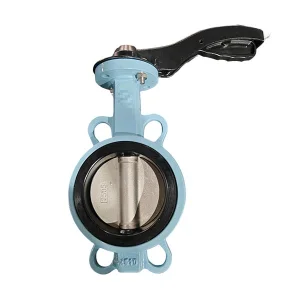
Precision Flow Equipment & High-Performance Assemblies
Explore our top-tier industrial valve lines designed to international dimensions (ASTM, ANSI, ISO, DIN, BS, JIS) with full OEM customization, advanced seat vulcanization, and certified pressure containment.
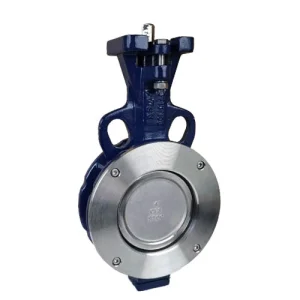
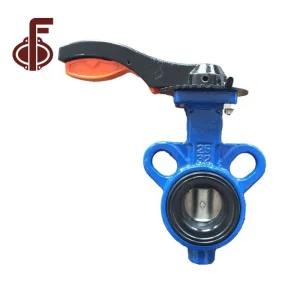
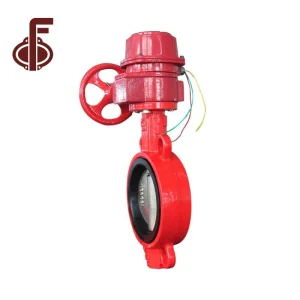
Global Industrial Status of Aluminium Butterfly Valves
The worldwide shift toward lightweight mechanical piping, low-carbon fabrication, and automated plant skids has established cast aluminium-body butterfly valves as a superior engineering alternative to traditional cast iron.
55%–65% Weight Reduction Paradigm
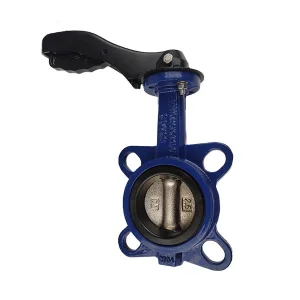
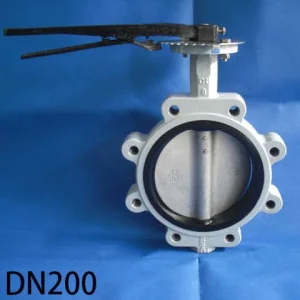
Modern EPC engineering teams and HVAC design contractors increasingly specify die-cast aluminium butterfly valves (utilizing alloys such as ASTM A380, ADC12, and EN AC-46100). By eliminating more than half the static dead weight associated with grey or ductile cast iron, these valves drastically reduce seismic pipe bracket stresses, lower freight shipping tariffs, and streamline elevated ceiling installation without requiring heavy overhead chain-hoist rigging.
Torque Efficiency & Actuation Sizing
Aluminium bodies allow micro-machining of the inner bore and disc profile with tighter dimensional tolerances, minimizing compression friction along the elastomeric seating perimeter. With break-away and dynamic running torque reduced by 25% to 35% compared to cast iron assemblies, smaller electric and pneumatic quarter-turn actuators can be deployed. This delivers notable reductions in capital expenditure and electrical duty cycle loads.
Corrosion Resilience & Anodized Passivation
Atmospheric corrosion poses a persistent threat to iron valves, resulting in exterior oxide flaking and eventual stem binding. Aluminium naturally develops a coherent, self-healing oxide barrier (Al₂O₃), further reinforced through technical hard-anodizing or electro-deposition epoxy powder coatings. This resilient surface treatment provides long-term resistance to coastal marine mist, condensing water chillers, and chemical washdown conditions.
Precision Engineering Architecture: Aluminium vs Iron vs SS
Selecting valve construction materials requires balancing mechanical tensile properties, fluid compatibility, and overall lifecycle cost. Review our empirical comparison matrix below.
| Evaluation Parameter | OEM Die-Cast Aluminium Alloy | Ductile Iron (GGG40 / EN-GJS-400) | Austenitic SS (CF8M / 316) |
|---|---|---|---|
| Specific Density (g/cm³) | 2.70 (Ultra-Lightweight) | 7.20 (Standard Heavy) | 7.95 (High Weight Penalty) |
| Operating Torque Factor | Low (Optimized Actuation Cost) | Medium to High | Medium (Higher Galling Potential) |
| Atmospheric Rusting | Passivated (Zero Red Oxide Rust) | Prone to Oxidation / Pitting | Highly Inert / Stainless |
| Standard Pressure Envelope | PN10 / PN16 / Class 150 | PN10 / PN16 / PN25 | PN16 / PN40 / Class 300+ |
| Thermal Conductivity (W/m·K) | 96 – 150 (Fast Thermal Transfer) | 36 | 16 |
| Seismic & Hanger Load | Minimal (Cuts support steel by 40%) | Requires structural pipe hangers | Requires heavy duty structural framing |
| Standard Seat Formulations | Vulcanized / Replaceable EPDM, NBR, FKM | Bonded or Cartridge EPDM / NBR | PTFE / RPTFE / Metal-to-Metal |
| Common Industry Standards | API 609, EN 593, ISO 5211 Direct Mount | BS 5155, EN 593, AWWA C504 | API 609 Cat B, ASME B16.34 |
Dual Shaft Pinless Integrity
Our proprietary dual-stub stem and through-shaft internal polygon designs eliminate prone through-disc taper pins. By isolating the fluid completely from the drive shaft via 410, 416, or 17-4PH stainless steel shafts, internal crevice corrosion and potential leakage along pin channels are completely averted.
Engineered Disc Geometries
To prevent galvanic couples between the aluminium housing and system media, discs are precision investment cast in ASTM A351 CF8 (SS304), CF8M (SS316), or Aluminium-Bronze (C95400/C95800). Hydrodynamic contoured edges optimize Cv (flow capacity) while reducing turbulence-induced cavitation.
Hard-Back & Molded Liners
We engineer rigid phenolic-backed or vulcanized elastomeric liners in high-purity virgin EPDM, petroleum-resistant NBR, or high-temperature FKM (Viton). The non-collapsible cartridge design maintains pristine axial dimensional stability across deep vacuum and high-velocity cyclic surges.
Engineered for Demanding Commercial & Industrial Scenarios
From hyperscale data center chilling circuits to offshore utility manifolds, our aluminium butterfly valves solve critical weight, space, and operational efficiency challenges.
HVAC & District Cooling
In high-density commercial skyscrapers and modern green data center central plants, dual-loop chilled water distribution lines (typically running 4°C to 12°C) experience severe thermal sweating and external moisture pooling. Aluminium wafer valves resist condensate pitting and drastically lower mechanical hanging loads in high-bay ceiling raceways.
Desalination & Water Treatment
Municipal wastewater processing facilities and Reverse Osmosis (RO) permeate header networks demand non-leaching valve components. By pairing an anodized aluminium shell with an ASTM A351 CF8M disc and NSF/WRAS-certified EPDM seat, our assemblies guarantee pure water transit without heavy metal oxide leaching.
Marine & Topside Skids
Naval vessels, mega-yachts, FPSO living modules, and marine ballast water management skids enforce strict structural weight budgets. Our aluminium bronze and aluminium body butterfly valves provide class-leading strength-to-weight ratios, ensuring reliable seawater handling while protecting ship stability.
OEM Modular Skids & Automation
Modular process skid fabricators (air drying, chemical mixing, filtration skids) benefit from standardized ISO 5211 top flanges. Direct mounting of compact electric or pneumatic smart positioners eliminates bulky brackets, simplifies wiring, and cuts shipping envelope dimensions.
Rigorous 5-Stage OEM Production & Quality Control
Every custom order follows strict traceable quality milestones from digital CAD/FEA simulation through casting, CNC machining, hydrodynamic testing, and custom export crating.
CAD & Spec Review
Comprehensive engineering datasheet confirmation, torque modeling, finite element stress analysis (FEA), and mating flange compatibility check.
Precision Casting
High-pressure die-casting or gravity foundry mold pouring with spectrographic chemical verification to ensure zero internal shrinkage voids.
Multi-Axis CNC
Precision turning of stem bores, flange sealing serrations, and ISO 5211 mounting pads within micron-level dimensional tolerances.
Pressure Testing
100% individual hydrostatic shell testing (1.5x PN) and pneumatic bi-directional seat testing (1.1x PN) in conformance with EN 12266-1 / API 598.
Custom OEM Packing
Laser tag marking, custom powder-coat finishing, private distributor branding, and moisture-sealed export-grade wooden pallet crating.
Future Innovations in Aluminium Valve Engineering (2025–2035)
Anticipating evolving decarbonization targets, digital smart actuation, and novel metallurgy, our R&D roadmap focuses on four high-impact frontiers.
Nano-Ceramic Hybrid Coatings
Development of plasma electrolytic oxidation (PEO) and nano-composite ceramic matrices deposited on aluminium wetted surfaces. This extends chemical pH operating thresholds (from pH 3.5 to pH 11.5) and matches stainless steel abrasive slurry wear resistance at a fraction of the cost.
Edge IoT Smart Position Sensing
Direct integration of self-powered micro-electromechanical sensors (MEMS) within the aluminium body. Provides continuous real-time wireless telemetry covering disc angle calibration, seal wear degradation, upstream cavitation spikes, and automated predictive maintenance notifications.
Circular Metallurgy & Low-Carbon Castings
Transitioning 90% of structural foundry ingots to verified 100% recycled high-tensile secondary aluminium alloys processed via solar-powered melting kilns, cutting embodied product carbon footprints to near-zero levels to comply with European CBAM regulations.
Procurement & Engineering Evaluation FAQ
Answers to common technical questions submitted by project procurement teams, plant engineers, and international distributors.
Q: How does an aluminium butterfly valve avoid galvanic corrosion when bolted between steel flanges?
Galvanic reaction requires electrical contact between dissimilar metals within an electrolyte. Our aluminium butterfly valves are engineered with fully enveloped cartridge or hard-backed elastomer seats (EPDM/NBR) extending across the raised sealing face. This resilient elastomer acts as an integrated dielectric isolating gasket, physically separating the aluminium valve body from the carbon steel or stainless steel companion flanges.
Q: What temperature and pressure limitations apply to aluminium body butterfly valves?
Aluminium butterfly valves are typically rated for standard industrial working pressures of PN10, PN16, or ANSI Class 150 (up to 16 bar / 232 psi). Temperature limits are primarily defined by the elastomer seal rather than the body alloy: standard EPDM ranges from -20°C to +120°C; NBR handles -10°C to +82°C; and specialized Viton (FKM) can accommodate up to +180°C. For cryogenic or high-superheat steam applications, alternative triple-eccentric metal-seated steel valves are recommended.
Q: Why does actuator sizing cost significantly less with aluminium butterfly valves?
Precision die-cast aluminium bodies feature ultra-smooth internal cavity machining and symmetrical tolerances. Combined with precision ground discs and smooth rubber seat compression profiles, break-away torque is reduced by roughly 30% relative to sand-cast ductile iron. As a result, engineers can specify a smaller frame pneumatic cylinder or lower-wattage electric actuator, saving 20% to 40% on total automated valve packages.
Q: What custom OEM services does ZFA Valve provide for international distributors?
Our comprehensive OEM program includes custom mold casting with embossed distributor logos, specialized electrostatic powder colors, customer-branded metallic riveted nameplates, dedicated barcode labeling, bespoke stem height adaptations, customized lever handles, and factory automation pairing with direct actuator calibration prior to dispatch.
Specialized Valve Assemblies & Pipeline Components
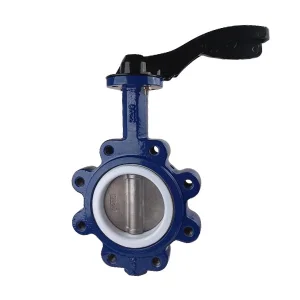
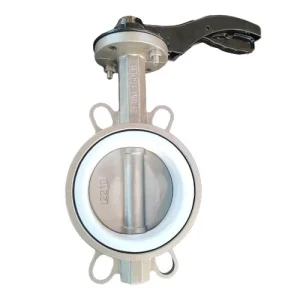
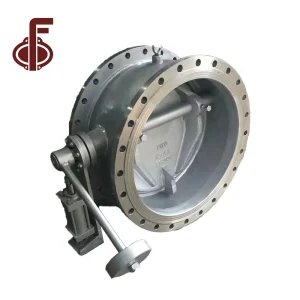
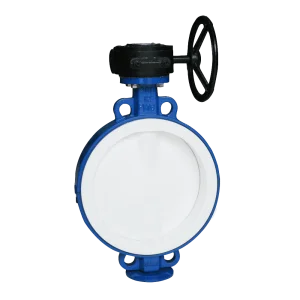
Discover our comprehensive array of large-diameter butterfly valves, resilient seated wafer designs, check valves, and high-purity PTFE lined valves for corrosive fluid networks.