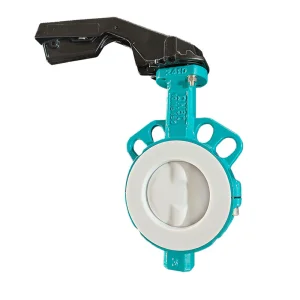
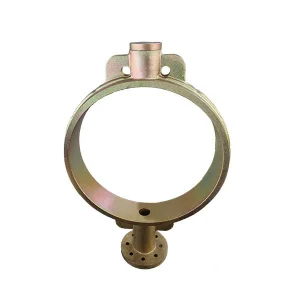
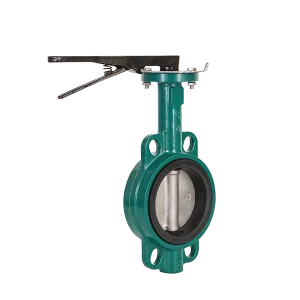
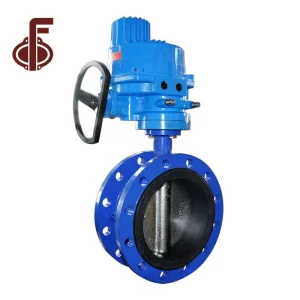
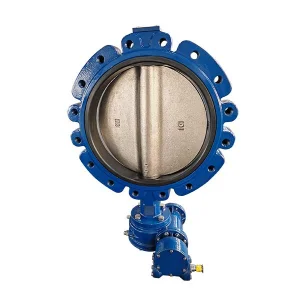
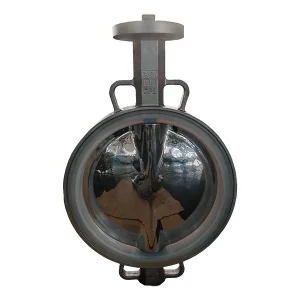
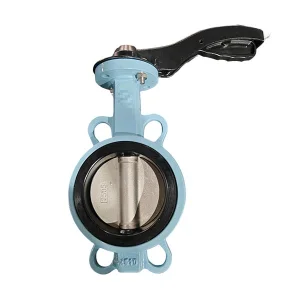
BS EN 593 Certified Valve Deployments
Direct supply line from our Tianjin manufacturing core. Configured for municipal, desalination, marine, and energy distribution networks.
The Global Landscape of BS EN 593 Butterfly Valves
Analyzing structural dynamics, strict regulatory mandates, and the shift toward zero-emission flow control architectures across Europe, North America, and the APAC region.
Standardization Benchmark
The BS EN 593 (incorporating EN 558 face-to-face series) stands as the globally acknowledged technical benchmark for industrial butterfly valves. It strictly defines allowable shell stress, minimum stem diameter tolerances, torque limits, and bidirectional isolation thresholds across cast and ductile irons.
Cost-to-Weight Dynamics
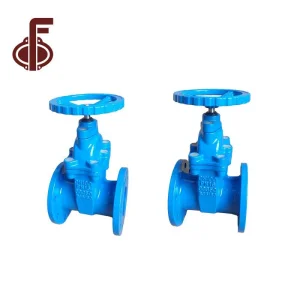
Modern infrastructure demands cost optimization without structural compromise. Concentric and high-performance offset butterfly valves built to BS EN 593 deliver an average 40% reduction in weight compared to gate valves, drastically reducing piping load and support infrastructure costs.
Emission & Leakage Standards
Global decarbonization initiatives push EPCs to require ISO 5208 Rate A (zero allowable leakage) testing. BS EN 593 manufacturing ensures precise interference fits between disc periphery and vulcanized elastomers or machined PTFE/metal seats to eliminate fugitive emissions.
China OEM Factory Competence: Tianjin Industrial Cluster
Combining heavy casting supply chain integration, precision multi-axis CNC machining, and digitized metallurgical verification.
Full Supply Chain Resilience & Metallurgical Integrity
Tianjin Zhongfa Valve Co., Ltd. (ZFA) leverages northern China's extensive metallurgical foundry network. Unlike regional assemblers who outsource critical processes, our production model integrates foundry batch testing, multi-axis computerized machining, and vulcanization line monitoring under one quality umbrella.
Every casting of ductile iron (EN-GJS-400-15 / EN-GJS-500-7) or cast iron (EN-GJL-250) undergoes strict spectrographic analysis to verify carbon-silicon saturation ratios and spheroidization grades before any chip-forming machining commences. This guarantees zero porosity in pressure-containing shells.
Automated Machining
Horizontal and vertical CNC centers eliminate manual error, achieving concentric seat profile tolerances within ±0.02mm for minimal operating torque.
Coating Integrity
Electrostatic fluid bed dipping applying non-porous AkzoNobel or equivalent WRAS-approved epoxy coatings at 250+ microns with high dielectric spark testing.
Traceable Quality
Complete 3.1 Material Test Reports (MTR) provided across body, disc, stem, and elastomer batches ensuring zero dispute during engineering inspections.
Rapid Prototype & Production
Fast mold configuration allows prototype generation in 15 days, with bulk sea-freight deliveries fulfilled regularly within 25–35 days.
Mission-Critical Applications of BS EN 593 Valves
Field-proven performance across critical global infrastructures where downtime is catastrophic.
Potable Water & Desalination
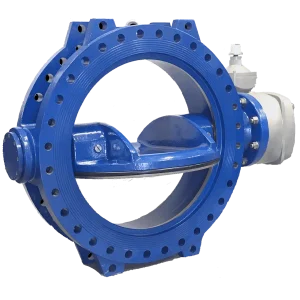
Utilizing WRAS/DVGW-grade EPDM bonded liners and aluminum bronze or duplex stainless steel (2205/2507) discs, our BS EN 593 valves prevent bi-metallic corrosion and withstand aggressive chloride attack in large seawater reverse osmosis (SWRO) facilities.
District HVAC & Cooling Towers
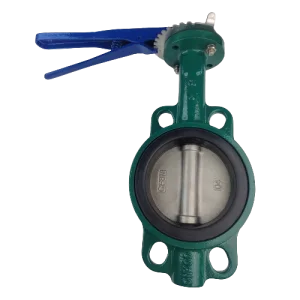
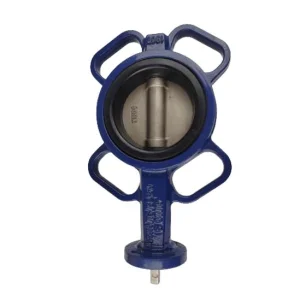
In ultra-high chilled-water loops, our wafer and lugged valves provide continuous low-torque operation. With precision-engineered pinless stem designs, turbulent hydrodynamic flutter is prevented, eliminating stem shear under long-term high-velocity flow.
Industrial Effluent & Slurry Transport
For wastewater treatment and non-corrosive chemical effluent handling, we configure resilient NBR liners and PTFE-coated discs, protecting pressure-bearing cast elements from abrasive wear, volatile organics, and localized pitting corrosion.
Emerging Trends & International Procurement Priorities
How supply chain executives, EPC specifiers, and OEM brand holders evaluate BS EN 593 valve partners.
Automation & Smart Actuation Ready
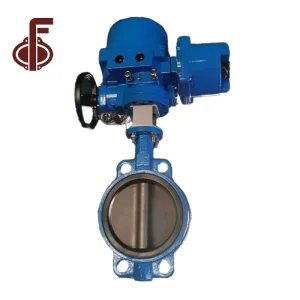
Global valves are no longer purely manual. Plants demand ISO 5211 direct-mount actuator flanges as a baseline. Our BS EN 593 valves feature normalized drive shafts and torque curve documentation ready for electric, pneumatic, and IoT-driven feedback actuators without extra brackets.
Private Labeling & Brand Protection
Procurement teams require seamless integration into regional product catalogues. We provide custom tooling for raised foundry logos, localized compliance tags, branded packaging, and serialized traceability barcoding matching ERP enterprise software requirements.
Total Life Cycle Economy (LCC)
The global shift is prioritizing lifecycle cost over initial purchase cost. By pairing renewable resilient seat cartridges with blow-out proof stems, our BS EN 593 designs yield up to 100,000 continuous full strokes before requiring seal inspection.
Frequently Asked Questions for Valve Specifiers
Answers to technical specifications, metallurgy, third-party witness inspections, and delivery options.
What is the key difference between BS EN 593 and API 609?
While API 609 primarily serves the North American petrochemical and refining sector with imperial bolt drillings, BS EN 593 is the European and international standard governing industrial butterfly valves. It is optimized for metric DIN/EN systems, water networks, process loops, and HVAC, specifying face-to-face standards per EN 558 series and pressure tests under EN 12266-1.
Can you provide customized flange drillings on BS EN 593 bodies?
Yes. As a full-service OEM factory, we manufacture universal multi-standard wafer bodies compatible with both EN 1092-2 PN10/PN16 and ASME B16.5 Class 150 flanging. Dedicated mono-flange and lugged bodies can be drilled to BS, DIN, ANSI, or JIS standards depending on your project destination.
How does your factory ensure Zero Leakage performance?
Every individual BS EN 593 unit produced by ZFA Valve undergoes 100% shell hydrostatic testing at 1.5x nominal pressure and bidirectional seat testing (both hydraulic and pneumatic) according to EN 12266-1 Rate A standards. We do not use batch sampling—every valve shipped carries a zero-drop guarantee.
What documentation accompanies OEM export shipments?
Each export shipment is supplied with an EN 10204 3.1 Material Test Certificate, factory hydro-test reports, dimensional inspection records, coating thickness and spark test logs, as well as CE Declaration of Conformity documents. Third-party inspections (SGS, BV, TÜV) are regularly supported.
Heavy-Duty Process & High-Tolerance Valve Series
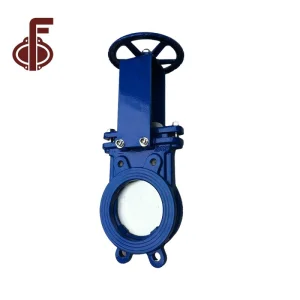
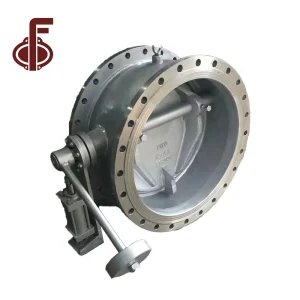
Broadening your commercial procurement with certified gate, wafer, flanged, and specialized fluid systems.