Standardized Flow Isolation & High-Tolerance Valves
Engineered for full integration with standardized Lockout/Tagout (LOTO) safety apparatuses, our valve bodies withstand critical operational pressures across worldwide pipeline networks.
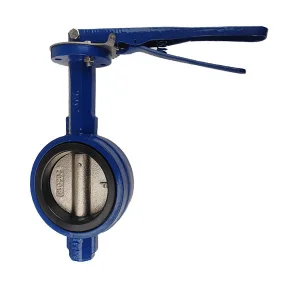
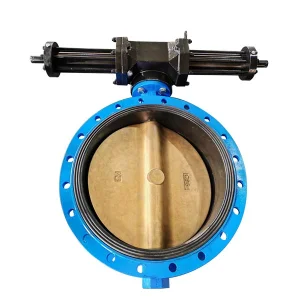
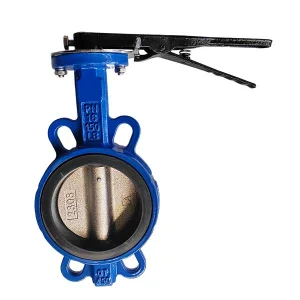
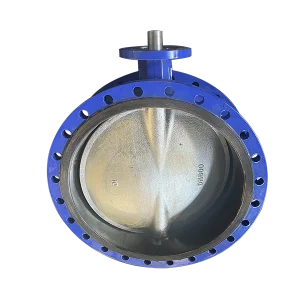
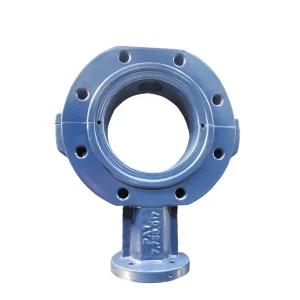
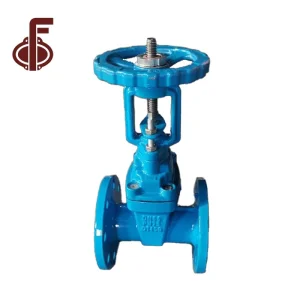
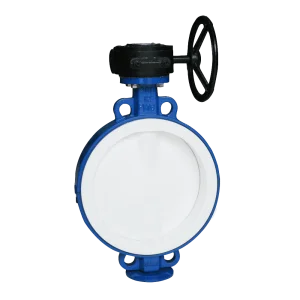
Macro-Level Industrial Safety & Lockout Integration
Lockout/Tagout (LOTO) protocols are not standalone mechanical add-ons; they represent the frontline barrier against catastrophic hazardous energy discharge in heavy industrial ecosystems.
OSHA 1910.147 Compliance
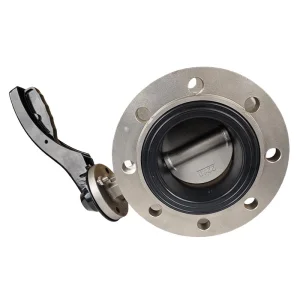
Our OEM valve neck and lever interfaces are precision-machined to interlock seamlessly with standard scissor clamp lockouts and adjustable cable brackets, fully fulfilling OSHA title 29 CFR 1910.147 requirements for zero-energy mechanical isolation.
Zero-Torque Slippage Defense
Quarter-turn butterfly valves experience intense hydrodynamic backpressures. Our integrated lockout points lock directly into notched positioning plates, neutralizing stem backlash, actuator creep, and unauthorized lever manipulation under live pipeline loads.
Polymeric & Alloy Integrity
Fabricated using non-conductive dielectric polypropylene and marine-grade stainless alloy components, the lockout devices resist UV-induced brittle degradation, hydrocarbon solvation, and continuous chemical plant atmospheres without mechanical fatigue.
Global Industrial Status & Supply Chain Resilience
Modern engineering contracts require turnkey isolation reliability. EPC contractors and plant operators face increasingly stringent international audits requiring audited valve and lockout manufacturing continuity.
Supply Chain Redundancy
Global logistics demand localized inventory paired with deep manufacturing throughput. Our Tianjin foundries and machining centers control raw ingot chemistry through finished valve assembly, protecting buyers against single-origin supply shocks.
Multi-Regulatory Audits
Navigating varying regional codes (such as EU Pressure Equipment Directive 2014/68/EU vs. ASME B16.34) demands rigorous design flexibility. We supply pre-configured, dual-certified components minimizing cross-border regulatory hold-ups.
Total Lifecycle Value (TCO)
Premature seat degradation or faulty mechanical lockout interlocks cause costly downtime. Standardizing on ISO-certified concentric and eccentric valves with matched safety lockout points drops unplanned refinery and utility outages significantly.
Localized Support & Jurisdictional Compliance
Safety enforcement varies across global municipal, offshore, and petrochemical corridors. Our production workflows conform to local mechanical and labor safety directives across continents.
North America (ANSI/OSHA)
Engineered for ANSI Class 125/150 flanges, MSS-SP-67, and OSHA Title 29 CFR safety lockout protocols across municipal water grids and chemical refineries.
European Union (CE/EN)
Full conformance to DIN EN 593, EN 1092-1 pressure classes (PN10/PN16), and EU CE marking directives for seamless commissioning in European process lines.
Asia-Pacific (JIS/KS)
Standardized face-to-face dimensions and flange bolt patterns according to JIS 5K/10K and KS standards, serving key shipyards and fabrication skids.
Eurasia (GOST)
Heavy ductile iron and alloy steel casings certified to GOST standards, designed to survive extreme sub-zero permafrost installations without casing embrittlement.
Engineered Field Deployments & Mission Profiles
Valves paired with reliable lockout interfaces operate in aggressive, volatile, and high-frequency cycles across diverse environments.
Potable Water & Wastewater Treatment
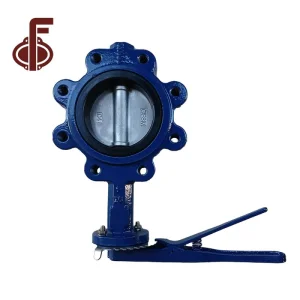
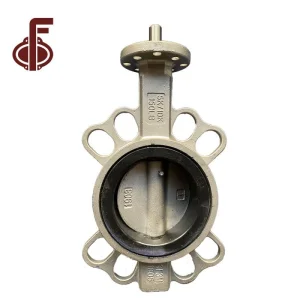
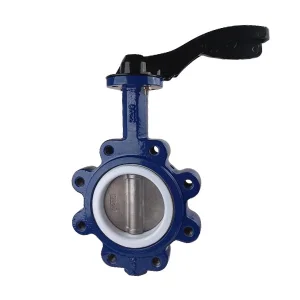
Utilizing resilient seated vulcanized EPDM liners, concentric wafer and lug butterfly valves ensure zero leakage during routine clarifier maintenance, allowing engineers to padlock lines safely during biofilter retrofits.
Petrochemical & Hydrocarbon Skids
PTFE full-lined and NBR seated configurations handle caustic hydrocarbon distillation streams. Sturdy manual lever lockout brackets prevent accidental stem rotation caused by high vibration on offshore and onshore pump manifolds.
District HVAC & Central Energy Plants
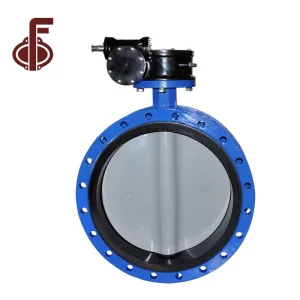
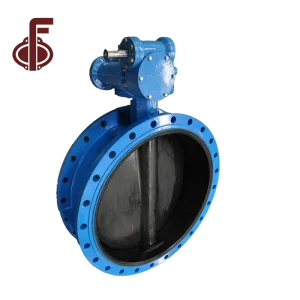
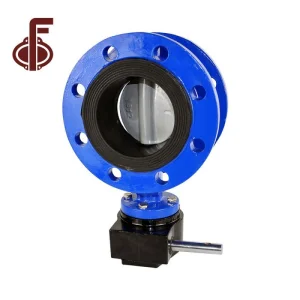
Large-bore double-flanged and wafer butterfly valves regulate chilled and condenser water lines. Lockout hardware enables systematic section balancing while ensuring mechanical isolation during seasonal chiller servicing.
Technological Roadmap: The Evolution of Industrial Lockouts
As Industry 4.0 shifts operational architecture toward automated verification, physical isolation hardware is uniting with digital safety validation networks.
Nano-Composite Dielectrics
Replacing traditional stamped metals with carbon-reinforced polymer composites that deliver exceptional tensile strength while preventing spark hazards in explosive ATEX environments.
RFID & NFC Sensor Pinning
Embedding wireless micro-transponders into the valve lock collar to communicate stem position directly to SCADA systems, preventing human misreporting during plant-wide turnarounds.
Self-Auditing Smart Interlocks
Deploying electro-mechanical interlocks with cloud validation that release safety padlocks only when upstream and downstream line pressures reach calibrated atmospheric safety levels.
Frequently Asked Engineering & Procurement Questions
Authoritative technical answers to assist safety consultants, purchasing leads, and pipeline mechanical engineers.
How do butterfly valve lockouts ensure total OSHA compliance during maintenance?
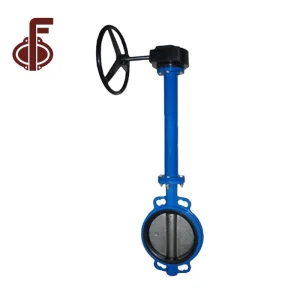
OSHA Standard 29 CFR 1910.147 mandates that all energy isolating devices must be physically locked out in a safe or off position to prevent unexpected re-energization. Butterfly valve lockouts accomplish this by enclosing or bracing against the quarter-turn handlever or gear operator, anchoring the stem against rotation. When multiple padlocks are applied through a lockout hasp, the line cannot be mechanically actuated until every maintenance technician removes their individual key.
Can OEM lockout brackets be retrofitted to valves from other manufacturers?
Yes. Our universal butterfly valve lockout mechanisms utilize adjustable clamping jaws and flexible multi-hole brackets designed to mount securely across ANSI, DIN, and JIS standard top-flanges (ISO 5211 patterns) and various lever thicknesses, providing reliable non-slip safety without modifying existing pipeline assets.
How do you select the appropriate seat elastomer (EPDM vs. NBR vs. PTFE) for locked isolation lines?
Seat selection depends on chemical compatibility and working thermal range. EPDM excels in water, steam, and HVAC services (-20°C to +120°C); NBR is specifically formulated for hydrocarbons, oils, and fuels (-10°C to +82°C); and PTFE provides total inertness to aggressive acids, alkalis, and pharmaceutical media (-20°C to +180°C). Choosing the correct seat eliminates fluid bypass that could compromise downstream personnel during a lockout.
What documentation is included with custom OEM valve and lockout export shipments?
Every commercial export consignment is supported by standard EN 10204 3.1 Material Test Reports (MTRs), hydrostatic pressure shell and seat test certificates, ISO 9001 factory inspection sheets, and CE declarations of conformity. Custom OEM markings, casting logs, and localized packaging are fully cataloged before departure.
Specialized Fluid Handling & Control Product Matrix
Explore our extensive line of flanged, wafer, lug, and double-eccentric valves manufactured to match international project standards and LOTO equipment.