
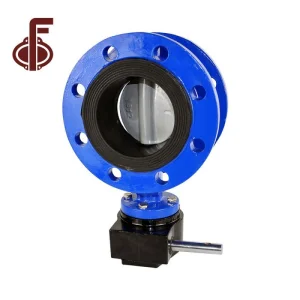
Flagship Butterfly Valves & Replacement Seating Systems
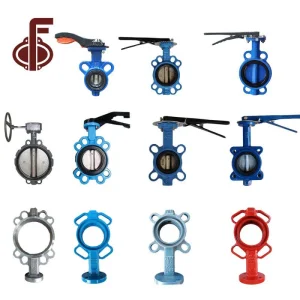
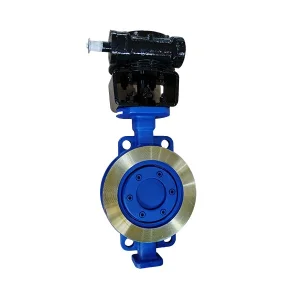
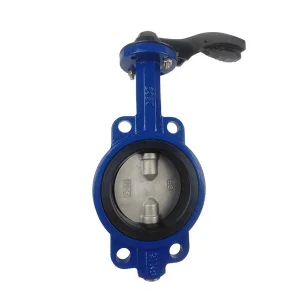
Factory-direct OEM flow isolation units fabricated to ASTM, ANSI, ISO, BS, DIN, and JIS standards. Browse our field-proven concentric and eccentric assemblies below.
The Tribology and Polymer Dynamics of Modern Valve Seating
In high-duty quarterly cycling and aggressive corrosive media, the butterfly valve seat is the ultimate determinant of fugitive emissions control, breakaway torque predictability, and system longevity.
Resilient Elastomers: Compression Set & Cross-Linking
For soft-seated concentric valves, seat life hinges upon cross-link density and compound formulation. Standard vulcanization techniques often suffer from permanent set under continuous disc interference. At our Tianjin production facility, raw EPDM, NBR, and Viton (FKM) polymers undergo sulfur-cured or peroxide-cured polymerization cycles. Peroxide-cured EPDM delivers superior hydrolytic resistance at elevated operating temperatures up to 135°C, suppressing the degradation of tensile modulus.
For petrochemical applications handling sour gas, hydrocarbons, and unrefined distillates, our hydrogenated nitrile butadiene rubber (HNBR) and high-fluorine FKM seat inserts maintain volumetric stability, restricting swelling to less than 3% in accordance with ASTM D471 immersion trials.
PTFE / TFM Cold Flow Resistance & Phenolic Backings
Fluoropolymer liners encounter structural challenges related to viscoelastic creep (cold flow) under compressive mechanical stress. To counteract continuous cold displacement, our engineering team utilizes high-density virgin PTFE sintered onto vulcanized elastomeric cushions or hard phenolic/aluminum backings. The composite geometry isolates mechanical hoop stress, channeling uniform radial sealing forces directly against the 316SS or Hastelloy disc edge.
For ultra-pure or aggressive acid loops, modified TFM1600 provides a tighter molecular structure, slashing gas permeability by 50% compared to conventional PTFE while delivering an extended flex life that withstands exceeding 50,000 operational cycles without seat spalling.
| Seat Compound Grade | Polymer Base | Thermal Envelope | Hardness Shore A | Resilience Rating | Certified Compliance |
|---|---|---|---|---|---|
| ZFA-PeroxEPDM | Peroxide-Cured Terpolymer | -30°C to +135°C | 70 ± 5 | Optimal for Steam, Chilled Water, Alkalines | FDA / WRAS / DVGW |
| ZFA-NBR-Hydro | Acrylonitrile Butadiene (NBR) | -15°C to +90°C | 75 ± 5 | Hydrocarbons, Oily Slurries, Mineral Oils | EN 549 / ISO 5208 |
| ZFA-FluoroFlex (FKM) | Hexafluoropropylene Vinylidene | -10°C to +200°C | 75 ± 5 | Hot Aromatics, Acids, Vacuum Applications | API 607 Fire Safe |
| ZFA-PureTFM | Modified Virgin TFM1600 | -40°C to +190°C | 58 ± 5 Shore D | Aggressive Chlorides, Wet Chlorine, Pharma | USP Class VI / CE |
| ZFA-TriLam-SS316 | 316L + Graphite Laminated | -50°C to +425°C | Metal Face Sealing | High Temp Steam, Cryogenic Liquid Gas | ISO 15848-1 Fugitive |
China Factory 4.0: Supply Chain Resilience & Precision Vulcanization
By pairing advanced Japanese CNC horizontal machining centers with automated vacuum compression rubber molding cells, Tianjin Zhongfa Valve delivers high throughput, rapid prototype iterations, and zero-defect consistency.
Precision Tooling & Mold Cavity Control
Thermal variance during mold curing creates localized under-cure or embrittlement. Our 500-ton hydraulic compression presses leverage multi-zone PID thermal mapping, sustaining cavity tolerances within ±0.03mm. This guarantees optimal interference fit between valve disc radii and seat inner faces, mitigating stem leakage and lowering actuation sizing requirements.
Finite Element Contact Analysis (FEA)
Using non-linear elastomer hyperelastic models (Mooney-Rivlin and Ogden parameters), our research engineers simulate seat displacement and contact stress patterns across dynamic valve rotations from 0° closed to 90° fully open. This eliminates seat pinch points at shaft transitions, extending rubber fatigue life beyond typical market lifecycles.
Resilient Supply Chain & Buffer Inventories
Situated within the industrial maritime hub of Tianjin, ZFA benefits from immediate access to deep-water shipping lanes and upstream metallurgical foundries. We stock extensive reserves of raw semi-finished castings (QT450, WCB, CF8M) and virgin polymers, insulating international OEM clients from raw material price shocks and ocean freight delays.
Macro Industry Solutions: Engineered for Demanding Fluid Architectures
Standard commercial valves fail when applied to specialized industrial chemistries. Discover how ZFA tailors body linings, metallurgy, and seat elastomers to distinct global market requirements.
Municipal Water & Desalination
High salinity and reverse osmosis permeates provoke pitting corrosion and cavitation wear. We utilize nickel aluminum bronze discs paired with vulcanized abrasion-grade EPDM liners, meeting EN 1074-1/2 criteria with bi-directional bubble-tight sealing.
Marine & Offshore Ballast Systems
Space-constrained shipboard piping demands compact wafer and lug bodies resistant to marine bio-growth and galvanic interaction. ZFA supplies ABS, DNV-GL, and Lloyd’s Register ready DI/Bronze assemblies with bonded NBR liners.
District Energy & Large-Bore HVAC
Chilled glycol circuits, closed hydronic systems, and low-pressure steam require wide temperature cycling tolerance. Our double eccentric vulcanized EPDM configurations reduce operating torque by 30%, optimizing building automation power consumption.
Petrochemical & Corrosive Chlor-Alkali
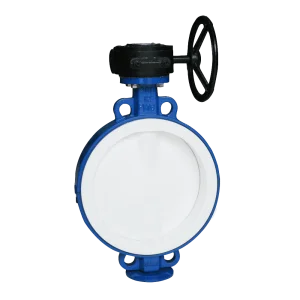
For chemical lines processing concentrated sulfuric acid, hydrofluoric solutions, or caustics, our split-body PTFE-lined series features pure virgin fluoropolymers mechanically keyed to ductile iron shells, isolating metal bodies from corrosive attacks.
Localized Engineering Support & Regulatory Compliance
Navigating regional technical barriers requires complete certification packages, factory audit readiness, and verifiable metallurgical test certificates (MTRs).
Certified Compliance Frameworks
Tianjin Zhongfa Valve maintains a verified quality management infrastructure certified under ISO 9001 and the European Pressure Equipment Directive (CE / PED 2014/68/EU). All food and drinking water seats are validated against FDA 21 CFR 177.2600, WRAS, and DVGW standards.
Full Mill Traceability (EN 10204 3.1)
Every shipment includes chemical composition and mechanical batch testing data. From raw iron nodularity testing (>85% for QT450-10) to optical emission spectrometry (OES) verifying SS304/SS316 disc metallurgy, our clients receive comprehensive documentation packs for EPC audits.
Dedicated OEM Engineering Teams
Our multi-lingual sales engineers coordinate directly with EPC procurement departments across North America, Europe, the Middle East, and APAC. We provide customized 2D/3D CAD submittals, actuator torque sizing sheets, and specialized face-to-face dimensions (ISO 5752, API 609, DIN 3202) within 24 hours.
Controlled 5-Stage OEM Production Process
From initial compound rheology testing to final export container packaging, each step is systematically governed by strict Quality Control Plan (QCP) gates.
Specification Review
Evaluation of working pressure, media composition, temperature boundaries, and actuator mounting pads (ISO 5211).
Foundry & Compounding
Spectrometric cast verification, polymer Mooney viscosity testing, vulcanization curing, and hard-back core stamping.
CNC Machining
Precision turning of valve seat channels, disc spherical radii, and stem double-D or keyed profiles to micro-finish smoothness.
Pressure & Leak Testing
100% hydrostatic shell testing at 1.5× PN, bi-directional pneumatic seat testing at 1.1× PN to verify ISO 5208 Rate A zero leakage.
Branding & Packaging
Custom electrostatic epoxy spray (RAL colors, min 250μm), customer OEM laser tags, desiccated vapor-barrier wrapping, and plywood crating.
Technology Roadmap & Future Outlook (2025–2030)
Flow systems are advancing toward higher decarbonization standards, fugitive methane tracking, and condition-based predictive maintenance. Discover our emerging valve seat technologies.
Bio-Based & Recyclable Fluoroelastomers
To satisfy stringent EU REACH regulations and evolving PFAS restrictions, our chemical laboratory is compounding advanced non-PFAS fluoro-polymers and bio-silicones that preserve thermal tolerance without volatile organic emissions during vulcanization.
Embedded Sensor Seat Rings (IoT-Ready)
Currently undergoing pilot testing, our next-generation composite seats incorporate micro-piezoelectric filaments within the elastomer body. These monitor real-time compression gradients and wear rates, predicting seat failure before line shutdowns occur.
Additive Frictionless Surface Coatings
Employing plasma-enhanced chemical vapor deposition (PECVD), nano-diamond like carbon (DLC) films are bonded onto disc contact profiles. This decreases dynamic friction coefficients to 0.08, slashing actuator energy draw by 40%.
Global Enterprise Sourcing: Mitigating Total Cost of Ownership (TCO)
Procurement executives evaluate valves not solely on initial acquisition cost, but on operational lifetime, downtime prevention, and maintenance simplicity.
Beyond Purchase Price: Lifecycle Economics
A poorly compounded butterfly valve seat can fail within 6 months due to explosive decompression or swelling, resulting in unplanned plant outages costing tens of thousands of dollars per hour. Sourcing from a specialized OEM factory like ZFA provides:
- Hard-Back Cartridge Modularity: Enables in-line seat replacement in under 15 minutes without replacing the entire ductile iron valve body.
- Predictable Seating Torque: Prevents premature gearbox failure and allows pairing with smaller, more cost-effective pneumatic/electric actuators.
- Extended Service Intervals: Peroxide-cured rubber profiles deliver 3× the service life of generic sulfur-cured commercial alternatives.
Production Part Approval Process (PPAP Level 3)
For major multinational brand distributors and tier-1 EPC contractors, ZFA provides standardized PPAP documentation packages including:
- Design Failure Mode & Effects Analysis (DFMEA): Structural hazard isolation on dynamic sealing surfaces.
- Dimensional Measurement Results: Coordinate Measuring Machine (CMM) verification reports.
- Control Plan & Gauge R&R: Calibrated repeatability data for all hydraulic pressure rigs.
- Certified Mill Test Reports: Full mechanical elongation and yield strength testing.
Frequently Asked Questions: OEM Valve Seating & Export Solutions
Common inquiries from international EPC contractors, distributor brand owners, and mechanical design engineers.
Which international flange standards are compatible with ZFA butterfly valve seats and bodies?
What is the engineering difference between a bonded seat and a replaceable boot seat?
How do you prevent disc corrosion and ensure seat compatibility in aggressive applications?
What pressure testing procedures are conducted prior to overseas container loading?
Can ZFA manufacture custom dimensions and provide white-label OEM branding?
Heavy-Duty Isolation, Non-Return & Filtration Assemblies
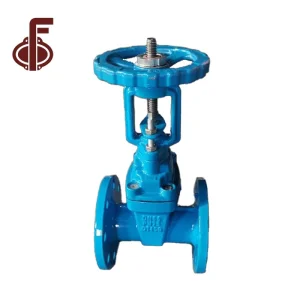
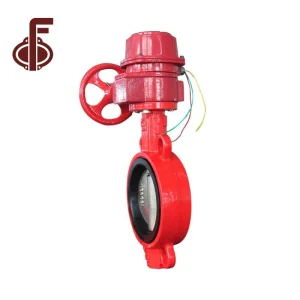
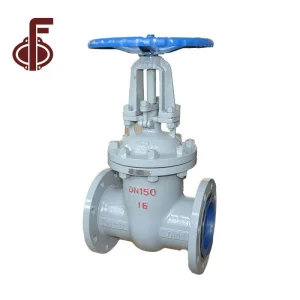
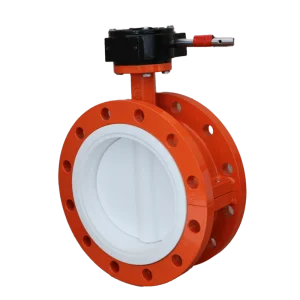
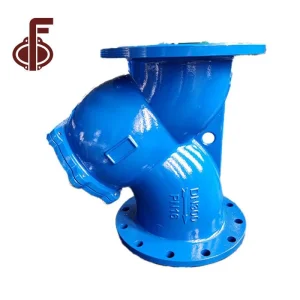
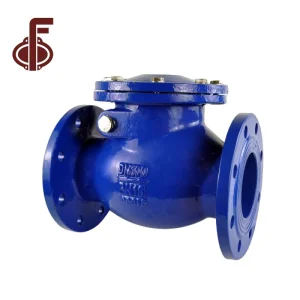
Discover our broader manufactured lineup of gate valves, swing check valves, Y strainers, and fire-signal wafer valves exported worldwide.
Request Technical Datasheets, 3D CAD & OEM Quotations
Send your project line conditions (media, pressure rating, temperature, flange standard) to receive a full engineering quote and valve specification sheet within 24 hours.
