
Featured Flow Control Assemblies (Series A)
Direct supply from Tianjin Zhongfa Valve Co., Ltd. (ZFA Valve). Engineered for mission-critical industrial isolation, cryogenic fluid diversion, and severe slurry throttling.
-
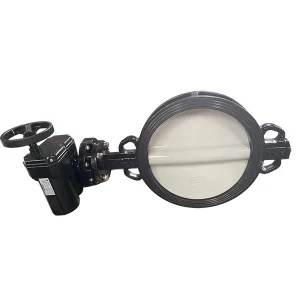 OEM Nylon Disc Wafer Type Honeywell Electric Butterfly Valve Manufacturer, ExportersView Details
-
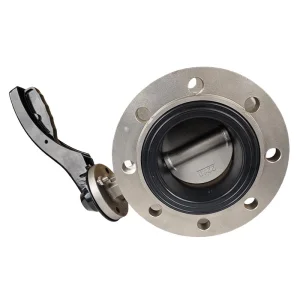 China CF8 Body CF8M Disc Double Flange Butterfly Valve Manufacturers, ExportersView Details
-
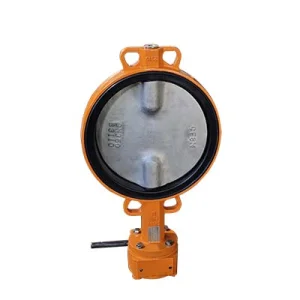 China Worm Gear Operated CF8 Disc Double Stem Wafer Butterfly Valve Manufacturer, ExporterView Details
-
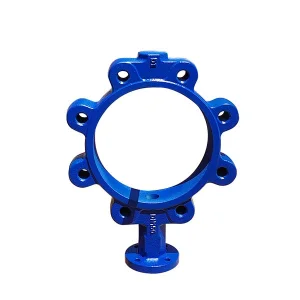 OEM Butterfly Valve Lug Body for Sea Water Exporter, ExportersView Details
-
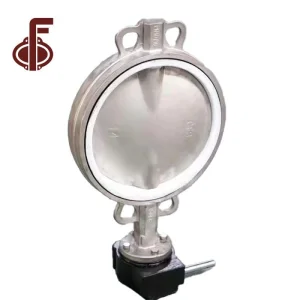 OEM PTFE Seat Wafer Type Butterfly Valve Manufacturer, ExporterView Details
-
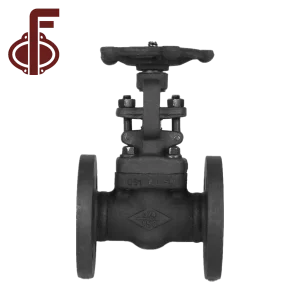 OEM Class1200 Forged Gate Valve Manufacturer, FactoriesView Details
-
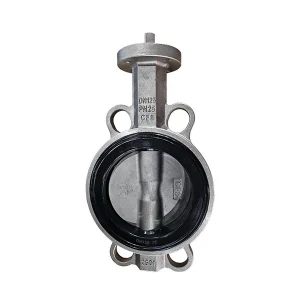 China PN25 DN125 CF8 Wafer Butterfly Valve with Soft Seat Manufacturer, ManufacturersView Details
-
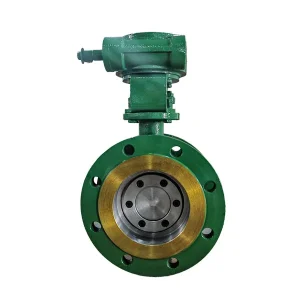 OEM WCB Double Flanged Triple Offset Triple Eccentric Butterfly Valve Exporter, ExportersView Details
Cast Steel Gate Valve Industry Trends & Macro Environment
A rigorous examination of shifting procurement frameworks, deep decarbonization challenges, and the architectural evolution of bi-directional linear shutoff valves.
Fugitive Emission Mitigation
Global environmental mandates—notably EPA Method 21, Clean Air Act, and TA-Luft / ISO 15848-1—are forcing oil, gas, and refining operators to eliminate methane and VOC fugitive line loss. Modern cast steel gate valves manufactured at ZFA Valve integrate engineered live-loaded graphite stuffing boxes, stem micro-finishes (Ra ≤ 0.4 µm), and coaxial lantern rings ensuring Class AH leakage compliance under extreme pressure and thermal cycling.
Severe Service & Sour Gas Upgrades
With accelerated offshore exploration and subsea crude recovery, sour crude containing wet H₂S requires full compliance with NACE MR0175 / ISO 15156. ZFA Valve manufactures cast carbon steel (WCB/WCC) and alloy bodies featuring controlled yield strength, low-stress heat treatment (PWHT), and Stellite Gr. 6 weld overlays on the seat ring and wedge face to prevent sulfide stress cracking (SSC) and hydrogen-induced cracking (HIC).
Decentralized Energy & LNG Transshipment
The global energy trade has driven unprecedented demand for cryogenic cast steel gate valves capable of functioning smoothly at -196 °C. Extended bonnets with gas column vapor pockets prevent stem packing freezing, while internal pressure-relief hole drilling on the upstream wedge face neutralizes catastrophic thermal expansion inside the bonnet cavity during liquefied gas vaporization.
Cast Steel Gate Valve Technical Specification Matrix
In-depth architectural comparison across heavy industrial API 600, ASME B16.34, and compact API 603 designs manufactured for international EPC contracts.
| Parameter / Metric | API 600 Heavy Duty (WCB / WC6 / C12A) | API 603 Corrosion Resistant (CF8M / CF3M) | DIN EN 1984 European Standard (GP240GH) |
|---|---|---|---|
| Nominal Bore (NPS / DN) | 2" to 60" (DN50 – DN1500) Full Port | 1/2" to 24" (DN15 – DN600) Standard Port | DN50 to DN1200 (PN16 – PN160) |
| Pressure Rating Class | ASME Class 150, 300, 600, 900, 1500, 2500 | ASME Class 150, 300, 600 | PN 16, 25, 40, 63, 100, 160 |
| Bonnet Joint Design | Bolted Bonnet (BB) / Pressure Seal (PSB) | Integral Flanged Bolted Bonnet (BB) | Bolted Bonnet (BB) / Oval Ring Gasket |
| Wedge Configuration | Flexible Wedge, Solid Wedge, Parallel Slide | Flexible Wedge / Solid Wedge | Flexible Wedge / Split Wedge |
| Seat Ring Construction | Renewable Welded / Screwed with Hardface | Integral Body Seat or Welded CF8M | Welded Cr-Steel Hardfacing (13Cr / Stellite) |
| Stem Mechanical Action | Rising Stem, Outside Screw & Yoke (OS&Y) | Rising Stem, Outside Screw & Yoke (OS&Y) | Rising Stem, OS&Y with Rotating Handwheel |
| Fugitive Emission Verification | API 622, API 624, ISO 15848-1 Class BH/AH | API 641, ISO 15848-1 Class BH | TA-Luft (VDI 2440), ISO 15848-1 |
API 600 vs. API 603 Distinctions
For heavy downstream petrochemical refining and steam plants, API 600 specifies heavier wall thicknesses than ASME B16.34 minimums to provide long-term corrosion allowance and mechanical rigidity under pipeline bending moments. Conversely, API 603 governs light-wall stainless steel valves where material cost optimization and inherent alloy corrosion resistance dictate design parameters.
Wedge Mechanics & Thermal Binding Prevention
Flexible wedge designs feature an annular groove around the perimeter, allowing independent deflection of the two seating faces. This critical flexibility accommodates pipeline-induced flange angularity and thermal movement during operational start-ups and emergency shut-downs, preventing thermal binding where a closed wedge becomes jammed tight due to body cooling contraction.
Backseat Sealing Safety Engineering
All ZFA Valve cast steel gate valves integrate a precision-machined integral or welded backseat inside the bonnet. When the gate is fully driven into the open position, the stem shoulder seals firmly against the bonnet backseat, isolating the packing chamber from line pressure. This permits stem packing emergency inspection and provides secondary containment against external fugitive emissions.
China Factory 4.0: Supply Chain Resilience & Efficiency
How modern robotic casting cells, automated multi-axis CNC machining, and comprehensive digital NDT quality controls ensure lead time stability and cost superiority for worldwide contract supply.
Automated Shell Molding & Vacuum Degassing
Traditional sand casting often suffers from sub-surface shrinkage porosities, pinholes, and inclusion defects. Tianjin Zhongfa Valve uses automated resin-bonded sand molding lines coupled with electric induction melting furnaces and vacuum degassing. This ensures homogeneous metal grain structure, low gas content, and consistent cast surface finish compliant with MSS SP-55 visual standards.
Dual-Spindle Multi-Axis CNC Machining
Valve body guide ribs, seat ring counter-bores, and bonnet flange gasket serrations are machined in single-clamping operations using horizontal multi-axis CNC machining cells. Eliminating manual re-fixturing guarantees perpendicularity between the wedge travel axis and the pipeline centerline within ±0.03 mm, drastically minimizing seat drag and operating torque.
Digital Traceability & In-House NDT Suite
Every casting heat batch is marked with an alphanumeric heat code linked directly to our digital ERP system. Raw materials undergo optical emission spectroscopy (OES) verification before pouring. The in-house testing lab conducts Radiographic Testing (RT), Ultrasonic Testing (UT), Magnetic Particle Inspection (MPI), and Liquid Penetrant Testing (PT) strictly per ASME Section V standards.
Localized Application Scenarios & Operational Case Studies
Real-world engineering analyses demonstrating the resilience of cast steel gate valves across varied, demanding industrial duty cycles.
Crude Refining & Atmospheric Distillation
Environment: Reduced crude at 360 °C with trace naphthenic acids and sulfur content.
Engineering Solution: ASTM A217 Gr. C5 or WC6 alloy steel gate valves fitted with API Trim 5 (Full Stellite Gr. 6 hardfaced wedge and seats). The rugged OS&Y stem allows visual indication of valve status from distant cat-walks, while high-temperature flexible graphite packing preserves leak-free reliability across thermal shutdown cycles.
Supercritical Thermal Power Boiler Feedwater
Environment: Ultra-high-pressure boiler bypass lines operating at 160 bar and 280 °C.
Engineering Solution: ASME Class 1500 / 2500 Pressure Seal Bonnet (PSB) cast steel gate valves in ASTM A216 WCC. The internal fluid pressure energizes the segmented thrust ring and soft iron/flexible graphite gasket, creating an ever-tighter bonnet seal as pipeline operating pressure increases, totally bypassing bolted bonnet bolt-stretch failure.
SWRO Seawater Desalination Plants
Environment: High chloride intake manifolds (TDS > 42,000 mg/L) subject to severe crevice and pitting corrosion.
Engineering Solution: ASTM A995 Gr. 4A / 5A Super Duplex stainless steel (2507) cast gate valves or nickel-aluminum bronze (NAB) trims. Zero carbon contamination during sand blast and pickling passivation cycles guarantees PREN > 42, entirely mitigating pitting failures in coastal desal facilities across the Middle East and North Africa.
Frequently Asked Questions (FAQ) for Engineering Teams
In-depth responses covering international certification, valve selection nuances, testing protocols, and contract manufacturing logistics.
What are the structural trade-offs between API 600 bolted bonnets and Pressure Seal Bonnets (PSB)?
How does ZFA Valve guarantee compliance with ISO 15848-1 and API 624 fugitive emission standards?
Which API trim number is recommended for sour oil service containing hydrogen sulfide (H₂S)?
Can cast steel gate valves be utilized for flow throttling or intermediate regulation?
What non-destructive examination (NDE) protocols are standard for OEM project contracts?
What is the typical manufacturing lead time for customized or large-bore cast steel gate valves?
Featured Flow Control Assemblies (Series B)
Complete your plant piping requirements with our precision check, silent non-return, resilient iron, and high-performance flanged assemblies.
-
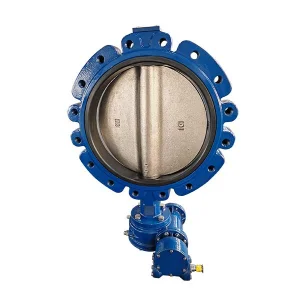 OEM 18" Hard Back Seat Lug Butterfly Valve with Pin DN450 PN10 Manufacturer, ExportersView Details
-
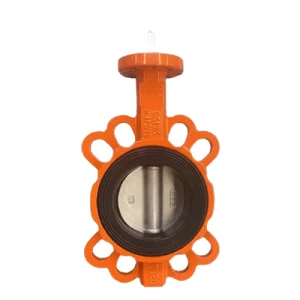 OEM 5K/10K/PN10/PN16 DN80 Aluminium Body CF8 Disc Wafer Butterfly Valve Factory, FactoriesView Details
-
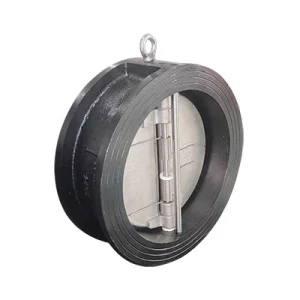 China Ductile Iron Body CF8M Disc Dual Plate Check Valve Manufacturer, FactoriesView Details
-
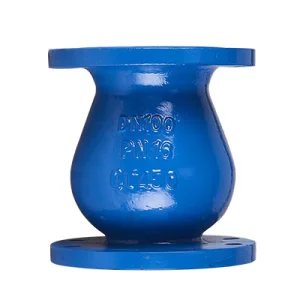 OEM Axial Flow Silent Check Valve One Way Flow Non Return Valve Manufacturer, ExporterView Details
-
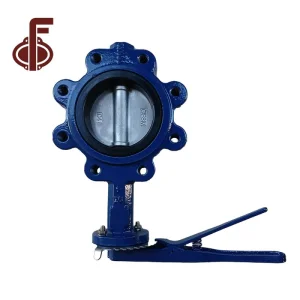 China Hand Lever Actuated Ductile Iron Lug Type Butterfly Valves Manufacturer, ExportersView Details
-
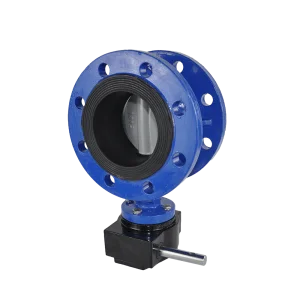 China AWWA C504 Centerline Butterfly Valve Factory, ExporterView Details
-
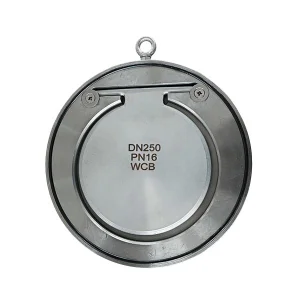 OEM Stainless Steel Body WCB Single Disc Check Valve PN16 Manufacturer, FactoriesView Details
-
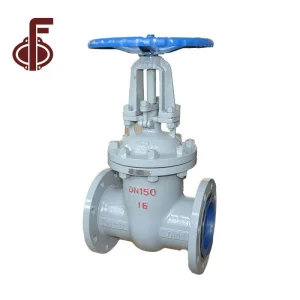 China 150LB 300LB WCB Cast Steel Gate Valve Manufacturer, FactoriesView Details
