High-Integrity Butterfly & Check Systems
Engineered for critical industrial installations, Municipal Waterworks, HVAC automation, and severe offshore process pipelines.
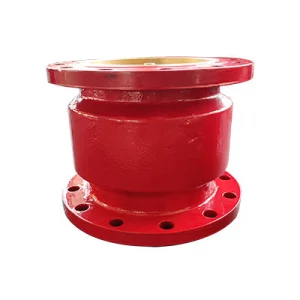
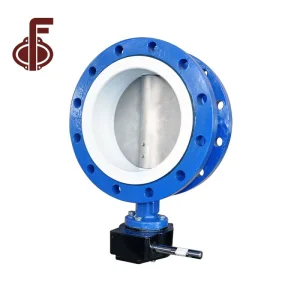
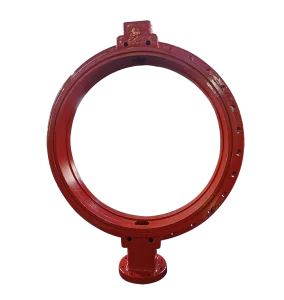
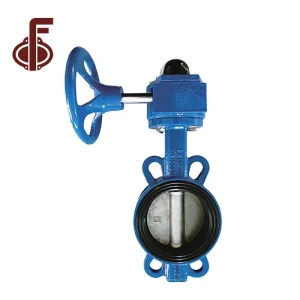
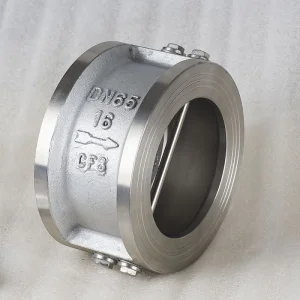
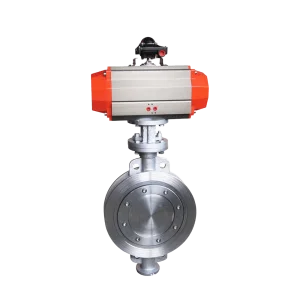
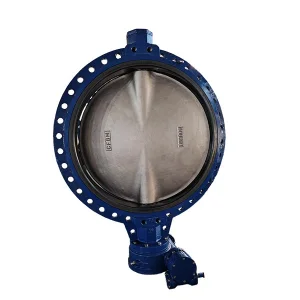
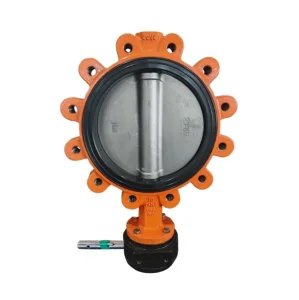
Structural Architectures of Industrial Butterfly Valves
A comprehensive examination of eccentric kinematics, sealing interfaces, and mechanical stress dynamics across concentric, double eccentric, and triple offset geometries.
Concentric (Resilient Seated)
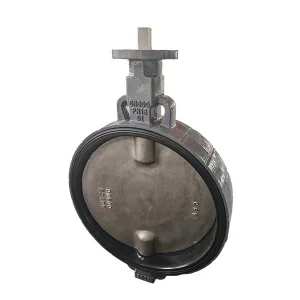
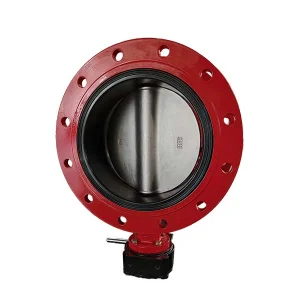
The stem axis and disc profile are positioned precisely on the center of the pipe bore. Relies on the elastomeric interference seal between the metal disc periphery and flexible liner (EPDM, NBR, or PTFE).
- Zero seat leakage at working pressures up to PN16 / Class 150
- Cost-effective for HVAC, wastewater, and clean water circuits
- Lined bodies prevent fluid contact with structural ductile iron
Double Eccentric (High Performance)
The stem is offset both from the seat surface centerline and the pipeline axis. The disc lifts immediately off the seat upon rotation, eliminating 90% of frictional wear and seat deformation.
- Optimized for intermediate pressure classes up to PN25 / Class 300
- Extended seat lifespan in high-cycle throttling applications
- Available with reinforced PTFE, R-PTFE, or flexible metal seats
Triple Eccentric (Metal-to-Metal)
Integrates a third angular offset creating an asymmetrical conical sealing profile. Operates without friction until mechanical contact, achieving bi-directional, bubble-tight zero leakage.
- Rated for extreme operating temperatures from -196°C to +600°C
- API 607 and ISO 10497 fire-safe qualified for petrochemical duty
- Handles cryogenic, superheated steam, and hydrocarbon services
Engineering Selection & Boundary Parameters
Cross-referencing body geometry, seat elastomer selection, pressure tolerances, and typical media applications.
| Valve Category | Body Material Options | Sealing Compound | Nominal Size | Pressure Class | Operating Temp |
|---|---|---|---|---|---|
| Wafer Concentric | Ductile Iron (GGG40/50), WCB | EPDM / NBR | DN40 – DN1200 | PN10 / PN16 / CL150 | -20°C to +120°C |
| Lugged Resilient | Ductile Iron, CF8M, WCB | PTFE / FKM | DN50 – DN800 | PN10 / PN16 / CL150 | -20°C to +180°C |
| Double Flanged Eccentric | WCB, CF8, CF8M, Duplex SS | R-PTFE / 316+Graphite | DN100 – DN2000 | PN16 – PN40 / CL300 | -40°C to +260°C |
| Triple Offset Metal-Seated | A216 WCB, A351 CF8M, 2205 SS | Stellite Hardfaced | DN80 – DN1800 | CL150 / CL300 / CL600 | -196°C to +600°C |
| U-Section / Mono Flange | Ductile Iron QT450-10, DI Hard Back | Vulcanized EPDM | DN600 – DN2400 | PN6 / PN10 / PN16 | -10°C to +110°C |
Localized Applications & Global Industry Dynamics
Balancing capital expenditure (CAPEX) with long-term maintenance efficiency (OPEX) across the world's most demanding process environments.
Municipal Water & Desalination
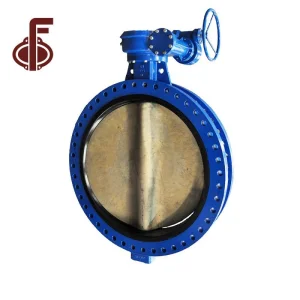
Large-bore double flanged concentric and double eccentric butterfly valves manage potable distribution, intake lines, and brine recycling in GCC and North American desalination infrastructures.
District HVAC & Building Services
Wafer and lugged types with low operating torques seamlessly pair with modulating electric actuators for continuous thermal balancing and cooling tower isolation in commercial mega-complexes.
Chemical & Corrosive Refining
Split-body PTFE/PFA lined butterfly valves guarantee zero ion contamination and complete corrosion resistance against concentrated sulfuric acid, alkalis, and aggressive chlor-alkali streams.
Power Generation & Thermal Utilities
Triple eccentric metal-seated configurations function as critical steam extraction valves, boiler feed isolation, and turbine inlet control, resisting severe thermal shock and water hammer.
Chinese Manufacturing Resilience & OEM Engineering
From foundry metallurgical control to CNC multi-axis machining and automated pressure hydro-testing at Tianjin Zhongfa Valve.
Drawing & Spec Review
Rigorous FEA stress analysis and fluid simulation validating custom torque profiles, flow coefficients (Cv), and raw metallurgy.
Foundry & Spectrometry
Direct spectral chemical validation of raw ductile iron, cast steel, or duplex alloys ensuring strict ASTM A536 / A216 conformance.
Precision CNC Machining
High-precision machining of disc spherical contours, seat sealing cavities, and ISO 5211 direct-mount actuation flanges.
100% Pressure Testing
Every single valve undergoes shell strength (1.5x PN) and seat tight shutoff (1.1x PN) pressure testing in adherence to ISO 5208.
OEM Marking & Logistics
Private label laser-tagging, epoxy electrostatic coating (min 250μm), and reinforced seaworthy palletization for international transit.
Technology Roadmap & Next-Gen Valve Architectures
Anticipating industrial transformation through digitalized telemetry, sustainable materials, and additive fabrication.
IoT-Enabled Smart Actuation
Integration of wireless IIoT acoustic sensors, micro-vibration telemetry, and position feedback transducers embedded directly into the actuator yoke. Enables predictive maintenance algorithms that detect stem packing leakage or seat wear before unplanned outages occur.
Additive Metallurgy & 3D Stellite
Utilization of laser powder bed fusion (LPBF) and cold-spray additive techniques to deposit high-density satellite alloys exclusively across high-wear sealing planes. Minimizes virgin rare-metal usage while providing unprecedented cavitation and erosion resistance.
Zero Fugitive Emission Standards
Engineering advanced live-loaded cup-and-cone PTFE and expanded graphite stem seals engineered to satisfy strict ISO 15848-1 Class A and TA-Luft compliance. Eliminates greenhouse gas bleed and toxic chemical leakage in downstream petrochemical processes.
Localized Engineering Support & Global Compliance
Eliminating cross-border friction through strict adherence to regional engineering norms and complete documentation audit readiness.
Full EN 10204 3.1 Traceability
Every consignment is accompanied by Mill Test Certificates (MTC) detailing complete heat numbers, chemical spectral compositions, tensile test yields, and elongation tests verified by accredited metallurgy labs.
Multi-Standard Flange Interoperability
Valves are engineered with universal bolt hole patterns and flange drillings to mate without mechanical strain against ASME B16.5, EN 1092-1, BS 4504, DIN 2501, and JIS B2239 counter-flanges.
Dedicated Engineering SLA
Global EPC contractors and distributor networks gain access to dedicated bilingual application engineers capable of reviewing P&ID schematics, providing sizing calculations, and generating CAD/BIM models within 24 hours.
Technical & Procurement FAQ
Key technical, mechanical, and logistical questions answered by ZFA Valve's chief engineering team.
What distinguishes Wafer, Lug, and Double Flanged butterfly valves?
Wafer valves are clamped directly between piping flanges with long studs—representing the lightest, most economical solution. Lug-type valves feature threaded inserts allowing them to be bolted to each pipe flange independently, making downstream line maintenance and dead-end isolation safe. Double flanged butterfly valves incorporate integral cast flanges on both sides, offering superior structural rigidity and alignment for large diameters (DN600+) and high-pressure duties.
When should a Triple Eccentric (TOV) valve be specified over a concentric design?
Concentric butterfly valves rely on resilient elastomer friction and are limited to operating temperatures below 180°C and pressures up to PN16/25. A triple offset valve (TOV) utilizes an all-metal laminated or solid stellite seat with zero frictional contact during disc travel. TOVs are strictly required for high temperatures (>200°C), superheated steam, cryogenic liquefied gas (-196°C), severe hydrocarbons, and applications demanding fire-safe compliance (API 607).
How does ZFA Valve guarantee zero porosity and sound metallurgical integrity?
We source ductile iron and cast steel from certified foundries using induction furnaces. Prior to casting, molten batches undergo optical emission spectroscopy. Castings are batch-inspected via magnetic particle testing (MPI) and ultrasonic testing (UT) where specified. Finished valve bodies are 100% hydrostatically proof-tested according to ISO 5208 and API 598 standards before packaging.
What customization and OEM services are supported for international brand owners?
Tianjin Zhongfa Valve supports complete end-to-end OEM partnerships: private label casting tags, custom body mold identification, specialized RAL powder coating specifications, disc material upgrades (e.g., Al-Bronze, Hastelloy, SS2205), specialized stem extension spindles for buried service, and factory mounting/calibration of customer-specified electric or pneumatic actuators.
Severe Duty Isolation, Gate & Control Assemblies
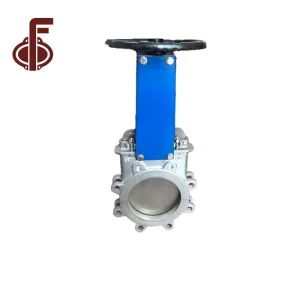
High-torque gear operators, fire-signal safety mechanisms, floating ball valves, and heavy-duty knife gate units.