
Primary Manufacturing Program
Precision Flow Isolation & Control Valve Series (Part I)
Explore our heavy-duty wafer, flanged, and pneumatic butterfly valve solutions manufactured in Tianjin, China. Each unit undergoes 100% shell and seat hydrostatic pressure verification prior to global export.
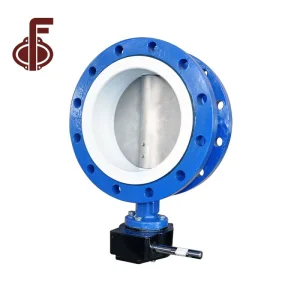
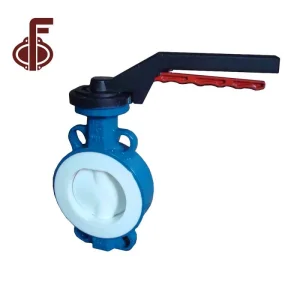
OEM PTFE Seat Flange Type Butterfly Valve
View Specifications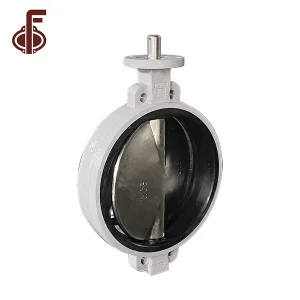
China WCB Wafer Type Butterfly Valve Exporter
View Specifications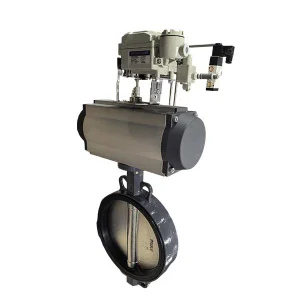
OEM DN100 PN16 E/P Positioner Pneumatic Wafer Valve
View Specifications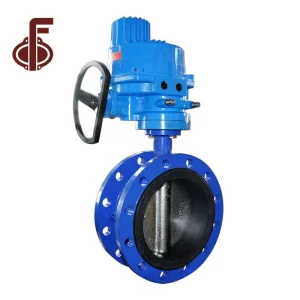
OEM Electric Actuator Flange Type Butterfly Valves
View Specifications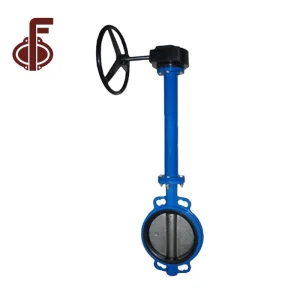
China Extention Stem Wafer Butterfly Valve
View Specifications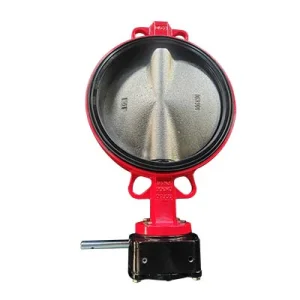
OEM DN300 Worm Gear GGG50 Wafer Valve PN16
View Specifications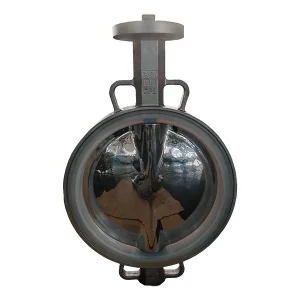
China Double Shaft Polished Disc CF8 JIS 10K Valve
View Specifications
Kinematic Engineering Analysis
The Physics of Double Eccentric Geometry in Critical Flow Control
Concentric butterfly valves experience continuous rotational rubbing against elastomeric liners, leading to premature seat degradation under elevated differential pressures. Double offset butterfly valves solve this through precision mathematical offsets.
Offset 1: Shaft Axis Behind Sealing Plane
The primary shaft centerline is located intentionally behind the structural sealing plane of the disc. This deliberate offset creates an uninterrupted, continuous 360-degree sealing contact perimeter, eliminating the traditional stem penetration holes through the seat that cause leak paths in standard concentric quarter-turn valves.
Offset 2: Shaft Offset from Pipe Centerline
The secondary offset shifts the shaft center slightly to the side of the pipeline bore centerline. When the valve rotates to open, this geometry generates a dynamic "camming action." The disc lifts cleanly away from the resilient or metallic seat within the initial 1 to 3 degrees of rotation, completely eliminating continuous frictional sliding.
45% Breakout Torque Reduction & 100k Cycles
By eradicating mechanical interference throughout the 85 degrees of travel, double eccentric butterfly valves decrease operating torque by 35% to 50% compared to rubber-lined concentric designs. This enables smaller, lower-power pneumatic and electric actuation skids while extending maintenance-free operating lifespan beyond 100,000 cycles.
| Performance Criteria | Standard Concentric Valve | Double Offset (High-Performance) | Triple Offset (Severe Service) |
|---|---|---|---|
| Sealing Architecture | Rubber interference fit across 90° travel | Cam-action lift-off within initial 1°–3° opening | Frictionless right-angled conical seat mating |
| Standard Pressure Range | PN6 – PN16 (Class 125 / Class 150 max) | PN10 – PN50 (ASME Class 150 / Class 300) | PN10 – PN100 (ASME Class 150 / 300 / 600) |
| Operating Temperature | -10°C to +120°C (Elastomer bound) | -50°C to +260°C (RTFE) / +450°C (Metal Seat) | -196°C (Cryogenic) up to +600°C (High Superheat) |
| Fugitive Emissions Control | Basic O-ring elastomer stem sealing | Live-loaded PTFE / Graphite packing (ISO 15848-1) | TA-Luft certified dynamic stem seal arrangement |
| Target Project Scope | General HVAC, low-pressure municipal water | Petrochem, steam isolation, desalination, marine skids | Critical refining, LNG liquefaction, superheated steam |
Global Macro Industry Solutions
Engineered Flow Infrastructure in an Era of Energy Transition
From deep-sea seawater reverse osmosis (SWRO) desalinators in the Arabian Gulf to combined cycle gas turbine (CCGT) cogeneration hubs across Europe and North America, double offset butterfly valves are replacing bulkier gate and ball valves.
Capital & Weight Efficiency
Double offset wafer and lug valves achieve a 70% reduction in weight and face-to-face footprint compared to conventional cast steel gate valves. In offshore FPSO topsides and seismic modules, this mass reduction substantially cuts structural platform capital cost.
Fugitive Emissions Mitigations
Global environmental mandates—including EPA Method 21 and the EU Methane Emissions Directive—demand strict fugitive leakage prevention. Our double offset stems feature ISO 15848-1 Class AH verified multi-layer live-loaded graphite-PTFE Chevron seals.
Throttling & Cavitation Resistance
With an inherently modified equal percentage flow characteristic curve, double eccentric discs provide superior throttling precision over a 20° to 70° control band, dampening hydrodynamic turbulence and eliminating the disc flutter typical of flat-face discs.
API 607 Fire-Safe Reliability
In petrochemical service carrying flammable condensates, our dual-seat hybrid design pairs a primary RTFE dynamic lip with a secondary backup metallic Inconel seal. If fire destroys the polymer seat, the secondary metal seat ensures zero catastrophical blow-by.
2006
Established Year
15+
Valve Typologies
100%
Hydrostatic Tested
8
Design Standards
<24h
Engineering RFQ Turnaround
Material Science & Tribology
Advanced Metallurgy and Dynamic Seat Polymer Chemistry
The lifespan of a high-performance double eccentric butterfly valve relies on pairing the correct alloy microstructure with an application-specific sealing trim. At Tianjin Zhongfa Valve Co., Ltd. (ZFA), our in-house metallurgical verification ensures full chemical and mechanical traceability across every pressure-retaining casting.
We source foundry heats with low phosphorus and sulfur parameters, performing Optical Emission Spectrometry (OES) to guarantee corrosion resistance against pitting and stress cracking in aggressive industrial media.
- Body Castings: ASTM A216 WCB (Carbon Steel), ASTM A351 CF8M / CF3M (316/316L SS), Duplex 2205 (UNS S31803), Super Duplex 2507 (UNS S32750), and Nickel Aluminum Bronze C95800 for high-salinity seawater intake.
- Shaft Metallurgy: 17-4PH (UNS S17400) condition H1150 high-tensile precipitation-hardened stainless steel, Duplex F51, or Inconel 718, eliminating stem deformation during emergency shutdown cycling.
- Sealing Trims: Virgin PTFE, 15% glass/carbon-reinforced RTFE for high-velocity steam, Virgin PEEK for high-pressure Class 300 cycles, and full Inconel 625 Stellite hardfaced metal-to-metal sealing up to 450°C.
Pressure-Temperature Operational Envelopes
Review our standard double offset trim boundary limits engineered to comply with API 609 Category B and ASME B16.34 wall thicknesses:
RTFE Soft Seat Configuration
Rating: ASME Class 150 / 300 · Temp: -40°C to +200°C · Zero Bubble Tight (API 598 Rate A, ISO 5208 Rate A).
Fire-Safe Dual Seat (API 607)
Primary: RTFE / Secondary: 316L / Inconel 625 spring energizer · Temp: -50°C to +260°C · Certified API 607 7th Edition.
Metal-to-Metal Hardfaced Trim
Solid 316L / Stellite Grade 6 overlay with Inconel energizer · Temp: -50°C to +450°C · Tightness: ANSI FCI 70-2 Class V / Class VI.
OEM Production Integrity
Controlled 5-Stage OEM Production & Metrology Flow
Tianjin Zhongfa Valve's OEM engineering program is structured so our procurement and EPC partners receive complete manufacturing documentation, from drawing approvals to final non-destructive examination (NDE).
Phase 01
CAD/FEA Engineering
Finite element stress analysis, disc hydrodynamic flow coefficient (Cv) modeling, and ISO 5211 top flange drive design.
Phase 02
Casting & PMI Verification
Spectrometric verification, positive material identification (PMI), radiographic checks, and shell wall ultrasonic testing.
Phase 03
Precision CNC Machining
Multi-axis horizontal machining of shaft bores, dual eccentric disc contours, and micro-inch seat finish retention.
Phase 04
Testing & Fire Certification
100% pressure testing: API 598 shell test (1.5x PN), bi-directional seat leakage test (1.1x PN), and low-pressure air sealing.
Phase 05
Traceability & Packaging
EN 10204 3.1 certification, unique heat numbering, epoxy anti-corrosive coating, and sea-worthy vacuum wood crating.
Compliance & Global Standards
International Regulatory Compliance & OEM Localization
Our Tianjin factory operates under audited quality frameworks to help contractors specify valves directly into municipal tenders, marine classification societies, and energy megaprojects without secondary re-qualification.
European Directives (PED & CE)
Full conformance with the Pressure Equipment Directive (PED 2014/68/EU Module H) ensures unhindered integration into European industrial loops. ATEX Directive 2014/34/EU compliance certifies our assemblies for explosive gas and dust environments.
API, ASME & AWWA Standards
Engineered to API 609 Category B (offset design & dimensions), ASME B16.34 (pressure-temperature ratings), ASME B16.5 / B16.47 (flange bolting), and AWWA C504 potable water pipeline specifications for US municipal distribution.
Actuation & Modern Automation
Standardized ISO 5211 direct mounting pads eliminate bracket deflection and torque losses. We configure seamless automation with Rotork, Auma, and Air Torque actuators, including SIL 3 safety instrumented solenoid and positioner setups.
Field Implementations
Critical Deployment Scenarios & Case Studies
How our double offset butterfly valves protect uptime across extreme thermal, corrosive, and operational environments around the world.
Persian Gulf SWRO Desalination
Environment: Seawater intake with 45,000 ppm TDS and high chlorine dosing.
Engineering Solution: Double flanged valves with ASTM B148 C95800 Nickel Aluminum Bronze bodies, Super Duplex 2507 discs, and virgin PTFE resilient seats. Eliminates crevice corrosion and cavitation, ensuring continuous operation at 25 bar.
District Energy & Geothermal HVAC
Environment: Superheated hot water transmission at 165°C and 16 bar cyclic load.
Engineering Solution: Lug-type double eccentric WCB valves with 15% carbon-filled RTFE seats and extended stems for thick lagging insulation. Achieved bubble-tight winter shutoff and cut seasonal stem seal maintenance to zero over 6 years.
Refining Flares & Petrochem Volatiles
Environment: Aromatics and natural gas liquid (NGL) recovery with high cycling.
Engineering Solution: Stainless steel CF8M body with API 607 7th Ed. fire-safe seats, live-loaded Belleville washer graphite gland seals, and quick-acting pneumatic Scotch-yoke actuation. Verified zero fugitive emissions under ISO 15848-1.
Technology Roadmap 2026–2030
Digital Twins, Additive Trim Alloys, and Green Hydrogen
Flow control design is evolving through industrial IoT and the decarbonization of processing hubs. Our research and development engineering group in Tianjin is advancing next-generation valve capabilities:
- Hydrogen Embrittlement Mitigation: Formulating nanostructured high-entropy alloy (HEA) coatings on stainless steel stems to prevent lattice micro-fissuring in hydrogen-methane blends up to 100 bar.
- Predictive Torque Diagnostics: Sensorized double offset stem modules that track micro-variations in torque profiles, warning SCADA networks of polymer wear or scale build-up before seal failure.
- Topology-Optimized Hydrodynamic Discs: Utilizing 3D laser powder bed fusion (LPBF) to produce streamlined discs that cut turbulent drag by 18%, reducing pumping energy across large pipelines.
Life Cycle Assessment (LCA) Carbon Tracking
As sustainability standards tighten under EU CBAM and Scope 3 reporting, Tianjin Zhongfa Valve delivers comprehensive life-cycle declarations. By utilizing induction melting powered by cleaner regional grid mixes and recycling 98% of machine swarf, our valves help contractors meet project embodied-carbon targets.
Procurement Engineering FAQ
Frequently Asked Questions by Valve Engineers & Buyers
Technical guidance covering selection, standards compliance, torque calculations, and OEM fabrication lead times.
What is the structural difference between double offset and triple offset butterfly valves?
A double offset valve incorporates two offsets (shaft behind seat plane, and shaft offset from pipe centerline), which allows the disc to lift off the seat during opening, making it ideal for RTFE, PEEK, and fire-safe dual seating up to 260°C. A triple offset valve adds a third geometric offset—an inclined conical profile of the sealing cone—which eliminates sliding altogether and enables solid metal-to-metal seating for temperatures exceeding 450°C and pressures up to Class 600.
How does ZFA calculate actuator sizing torque for high-performance butterfly valves?
Actuator sizing torque is calculated by summing break-away seating torque, hydrodynamic dynamic torque, and packing gland friction. For double offset valves, breakout torque is significantly lower than for concentric rubber-lined valves. We recommend sizing pneumatic and electric actuators with a minimum 25% safety factor for clean media, and a 35% to 50% safety margin for viscous, dry gas, or slurry services.
Are double eccentric butterfly valves bi-directional or uni-directional?
Double offset valves are primarily designed for bi-directional isolation, meeting API 598 Rate A zero leakage in both flow directions. However, they have a "preferred flow direction" (shaft upstream), where line pressure energizes the dynamic seat lip against the disc edge. In reverse flow, the valve remains bubble-tight, though operating torque may be slightly higher depending on line differential pressure.
What material documentation is provided with project orders?
Every shipment comes complete with EN 10204 Type 3.1 Material Test Reports (MTR) tracing the heat numbers of all pressure-containing bodies, discs, and stems. We also supply third-party pressure test logs, paint dry film thickness (DFT) reports, NACE MR0175/ISO 15156 compliance declarations for sour gas, and CE/PED Declaration of Conformity certificates.
Can you provide custom face-to-face dimensions and private labeling?
Yes. As a direct OEM manufacturer, we produce bodies to API 609 Category B, ISO 5752 series 20, or DIN 3202 dimensions. For global valve brand owners, we provide custom pattern making, OEM casting logos, customized nameplates, bespoke epoxy paint shades (such as RAL 5005 or RAL 7035), and custom export packaging.
What is the standard production lead time for large-diameter or alloy valves?
Standard WCB and CF8M wafer and lug valves in sizes DN50 to DN600 are typically assembled, pressure tested, and dispatched within 2 to 3 weeks. Engineered large-bore models (DN700 to DN2000) or special metallurgy castings (such as Duplex 2205, Hastelloy, or C95800 Bronze) generally follow an 6-to-8-week fabrication cycle, inclusive of RT/UT examination.
Industrial Valve Catalog
Precision Flow Isolation & Control Valve Series (Part II)
Complete your plant skid specifications with our actuator-ready wafer valves, aluminum alloy low-weight bodies, non-return check valves, and high-pressure carbon steel isolation systems.
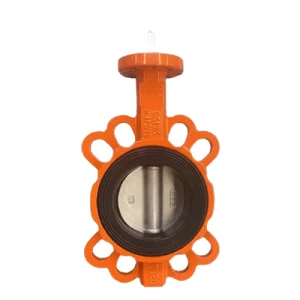
OEM DN80 Aluminium Body CF8 Disc Wafer Valve
View Specifications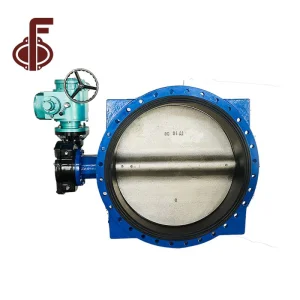
China Large Diameter Electric Flange Valves
View Specifications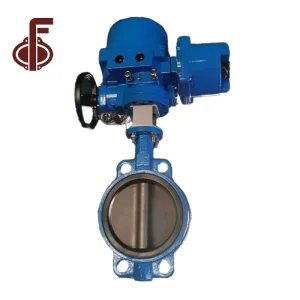
OEM Electric Actuator Wafer Butterfly Valve
View Specifications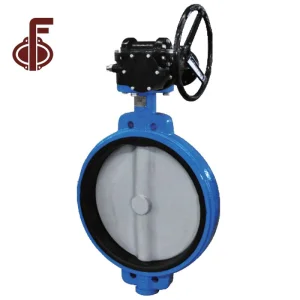
China Worm Gear Operated Wafer Type Valve
View Specifications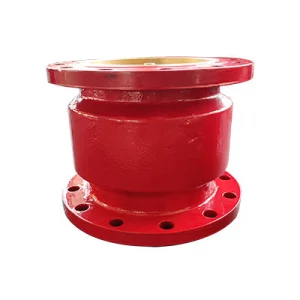
China Silencing Check Valve Non Return Valve
View Specifications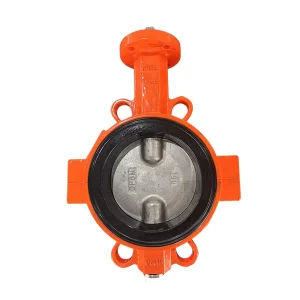
OEM 5" WCB Split Body Wafer Butterfly Valve
View Specifications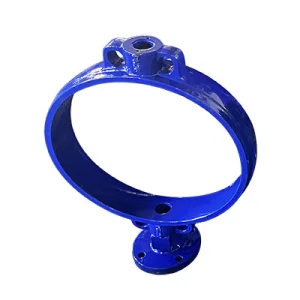
China Wafer Valve Ductile Iron Body Exporter
View Specifications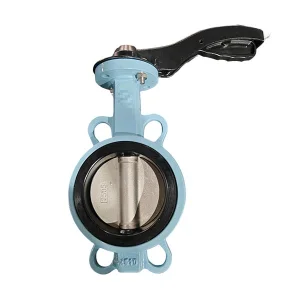
OEM Lever CF8 Disc Soft Seat Wafer Valve DN100
View SpecificationsConnect Directly with ZFA Valve Design Engineers
Send your line parameters (size, media, pressure class, temperature, and actuation requirements). Our engineering desk replies within 24 hours with general assembly (GA) drawings, 3D STEP models, and commercial quotes.
