
Primary Export Valve Portfolio · Direct Factory Sourcing
Explore our high-performance butterfly, check, and specialty flow-control valve product lines engineered for heavy municipal water distribution, HVAC networks, chemical processing, and industrial pipeline infrastructures.
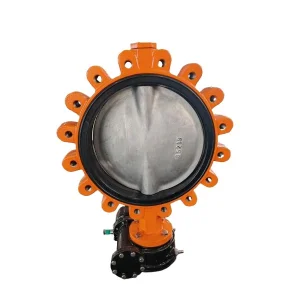
China Two Shaft Replaceable Seat Lug Butterfly Valve DN400 PN10 Manufacturers, Exporters
View Valve Specs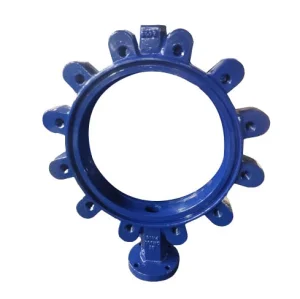
OEM Butterfly Valve Fully Lug Body Manufacturers, Exporter
View Valve Specs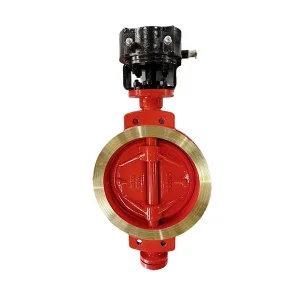
OEM 150LB WCB Wafer Triple Eccentric Butterfly Valve Manufacturer, Factories
View Valve Specs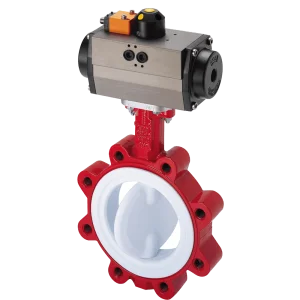
OEM PTFE Full Lined Lug Butterfly Valve Manufacturer, Exporter
View Valve Specs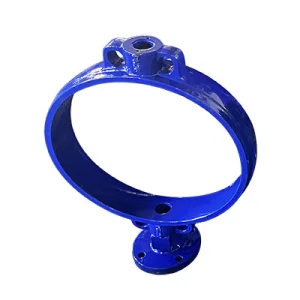
China Wafer Type Butterfly Valve Ductile Iron Body Manufacturers, Exporter
View Valve Specs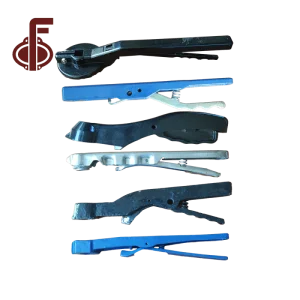
China Ductile Cast Iron Butterfly Valve Handle Factories, Exporters
View Valve Specs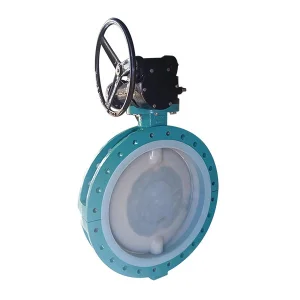
China U type Two-piece Body Silicon Rubber Disc & Seat Flange Butterfly Valve Factories, Exporter
View Valve Specs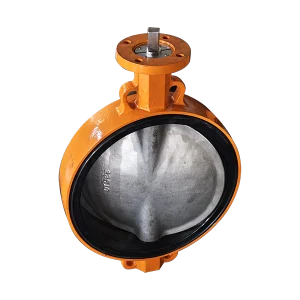
China CF8M Disc Two Shaft Wafer Type Butterfly Valve Factory, Factories
View Valve SpecsThe Metallurgy and Mechanics of Ductile Iron Gate Valves
Engineered for full-bore bi-directional isolation, minimal head loss, and decades of leak-free service under extreme hydraulic stresses.
Spheroidal Graphite Metallurgy
Unlike brittle grey cast iron (GG25), our OEM ductile iron (EN-GJS-450-10 / EN-GJS-500-7 / ASTM A536 65-45-12) features nodular graphite spheres induced by precision magnesium inoculation. This metallurgical microstructure delivers superior tensile strength (>450 MPa), 10-12% elongation, and high shock resistance, preventing catastrophic pipe wall fractures caused by hydraulic water hammer and ground subsidence.
Zero-Pocket Resilient Seating
Traditional metal-seated gate valves rely on bottom seat cavities where sediment, calcified silt, and sand particles accumulate, impeding complete wedge closure. Our modern resilient seated (soft-seal) gate valves incorporate a smooth, unobstructed straight-through waterway. The ductile iron wedge is vulcanized entirely with NSF/WRAS-certified EPDM or NBR rubber, guaranteeing drop-tight bi-directional isolation at zero leakage (Rate A according to EN 12266-1).
Corrosion Defense & FBE Coating
Pipeline longevity hinges on anti-corrosion barrier integrity. As a trusted OEM exporter, every valve body, bonnet, and wedge casting undergoes automated shot blasting to Sa 2.5 cleanliness, followed by electrostatically applied Fusion Bonded Epoxy (FBE) powder coating conforming to DIN 3476 and EN 14901, with dry film thickness consistently maintained above 250 µm to survive aggressive soil electrolysis and abrasive slurry wear.
Industrial Demand & Commercial Realities Across Key Continents
International engineering contractors and regional utility boards face divergent regulatory and operational mandates. An elite OEM exporter bridges these differences through flexible manufacturing adaptability.
North America & Middle East Infrastructure
- AWWA C509 / C515 Standards: North American municipal tenders demand strict adherence to reduced-wall ductile iron thickness (C515) without sacrificing burst safety factors, alongside NSF/ANSI 61 and 372 lead-free drinking water certifications.
- Desalination & Extreme Salinity: Gulf states require special trim metallurgy, including Duplex 2205 stems, aluminum bronze wedges, and high-build holiday-free FBE coatings to handle high-salinity seawater and brackish thermal discharge.
- District Cooling Networks: Huge demand for large-bore gate and triple eccentric butterfly valves capable of zero seat degradation under continuous 24/7 chilling fluid circulation.
European Union & Asia-Pacific Municipalities
- EN 1074 & EN 1171 Compliance: European water systems specify standardized face-to-face dimensions (EN 558 Series 14/15 or DIN 3202 F4/F5) with stringent WRAS, ACS, and DVGW hygienic material approvals.
- Smart City Water Grids (APAC): Rapid urbanization across Southeast Asia drives demand for smart-actuated gate valves integrating battery-powered IoT flow sensors for predictive municipal non-revenue water (NRW) loss reduction.
- Industrial Waste Handling: Integration of knife gate valves and soft-seal resilient gate valves within mining, slurry, and biological wastewater recovery systems.
Engineering Trade-Offs: Gate Valves vs. Alternative Flow Devices
Selecting the optimum valve topology requires balancing pressure loss, solids handling, actuation torque, and life-cycle capital expenditure.
| Performance Parameter | Resilient Seated Gate Valve | Metal Seated Gate Valve | High-Performance Butterfly Valve | Knife Gate Valve |
|---|---|---|---|---|
| Hydraulic Bore Geometry | 100% full bore, zero restriction, straight waterway | Full bore with recessed bottom seat pocket | Reduced effective area due to central disc profile | Full perimeter shearing port |
| Pressure Drop (ΔP / Flow Coeff.) | Lowest possible head loss (Cv > 98%) | Very low, minor turbulence at seat groove | Moderate head loss due to disc flow deflection | Minimal head loss in open state |
| Seat Tightness Standard | EN 12266-1 Rate A (Bubble-tight, zero leak) | EN 12266-1 Rate B/C (Permissible micro-leak) | Rate A (Soft) / Rate B (Metal Triple Offset) | MSS SP-81 Class IV / VI |
| Particulate & Slurry Tolerance | Excellent: Silt passes through without jamming | Moderate: Grit accumulates in bottom cavity | Moderate: Suspended fibers can snag on disc | Outstanding: Knife blade shears tough solids |
| Stem Sealing Technology | Maintenance-free multi O-ring NBR/EPDM | Traditional graphite or PTFE gland packing | V-ring live-loaded chevron packing sets | Reinforced elastomer packing gland |
| Typical Service Lifespan | 40 - 50+ Years in potable & raw water | 25 - 35 Years (requires lapping/repacking) | 20 - 30 Years (seat replacement required) | 15 - 25 Years (abrasive wear dependent) |
Chinese Factory Supply Chain Resilience & Foundry Ecosystem
How Tianjin Zhongfa Valve harnesses integrated raw iron casting, automated molding lines, precision multi-axis CNC machining, and seaport logistics to deliver unrivaled OEM speed and cost efficiency.
Automated Disamatic Molding Lines
Our state-of-the-art foundry facilities leverage automated green-sand and resin-bonded sand molding lines. By maintaining digital thermal analysis and automated magnesium cored-wire injection, we achieve tight microstructural consistency with high nodularity (>90%), eliminating internal shrinkage cavities and microscopic blowholes before machining.
Multi-Axis CNC Precision Finishing
Critical sealing components—including bonnet alignment bores, stem nut threads, and flange sealing serrations—are machined in single-clamping operations using horizontal CNC machining centers. This eliminates cumulative geometric runout, minimizes operating torque, and guarantees interchangeability of OEM parts across production batches.
Tianjin Port Multimodal Advantage
Located at the core of the Bohai Rim manufacturing corridor and proximate to Tianjin Xingang Port, our factory enjoys immediate access to global container shipping routes. Integrated raw material supply networks insulate our production schedules from macro supply shocks, enabling rapid containerized exports to Europe, the Americas, and the Middle East.
Localized Application Scenarios & Field Engineering
Gate valves operate under starkly contrasting external environments. From sub-zero buried pipelines in Nordic regions to high-temperature arid desert water networks, our OEM configurations adapt to localized soil dynamics and hydraulic stresses.
Directly Buried Underground Mains
Modern urban planning eliminates expensive concrete valve chambers in favor of directly buried installations. Our Non-Rising Stem (NRS) ductile iron gate valves integrate telescopic extension spindles, street surface boxes, and PUR (polyurethane) outer coatings. The maintenance-free stem O-ring packing prevents groundwater ingress even when submerged under high water tables.
Desalination Intake & Brine Discharge
Handling raw marine water and hyper-saline reverse osmosis reject streams requires specialized anti-corrosion barrier systems. We configure gate valves with EN-GJS-400-18-LT low-temperature impact bodies, duplex stainless steel stems (AISI 31803 / 1.4462), and high-integrity FBE lining spark-tested at 3,000 volts to verify zero pinpoint porosity.
Fire Protection & High-Rise Deluge
Fire pump header isolation demands uncompromised reliability and instant status visibility. Our Outside Screw & Yoke (OS&Y) rising stem ductile iron gate valves provide immediate optical indication of open/close status. Fully compatible with tamper supervisory switches, grooved couplings, and flange connections rated up to 300 PSI (PN25).
The Next Era: Smart Actuation, Nanocoatings & Zero Water Loss
As global water scarcity accelerates, gate valves are evolving from passive mechanical iron stops into intelligent, communicative flow nodes integrated with municipal SCADA networks.
Integrated Acoustic Leak Sensing
Embedding miniaturized piezoelectric acoustic sensors directly within the ductile iron bonnet allows real-time detection of high-frequency micro-acoustic waves generated by turbulent pinhole pipe leaks miles down the pipeline network, transmitting telemetry over NB-IoT and LoRaWAN protocols.
Autonomous Solar-Powered Actuation
Decentralized remote gate valve clusters located along cross-country aqueducts increasingly employ ultra-low-power intelligent electric actuators driven by localized solar panels and supercapacitor banks, facilitating instant remote shutoff during line ruptures without regional grid dependency.
Self-Healing Graphene Polymer Envelopes
Advanced R&D at our production facility is evaluating graphene-reinforced fluoroelastomer and EPDM compounds for valve wedges. These nanostructured polymers exhibit 300% greater abrasion resistance against sand scour and possess microscopic elastic recovery that prevents permanent seal deformation under long-term compression.
Engineered Heavy-Duty Flow Control Assemblies
Precision check valves, high-pressure triple offset butterfly designs, fire-fighting valves, and ductile cast iron flow control systems ready for custom OEM branding, certification testing, and worldwide dispatch.
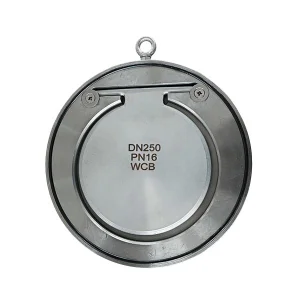
OEM Stainless Steel Body WCB Single Disc Check Valve PN16 Manufacturer, Factories
View Valve Specs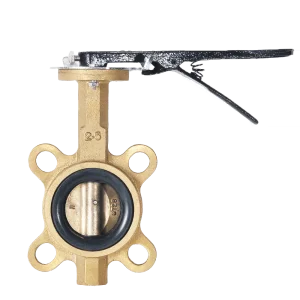
OEM Brass Bronze Wafer Butterfly Valve Manufacturer, Manufacturers
View Valve Specs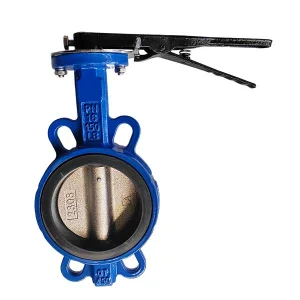
OEM PN16 5K 10K 150LB Hard Back Seat Wafer 4 Butterfly Valve Manufacturer, Factories
View Valve Specs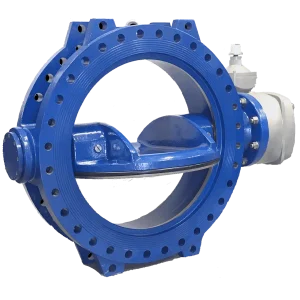
OEM AWWA C504 Double Eccentric Butterfly Valve Factories, Exporter
View Valve Specs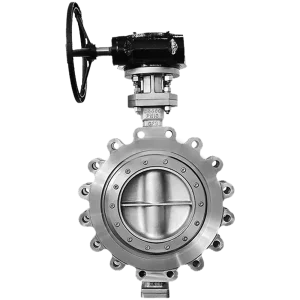
OEM Lug Type Triple Offset Butterfly Valve Factories, Exporters
View Valve Specs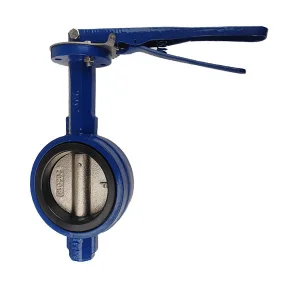
China Hard Back Seat Earless Wafer Butterfly Valve with Handlever Factories, Exporters
View Valve Specs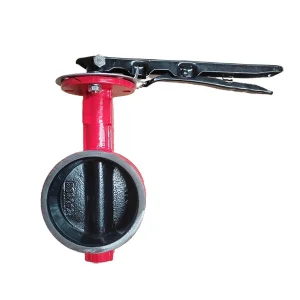
OEM Grooved Type Butterfly Valve for Fire Fighting Factories, Exporter
View Valve Specs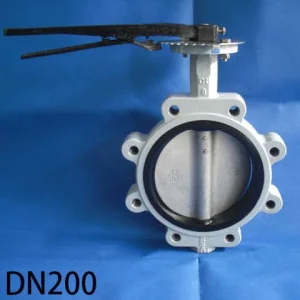
OEM Casting Iron Body CF8 Disc Lug Type Butterfly Valve Manufacturers, Factory
View Valve SpecsGlobal Regulatory Compliance & Engineering Quality Assurances
International tenders require uncompromising adherence to metallurgical traceability, hydrostatic pressure protocols, and sanitary contact certifications.
EN 10204 3.1 Traceability
Every heat number from our induction smelting furnaces is documented. Inspection certificates include optical emission spectrometry (OES) chemical breakdowns, tensile testing data, elongation percentages, and Charpy V-notch impact toughness tests performed according to EN 10204 Type 3.1 standards.
Potable Water Sanitary Approvals
Rubber vulcanization materials (EPDM and NBR compounds) and epoxy powder formulas are certified in full alignment with international hygienic regulations: UK WRAS, French ACS, German DVGW W270, and North American NSF/ANSI 61, ensuring zero organic leaching and zero bacterial biofilm growth.
Hydrostatic Pressure Testing
100% of our manufactured valves undergo hydrostatic shell and seat pressure testing prior to packaging in compliance with ISO 5208 and EN 12266-1. Shell test pressure reaches 1.5 × PN (e.g., 24 bar for PN16 rating), and seat isolation is verified to 1.1 × PN with zero allowable bubble leakage.
Frequently Asked Questions for Valve Procurement Engineers
In-depth answers addressing design standards, metallurgy, pressure ratings, OEM customization, and logistics management.
