
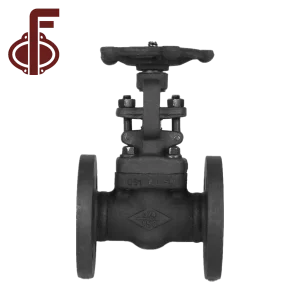
OEM Class1200 Forged Gate Valve Manufacturer, Factories
View Technical Specs
Direct factory production certified under ISO 9001 and CE directives. Fully configured for harsh media, corrosive chemicals, and high-pressure transmission networks.
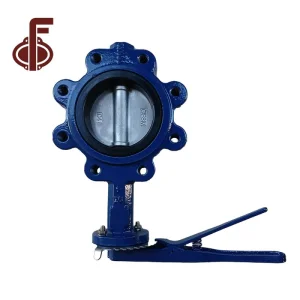
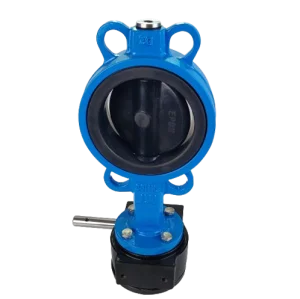
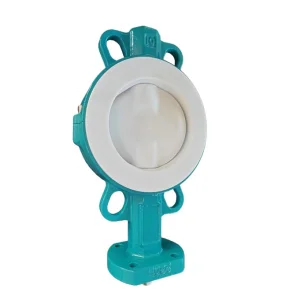
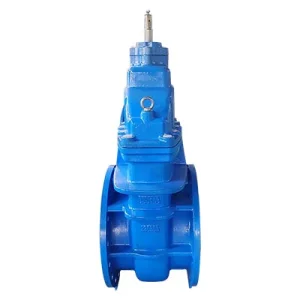
Deep engineering insights into how modern OEM gate valve topologies mitigate pressure drops, eliminate cavitational wear, and ensure bi-directional hermetic isolation.
Fullway (full-bore) architecture provides an unobstructed, straight-through cylindrical passageway matching the internal diameter of connected piping. By eliminating choke-points and turbulent recirculatory vortices, laminar flow is conserved, reducing operational pumping horsepower requirements by up to 14% compared to restricted-port alternatives.
OEM customization bridges ductile iron resilient-seated wedges (vulcanized EPDM/NBR for potable water up to 16 Bar) and high-temperature Stellite hard-faced metal-to-metal seating (for steam and slurry lines reaching 425°C). Precise CNC wedge balancing prevents galling under asymmetric dynamic line differentials.
Incorporating rolled trapezoidal ACME stem threading and dual O-ring secondary seals, our non-rising stem (NRS) and outside screw & yoke (OS&Y) designs lower breakaway torque by 30%. Thrust bearings fabricated from self-lubricating bronze ensure lifetime operation without packing repacking cycles.
How fullway gate valves solve challenging flow environments across distinct geographic, climactic, and chemical operating terrains.
Underground municipal water networks require maintenance-free non-rising stem gate valves fitted with extension spindles. Our electrostatically applied thermoset fusion-bonded epoxy (FBE) coating (minimum 250 µm) guarantees immunity to microbial soil corrosion and galvanic pitting.
For coastal Middle East and Mediterranean seawater treatment complexes, valve bodies are cast from Nickel Aluminum Bronze (C95800) or Super Duplex SS2507, preventing chloride stress cracking and erosion-corrosion caused by high-velocity saline reject flows.
Condensate extraction lines, boiler feedwater loops, and cooling towers rely on ASME Class 600/900 OS&Y forged valves. Flexible wedges accommodate thermal thermal binding, enabling rapid emergency isolations during abrupt turbine trips without seat leakage.
Unrefined mineral tailings and cellulose fiber suspensions can clog conventional seats. Fullway knife gate configurations integrate bottom scraper designs and elastomeric transverse seals, clearing sediment accumulations during closure to guarantee zero jams.
Leveraging vertically integrated metallurgy, automated CNC machining clusters, and digital quality monitoring to assure on-time delivery across international megaprojects.
Unlike broker-type exporters, our Tianjin manufacturing hub operates internal sand-casting, investment lost-wax foundries, and automated ductile iron resin-sand molding lines. Direct control from raw ingot spectroscopic chemical analysis to final hydraulic testing shortens cycle times by 35% compared to multi-tiered sourcing structures.
Tooling flexibility allows direct switching across flanged drillings: ANSI/ASME B16.5 (Class 150/300), EN 1092-2 (PN10/PN16/PN25), BS 10, AS 2129, and JIS B2239 within the same manufacturing cell. Standardized valve bodies lower OEM mold changeover overhead, providing aggressive FOB/CIF pricing schedules.
Situated within an hour of Tianjin Xingang Port—one of Northern China's primary maritime transshipment gateways—our logistics department coordinates daily container consolidation. Continuous raw body buffer inventories ensure standard DIN/ANSI sizes DN50 to DN600 ship within 15 working days.
Bridging traditional mechanical flow control with Industrial IoT (IIoT), additive manufacturing, and digital emission tracking.
Integration of low-power Modbus, Profibus, and WirelessHART actuators allowing remote valve position confirmation, torque feedback tracking, and real-time operational diagnostics.
Embedded non-intrusive acoustic emission sensors within the gate valve seat pocket to detect cavitation onset, scale formation, and internal micro-leakage before operational failure occurs.
Laser powder bed fusion (LPBF) additive manufacturing of customized trim profiles and internal guide channels, decreasing deadweight by 22% while boosting tensile durability under high delta-P.
Integration of individual QR-coded digital passports for every export valve, validating recycled alloy ratios, foundry energy indices, and verifiable LCA emissions data for global ESG compliance.
Eliminating contractor liability with 100% shell and closure hydrostatic testing according to API 598 and EN 12266-1 prior to crate export packaging.
Complete traceability documentation packages accompany every export shipment, including 3.1 Mill Test Certificates (MTC), non-destructive testing (NDT/RT/PT) records, paint thickness logs, and raw chemistry melt reports.
Designed and certified to ISO 15848-1 and API 641 fugitive emission criteria. Precision burnished stem micro-finishes (Ra < 0.4 µm) paired with live-loaded dynamic packing rings ensure VOC emissions stay strictly below 100 ppmv.
OEM private-labeling incorporates customized casting tag lines, customer laser badge serial numbers, and local operating language manuals (English, Spanish, French, Arabic, Russian), guaranteeing rapid site clearance with utility inspectors.
Heavy-duty engineered valves engineered to resist wear, thermal variations, and corrosive line conditions.
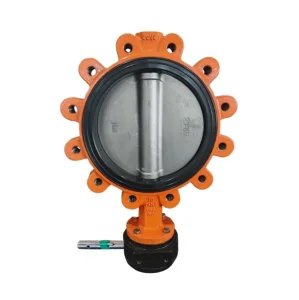
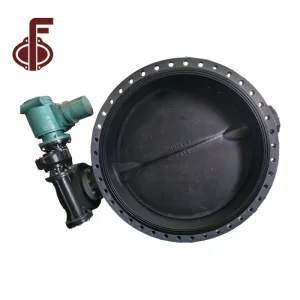
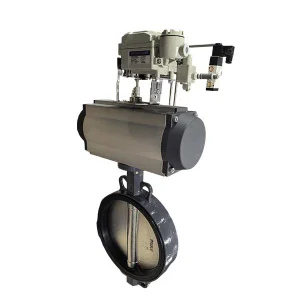
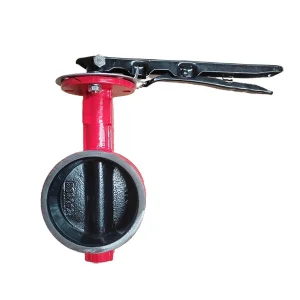
Clear, authoritative technical answers addressing engineering parameters, material suitability, pressure containment, and international supply logistics.
A fullway (full bore) gate valve possesses an internal waterway diameter identical to the nominal bore of the mating pipeline. Unlike reduced bore ball valves or butterfly valves where the disc profile permanently obstructs a section of the flow core, a fully retracted fullway wedge leaves a frictionless, uninterrupted corridor. This eliminates dynamic turbulence, reduces line pressure drop to near zero, and facilitates unrestricted mechanical pigging during pipe cleaning operations.
Outside Screw and Yoke (OS&Y) stems feature external threading isolated from direct contact with line fluids. They should be selected for high-temperature service, corrosive chemicals, fire protection risers (where visual open/closed confirmation is mandatory per NFPA), and power plant steam lines. Non-Rising Stem (NRS) valves are favored where physical vertical headroom is restricted, such as municipal underground water vaults, marine engine room bilges, and trench excavations.
Our OEM manufacturing process utilizes high-pressure transfer molding where the ductile iron core is sandblasted to Sa 2.5 cleanliness, chemical-primed, and encapsulated in premium synthetic EPDM or NBR rubber. The vulcanization occurs at carefully calculated isothermal states ensuring cross-link polymerization bonds the elastomer to the iron core. This prevents tearing, peeling, and rubber fatigue even when subjected to continuous dynamic line differentials reaching 16 to 25 Bar.
Each gate valve produced undergoes strict hydrostatic and pneumatic pressure testing in accordance with ISO 5208 and EN 12266-1 (Rate A zero-leakage standard) or API 598. Shell tests are sustained at 1.5 times the nominal cold working pressure rating (CWP), while low-pressure and high-pressure closure tests verify absolute bidirectional drop-tightness across the seat interfaces before painting and shipping.
Yes. In addition to standard DIN 3202 F4/F5, BS 5163, ISO 5752 Series 3/14/15, and ASME B16.10 dimensions, our in-house pattern shop can adapt cast patterns to replicate historical or non-standard face-to-face configurations. This allows EPC retrofit contractors to substitute failed legacy valves without altering piping geometry or cutting welded pipe spools.
Our dedicated export department provides complete commercial documentation packs, including Certificate of Origin (CO, Form E, Form F, or EUR.1), notarized consular invoices, and compliant wood packaging certificates (ISPM 15 heat-treated plywood crates). Technical compliance dossiers with CE declarations, WRAS/NSF compliant material test reports, and dimensional CAD files are provided to expedite project approval.
