
Axial Silent Series
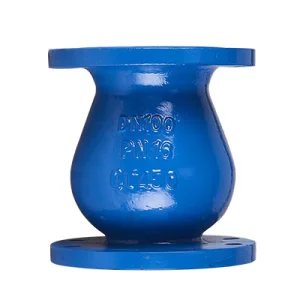
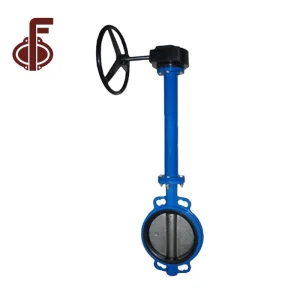
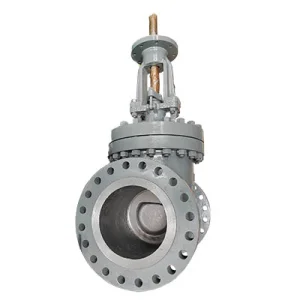
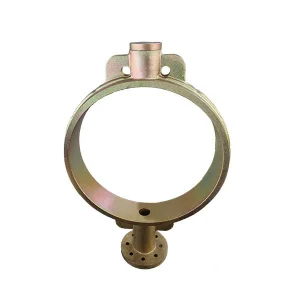
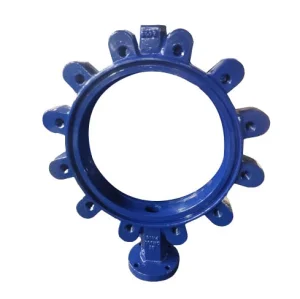
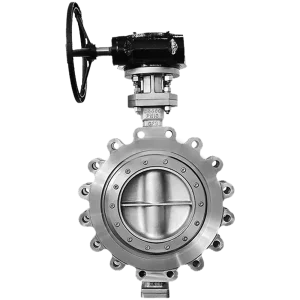
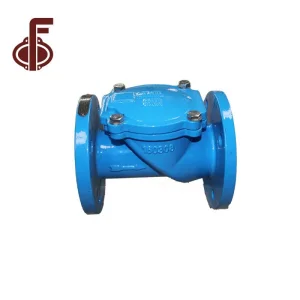
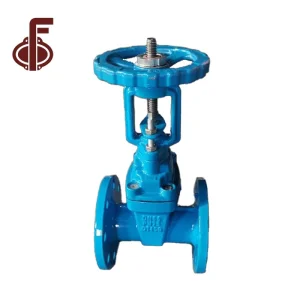
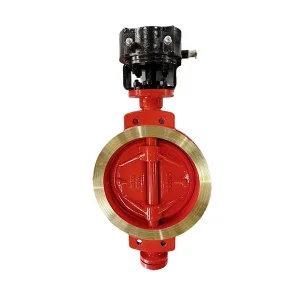
Explore our primary manufactured range of wafer, lug, flanged, and non-return check valves. Fully customizable to EPC specifications, drawing packages, and multinational operational standards.
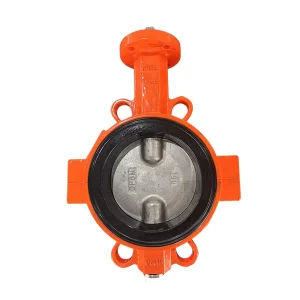
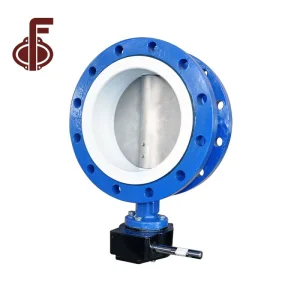
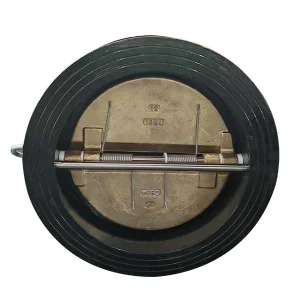
Understanding the transition from basic concentric rubber-lined valves to advanced triple-eccentric geometries engineered to withstand continuous cycle pressures up to 100 bar (1500 PSI) and extreme thermal gradients.
In modern fluid engineering, high-pressure pipeline systems historically relied upon gate and ball valves for primary isolation. However, critical engineering limitations—namely significant structural weight, massive face-to-face dimensions, high mechanical operating torque, and susceptibility to thermal binding—have driven global infrastructure towards quarter-turn high-pressure butterfly valves (HPBVs). Today, as process pressures consistently exceed PN25 (Class 150) into PN40, PN63, and PN100 (ASME Class 300 to Class 600) regimes, quarter-turn technology has evolved through precision mechanical offsets.
The fundamental constraint of concentric butterfly valves is constant mechanical interference between the elastomer seat and the rotating disc throughout the entire 90-degree travel arc. Under severe high-pressure differential conditions (ΔP), this continuous rubbing causes swift seat erosion, micro-cracking, and premature blowout. High-performance OEM factories resolve this via mathematical geometry across three distinct spatial planes:
The center of the valve stem is displaced behind the plane of the sealing surface. This spatial offset provides uninterrupted 360-degree contact around the body perimeter, creating space for an uninterrupted sealing ring without passing the stem through the seat itself.
The stem is shifted laterally from the longitudinal flow centerline of the bore. This eccentric positioning provides a secondary camming action: during opening, the disc swings immediately away from the seat, eliminating abrasive rubbing across 88 degrees of rotation.
The seating surface profile is machined not as a circular cylinder, but as an inclined cone whose focal apex is offset from the pipe center. This completely prevents mechanical jamming, enabling pure torque-seating and zero-friction wedging for bi-directional bubble-tight shutoff.
By pairing an inclined conical disc with an elastic laminated metallic seal ring (alternating precision AISI 316L stainless steel foils and ultra-pure exfoliated graphite), the triple offset butterfly valve attains mechanical torque-seating. Instead of depending on elastic elastomer deformation to maintain line isolation, seating pressure increases proportionally as closing torque is applied to the valve stem. As line pressure rises, the natural pressure vector assists in disc seating, maintaining an API 598 zero-leakage threshold across bi-directional high-pressure duty cycles.
Tianjin Zhongfa Valve Co., Ltd. (ZFA Valve, established 2006) operates at the nexus of advanced industrial automation and disciplined metallurgical casting. Our modern manufacturing center combines CNC horizontal machining centers, 5-axis simultaneous grinding for elliptical seats, and complete in-house destructive and non-destructive material evaluation.
Direct engineering comparison of quarter-turn and multi-turn isolation valves for EPC contractors, engineering consultants, plant operators, and OEM system integrators.
| Valve Type | Pressure Class | Standard Materials | Sealing Technology | Weight vs Gate Valve | Operating Characteristics |
|---|---|---|---|---|---|
| Triple Offset (TOV) Butterfly | ASME 150 - 600 / PN10 - PN100 | WCB, CF8M, Duplex 2205, Super Duplex | Laminated SS316 + Graphite / Solid Stellite | Up to 70% Lighter | Zero friction, bi-directional, high delta-P throttling, API 607 fire-safe. |
| Double Offset (High Perf.) | ASME 150 - 300 / PN16 - PN40 | WCB, CF8, CF8M, Ductile Iron | Reinforced R-PTFE, Virgin PTFE, PEEK | Up to 65% Lighter | Chemical handling, HVAC district cooling, clean steam, moderate temp. |
| Concentric Resilient Seated | PN6 - PN16 / Class 125 - 150 | Ductile Iron GGG40/50, WCB, CF8 | Molded EPDM, NBR, Viton, White Silicone | Up to 80% Lighter | Water treatment, wastewater, utility air, sea water intake lines. |
| Cast Steel Wedge Gate | ASME 150 - 900 / PN16 - PN160 | ASTM A216 WCB, WC6, LCC | Metal-to-Metal API Trim 8 / Trim 5 | Baseline Weight (Heavy) | Full bore isolation only, prone to thermal locking, multi-turn stroke. |
| Trunnion Mounted Ball Valve | ASME 150 - 1500 / PN16 - PN250 | Forged A105N, F316, F51 | Spring energized primary metal/soft seats | 15% - 30% Heavier than TOV | Pigging lines, severe abrasive slurries, high actuator break-away torque. |
As process plants pursue aggressive carbon abatement and energy optimization, weight reduction in piping systems is a critical factor. For offshore drilling platforms, Floating Production Storage and Offloading (FPSO) modules, and modular process skids, replacing bulky cast gate valves with triple eccentric high-pressure butterfly valves reduces deadweight by over 60%, drastically simplifying structural support trusses and seismic anchoring overhead.
Examining how OEM high-pressure butterfly valves are deployed in severe-service operating plants across the Americas, Europe, Middle East, and Asia-Pacific.
Operating in Persian Gulf seawater reverse osmosis (SWRO) facilities under continuous working pressures of 70 to 85 bar. High-pressure membrane feed racks require Super Duplex Stainless Steel (ASTM A995 5A / 2507, PREN > 42) butterfly valves to completely withstand localized pitting and crevice corrosion under high chloride concentrations.
District heating transmission manifolds running superheated steam up to 350°C at PN40. Lug and double-flanged metal-seated triple offset valves eliminate gland thermal binding, holding bubble-tight zero leakage during seasonal grid start-up and shutdown thermal cycling.
Hydrotreating and sour gas refinery units compliant with NACE MR0175/ISO 15156. Inconel 625 weld-overlay disc edges paired with API 641 fugitive emission live-loaded stem seals prevent hazardous VOC and volatile gas release in explosive zone atmospheres.
The ongoing global transition toward liquefied natural gas (LNG) infrastructure, carbon capture and storage (CCS), and commercial blue/green hydrogen networks demands valve hardware capable of surviving severe pressure-temperature envelopes. High-pressure butterfly valves are increasingly engineered with extended bonnets for cryogenic service (BS 6364), enabling operating temperatures as low as -196°C in liquid methane transport, alongside high-pressure CO2 supercritical phase pipelines operating at 150 bar.
Industrial buyers are shifting capital allocation toward certified OEM manufacturing partners in China capable of handling high-mix low-volume engineering challenges. By partnering with Tianjin Zhongfa Valve Co., Ltd., global distributors and plant operators shorten lead times from 36 weeks (traditional European foundries) down to 8–12 weeks, while benefiting from state-subsidized green casting foundries, automated precision machining, and exhaustive Quality Assurance documentation packs (Material Test Reports, NDT charts, Hydrostatic Certificates).
Detailed technical responses compiled by Tianjin Zhongfa Valve's chief application engineers to assist project procurement managers and pipeline engineering consultants.
In eccentric valves, high differential pressure (ΔP) creates an unbalanced hydro-mechanical dynamic torque vector across the disc face. Because the shaft is offset from the disc center, upstream pressure tends to either force the valve shut or open, depending on flow orientation. Actuator sizing must incorporate not only seat breakout friction and packing drag, but also full dynamic aerodynamic torque calculated at maximum operating velocity per AWWA C504 and EN 593 guidelines.
ASME B16.34 governs minimum wall thickness, bolt circle diameter, and flange thickness across varying pressure classes. A Class 150 WCB cast valve body is rated for ~19.6 bar at ambient temperature, Class 300 withstands ~51.1 bar, and Class 600 sustains up to 102.1 bar. As pressure class increases, wall thickness rises proportionally, and the stem diameter is scaled up with higher shear-strength alloys (such as 17-4PH or XM-19) to prevent stem deformation under extreme torque loads.
Laminated seats (composed of alternating laminations of precision 316SS foil and pure graphite) provide microscopic mechanical compliance. When the conical disc engages the seat, the metallic layers deflect elastically while the graphite fills surface micro-imperfections, achieving API 598 zero-leakage Rate A shutoff. Solid Stellite seats are specified for extreme abrasive slurries or temperatures beyond 450°C, but typically achieve API 598 Class IV or V tightness unless precision lapped by hand.
Our high-pressure valves are engineered with a live-loaded, cup-and-cone packing assembly combining braided graphite anti-extrusion rings and die-formed flexible graphite rings under continuous Belleville spring compression. This structure absorbs thermal cycling and dynamic pressure shocks, meeting ISO 15848-1 Class AH/BH and API 641 fugitive emission levels below 50 ppmv stem leakage over thousands of mechanical cycles.
Every shipment includes an exhaustive Quality Dossier containing: Certified EN 10204 Type 3.1 Material Test Reports (MTRs) for pressure-containing castings and stems, Hydrostatic and Pneumatic Pressure Test Certificates (API 598 / ISO 5208), Positive Material Identification (PMI) spectral logs, Non-Destructive Examination reports (Liquid Penetrant RT/UT where contracted), Painting and Coating Inspection reports, and Certificate of Origin documents.
Yes. High-performance double-offset and triple-offset butterfly valves exhibit an equal percentage or modified linear flow characteristic between 20° and 70° disc opening. However, for continuous high pressure-drop throttling, engineers must calculate the Valve Cavitation Index (σ) to ensure fluid pressure does not fall below vapor pressure at the vena contracta, which could induce cavitation damage to the downstream pipe walls.
Wafer valves are the lightest and most cost-effective, clamped between pipe flanges by through-bolts, but cannot be used for dead-end terminal isolation. Lugged valves have drilled and tapped threaded lugs, allowing downstream piping to be unbolted for maintenance while holding full working pressure upstream. Double-flanged valves provide superior torsional rigidity and are the preferred international standard for large-bore lines (>DN600) and buried municipal distribution.
ZFA Valve provides full turnkey OEM support. We work from your 2D/3D CAD specifications or design from scratch to your target market standards (ANSI, DIN, JIS, BS). Our facilities support customized body casting patterns (embossed logos, patent markings), specialized coating colors (epoxy, polyurethane, fluoropolymer), proprietary serial tagging, customized actuator interface flanges (ISO 5211), and branded neutral seaworthy wooden box packaging.
Temperature limits depend entirely on seat and body metallurgy: Resilient EPDM seats are limited to +120°C; NBR handles up to +82°C; virgin or filled PTFE seals peak at +180°C. For thermal power plants and superheated steam above 200°C, metal-seated triple offset valves with Inconel or Stellite seats routinely operate up to +550°C, and custom engineered alloy models (such as Incoloy 800H or 310S SS) handle continuous duty up to +650°C.
Standard stocked body components (WCB/CF8M, DN50 to DN600 in PN16/Class 150) can be assembled, tested, and crated within 7 to 15 business days. Highly customized project orders requiring special foundry melts (Duplex 2205, Hastelloy, Monel), custom stem extensions, or third-party witness testing (Lloyd's, DNV, SGS, Bureau Veritas) typically ship in 6 to 9 weeks, outperforming legacy global manufacturers by 50%.
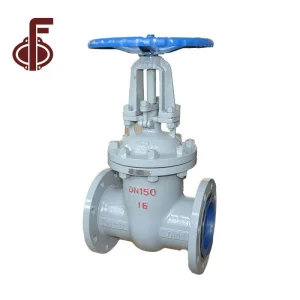
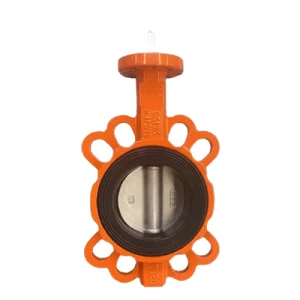
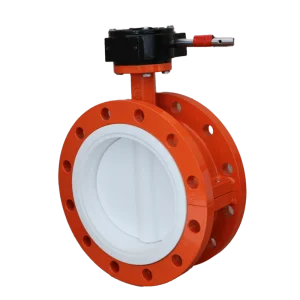
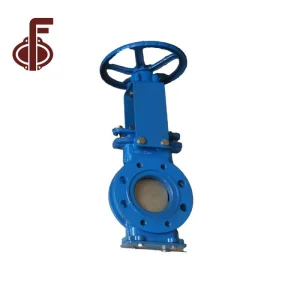
Browse the second portfolio of precision manufactured flow equipment from Tianjin Zhongfa Valve Co., Ltd., built in accordance with ASTM, ANSI, ISO, BS, DIN, GOST, JIS, and KS certifications.
Connect directly with Tianjin Zhongfa Valve's senior technical sales engineers. Send your tender datasheets, medium chemistry, differential pressure constraints, and project timelines for an authoritative review and quote within 24 hours.
Submit complete tender documentation, valve datasheets, and flow velocity profiles directly to our application desk.
Email: [email protected]Speak with a valve specialist regarding torque calculations, Stellite hardfacing, or ISO 5211 actuator mounting.
Call: +86 176 0227 9258Download dimensional 2D DWG and 3D STEP valve models, pressure-temperature rating charts, and complete material tables.
Request Full Valve Catalog