
Primary Industrial & Thermal Control Valve Fleet
Direct OEM manufacturing line covering replaceable liners, double-shaft concentric units, and severe-service metal seating configurations for heavy industrial operations.
-
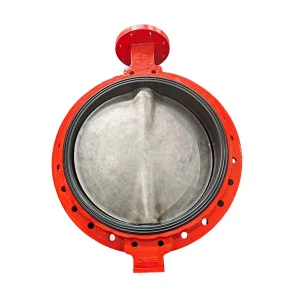
China DN700 WCB Soft Replaceable Seat Single Flange Butterfly Valve Manufacturer, Factory
View Valve Specification -
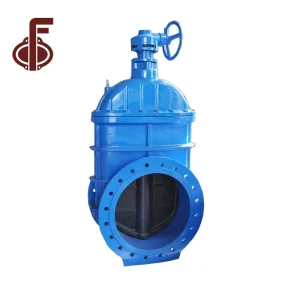
OEM DI PN10/16 class150 Soft Sealing Gate Valve Manufacturers, Exporter
View Valve Specification -
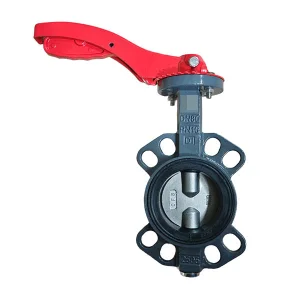
OEM PN16 DN80 CF8 Double-Shaft Disc Design Wafer Butterfly Valve Manufacturers, Factories
View Valve Specification -
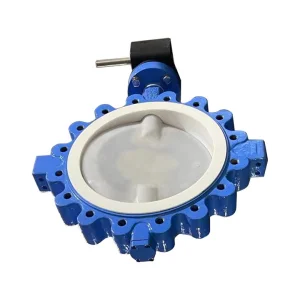
China Silicon Rubber Disc PTFE Lug & Flange Butterfly Valve Split Body type Manufacturer, Factories
View Valve Specification -
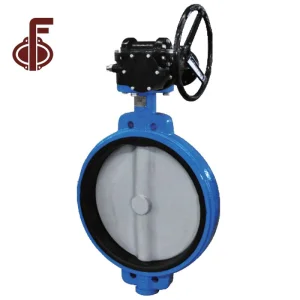
China Worm Gear Operated Wafer Type Butterfly Valves Factories, Exporters
View Valve Specification -
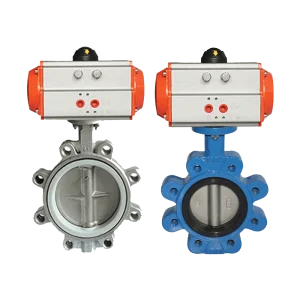
China Pneumatic Soft Seal Lug Butterfly Valve OEM Factory, Factories
View Valve Specification -
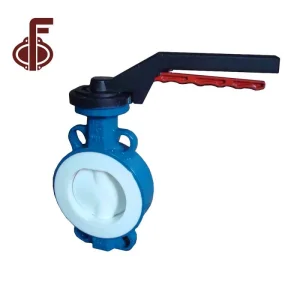
OEM Concentric Cast Iron Full Lined Butterfly Valve Manufacturers, Factories
View Valve Specification -
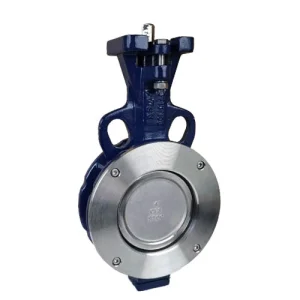
OEM Double Eccentric Wafer High Performance Butterfly Valve Factories, Exporters
View Valve Specification
Engineering Severe-Service Isolation: The High-Temperature Paradigm
Thermodynamic stability, metallurgical selection, and zero-leakage friction elimination under extreme cycling conditions up to 815°C (1500°F).
Industrial piping installations operating under thermal elevation demand precision fluid control components that bypass the mechanical limitations of classical concentric and soft-seated valves. While standard elastomeric seals (such as EPDM and NBR) degrade exponentially once continuous operating thresholds exceed 120°C, industrial processing lines within petrochemical crackers, steam manifold headers, district heating circuits, and rotary kiln exhaust lines depend continuously on zero-leakage isolation under thermal cycling.
Tianjin Zhongfa Valve Co., Ltd. (ZFA Valve), established in 2006, engineers and manufactures high-integrity high-temperature butterfly valves tailored specifically to resolve thermal expansion mismatch, galling, and fugitive stem emissions. Integrating triple-eccentric geometries with Stellite® hardfaced trim profiles, our production facility in Tianjin provides international engineering, procurement, and construction (EPC) contractors and global valve brands with field-verified valve assemblies tested strictly in accordance with API 598, ISO 5208, and ANSI/FCI 70-2 Class VI requirements.
Triple-Offset Geometry: Eliminating Friction and Thermal Galling
The primary barrier to valve longevity in high-temperature environments is galling caused by continuous contact friction between the disc boundary and the annular seat ring. In our high-temperature triple offset designs, three geometric eccentricities are manufactured into the flow pathway:
- First Offset: The shaft axis is shifted behind the seating surface plane, creating a continuous uninterrupted 360-degree seal profile.
- Second Offset: The shaft centerline is offset from the longitudinal pipe centerline, allowing mechanical camming separation during the initial degrees of opening stroke.
- Third Offset (The Angled Cone): The sealing cone axis is machined inclined relative to the pipe centerline. This generates a right-angled approach geometry where contact occurs purely at the ultimate point of final shut-off, mitigating seat scrub, mechanical wear, and high torque drag under differential expansion.
| Valve Design Architecture | Sealing Profile | Thermal Boundary Limit | Leakage Class (API 598 / FCI 70-2) | Ideal Application Environments |
|---|---|---|---|---|
| Concentric Resilient Seated | Elastomer Liner (EPDM, NBR, Viton) | -20°C to +150°C (-4°F to 302°F) | ISO 5208 Rate A (Zero Bubble) | HVAC distribution, municipal wastewater, low-pressure condensate lines. |
| Double Eccentric High Performance | PTFE / R-PTFE / PEEK / Flexible Metal | -50°C to +260°C (-58°F to 500°F) | ANSI Class IV or Class VI (PTFE) | Intermediate steam throttling, light chemical hydrocarbons, utility gas. |
| Triple Eccentric Severe-Service | Laminated SS316 + Graphite / Solid Stellite® 21 | -196°C to +815°C (-320°F to 1500°F) | API 598 Zero Leakage / FCI Class VI | Superheated steam isolation, refinery coking, hot syngas, molten salts, flare gas. |
Global Industrial Status & Advanced Technology Roadmap
Aligning valve manufacturing paradigms with global decarbonization, industrial hydrogen networks, and ultra-critical combined cycle developments.
Established Baseline
Peak Thermal Rating
Hydro & Air Shell Tested
Quality Verification
Additive Laser Cladding
Adoption of automated robotic PTA (Plasma Transferred Arc) and laser cladding to deposit specialized cobalt-based Stellite® alloys directly onto cast stainless-steel disc seating matrices, preventing delamination at 700°C.
ISO 15848-1 Low-Emission
High-temperature packing matrices combining expanded pure mineral graphite rings with braided carbon anti-extrusion caps, ensuring fugitive VOC emission mitigation down to Class AH parameters under severe cycling.
Hydrogen & SMR Adaptation
Next-generation R&D addressing hydrogen embrittlement across stem materials using precipitation-hardened 17-4PH, Inconel® 718, and A-286 alloys designed for high-temperature synthesis gas applications.
Digital Twin FEA Validation
Prior to foundry casting pouring, our engineering team executes multi-physics transient thermo-mechanical finite element analysis (FEA) to predict valve body distortion, bolt stretch, and localized stress fields.
Localized Engineering Use Cases & Field Implementations
Field installations requiring extreme tolerance to thermal shifts, erosive particulate streams, and cyclic boiler loads.
Superheated Steam Manifolds
Integrated across cogeneration (CHP) turbine bypass and header isolation lines. Valves endure rapid thermal shocks without sticking, providing tight shutoff against saturated and superheated steam lines up to 450°C.
Rotary Cement Kiln Flue Gas
Exhaust and dust extraction lines handling particulate-laden flue gas up to 600°C. Metal hardfacing on disc edges ensures resistance against abrasive clinker dust scouring without compromising emergency trip shut-off speeds.
Petrochemical Delayed Coking
Fractionator overhead isolation and hydrocarbon flare headers. Engineered with extended ISO 5211 bonnets that displace stem packing rings out of direct line heat radiating zones, preserving seal integrity during unheading cycles.
Concentrated Solar Power (CSP)
Molten salt storage and transfer networks operating within 300°C to 565°C corridors. Utilizes customized 316H and high-nickel body alloys with dual-flange connections to eliminate thermal flange leakage risks.
Supply Chain Resilience & Chinese Factory OEM Efficiency
Vertically consolidated foundry clusters, precision CNC machining, and direct maritime logistics delivering unbeatable production economies.
Integrated Foundry Infrastructure
Direct supply partnerships with North China's specialized casting foundries. Spectrometric verification ensures strict metallurgical compliance for ASTM A216 WCB, A351 CF8M, CF3M, and high-temp alloy A217 WC6/WC9.
Horizontal CNC Tooling Lines
High-precision machining cells with multi-axis indexing enable boring, facing, and offset stem profiling in single clampings, eliminating human alignment variances and guaranteeing concentric tolerances down to ±0.015mm.
Export Testing Verification
Every individual production run undergoes hydrostatic shell testing at 1.5× nominal pressure and bi-directional pneumatic seat testing per API 598. Non-destructive examination (RT, UT, PT, MT) packs are prepared for project dossiers.
Maritime Port Consolidation
Located in the industrial cluster of Tianjin, our factory is minutes away from Tianjin Xingang Port, cutting transit bottlenecks and enabling weekly container consolidations to Southeast Asia, Europe, the Middle East, and the Americas.
Localized Support & International Compliance Assurance
Comprehensive standard coverage meeting statutory safety and metallurgical demands across all continental jurisdictions.
Sourcing flow control valves for international capital projects requires total certainty that documentation, materials testing records, and physical equipment withstand scrutiny from independent third-party inspection agencies (such as SGS, Lloyd's Register, BV, or TÜV). Tianjin Zhongfa Valve Co., Ltd. (ZFA) operates an audited Quality Management System verified under ISO 9001 and European Pressure Equipment Directive (PED) CE certification.
Our OEM high-temperature valve exports are designed, cast, and certified against universal cross-border standards:
- North American Engineering Standards: ASME B16.34 (Valves Flanged, Threaded and Welding End), ASME B16.5 / B16.47 (Flange Dimensions), API 609 (Butterfly Valves: Double-flanged, Lug- and Wafer-type), and API 598 (Valve Inspection and Testing).
- European & British Specifications: EN 593 (Industrial valves - Metallic butterfly valves), EN 12266-1 (Pressure testing of metallic valves), and EN 1092-1 (Steel Flanges).
- Regional Jurisdictions: Dimensional compliance for Russian and CIS pipelines per GOST 33259 / GOST 12815, as well as East Asian networks adhering to Japanese JIS B2220 and Korean KS B1511 protocols.
- Material Traceability: Complete EN 10204 3.1 Mill Test Certificates detailing heat chemistry, yield strength, elongation, Charpy V-notch impact values, and positive material identification (PMI) data.
High Temperature Butterfly Valve Engineering FAQ
Direct technical answers addressing actuation sizing, seat metallurgy, and extreme thermal operational constraints.
Why do conventional elastomeric and soft-seated butterfly valves fail in elevated thermal lines?
What is the function of an extended bonnet in high-temperature butterfly valve assemblies?
How does triple offset geometry maintain zero-leakage shut-off at high temperatures?
Can ZFA configure actuators for rapid-cycle high-temperature steam lines?
What testing documentation is delivered with export OEM orders?
Specialized Flow Control & Heavy-Duty Valve Fleet
Heavy hammer checks, double-offset performance valves, high-nickel alloys, and extended-stem configurations engineered for project versatility.
-
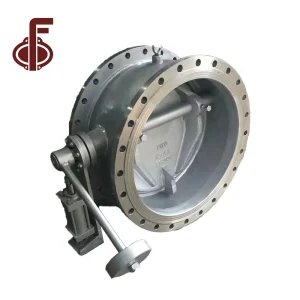
OEM Butterfly Check Valve with Heavy Hammer Manufacturers, Factory
View Valve Specification -
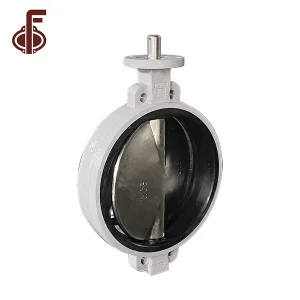
China WCB Wafer Type Butterfly Valve Factory, Exporter
View Valve Specification -
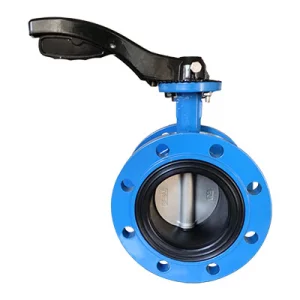
OEM EN593 Replaceable EPDM Seat DI Flange Butterfly Valve Manufacturer, Manufacturers
View Valve Specification -
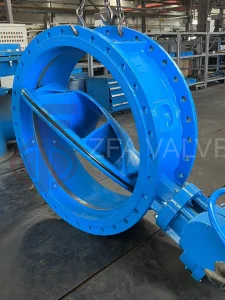
OEM Flange Type Double Offset Butterfly Valve Factory, Factories
View Valve Specification -
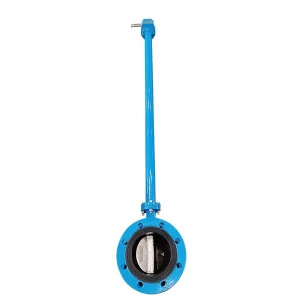
China Vulcanized Seat Flanged Long Stem Butterfly Valve Factory, Factories
View Valve Specification -
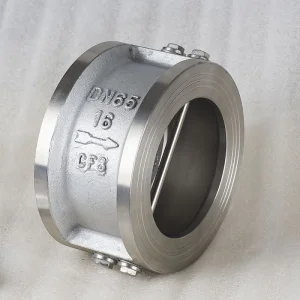
OEM SS2205 Dual Plate Check Valve Exporter, Exporters
View Valve Specification -
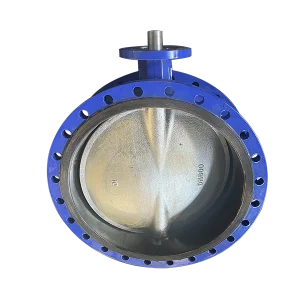
OEM Bare Shaft Vulcanized Seat Flanged Butterfly Valve Manufacturer, Factory
View Valve Specification -
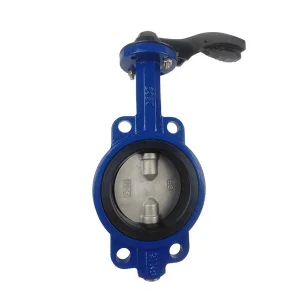
China DN100 4inch Hard Back Seat Wafer body Butterfly Valve Exporter, Exporters
View Valve Specification
