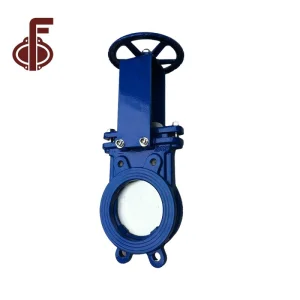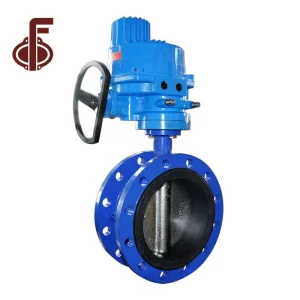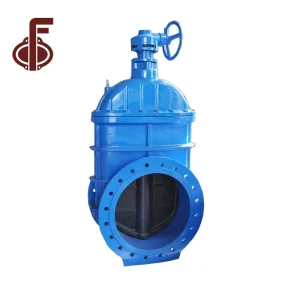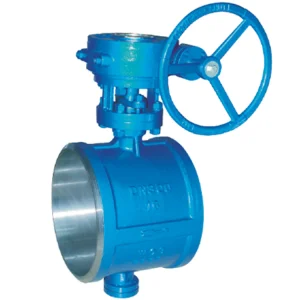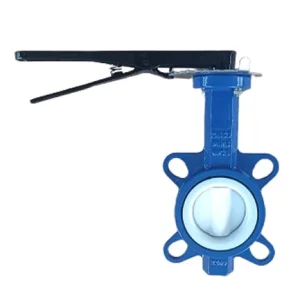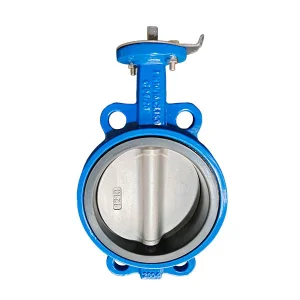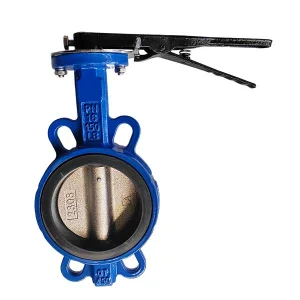
Featured Solutions
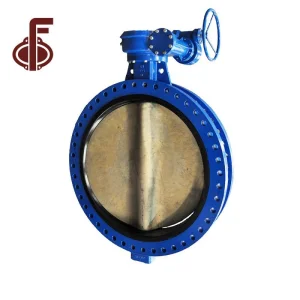
Heavy Industrial Flow Solutions: Factory Direct Portfolio
State-of-the-art flow isolation assemblies, manufactured to ASTM, ANSI, DIN, and JIS parameters with zero dead-leg integrity.
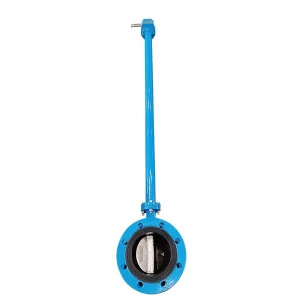
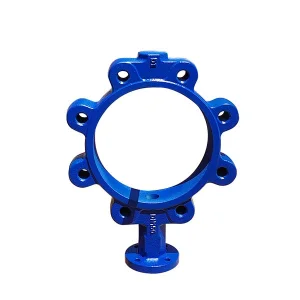
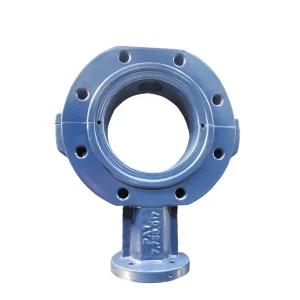
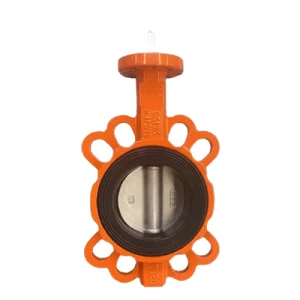
Technical Whitepaper
Industrial Significance of Lug Type Butterfly Valves
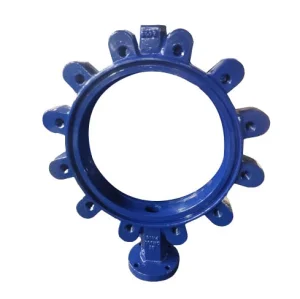
Engineered with threaded inserts along the valve circumference, lug type butterfly valves solve the critical issue of pipeline dismantling without downstream line depressurization.
100%
Bi-Directional Bubble Tight
Class 150/PN25
Dead-End Isolation
±0.02mm
CNC Flange Thread Precision
30,000+
Cycle Duty Life Verified
Dead-End Service Capability
Unlike wafer patterns which rely on counter-flange compressive clamping, lugged configurations feature independent internal female threading (metric or UNC). This allows technicians to dismount downstream piping while maintaining full system pressure upstream, slashing turnaround downtime.
Hydrodynamic Torque Attenuation
Our disc profiles undergo computational fluid dynamics (CFD) modeling to reduce dynamic torque spikes during throttling. The streamlined contoured disc ensures minimal friction resistance, preventing cavitation and vibration in variable-flow municipal pumping arrays.
Seat Vulcanization Integrity
We manufacture both phenolic-backed bonded seats and full vulcanized rubber body linings. This eliminates elastomer radial stretch, prevents seat migration under high differential velocities, and ensures zero tear risk under tight shut-off torque cycles.
Manufacturing Prowess
Precision Casting & Scaled Production Excellence
Bridging high-speed manufacturing with stringent European testing protocols to offer unparalleled OEM valve performance.
Cluster Foundry Integration
Operating within the Tianjin valve manufacturing cluster enables rapid molten material sourcing, strict melt-batch spectral analysis, and complete ductile iron (QT450-10, GGG40/50), WCB, CF8, and CF8M material traceability back to the heat number.
High-Efficiency CNC Machining
All lug bolt holes are tapped on multi-axis automated tapping centers, guaranteeing absolute pitch-circle concentricity. Dual-stem broaching matches tolerances to avoid hysteresis, ensuring optimal direct-mount interface with ISO 5211 actuators.
Rigorous QA Hydrostatic Verification
Every OEM unit undergoes dual testing: Shell testing at 1.5x PN design rating and high-pressure resilient seat closure testing at 1.1x PN under ISO 5208 Rate A criteria. Low-pressure air testing at 6 bar ensures gas-tight sealing capability.
Engineering Matrix
OEM Lug Type Butterfly Valve Material & Duty Matrix
Configurable component specifications matched precisely to corrosive, thermal, and mechanical operating environments.
| Component | Material Options | Applicable Standards | Target Media & Environment |
|---|---|---|---|
| Valve Body | Ductile Iron (GGG40/50), Carbon Steel (WCB), Stainless (CF8/CF8M/CF3M), Aluminum Alloy | EN 1563, ASTM A216, ASTM A351, DIN 1693 | Potable water, sewage, marine brine, hydrocarbons, steam |
| Disc | Ductile Iron (Nylon coated), CF8, CF8M, 2507 Super Duplex, Aluminum Bronze (C95800) | ASTM A351, ASTM B148, EN 10213 | Seawater cooling, slurry, industrial effluent, chemical processing |
| Seat Liner | EPDM, High-Temp EPDM, NBR (Buna-N), Viton (FKM), PTFE, RPTFE | FDA 21 CFR 177.2600, EN 681-1 | -30°C to +200°C thermal range; hydrocarbons, potable water, aggressive acids |
| Stem / Shaft | SS416, SS420, SS304, SS316, 17-4PH, Monel K-500 | ASTM A276, ASTM A564 | High torsional resistance, zero pin-leakage with blowout-proof retention |
| Actuation Top | Bare shaft, Manual Lever, Worm Gearbox, Pneumatic, Intelligent Electric | ISO 5211 Direct Mount Flange | SCADA integration, modbus fieldbus, failsafe emergency cut-off |
Real-World Deployments
Critical Field Scenarios for Lugged Butterfly Assemblies
From municipal desal plants to district chilling manifolds, our OEM units deliver structural reliability under extreme fluid conditions.
District HVAC & Chilled Water
Installed across commercial chiller plant headers and cooling tower pump sets. Threaded lugs eliminate pipe slip under thermal expansion and contraction, guaranteeing reliable condensation seal isolation.
Marine & Offshore Seawater
Outfitted with Aluminum Bronze (C95800) discs and high-integrity NBR or FKM seats to prevent pitting erosion and galvanic oxidation in ballast management and marine engine cooling loops.
Wastewater Treatment & Desalination
Applied within ultrafiltration and reverse osmosis skids. Fully encapsulated vulcanized rubber bodies isolate fluid completely from metallic casings, preventing localized crevice attack.
Procurement Trends
Global Sourcing Dynamics & Valve Technology Evolutions
How modern EPCs and industrial equipment OEMs mitigate supply volatility while meeting decarbonization benchmarks.
Fugitive Emissions Control
With industrial environmental compliance tightening worldwide (such as ISO 15848-1 and TA-Luft standards), stem gland designs now leverage multiple O-rings, secondary self-adjusting PTFE V-rings, and polished low-roughness stem finishes.
Demand for Actuation-Ready Skids
Buyers are consolidating procurement pipelines. Instead of handling bare-shaft valves and third-party actuators separately, clients increasingly request pre-assembled, factory-calibrated packages featuring intelligent diagnostics and quick-disconnect protocols.
OEM Custom Labeling & Dual Drillings
Distributors avoid excessive warehouse overhead by sourcing universal multi-standard lug valves compatible with PN10, PN16, ANSI Class 150, and JIS 10K flanges, supported by complete white-label casting markings and personalized serial coding.
Expert Knowledgebase
Frequently Asked Questions: Lug Butterfly Valve Specification
In-depth technical answers addressing end-connection mechanics, torque calculations, and sourcing best practices.
What is the structural difference between Wafer and Lug butterfly valves?
Wafer valves have centering eyelets or unthreaded holes clamped between opposing flanges by long through-bolts. If one side of the pipe is disassembled, the valve loses clamping retention. Lug valves possess threaded female bolt holes around the perimeter, permitting independent fastening to each pipe flange, which enables downstream disassembly under dead-end isolation conditions.
Can a lug type butterfly valve be used for dead-end pipe termination?
Yes. OEM lug type butterfly valves are engineered for dead-end installation. However, the maximum allowable dead-end differential pressure must be cross-checked against standard ratings. High-performance models accommodate full PN16/Class 150 pressure, while conventional resilient-seated units may be limited to 10 bar or 16 bar depending on whether retaining ring designs are utilized.
How should seat elastomers be specified across varying media?
EPDM is standard for clean water, chilled HVAC lines, and mild alkaline effluent (-20°C to +120°C). NBR (Nitrile) is strictly mandated for oil lines, hydrocarbons, and compressed air systems containing lubrication mist (-10°C to +82°C). PTFE and FKM (Viton) are reserved for aggressive chemicals, concentrated acids, and high temperatures up to +180°C/+200°C.
What actuation safety factors are recommended when sizing actuators?
Due to dynamic fluid friction, particulate deposits, and start-stop seat adhesion (breakaway torque), valve sizing must apply safety margins: Add a 20% to 25% safety torque factor for clean liquids, a 30% to 35% margin for slurries or viscous media, and at least 40% for dry air or pneumatic bulk handling lines.
What quality documentation does your factory provide for EPC submittals?
Our standard quality records include EN 10204 Type 3.1 Material Test Reports (MTR) covering chemical spectrometry and tensile/elongation properties, hydrostatic and pneumatic test certificates (ISO 5208 / API 598), paint coating thickness (DFT) logs, and CE/ISO 9001 compliance credentials.
Can you provide custom flange drilling standards (ANSI, BS, DIN, JIS) on one body?
Yes. We support custom universal lug drilling or custom bolt-hole tapping (such as metric M16/M20 or imperial UNC threads) matching Class 125/150, PN10, PN16, and JIS 10K flanges to streamline installation for international field assemblies without body modifications.
Extended Range
Industrial Valve Engineering: Specialized Product Portfolio
Complementary heavy-duty fluid control valves designed for plant engineering, water utilities, and demanding piping systems.