Featured OEM Butterfly Valves & Engineered Flow Solutions
Factory-direct industrial isolation components with certified bubble-tight shutoff, custom metallurgical castings, vulcanized seating technologies, and ISO 5211 direct mounting provisions.
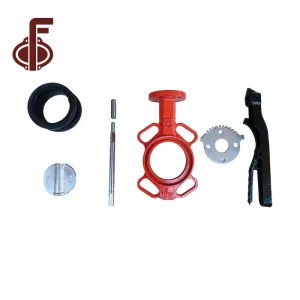
OEM Replaceable Seat Aluminum Hand Lever Wafer Butterfly Valve with EPDM Seat
Explore Technical Specs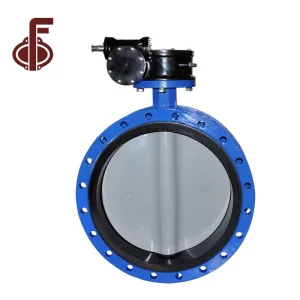
OEM NBR Seat Flange Butterfly Valve Factory, Exporters
Explore Technical Specs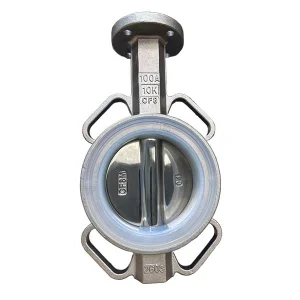
China Polished CF8M Disc Silicon Rubber Seat Potable Water Butterfly Valve
Explore Technical Specs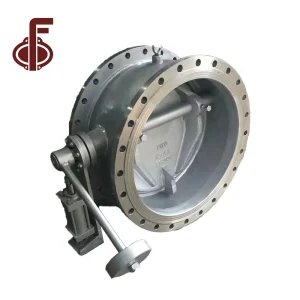
OEM Butterfly Check Valve with Heavy Hammer Manufacturers, Factory
Explore Technical Specs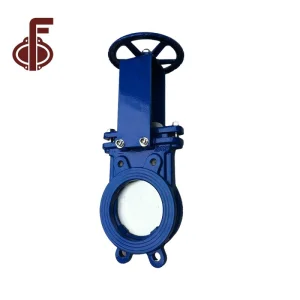
OEM Ductile iron PN10/16 Wafer Support Knife Gate Valve Manufacturer
Explore Technical Specs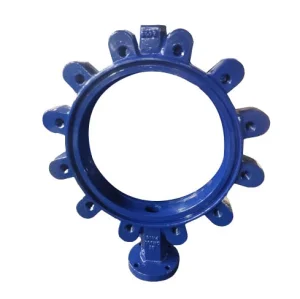
OEM Butterfly Valve Fully Lug Body Manufacturers, Exporter
Explore Technical Specs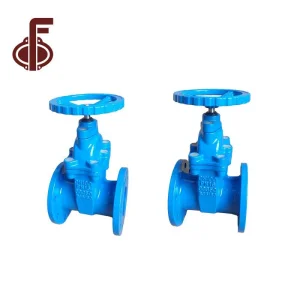
OEM DI PN10/16 Class150 Soft Sealing Gate Valve for Water Pipe
Explore Technical Specs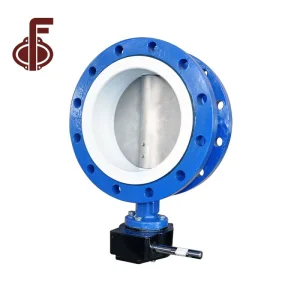
OEM PTFE Seat Flange Type Butterfly Valve Manufacturers, Factory
Explore Technical SpecsThe Strategic Paradigm Shift in Modern On-Off Butterfly Valve Engineering
Rapid industrialization, stricter carbon mandates, and the modernization of municipal utility infrastructures have transformed quarterly-turn on-off butterfly valves from basic hardware components into hyper-engineered critical isolation assets.
Quarter-Turn Kinematic Efficiency
Compared with legacy multi-turn gate and globe valves, on-off butterfly valves deliver a 70% reduction in structural weight, dramatically reduced face-to-face dimensions (ISO 5752 series 20/API 609 table 1), and ultra-fast 90-degree rotary stroke automation that optimizes emergency shutdown (ESD) response times across continuous process loops.
Autonomous Actuator Interoperability
Modern flow grids demand standardized integration. Top-flange designs conforming rigidly to ISO 5211 allow seamless plug-and-play linkage with pneumatic rack-and-pinion cylinders, intelligent multi-turn electric actuators, and hydraulic safety systems incorporating Fieldbus, Profibus, or HART digital feedback protocols.
Zero-Fugitive Environmental Safety
With greenhouse gas and hazardous VOC monitoring enforced under EPA Method 21 and ISO 15848-1 Class AH/BH standards, ZFA Valve applies finite-element dynamic stem-packing geometries that eliminate fugitive atmospheric micro-leakage in chemical processing and pipeline transport systems.
Global Procurement Criteria: Evaluating Real OEM Capabilities Beyond Re-badging
For international EPC contractors, oil majors, and water utilities, sourcing valves directly from Chinese manufacturers requires a rigorous risk-engineering framework that eliminates counterfeit metallurgical traces and ensures uninterrupted plant lifecycles.
Metallurgical Integrity & Traceability
Complete optical emission spectroscopy (OES) melt analysis. Every ductile iron (GGG40/QT450-10, GGG50), WCB, CF8, or CF8M casting includes an EN 10204 Type 3.1 chemical composition and mechanical tensile certificate.
Elastomer Chemistry & Bonding
Resilient seats are compound-engineered specifically for working fluids. High-grade vulcanized or replaceable liners prevent high-velocity de-bonding, cold flow deformation, and chlorine/ozone chemical stress micro-cracking.
Stringent Pressure Testing Protocols
100% factory hydrostatic shell testing at 1.5× PN rating and pneumatic seat testing at 1.1× PN rating according to ISO 5208 Rate A and API 598 zero allowable liquid leakage, eliminating costly field commissioning retrofits.
OEM Customization & Private Labeling
Turnkey OEM service including laser engraving of client serials, bespoke Ral-code epoxy electrostatic spraying (min 250μm for C4/C5 marine environments), customized nameplates, and timber-free export sea crating.
Macro-Industry Engineering Solutions: Field-Proven Deployment Blueprints
From extreme chemical aggressiveness to high-volume municipal conduits, valve specifications must directly mirror operating pressures, hydrodynamic shear forces, and cyclical thermal loading.
Desalination & Potable Water Transmission
Challenge: Marine salinity corrosion, cavitation pitting, and strict microbiological migration limits in municipal drinking water.
ZFA Engineering Blueprint: Vulcanized NSF/WRAS-certified EPDM or silicon liners with high-polish CF8M disc profiles or duplex stainless steel (2205/2507) discs that prevent biofilm build-up and withstand harsh seawater brine reverse-osmosis backwash.
District Heating, Cooling & Commercial HVAC
Challenge: Frequent thermal expansion cycles, high flow velocities, and continuous year-round modulated or automated on-off duty.
ZFA Engineering Blueprint: Concentric or double-eccentric wafer and lug butterfly valves equipped with heat-resistant peroxide-cured EPDM (up to +135°C), low-torque pinless splined drive shafts, and direct-mount ISO 5211 electric motorized actuators.
Corrosive Chemical & High-Purity Refining
Challenge: Concentrated inorganic acids, organic solvents, and toxic process lines causing elastomer degradation.
ZFA Engineering Blueprint: Fully lined virgin PTFE/PFA concentric butterfly valves with split body ductile iron casting shells. Disc encapsulation with min 3mm uniform polymer wall thickness ensures zero metallic exposure and long-term chemical isolation.
Engineering Material Matrix: Seat & Body Metallurgy Science
Matching the physical elastomer polymer and base metal casting to media velocity, chemical pH, abrasive particulate concentration, and working temperature limits.
| Seat Material | Hardness / Polymer Basis | Operational Temperature | Compatible Media | Incompatible Media | Standards |
|---|---|---|---|---|---|
| EPDM (Ethylene Propylene) | Shore A 70±5, Peroxide/Sulfur cure | -20°C to +120°C (Max +135°C) | Potable water, sewage, low-pressure steam, glycol systems, dilute acids/bases | Hydrocarbons, petroleum oils, diesel, aromatic solvents | WRASFDA |
| NBR / Buna-N (Nitrile) | Shore A 75±5, Acrylonitrile-butadiene | -10°C to +82°C (Max +90°C) | Lubricating oils, crude oil, hydraulic fluid, compressed oily air, gas fuels | Ozone, strong oxidizers, ketones, brake fluids | ISO 5208API 609 |
| FKM / Viton® (Fluoroelastomer) | Shore A 75±5, Fluorocarbon polymer | -15°C to +180°C (Max +200°C) | High-temp fuels, aggressive acids, hydrocarbons, chlorinated hydrocarbons | Steam, hot amines, polar solvents (MEK, acetone) | ASME B16.34 |
| PTFE / RTFE (Fluoropolymer) | Virgin or reinforced polytetrafluoroethylene | -29°C to +180°C (Max +200°C) | Concentrated sulfuric/nitric acids, aggressive alkalis, ultra-pure chemicals | Molten alkali metals, high fluorine gas at elevated pressure | FDA 21 CFRUSP-VI |
| Metal-to-Metal (Stellite/SS316) | Integral hardfaced triple offset seal | -50°C to +425°C (Cryogenic to High Temp) | Superheated steam, refined hydrocarbons, hot flue gases, coking media | Severe scale slurries without hardened cladding | API 607 FIRE-SAFE |
Five-Gate Quality Control: The ZFA Valve Zero-Defect Manufacturing Pipeline
Full in-house fabrication ensures that every valve leaving our production facility in Tianjin delivers absolute functional reliability, validated by systematic non-destructive and pressure testing routines.
Gate 1: Incoming Raw Metallurgy Audit
Verification of sand and investment castings via direct-reading spectrometer. Nodularity testing for ductile iron (minimum 85% nodularity grade per ISO 1083) and Brinell hardness validation before releasing casting blanks to machining lines.
Gate 2: CNC Multi-Axis Machining Tolerances
Shaft bores, disc edge sphericity, and flange serration profiles are finished on computerized horizontal machining centers. Surface roughness on sealing disc profiles is kept under Ra 0.4μm to minimize seat rotational friction and dynamic torque requirements.
Gate 3: Automated Hydro & Air Leak Testing
Every single valve undergoes pressure qualification on semi-automated clamping test benches: 1.5x design pressure shell hydrostatic testing, followed by dual-direction 1.1x pressure seat tightness tests with high-sensitivity electronic pressure-decay and bubble sensors.
Technological Roadmap: The Evolution of Intelligent On-Off Valves
Flow isolation systems are transitioning toward digitalized predictive maintenance networks, advanced carbon-neutral composites, and real-time remote diagnostics.
Embedded Torque Sensing & IIoT
Next-generation butterfly valves integrate contactless Hall-effect stem position sensors and piezo-resistive micro-strain gauges that detect abnormal operating torque profiles caused by scaling, cavitation wear, or debris entrapment before complete mechanical seizure occurs.
Advanced Anti-Erosion Disc Nanocoatings
To expand standard CF8 and CF8M disc lifespans in abrasive fly ash and slurry applications, ZFA Valve is developing diamond-like carbon (DLC) and tungsten carbide HVOF thermal spray coatings that increase surface Vickers hardness up to HV1100 without compromising fluid hygiene.
Ultralight Composite Actuation Interfaces
Minimizing topside piping weight for offshore and elevated platforms through high-modulus carbon-fiber reinforced brackets and corrosion-proof engineered polymer gearbox enclosures that withstand continuous salt-spray exposures in tropical maritime zones.
Frequently Asked Questions: Industrial On-Off Butterfly Valve Procurement
Clear engineering answers addressing flanged connections, seating mechanics, certification credentials, and factory customization capabilities.
What are the key technical differences between concentric, double eccentric, and triple offset butterfly valves in on-off service?
Which international pipeline flange standards are supported by ZFA Valve OEM body castings?
When should buyers select a wafer body design versus a full lug or double-flanged butterfly valve?
How does ZFA Valve guarantee zero-leakage performance under repetitive high-cycle duty?
What are the lead times for custom OEM branding, custom epoxy colors, and specialty disc metallurgy?
Large-Bore, High-Performance & Actuated Valve Engineering
Heavy industrial infrastructure solutions including large-diameter water transmission butterfly valves, high-performance stainless units, and automated pneumatic actuation assemblies.
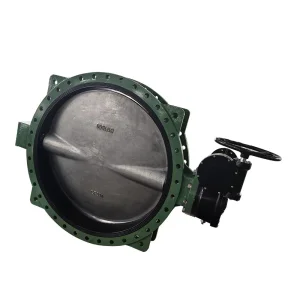
OEM DN1500 Vulcanized EPDM Seat Large Flange Butterfly Valve Exporter
Explore Technical Specs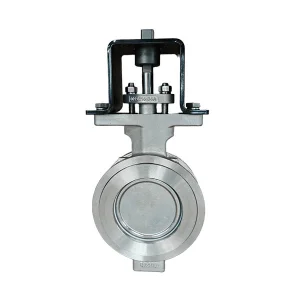
China CF8 Wafer High Performance Butterfly Valve with Support
Explore Technical Specs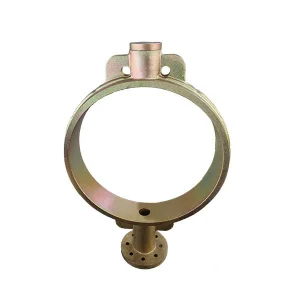
OEM Hot-dip Galvanized Wafer Butterfly Valve Body Manufacturer
Explore Technical Specs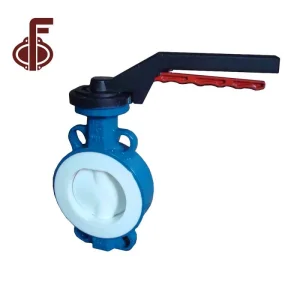
OEM Concentric Cast Iron Full Lined Butterfly Valve Manufacturers
Explore Technical Specs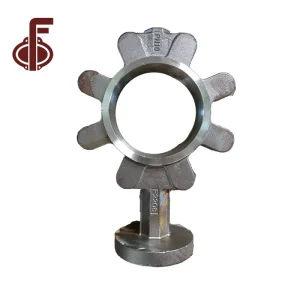
OEM Lug Type Butterfly Valve with Body Factory, Exporter
Explore Technical Specs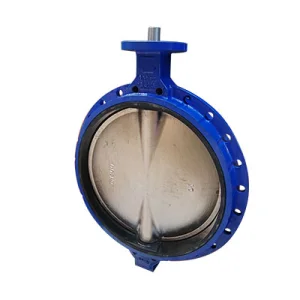
OEM DN800 DI Single Flange Type Wafer Butterfly Valve
Explore Technical Specs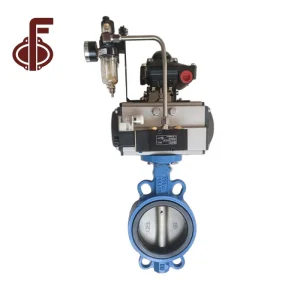
China Pneumatic Actuator Wafer Butterfly Valves Manufacturer, Exporters
Explore Technical Specs