Precision Flow Isolation & Quarter-Turn Valve Products
Direct factory supply manufactured under tight metallurgical control, rigorous hydrostatic shell testing, and precision CNC tolerance machining.
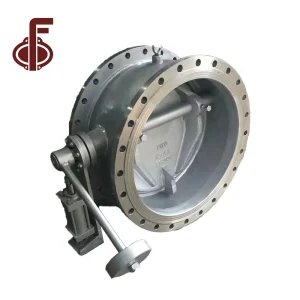
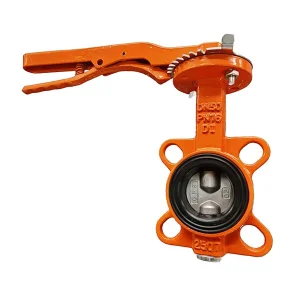
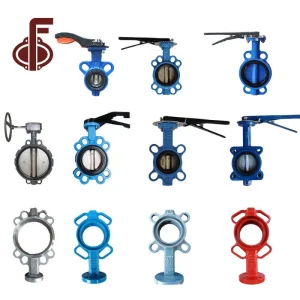
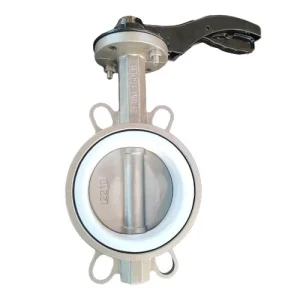
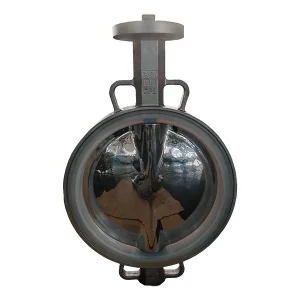
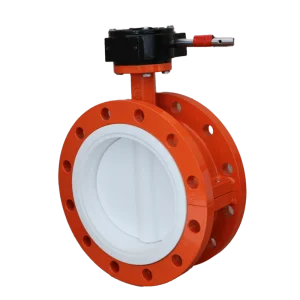
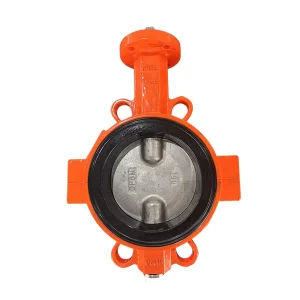
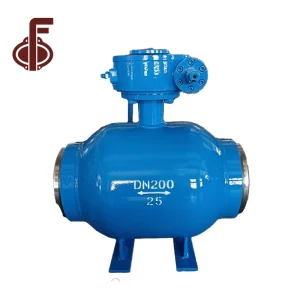
1. The Mechanical Architecture of Semi-Lug (Guide Lug) Butterfly Valves
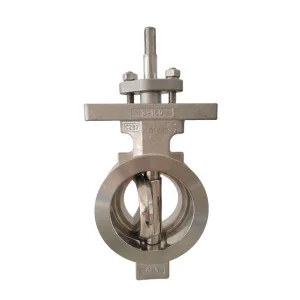
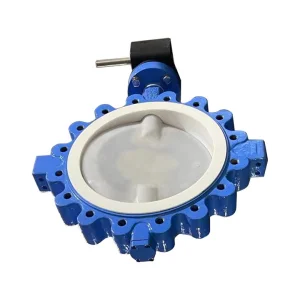
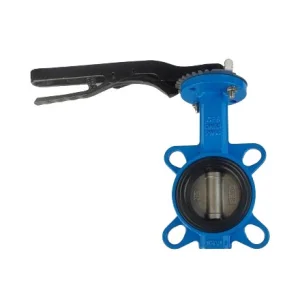
In modern industrial process engineering, fluid control infrastructure requires balancing structural integrity, pipe installation velocity, and material economy. The Semi-Lug Butterfly Valve—commonly designated as a Guide-Lug or U-section wafer valve—represents an optimal mechanical compromise between the minimalist wafer pattern and the heavier, fully tapped lugged valve.
Bolt Alignment Ear Geometry
Unlike full-lug valves which feature internally threaded metric or imperial tapped ears along the entire circumference, semi-lug designs incorporate unthreaded or partially located clearance ears that accept standard through-bolts.
- Eliminates cross-threading risks during hazardous on-site rigging.
- Self-centers accurately between DIN EN 1092-2 and ASME B16.5 flanges.
- Accommodates variations in companion flange bolt-circle diameters (PCD).
Torsional Deflection Control
Through-bolting with guided ears secures the elastomeric seat sleeve under continuous, uniform compressive stress across the 360-degree pipe face, avoiding asymmetrical localized seat pinching.
- Uniform gasket seal compression prevents perimeter micro-leakage.
- High resilience against mechanical pipe expansion and thermal vibration.
- Low operating torque via concentric shaft-to-seat symmetrical profiling.
TCO & Weight Optimization
Engineering analyses show semi-lug castings reduce ductile iron (GGG40/GGG50) weight by 18% to 27% compared to full-lug designs without degrading EN 12266-1 burst pressure ratings.
- Significant reduction in maritime container logistics freight costs.
- Reduced structural load on elevated seismic pipe racks.
- Lower raw material overhead passed to OEM brand distributors.
2. Why Tier-1 Global Procurement Centers in China (Tianjin Hub)
The manufacturing cluster located in Tianjin, China supplies over 40% of the world's concentric resilient-seated and high-performance butterfly valves. For international EPC contractors and global valve OEM labels, sourcing semi-lug butterfly valves from modern Chinese facilities provides structural advantages.
Modern Casting Infrastructure
Automated Furan resin sand lines and green-sand molding plants eliminate internal sand holes, micro-porosity, and cold-shut defects. Automated optical emission spectrometers (OES) inspect each induction furnace tap before ductile iron pouring.
- Nodularity grade exceeding 85% per ISO 1083 / ASTM A536.
- Tensile strength ≥ 450 MPa with elongation ≥ 10% (QT450-10 / GGG50).
- Tight dimensional tolerances adhering to ISO 8062-3 Grade DGG 10.
Multi-Axis CNC Machining
Horizontal and vertical CNC machining centers execute the valve body neck, flange sealing grooves, through-bolt guide holes, and upper ISO 5211 actuator mounting pads in a single clamping setup to maintain concentric alignment.
- Stem shaft bore runout controlled within 0.03 mm.
- Disc spherical sealing edge polished to mirror finish (Ra ≤ 0.4 µm).
- Direct-mount ISO 5211 dimensions guarantee standardized automation.
FBE Anti-Corrosion Coating
Valves undergo shot-blasting to Sa 2.5 cleanliness before electrostatic powder deposition of fusion-bonded epoxy (FBE). The polymer coat cures at 200°C to create an impermeable barrier against aggressive soil and water chemistries.
- Uniform film thickness ≥ 250 µm with zero pinholes.
- 3000V non-destructive high-voltage spark testing verification.
- WRAS & FDA compliant epoxy options for potable drinking networks.
3. Material Science Selection Matrix for OEM Semi Lug Butterfly Valves
The lifespan of a quarter-turn butterfly valve depends primarily on the tribological pairing between the rotating disc periphery, the primary resilient seat elastomer, and the dynamic stem packing seals. ZFA Valve manufactures semi-lug valves configured to match diverse chemical media, temperature variations, and cyclic operating pressures.
| Component | Material Standard | Operational Temperature | Compatible Process Media | Engineering Benefit |
|---|---|---|---|---|
| Body Casting | Ductile Iron GGG50 / ASTM A536 65-45-12 | -20°C to +150°C | Water, mild neutral fluids, HVAC chilled circuits | High yield strength; superior absorption of pipe line stress. |
| Body Alternative | Cast Carbon Steel WCB / ASTM A216 | -29°C to +425°C | Steam condensates, hydrocarbons, boiler feeds | Elevated pressure ratings exceeding Class 300; toughness. |
| Disc Metallurgy | CF8M (AISI 316) / 1.4408 SS | -40°C to +200°C | Seawater, chlorinated effluent, food acids | Molybdenum addition prevents severe pitting corrosion. |
| Disc Alternative | Nickel Aluminum Bronze C95800 | -20°C to +180°C | High velocity raw seawater, marine ballast | Exceptional resistance to biofouling & cavitation erosion. |
| Resilient Seat | High-Grade Virgin EPDM / EPDM-HT | -20°C to +120°C (HT: +150°C) | Hot/chilled water, low pressure steam, air | High elastic recovery, ozone and weathering degradation proof. |
| Resilient Seat | Nitrile NBR (Buna-N) | -10°C to +82°C | Diesel, kerosene, lubricating oils, hydraulic fluid | Zero swelling or hardening when in direct oil contact. |
| Lined Seat | PTFE / R-PTFE Backed with Silicone | -20°C to +180°C | Concentrated sulfuric/nitric acids, pharma | Universal chemical inertia; ultra-low friction coefficient. |
| Shaft / Stem | SS416 / SS420 / SS431 / 17-4PH | -40°C to +300°C | High torque actuation loads | Splined or double-D pinless engagement eliminates internal corrosion. |
Pinless Stem vs. Pinned Disc Technology
Traditional concentric butterfly valves employ taper pins driven through the disc hub to anchor the drive shaft. While simple, these penetration holes introduce failure modes: localized crevice corrosion, galvanic oxidation, and leak paths across the disc boundary.
OEM semi-lug designs from Tianjin Zhongfa utilize Pinless Drive Geometry. Precision-milled Double-D, square, or involute splined shafts transfer actuator torque through the internal hub bore. The disc surface remains solid, ensuring uninterrupted hydrodynamic flow, zero stem leakage, and streamlined field maintenance.
Dovetail vs. Phenolic Cartridge Seat Backing
Seat displacement under high flow velocities (> 3.5 m/s) or line vacuum conditions often causes premature failure in conventional boot-style resilient liners. When the disc opens against differential pressure, unsupported liners deform into the flow stream.
Our semi-lug series incorporates Dovetail Retention Grooves or rigid phenolic/aluminum cartridge rings. The vulcanized rubber locks into the cast body cavity, preventing liner collapse during pump suction drawdowns or full vacuum cycles in condensing loops.
4. Macro Industrial Scenarios & Real-World Operating Environments
Semi-lug butterfly valves are engineered for demanding installations worldwide. Because they fit between mating flanges with self-locating guide ears, their footprint is suited for tight spaces, skid systems, and high-vibration piping.
Municipal Water Treatment & Desalination
Reverse osmosis (SWRO) facilities and high-capacity water treatment plants require valves that resist chloride stress corrosion. Semi-lug bodies in GGG50 with vulcanized thick-wall EPDM seats and nickel aluminum bronze (C95800) or duplex stainless steel (2205) discs withstand aggressive seawater at PN10/PN16 ratings.
- Tested to ISO 5208 Rate A zero leakage.
- WRAS-approved potable water elastomers.
District Cooling & High-Rise HVAC
Chilled water distribution, cooling towers, and boiler loop interfaces require low pressure drop ($C_v$ optimization) to minimize plant pumping energy. The semi-lug profile fits compactly into plant room headers while allowing fast bolt installation in tight ceiling corridors.
- Compatible with electric modulating actuators.
- Condensation-resistant long-neck body for post-insulation.
Chemical Processing & Flue Gas Scrubbers
Industrial scrubbing systems, caustic regeneration lines, and metal pickling circuits use highly acidic and alkaline streams. In these applications, split-body semi-lug valves lined with 3 mm virgin PTFE or PFA isolate metal body components from direct corrosive media contact.
- Chemical resistance across pH 0 to 14.
- Spark-tested PFA encapsulation on CF8M discs.
5. Global Procurement Dynamics: Audits, Traceability & TCO
Procuring valves for major infrastructure or multinational distribution networks requires verifying total lifecycle cost (TCO) beyond initial per-unit pricing. Unexpected field downtime, seal blowouts, or off-spec flange dimensions cause costly project delays. ZFA Valve implements quality protocols designed for international inspection agencies.
EN 10204 Type 3.1 Traceability
Every casting heat batch is marked with an alphanumeric heat number. Full physical and chemical mill certificates confirm carbon, manganese, silicon, and magnesium content along with Charpy V-notch impact and yield values.
- Positive Material Identification (PMI via XRF).
- Cast body traceability to raw ingot records.
100% Pressure Testing (API 598)
No valve leaves the assembly line without automated hydrostatic and pneumatic testing. Shell integrity is verified at 1.5x PN design pressure; seat tightness is tested under 1.1x PN water pressure and 0.6 MPa dry air.
- Zero bubble leakage under differential pressure.
- Bidirectional hold tests per EN 12266-1.
Turnkey OEM / ODM Branding
We support valve distributors and brand owners with custom foundry mold nameplates, custom body cast logos, high-durability epoxy color customization (RAL codes), private label laser engraving, and custom export crating.
- CAD, SolidWorks & BIM model generation.
- Standardized seaworthy fumigated packaging.
6. Future Horizons: Smart Automation, Low Emissions & Decarbonization
The valve manufacturing sector is moving toward intelligent automation and stringent environmental compliance. Industrial buyers increasingly specify components that reduce fugitive emissions and integrate into digital plant architectures.
ISO 15848-1 Fugitive Emission Standards
Stricter volatile organic compound (VOC) limits require butterfly valves with advanced stem sealing systems. Quad-ring elastomeric seals paired with PTFE thrust washers prevent microscopic fugitive emissions at the upper neck boundary.
- Tested to ISO 15848-1 Class BH/AH.
- Reduces atmospheric emissions in chemical skids.
Direct Smart IoT Actuator Integration
All ZFA semi-lug valves feature integral ISO 5211 direct-mount pads. This eliminates adapter brackets and couplings, minimizing mechanical hysteresis and side-loading on upper bearings during modulation.
- Supports Modbus, Profibus, HART, and 4-20mA smart units.
- Predictive maintenance feedback via travel & torque metrics.
Low-Carbon Foundry Metallurgy
By using medium-frequency electric induction furnaces charged with high-purity refined scrap and pig iron, Tianjin foundries have significantly reduced energy consumption per ton of finished ductile iron casting.
- Cradle-to-gate carbon footprint documentation.
- Dust collection systems complying with ISO 14001.
7. Frequently Asked Questions (FAQ) for Engineering Buyers
Detailed technical responses to common questions raised by EPC specifiers, mechanical contractors, and international procurement teams.
What is the key mechanical difference between a Semi-Lug and a Full-Lug butterfly valve?
Can semi-lug butterfly valves be deployed in dead-end service?
Why choose Ductile Iron GGG50 (ASTM A536) over Cast Iron GG25?
How does stem runout and disc edge micro-finish impact operating torque?
What documentation and inspection certificates are supplied with OEM export orders?
How does dovetail seat geometry prevent liner dislocation under vacuum conditions?
What lead times and container loading capacities apply to bulk OEM supply?
High Performance Butterfly, Check & Heavy Isolation Valves
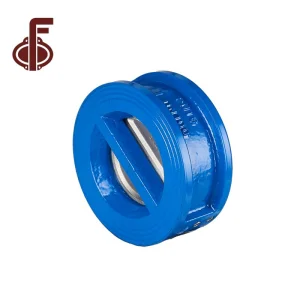
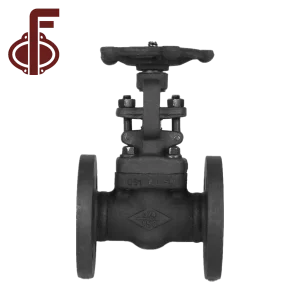
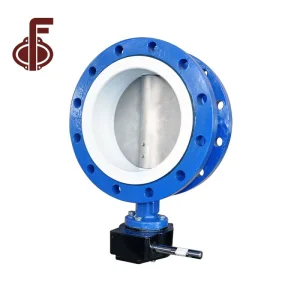
Explore additional industrial configurations including dual-plate checks, high-pressure forged valves, fluoroplastic lined units, and automated valves.