
Engineered Valve Series & OEM Component Assembly
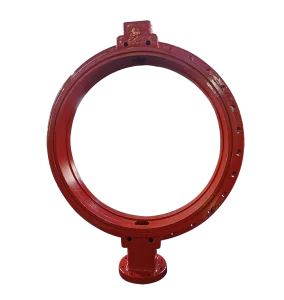
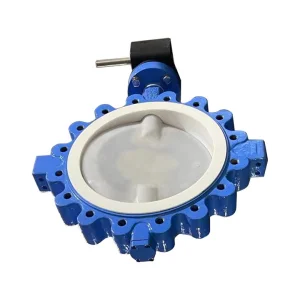
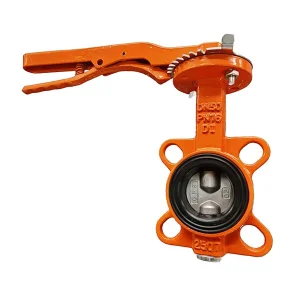
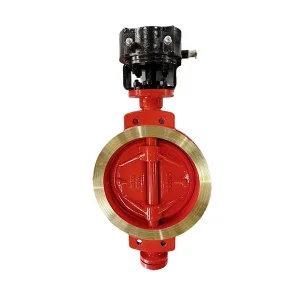
Explore our high-performance industrial flow control systems, precision casting bodies, and elastomeric-seated valves manufactured in compliance with international ASME, DIN, and ISO standards.
Global Industrial Reality: The Shift Toward Top Entry Floating Ball Valve Architectures
Comprehensive analysis of valve sealing mechanics, pipeline downtime economics, and why heavy process industries are standardizing on top entry configurations.
Across modern hydrocarbon handling, LNG regasification facilities, subsea tie-ins, and complex chemical production trains, valve failure is rarely a localized inconvenience—it represents catastrophic operational downtime costing upward of $180,000 per hour in unproduced hydrocarbons or interrupted process fluid runs. Historically, conventional two-piece or three-piece side-entry floating ball valves dominated pipeline specifications due to lower initial purchase outlays. However, global plant asset managers and Engineering, Procurement, and Construction (EPC) consortiums are systematically shifting specifications toward Top Entry Floating Ball Valves to eliminate the unsustainable life-cycle operating expenses (OPEX) inherent in welded-line removals and joint leakage points.
Core Architectural Advantage: Unlike side-entry configurations that require breaking flanged connections, cutting welded joints, or pulling the entire valve assembly out of the pipeline for seat reconditioning, a Top Entry Floating Ball Valve permits full internal trim replacement—including ball, seats, thrust washers, and stem packing—directly in-line via a single bolted bonnet interface.
The Mechanical Sealing Principle: Self-Energized Upstream Bi-Directional Dynamics
The floating ball valve architecture relies on a downstream sealing mechanism. In this configuration, the ball is not mechanically anchored to stationary trunnion bearings; rather, it is suspended between two resilient elastomeric, thermoplastic (PTFE, RPTFE, PEEK, Devlon V-API), or precision-lapped metal seats. As upstream line pressure builds, it acts against the projected surface area of the spherical ball, gently displacing ("floating") the ball downstream against the downstream seat ring.
This design creates a self-energized, pressure-assisted sealing interface: the higher the system pressure differential, the higher the contact stress developed between the spherical surface of the ball and the downstream seat seal envelope. Upstream sealing is further enhanced by spring-energized or pre-loaded wedge geometries within the top-entry bonnet cavity, guaranteeing bubble-tight shut-off under low-pressure scenarios (0–20 psig) where line pressure alone is insufficient to mechanically energize standard polymer seats.
Minimizing Fugitive Emissions under ISO 15848-1 and TA-Luft Standards
In conventional side-entry split-body valves, structural pipeline bending stresses directly load the body-to-adaptor flanged joints, increasing the probability of hazardous external leakage into the atmosphere. Top entry designs utilize a rugged, single-piece monolithic cast or forged body without transverse body splits. The sole structural envelope opening is situated perpendicular to pipeline bending vectors on the top bonnet flange.
By engineering deep, live-loaded stuffing boxes featuring Belleville spring stacks, Chevron PTFE rings, and pure flexible graphite backup packings, modern top entry floating ball valves effortlessly surpass Class A and Class B fugitive emission thresholds defined by ISO 15848-1 and the German TA-Luft (VDI 2440) clean air mandates. This mechanical integrity is vital for handling volatile organic compounds (VOCs), hydrogen blending systems, anhydrous ammonia, and sour natural gas containing hydrogen sulfide (H2S) compliant with NACE MR0175 / ISO 15156.
True In-Line Serviceability
Technicians remove the bonnet cover to inspect, clean, or replace internal trims in under 45 minutes without cutting welded pipe joints or altering alignment.
Monolithic Stress Resistance
One-piece cast steel or forged bodies eliminate split-joint leak paths, easily withstanding intense external pipeline bending loads and water hammer shocks.
API 607 Fire-Safe Certified
Engineered secondary metal-to-metal seating seals remain intact even when primary soft elastomeric or fluoropolymer seats burn away in inferno temperatures.
Chinese OEM Foundry Clustering: The Structural Efficiency Benchmark
How state-of-the-art CNC automation, advanced vacuum metallurgy, and end-to-end supply chain integration deliver superior total cost of ownership (TCO) for international buyers.
In global industrial procurement, sourcing valves from premier Chinese manufacturers like Tianjin Zhongfa Valve Co., Ltd. (ZFA) has transitioned from a purely price-conscious transaction into a strategic partnership driven by engineering quality, accelerated fabrication cycles, and metallurgical excellence. The Chinese industrial valve manufacturing cluster—principally centered in Tianjin, Wenzhou, and Jiangsu—combines integrated casting foundries, automated machining cells, and specialized cryogenic and high-pressure testing laboratories within immediate regional radius.
1. Vacuum-Assisted Precision Foundry Technology
Top entry ball valve bodies feature intricate internal profiles, seat pockets, and bonnet bolt flanges that must be 100% free of porosity, slag inclusions, or shrinkage cavities. ZFA utilizes high-purity induction furnaces alongside automated lost-foam and precision resin-sand molding techniques. Castings in WCB, LCB, CF8M, Duplex 2205, and Super Duplex 2507 undergo continuous Spectrographic Spark OES chemical verification and automated radiographical scanning (RT) in accordance with ASME B16.34 non-destructive examination directives.
2. Five-Axis CNC Machining of Complex Wedge & Sphere Profiles
The core challenge in top entry floating ball valves is the exact taper geometry of the seat insertion guide. If the internal seat pockets diverge by mere fractions of a millimeter, the floating ball will experience localized torque spikes and seat extrusion. ZFA employs multi-axis CNC horizontal machining centers (HMCs) with optical probe tool-setting. Spherical balls are turned and diamond-lapped to achieve a surface roughness finish of Ra ≤ 0.1 µm, ensuring minimal operational break-torque and zero-leakage sealing at both cryo (-196 °C) and elevated temperatures (+450 °C).
3. Absolute Quality Assurance & EN 10204 3.1 Traceability
Every single valve body, bonnet, stem, and seat ring leaving our Tianjin manufacturing base is stamped with unique traceability heat numbers tied directly to physical testing reports, charpy V-notch impact toughness tests, and mechanical tensile validation. Buyers receive verifiable EN 10204 3.1 material test certificates (MTRs) and comprehensive pressure test graphs documenting compliance with API 598 and ISO 5208 standards.
Localized Application Scenarios Across Mission-Critical Infrastructure
Where top entry floating ball valves provide irreplaceable safety, environmental containment, and process efficiency.
Upstream Sour Gas & Oil Gathering
Installed on manifold skids exposed to raw crude containing wet CO2, chloride stress cracking agents, and H2S. Engineered with Inconel 625 weld overlays on sealing pockets and compliant with NACE MR0175 hardness restrictions (max 22 HRC).
Cryogenic LNG & Ethylene Transport
Equipped with specialized 250 mm – 450 mm extended bonnets to establish a vaporized gas insulation column protecting stem packings from extreme cold. PCTFE and modified PTFE seat inserts deliver zero bubble leakage at -196 °C.
Petrochemical & Refinery Hydrocrackers
Designed for severe high-cycling services handling corrosive benzene, sulfuric alkylation slurries, and catalytic cracker off-gas. Hardened Stellite 6 or Tungsten Carbide coatings protect metallic seats against abrasive particulate scour.
High-Pressure Offshore Manifolds
Compact top-entry envelopes save critical topside deck space and crane lifting payloads on offshore production platforms. The monolithic shell protects high-pressure hydrocarbon streams against external marine saline corrosion.
Pulp, Paper & Corrosive Mineral Mining
Resistant to black liquor, tailings slurry, and high-acid heap leaching extraction. The straight-through full port bore configuration eliminates internal flow turbulence, minimizing cavitation and velocity-driven body wall thinning.
Superheated District Steam Networks
Replaces problematic globe and gate valves on municipal heating headers. Incorporates graphite-packed bonnets and high-modulus carbon/graphite filled PTFE seats capable of enduring continuous 250 °C thermal cycles without relaxation.
Engineering Evaluation: Top Entry vs. Side Entry vs. Trunnion Mounted
A multi-parameter technical comparison to assist piping engineers and procurement officers in selecting the optimal valve anatomy.
| Evaluation Parameter | Top Entry Floating Ball | Side Entry 2-Piece / 3-Piece | Trunnion Mounted Ball Valve |
|---|---|---|---|
| In-Line Maintenance | Exceptional Internal trim fully replaceable via top bonnet. | Poor Must unbolt flanges or cut pipeline to repair internals. | Moderate to Poor Requires crane pullout for body split disassembly. |
| Leak Path Vulnerability | Minimal Single external bonnet joint; no body splits. | High Multiple transverse flanged body splits subject to line bending. | Moderate 2 or 3 piece bolted split body configurations. |
| Torque Requirement | Moderate Pressure-energized floating seat friction. | Moderate Equivalent to top entry floating size-for-size. | Low Ball mechanically supported by upper/lower trunnions. |
| Optimal Size & Class Range | DN15 to DN200 (1/2" to 8") | Class 150 to Class 600 | DN15 to DN300 (1/2" to 12") | Class 150 to Class 300 | DN50 to DN1500 (2" to 60") | Class 150 to Class 2500 |
| Structural Rigidity | Maximum Monolithic body absorbs high seismic and pipe stresses. | Standard Moderate resistance to heavy bending moments. | High Heavy forged or cast shell architecture. |
| Total Life-Cycle Cost (LCC) | Lowest OPEX 70% reduction in long-term maintenance costs. | High OPEX Frequent line shutdowns and gasket leaks over life. | High CAPEX Higher initial purchase price and tooling costs. |
Critical Purchasing Criteria for EPC Piping Packages
When procuring industrial valves for turn-key capital projects, valve purchasers must evaluate beyond initial sticker prices. Key items to enforce on factory inquiry datasheets include:
- Cavity Relief Mechanisms: Verify whether internal bonnet relief grooves or self-relieving downstream seat springs are required to prevent overpressurization caused by thermal fluid expansion inside the body cavity.
- Anti-Static Grounding Continuity: Positive spring-loaded metallic contact between the stem, ball, and valve body must demonstrate electrical resistance under 10 ohms (measured per BS 5351 / API 6D).
- Blow-Out Proof Stem Engineering: The stem must incorporate an integrally machined collar that seats positively against the interior body neck, preventing stem ejection under extreme pressure even if exterior packing retainers are loosened.
Technological Paradigms Driving Next-Generation Valve Manufacturing
The transformation of traditional manual containment valves into intelligent, zero-emission flow assets.
Hydrogen Service Readiness
Hydrogen gas molecules (H2) readily permeate conventional elastomers and induce metallurgical embrittlement. Modern factories enforce low-yield Austenitic 316L/904L steels and specialized polymeric blends tested for rapid gas decompression (RGD).
IoT Smart Positioners & Predictive Diagnostics
Actuator interface mounting pads complying with ISO 5211 now integrate smart digital bus protocols (HART, Foundation Fieldbus, Profibus). Optical sensors continuously monitor operating torque curves to warn of seat wear weeks before leakage occurs.
Laser Cladding & Additive Metallurgy
To eliminate expensive solid Hastelloy or Inconel forgings, Chinese manufacturers utilize advanced robotized laser cladding. Sealing pockets receive precision-bonded 3 mm Stellite coats, combining carbon steel structural economy with elite corrosion resistance.
Specialized Flow Control & OEM Infrastructure Solutions
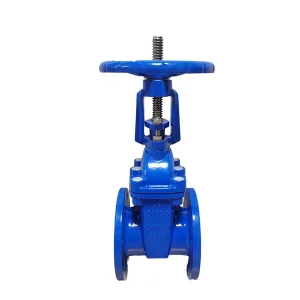
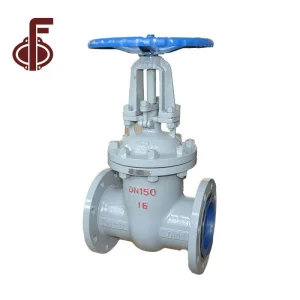
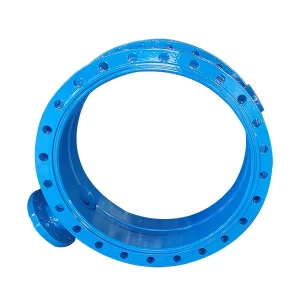
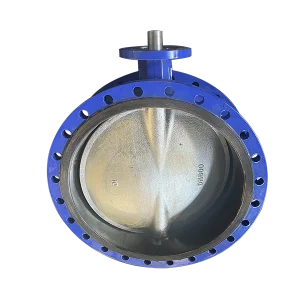
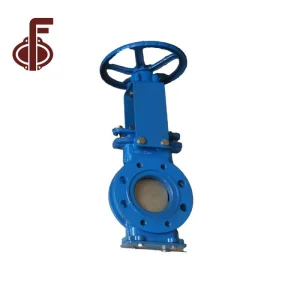
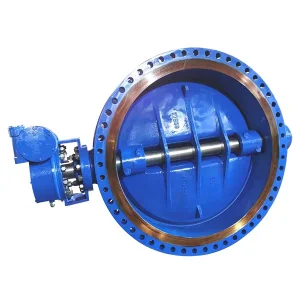
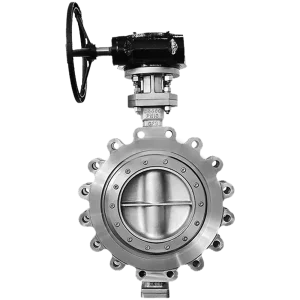
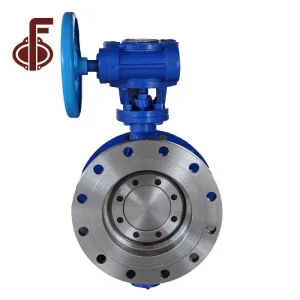
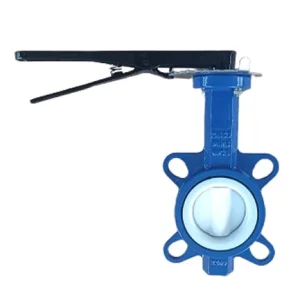
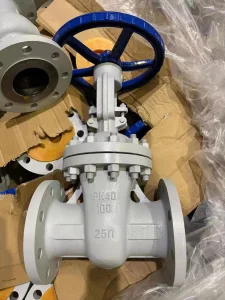
Browse our expanded export series including triple-eccentric metal seated valves, heavy slurry knife gates, and international standard GOST/DIN gate assemblies.
Frequently Asked Questions: Top Entry Floating Ball Valve Procurement
Direct answers from our senior chief engineers addressing mechanical integrity, seat selection, testing benchmarks, and OEM brand supply agreements.
How does an in-line seat replacement procedure work for a top entry floating ball valve?
What seat materials are recommended for severe service hydrocarbon vs. chemical lines?
How does ZFA Valve guarantee API 607 / ISO 10497 fire-safe performance?
Can Tianjin Zhongfa Valve manufacture top entry valves under OEM private labeling agreements?
What non-destructive examination (NDE) and pressure testing certifications accompany shipments?
Initiate Your Engineering Valve Inquiry
Partner directly with Tianjin Zhongfa Valve's engineering team for custom drawings, project-specific torque sizing, rapid sample casting, and turnkey OEM export solutions.
