
Featured Industrial Butterfly Valve Configurations
Factory-direct OEM flow-control valves built under ISO 9001 and CE compliance for industrial water, cryogenic hydrocarbons, and severe petrochemical processes.
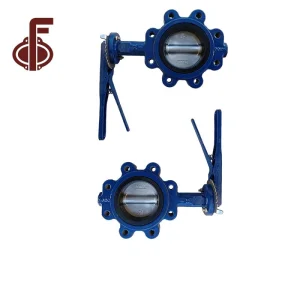
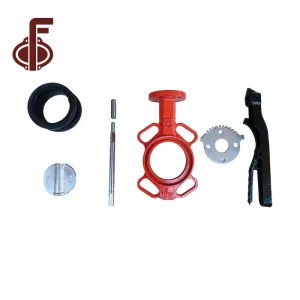
OEM Replacable Seat Aluminum Hand Lever Wafer Butterfly Valve with EPDM Seat Factory, Exporter
Technical Specs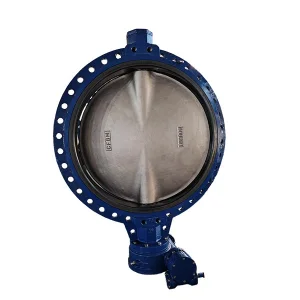
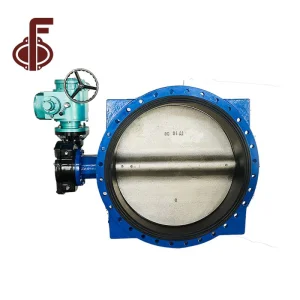
China DN1000 DI Hard Back Seat Mono Flange Butterfly Valve with Worm Gear Exporter, Exporters
Technical Specs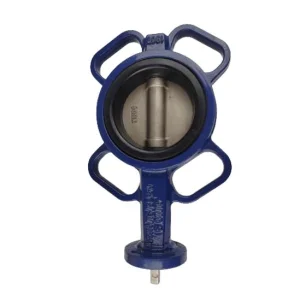
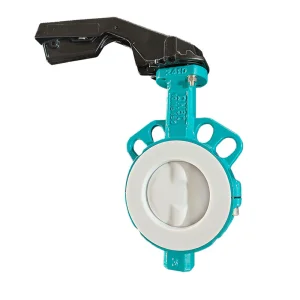
China HandLever Operated PTFE Full Lined Butterfly Valve Wafer type Factory, Exporter
Technical SpecsFriction-Free Mechanical Geometry Demonstrated
In modern mission-critical piping systems, standard concentric and double eccentric butterfly valves often experience localized seat galling and premature elastomer breakdown under extreme temperature swings. As visually captured in our operational kinematic analysis video, the Triple Offset Butterfly Valve (TOBV) utilizes a compound angled, non-rubbing cone-in-cone profile that completely isolates mechanical friction from dynamic sealing.
Throughout 89 degrees of the valve's rotational stroke, the disc seal ring remains entirely disconnected from the body seat. Sealing occurs exclusively at the final degree of closure via a mechanical camming wedging force. This completely neutralizes seat scouring, drastically lowers operating breakaway torque, and ensures verifiable API 598 zero-leakage bidirectional isolation over thousands of continuous thermal cycles.
Fugitive Stem Emissions
Bidirectional Seal Integrity
Peak Thermal Resiliency
Mean Cycles to Service
Deconstruction of the Triple Offset Principle
How our Tianjin engineering department calculates angular geometries to eliminate seat friction, lower actuator sizing, and prolong maintenance cycles.
Offset 1: Axial Shaft Displacement
The stem centerline is positioned deliberately behind the plane of the seat sealing face. This spatial displacement creates an unbroken, continuous 360-degree sealing perimeter, eliminating the troublesome penetration points common in concentric resilient-seated valves where the stem penetrates through the elastomer liner.
Offset 2: Radial Centerline Eccentricity
The valve shaft is offset horizontally from the precise centerline of the pipe bore. During rotational stroke, this creates an eccentric camming trajectory that swings the disc smoothly clear of the seat within the first few degrees of opening, preventing binding and reducing operating breakaway torque.
Offset 3: Oblique Conical Axis Profile
The axis of the conical seat surface is angled away from the valve bore axis. This generates an asymmetric conical sealing envelope where the disc moves into the body seat identically to a plug cock entering an angled cone—achieving absolute metal-to-metal seating contact strictly at final torque shutoff.
Technology Roadmap: Hydrogen, Cryogenics & Digital Twins
Advancing beyond standard quarter-turn capabilities into extreme cryogenic liquefaction, non-fugitive emissions, and smart predictive infrastructure.
Liquid Hydrogen & Cryo-LNG
Engineered with extended vapor columns conforming to BS 6364 and cryogenic cold-box designs. Operating reliably down to -253°C with kel-F or energized multi-layer metal laminations that compensate for severe cryogenic contractions.
Low-Fugitive Packing
Certified to ISO 15848-1 Class AH and Shell MESC SPE 77/312 standards. Live-loaded Belleville disc spring stem packing systems preserve tightness across 100,000 thermal cycles with helium leakage rates well under 10⁻⁵ mg·s⁻¹·m⁻¹.
Smart IoT Digital Twins
Integrated multi-sensor bracket housings communicating through wireless HART and LoRaWAN. Real-time stem torque tracking, acoustic signature leak detection, and predictive remaining-useful-life (RUL) health profiling.
Additive Hardfacing Matrix
Advanced plasma transferred arc (PTA) welding and directed energy deposition (DED) additive manufacturing allow seamless integration of Stellite 21 and Colmonoy 6 coatings directly onto the body seat for slurry erosion protection.
Smart Foundry, 5-Axis Precision & Resilient Supply Chains
Founded in 2006, Tianjin Zhongfa Valve Co., Ltd. (ZFA Valve) operates as a technologically modernized, vertically integrated industrial valve manufacturer. Our Tianjin production facility merges high-end automated sand casting lines, vacuum-assisted investment casting, and multi-axis CNC machining centers to maintain rigid quality assurance from initial melt to global container dispatch.
By running dedicated five-axis machining centers specifically programmed for conical triple offset geometries, we attain sub-micron dimensional repeatability (±0.005mm) across body seat tracks and disc laminate profiles. Our digitized Manufacturing Execution System (MES) assigns a unique serialized QR code to each casting, linking spectrometer chemical assays, mechanical tensile tests, Charpy V-notch impact tests, and hydrostatic pressure graphs directly to EN 10204 3.1 inspection certificates.
Continuous Quality Verification Workflow
-
1
Incoming Spectrographic Chemistry Audit:
Optical emission spectrometers test every ladle batch to eliminate non-conforming scrap castings before rough turning.
-
2
Laser CMM Coordinate Geometry Checks:
Laser coordinate measuring machines scan body seat angles and stem concentricity against 3D CAD master files.
-
3
Hydrostatic Shell & Seat Overpressure:
Hydrostatic shell testing at 1.5x design pressure and high-pressure bidirectional air/nitrogen seating verification at 1.1x rating.
-
4
Automated Marine Export Packaging:
Anti-corrosion VCI barrier foil vacuum heat-sealed in reinforced, ISPM-15 compliant heat-treated timber crates.
Global Macro-Industry Process Solutions
Custom-configured triple offset valves deployed across extreme operating regimes, toxic hydrocarbon crackers, and critical district heating loops.
Refining & Petrochemical Synthesis
Installed on continuous catalyst regeneration (CCR) units, fluidized catalytic crackers (FCC), and hydrocracker isolation. Metal-to-metal seating stands up to entrained catalyst fines, thermal shocks, and hydrogen embrittlement without seat damage.
Thermal & Combined-Cycle Power
Engineered for high-pressure superheated main steam isolation, turbine extraction lines, and boiler feedwater bypass systems. Handles temperatures up to 550°C while replacing bulky, heavy gate valves to drastically lower piping stress.
LNG Marine & Regasification
Cryogenic triple offset valves installed on LNG bunkering skids, floating storage regasification units (FSRUs), and onshore receiving terminals. Designed with extended bonnets to keep packing glands frost-free and compliant with cryogenic standards.
SWRO Seawater Desalination
Fabricated with Nickel Aluminum Bronze (C95800) and Super Duplex 2507 disc trims to withstand severe chloride-induced pitting, high-pressure brine velocity, and severe cavitation typical of reverse osmosis reject recovery streams.
District Energy & Geothermal
Large-diameter double-flanged triple offset valves engineered for sub-surface municipal heating and high-temperature mineral-rich geothermal loops. Resists scaling deposits and reduces mechanical pump head loss.
Chemical Processing & Corrosives
Furnished with pure Monel 400, Hastelloy C-276, and titanium wetted parts for wet chlorine, sulfuric acid dosing, and dynamic industrial chemicals where regular austenitic stainless steels quickly pit or succumb to stress cracking.
Engineering Comparison: Triple Offset vs. Gate & Ball Valves
Why international EPC contractors and process plant procurement teams replace conventional isolation valves with high-performance triple offset designs.
| Performance Dimension | ZFA Triple Offset Butterfly | Wedge Gate Valve (API 600) | Trunnion Ball Valve (API 6D) |
|---|---|---|---|
| Sealing Principle | Torque-seated, friction-free conical metal seal | Sliding wedge prone to severe seat scoring | Line-pressure energized floating or trunnion seat |
| Leakage Rate | API 598 Rate A Zero Leakage | API 598 Allowable Drop Count | ISO 5208 Rate A (Soft) / Rate C (Metal) |
| Structural Weight | Baseline (100% - Lightest) | 350% to 500% heavier (needs structural pipe supports) | 220% to 300% heavier |
| Breakaway Torque | Low uniform torque (compact actuators) | High multi-turn stem torque requirement | High breakaway torque at elevated differential delta-P |
| Thermal Shock Sensitivity | Immune (elastic laminated disc accommodates expansion) | High risk of thermal binding and jammed wedge | Thermally vulnerable (polymer seat distortion) |
| Fugitive Stem Emissions | Quarter-turn rotary seal (ISO 15848-1 AH) | Rising stem draws dirt past graphite packing rings | Rotary stem; potential seat pocket pocket cavity traps |
| Installed Project CAPEX/OPEX | Lowest Overall Lifecycle Cost | High installation labor; high overhaul costs | High initial purchase cost; high repair complexity |
Disc & Seat Material Configuration Guide
Avoid project delays and premature plant shutdowns by choosing the correct seat, disc metallurgy, and body metallurgy matched specifically to your operating conditions.
| Seat Trim Material | Typical Service Applications | Operating Temp Range | Engineering Incompatibilities |
|---|---|---|---|
| EPDM (Resilient Soft Seat) | Potable water supply, HVAC chilled/hot loops, low-pressure air, mild wastewater | -20°C to +120°C | Avoid in mineral oils, hydrocarbon fuels, strong aromatics |
| NBR / Nitrile (Resilient Soft Seat) | Oils, lubricants, fuels, petroleum fluids, hydraulic systems, low-pressure gas | -10°C to +82°C | Avoid in ozone, chlorinated hydrocarbons, hot ketones |
| PTFE / PFA (Fluoropolymer Lined) | Aggressive acids (hydrochloric, nitric), caustic bleaches, hygienic food & pharma | -20°C to +180°C | Avoid in high-velocity abrasive slurries, molten alkali metals |
| SS316 + Flexible Graphite Laminate | High-temperature superheated steam, thermal oil, flare systems, hydrocarbon refining | -50°C to +450°C | Avoid in highly abrasive mineral tailings without hardfacing |
| Inconel 625 / 718 + Graphite | Offshore sour gas (NACE MR0175), high-pressure subsea, aggressive flue gas desulfurization | -196°C to +600°C | Excessive cost for straightforward low-pressure water utilities |
| Solid Stellite Grade 21 (Hardfaced) | Severe cracking units, FCCU catalyst slurries, abrasive ash disposal, nuclear thermal | -253°C to +825°C | Requires precise sizing calculation for actuator torque shutoff |
Industrial Valves & Pipeline Filtration Equipment
Comprehensive pipeline isolation, non-return check valves, and pipeline debris protection engineered to ASTM, DIN, BS, and JIS standards.
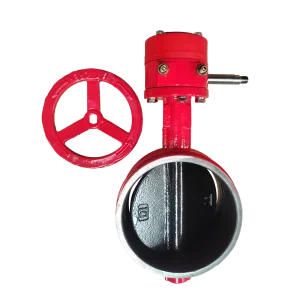
OEM Worm Gear Grooved Butterfly Valve Fire Signal Remote Control Manufacturers, Factories
Technical Specs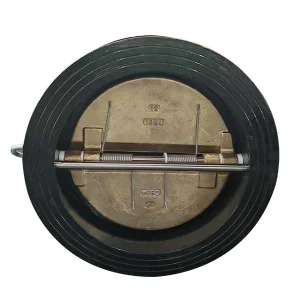
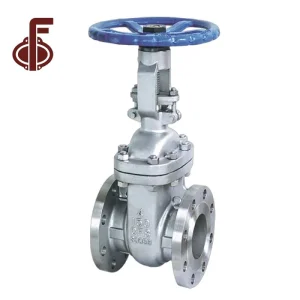
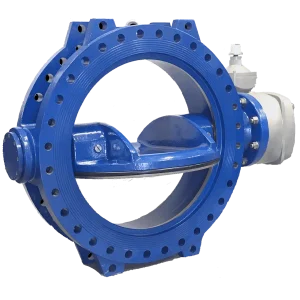
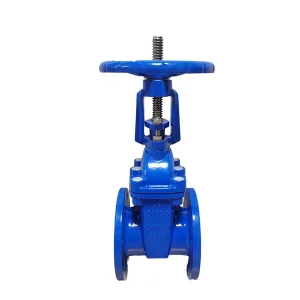
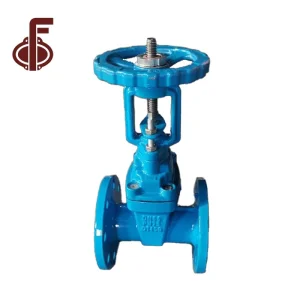
China DI PN10/16 Class150 Soft Sealing Rising Stem Gate Valve Manufacturer, Exporters
Technical Specs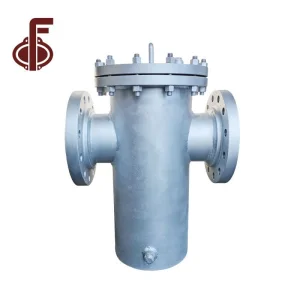
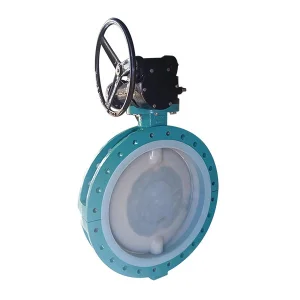
China U type Two-piece Body Silicon Rubber Disc & Seat Flange Butterfly Valve Factories, Exporter
Technical SpecsWorldwide OEM Export Framework & Auditable Reliability
Serving regional EPC engineering firms, global stocking valve distributors, and chemical plant operators with seamless documentation and factory support.
24-Hour Engineering Turnaround
Our Tianjin sales engineering desk produces complete custom CAD 2D approval prints, 3D STEP solid models, CV flow coefficients, and actuator sizing calculations within 24 hours of receiving formal project enquiry datasheets.
Complete MTR & NDT Dossiers
Each batch order ships with full EN 10204 3.1 or 3.2 inspection dossiers covering Positive Material Identification (PMI), dye penetrant (PT), magnetic particle (MT), radiographic testing (RT), and hydro-pneumatic seat test certificates.
Private Labeling & Custom Trim
Dedicated OEM manufacturing support gives global valve brand owners private casting markings, laser-etched stainless steel nameplates, custom valve body lengths, and customized ISO 5211 direct-mount automation brackets.
Frequently Asked Engineering Questions
Clear, technically rigorous answers for EPC piping engineers, procurement managers, and plant maintenance directors.
