
Precision Knife Gate Valve Solutions Engineered for Nigeria Heavy Industry
Engineered for high-viscosity solids, abrasive mineral slurries, and zero-clog isolation. Verified across demanding extraction corridors from the Niger Delta oil basins to northern limestone quarries.
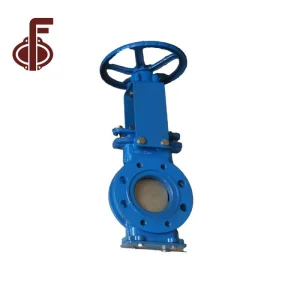
Nigeria Petrochemical Flange Knife Gate Valve (SS/DI PN10/16 Class 150)
Full-bore flanged configuration designed for oily sludge handling, refinery wastewater treatment skids, and viscous chemical transfer lines across Port Harcourt and Lekki refining hubs.
Explore Model Specs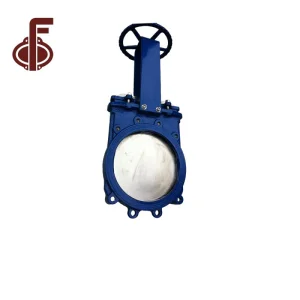
Ductile Iron Lug Knife Gate Valve for Nigerian Cement & Bulk Handling
Lugged body architecture providing rigid downstream isolation in raw cement slurry processing, clinker transport, and pulverised coal pneumatic injection systems in Ogun, Edo, and Sokoto mills.
Explore Model Specs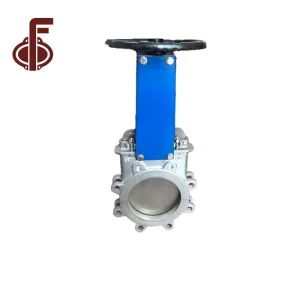
Stainless Steel Lug Knife Gate Valve for Mineral Separation Lines
CF8/CF8M grade stainless steel bevelled knife gate designed to resist aggressive acids, gold and lithium flotation tailings, and corrosive agricultural mash in Kaduna, Jos, and Niger State processing plants.
Explore Model Specs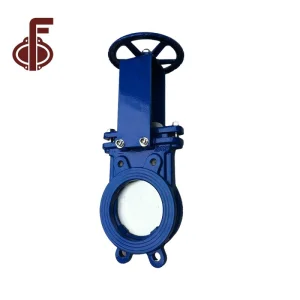
Ductile Iron Wafer Knife Gate Valve for Lagos Municipal & Industrial Effluent
Lightweight space-saving wafer profile fitted with self-cleaning guiding lugs and dynamic perimeter seals, engineered for non-clogging wastewater, raw sewage, and storm drainage infrastructure.
Explore Model SpecsNigeria’s Industrial Expansion: Why Knife Gate Valve Integrity Matters
As Africa's commercial powerhouse expands heavy processing capacity, fluid systems encounter hyper-abrasive slurries, suspended solids, and aggressive media where standard gate or butterfly valves suffer rapid erosion and stem jamming.
Cement & Building Materials
Nigeria's massive cement producers (Dangote Cement, BUA Cement, Lafarge Africa) process millions of tonnes of limestone, shale, and gypsum annually. Pneumatic powder lines and wet slurry grinding circuits require knife gate valves with shear-action gate blades that slice cleanly through dense lime cake without packing bottom cavities.
- Elimination of pocket cavities preventing solid build-up
- Hardened stainless steel gates resisting quartz abrasion
- Replaceable polyurethane or EPDM seats for quick turnaround
Refining, Petrochemicals & Gas
The commissioning of mega-refineries like the Dangote Petroleum Refinery in the Lekki Free Trade Zone, alongside downstream facilities in Port Harcourt and Warri, has increased the demand for API 598/MSS-SP-81 certified knife gate valves. These isolate catalyst fines, heavy coker bottoms, and oily sludge effluent streams where fire safety and zero fugitive emissions are critical.
- Braided PTFE / graphite packing glands for zero packing blowouts
- WCB and CF8M bodies suited to volatile hydrocarbon environments
- Full automation with explosion-proof pneumatic actuators
Solid Minerals Extraction & Mining
Under the Federal Ministry of Solid Minerals Development mandate, industrial-scale mining for lithium, tantalite, lead-zinc, and iron ore is accelerating in Nasarawa, Kogi, Plateau, and Zamfara. Knife gate valves serve as the workhorses in cyclone feed, tailings discharge, and hydro-transport circuits, handling rock slurries up to 65% solids content.
- Heavy-duty bi-directional sleeves protecting valve casting
- Scraper wipers preventing external contamination of packing
- High operating cycles without seat displacement
Global Technological Trends in Knife Gate Valve Manufacturing
The knife gate valve market is transitioning from basic unidirectional shutoff components toward highly engineered, smart-actuated severe-service flow controllers designed to eliminate environmental discharge and minimize unplanned plant downtime.
1. Transition to Bi-Directional Zero-Leakage Architecture
Traditional unidirectional knife gates rely on upstream line pressure to force the gate blade against the seat ring, making them prone to severe backflow leaks when backpressure develops. Global engineering standards now mandate bi-directional knife gate valves fitted with dual resilient elastomeric perimeter seals or heavy-duty polyurethane liners. This guarantees bubble-tight Class VI shutoff regardless of flow orientation, providing operators with flexible installation options and failsafe protection against process reversals.
2. Advanced Surface Metallurgy & Polymer Liner Integration
Erosive slurries containing quartz sands, clinker dust, or mining pulp cause cavitation erosion along the leading bevel edge of standard stainless steel blades. Leading exporters utilize surface modifications including high-velocity oxy-fuel (HVOF) tungsten carbide thermal spraying, hard chrome micro-plating, and Stellite welding. Concurrently, natural rubber elastomer sleeves and polyurethane cast-liners isolate the ductile iron valve body completely from the abrasive stream, extending mean time between maintenance (MTBM) by over 300%.
3. Digitalized Actuation & Predictive Valve Diagnostics
Modern industrial facilities throughout Sub-Saharan Africa are rapidly integrating SCADA and Industry 4.0 automation networks. Knife gate valves exported for critical process lines now incorporate smart electro-pneumatic positioners, continuous torque monitoring transmitters, and non-contact inductive limit switches. Plant engineers can detect cycle resistance caused by solid accumulation around the valve chest in real-time, triggering automated flushing cycles before gate seizing occurs.
4. Low Fugitive Emission & Self-Cleaning Packing Glands
With tighter ESG policies and the Nigerian Upstream Petroleum Regulatory Commission (NUPRC) implementing stricter environmental controls, stuffing box leakage is unacceptable. Next-generation knife gates feature dual-bevel scraper blades and PTFE-infused composite wiper rings that actively strip solidified crusts, scale, and dry cake from the gate blade during upward retraction, keeping the packing chamber free from abrasive contamination and preventing external environmental emissions.
Knife Gate Valve Material Specifications for West African Operating Conditions
A rigorous engineering comparison to guide EPC procurement managers and plant engineers across Nigeria in choosing the right material pairings for specific abrasive, corrosive, or high-viscosity applications.
| Valve Component | Standard Ductile Iron Configuration | Corrosive Chemical & Marine Grade | Extreme Slurry & High-Solids Grade | Target Nigerian Industry Application |
|---|---|---|---|---|
| Body Metallurgy | Ductile Iron GGG40 / QT450 (Fusion Bonded Epoxy 250µm) | CF8 / CF8M (304 / 316 Austenitic Stainless Steel) | Heavy-Duty Ductile Iron or WCB with Polyurethane Cavity Liner | Municipal Wastewater (Lagos Water Corp), Sugar Processing (Savannah Sugar) |
| Gate Blade | AISI 304 Stainless Steel, Precision Ground Bevel Edge | AISI 316L / 2205 Duplex Stainless Steel, Electro-polished | 17-4PH / Hard Chrome Coated 316SS with Stellite Cutting Edge | Cement Slurry (Ewekoro, Obajana), Mining Tailings (Jos Tin/Columbite) |
| Seating Arrangement | EPDM Resilient Seat (Reinforced with Steel Core) | Virgin PTFE / R-PTFE with FKM O-Ring Energizer | Natural Slurry Rubber Double Sleeves with Internal Ring | Refinery Effluent Treatment (Lekki), Palm Oil Refining (Cross River) |
| Operating Temp | -10°C to +90°C | -20°C to +180°C | -10°C to +80°C (High Abrasion Dynamic) | Drilling Mud Desanding, Gas Scrubbing Plant Effluent |
| Pressure Rating | DN50–DN300: 10/16 Bar; DN350+: 6–10 Bar | Class 150 / PN10 / PN16 Full Rating | PN10–PN16 Bi-directional Bubble-Tight Shutoff | Crude Pipeline Dewatering, Municipal Pump Discharge |
| Actuator Capability | Handwheel with Rising / Non-Rising Stem, Bevel Gear | Double Acting Pneumatic Cylinder with Namur Solenoids | Electric Actuator (AUMA, Rotork Compatible, Modbus/Profibus) | Automated Tank Farms, Continuous Flotation Concentrators |
End-to-End Export & Supply Chain Roadmap for Nigeria Projects
From initial design verification to dockside clearance in Apapa or Onne ports, our export framework ensures complete technical compliance, rigorous factory acceptance testing (FAT), and reliable logistics delivery.
Process Specification Audit
Our sales engineering team cross-checks line fluid composition, solids concentration percentage, operating pressure, slurry flow velocity, and end-connection flange compatibility (DIN, ANSI Class 150, BS).
Precision Foundry & CNC Machining
Castings undergo non-destructive testing (NDT), dimensional verification, and precision CNC milling of seat guides and flange bolt circles to guarantee flawless interchangeability on-site.
100% Hydrostatic & Leakage Testing
Every single valve undergoes rigorous hydrostatic shell pressure testing (1.5x PN) and bi-directional resilient seat leakage verification under API 598 and MSS-SP-81 standards prior to release.
Tropicalized Protective Coating
Application of high-build offshore-grade marine epoxy (250–300 microns dry film thickness) engineered to withstand extreme West African coastal humidity, high salinity, and heavy tropical downpours.
SONCAP & Custom Export Logistics
Full support with Standards Organisation of Nigeria Conformity Assessment Programme (SONCAP), Form M processing documentation, robust fumigated sea-freight crating, and direct dispatch to Lagos (Apapa/Tin Can) or Port Harcourt.
Frequently Asked Questions on Knife Gate Valves in Nigeria
Real-world technical answers compiled by our application engineers addressing procurement, maintenance, material selection, and site commissioning challenges in West African projects.
What is the key difference between a knife gate valve and a standard wedge gate valve in slurry service?
A standard wedge gate valve utilizes a dual-seated tapered wedge that drops into a recessed groove at the bottom of the valve body. In slurry or solid-laden lines (such as cement slurry or mining runoff), particles settle into this bottom cavity, preventing the wedge from fully closing and leading to stem bending, seat damage, and severe leakage. In contrast, a knife gate valve features an open-bore bottom without a cavity. The sharp bevelled blade shears through solids and pulp, seating cleanly against elastomeric or metal seals, ensuring 100% full closure without clogging.
Can your knife gate valves withstand high-viscosity crude oil and oilfield drilling mud in the Niger Delta?
Yes. For drilling mud recovery systems, shale shakers, and oil terminal sludge recovery in Delta, Rivers, and Bayelsa states, we provide knife gate valves constructed from WCB cast steel or CF8M stainless steel paired with abrasion-resistant polyurethane liners or Viton seals. The blade is ground to a high-polish Ra 0.4µm finish, preventing asphaltic wax and drilling polymers from adhering to the sliding surfaces.
How do you handle import documentation, SONCAP, and customs clearance requirements for Nigerian buyers?
We work regularly with Nigerian EPC contractors, industrial end-users, and technical distributors. Every export consignment is supplied with complete factory test certificates (EN 10204 3.1), Product Certificate (PC), and SONCAP Certificate (SC) required for Form M processing through the Central Bank of Nigeria trade portal. Packaging complies with international ISPM 15 heat-treated timber requirements to avoid port delays at Apapa, Tin Can Island, or Onne.
What actuation options are available for remote pumping stations and unmanned plant sections?
We supply fully integrated automation packages tailored to local operational constraints. This includes heavy-duty double-acting pneumatic actuators fitted with manual overrides and anti-corrosion anodized aluminium or stainless steel cylinders, explosion-proof electric multi-turn actuators (compatible with 380V/415V 50Hz 3-phase grid power), and bevel-gear handwheels with extended stems for pit or below-grade installations.
How do you address abrasive wear when handling high-silica clinker and raw meal in cement processing?
For abrasive pneumatic clinker transport and lime slurry, we integrate deflection wear cones made from Ni-Hard iron or stainless steel upstream of the valve seat. Additionally, the knife gate blade is treated with hard chromium plating or Stellite hardfacing on the cutting bevel. The seat utilizes a perimeter U-seal or field-replaceable polyurethane liner that isolates the casting from impingement wear.
What is the standard manufacturing and shipping lead time for custom valve orders to Nigeria?
Standard ductile iron and stainless steel wafer/lug knife gate valves from DN50 to DN300 are typically dispatched from our factory within 10 to 15 business days. Larger diameter units (DN350 to DN1200) or special duplex alloys take approximately 25 to 35 business days. Sea freight transit times from Tianjin Port to Lagos (Apapa/Tin Can) or Port Harcourt average 30 to 40 days, with air freight options available for critical emergency plant shutdowns.
Integrated Flow Control Solutions for West African Plants & Utilities
Beyond our knife gate valve series, we manufacture a comprehensive suite of high-performance butterfly, gate, and check valves designed for water transmission, petrochemical refining, and industrial HVAC networks throughout Nigeria.
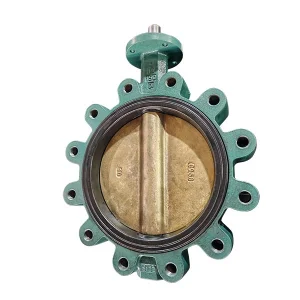
Nigeria Offshore C95800 Nickel Aluminum Bronze Disc Lug Butterfly Valve
High-integrity nickel aluminum bronze disc engineered for seawater cooling loops, offshore FPSO ballast systems, and coastal brackish water intake facilities across the Gulf of Guinea.
Explore Model Specs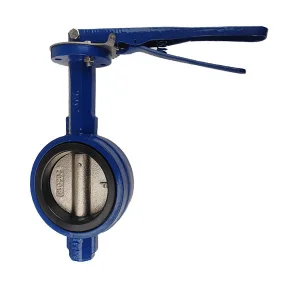
Hard Back Seat Earless Wafer Butterfly Valve for Commercial Utilities
Rigid bonded liner preventing seat displacement under high line velocities. The ideal economic choice for commercial building HVAC, chilled water loops, and potable water distribution in Abuja and Lagos.
Explore Model Specs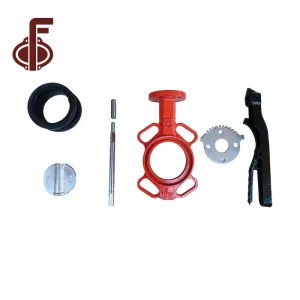
Replaceable EPDM Seat Wafer Butterfly Valve with Aluminum Hand Lever
Field-replaceable resilient seat configuration allowing rapid in-line maintenance and minimal downtime for food processing, breweries, and agro-allied plants in Ibadan and Benin City.
Explore Model Specs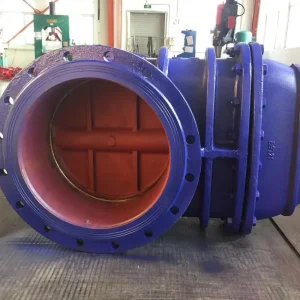
Brass / CF8 Metal Seal Gate Valve for Nigerian Industrial Steam Lines
Precision-machined metal-to-metal seating architecture designed for low-pressure steam boilers, condensate lines, and high-temperature thermal fluids in textile, soap, and processing factories.
Explore Model Specs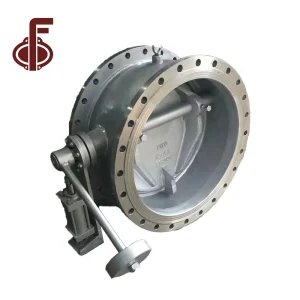
Butterfly Check Valve with Counterweight Heavy Hammer for Municipal Pumping
Controlled non-slam closure mechanism protecting massive raw water transmission pipelines and high-lift booster pumps from catastrophic hydraulic water hammer shockwaves.
Explore Model Specs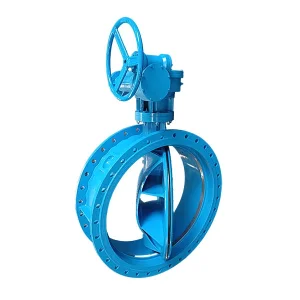
Double Eccentric Flanged Butterfly Valve for Main Trunk Water Pipelines
Offset shaft geometry minimizes seat friction during cycling, significantly extending seal life across municipal water supply networks and hydroelectric intake conduits.
Explore Model Specs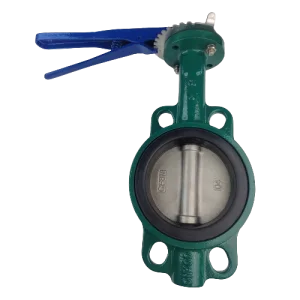
Cast Iron Hard Back Seat Wafer Butterfly Valve for Plant Utility Lines
Robust ductile/cast iron construction combined with rigid phenolic back seat ring for dimensional stability under repeated cycling in water treatment and agricultural irrigation.
Explore Model Specs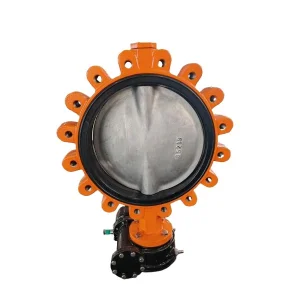
DN400 PN10 Two-Shaft Replaceable Seat Lug Butterfly Valve for Heavy Infrastructure
Dual stub-shaft design delivering high flow coefficients (Cv) with minimal head loss. Built for dead-end piping service in power generation cooling circuits and petrochemical storage facilities.
Explore Model SpecsYour Trusted Engineering Exporter of Knife Gate Valves to Nigeria
From initial design consultation through material selection, precise machining, stringent pressure testing, and sea-freight logistics, we provide West African industries with flow-control valves built to perform in the toughest environments.
