
High-Integrity Butterfly Valves & Fluid Pipeline Instrumentation
Engineered for full dead-end ratings, cryogenic to elevated thermal lines, and heavy-duty industrial processing.
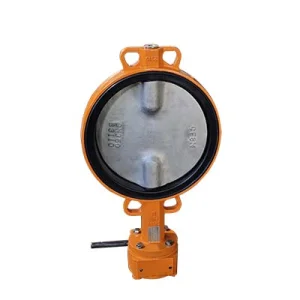
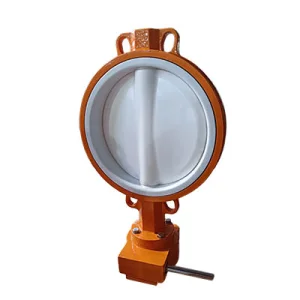
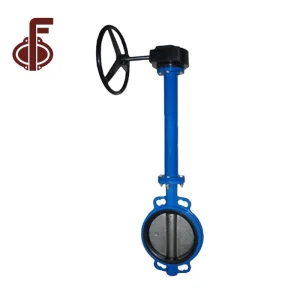
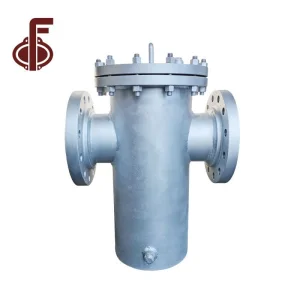
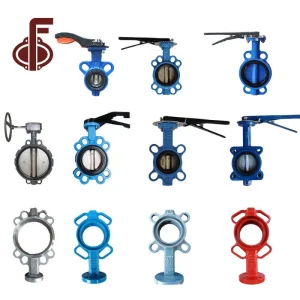
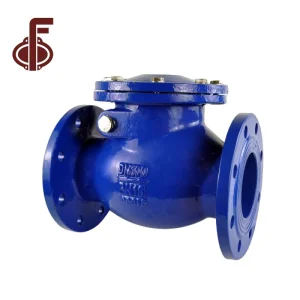
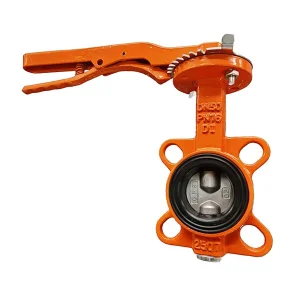
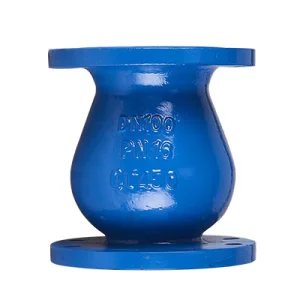
The Engineering Evolution of Lug Type Butterfly Valves
Analyzing critical differential pressures, dead-end isolation capabilities, and torsional integrity in demanding fluid circuits.
Independent Flange Bolting & Dead-End Service
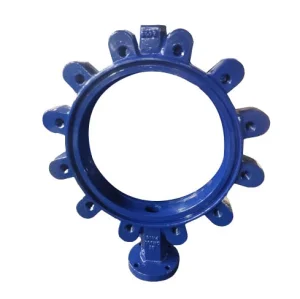
Unlike standard wafer valves that depend on long through-bolts passing through adjacent companion pipe flanges, the butterfly lug valve features tapped metric or UNC threaded lugs around its outer circumference. This configuration is mathematically designed to eliminate axial bolt stretch under thermal cycling.
More critically, lug designs permit dead-end service (blind-end shutoff). Maintenance teams can completely unbolt and service the downstream pipeline without depressurizing or draining the upstream header—saving hundreds of operational maintenance hours in continuous continuous chemical plants and high-rise commercial loops.
Dovetail vs Cartridge Resilient Seating
Modern Chinese manufacturing facilities have migrated past loose, glue-bonded elastomer liners into precision vulcanized or dovetail mechanical anchoring. When high-velocity slurry, chilled water, or gaseous hydrocarbons flow through an open valve, hydrodynamic vacuum pressures typically induce seat collapse in inferior designs.
Our dovetail mechanical interlock locks high-grade EPDM, NBR, or Viton securely into the ductile iron casing. This guarantees zero seat deformation during high turbulent throttling, drastically decreasing operational torque requirements while upholding API 598 Bubble-Tight zero leakage shutoff.
Pinless Shafts & Dry Stem Geometry
Traditional butterfly valve discs were secured to drive stems using transverse taper pins. Over prolonged service life, these pins create stress-concentration fracture zones and leak paths through the stem packing. Leading Chinese valve exporters have transitioned to dual-shaft splined or square-drive pinless architectures.
By encasing the stem fully behind the resilient or PTFE boot seal, the shaft never contacts corrosive fluid media (dry-stem construction). This prevents galvanic seizing, preserves drive shaft yield strength, and guarantees seamless automation pairing with quarter-turn electric and pneumatic actuators.
Engineering Specification Insight: ASME B16.34 & API 609 Lugged Flange Drilling
When procuring from China butterfly lug valve exporters, international engineers must stipulate lug thread specifications. Standard production facilities in China accommodate multi-standard tapping—ranging from DIN EN 1092-2 PN10/PN16 metric threading (M16, M20, M24) to ANSI/ASME B16.5 Class 150 UNC threaded lugs, JIS 10K/16K, and AS 2129 Table E. Specifying dual-drilled universal lug profiles allows multi-territory EPC distributors to streamline warehouse SKUs while satisfying worldwide project mandates.
Global EPC Procurement & Seat Chemistry Comparison
Detailed performance benchmarks ensuring total compatibility across corrosive chemicals, hydrocarbon fuels, marine seawater, and municipal waterworks.
| Elastomer / Liner Type | Permissible Temp Range | Recommended Working Fluids | Cavitation & Abrasion Resilience | Primary Industrial Sector |
|---|---|---|---|---|
| High-Grade EPDM (Sulphur / Peroxide Cured) | -20°C to +125°C | Potable water, HVAC chilled water, wastewater, low-pressure steam, mild caustic wash | Excellent tensile resistance to continuous micro-vibrations and scale impingement | Commercial HVAC, District Cooling, Municipal Water Networks |
| NBR / Buna-N (Nitrile Butadiene) | -10°C to +85°C | Diesel fuels, mineral oils, hydraulic fluid lines, compressed gases, animal oils | High resistance to petroleum swelling; vulnerable to high ozone and solar UV oxidation | Refinery Utilities, Compressed Air Loops, Marine Bunkering |
| Virgin & Conductive PTFE | -25°C to +180°C | Sulfuric acid, chlorine brine, ultrapure pharmaceutical media, organic solvents | Low coefficient of friction (smooth torque); vulnerable to hard abrasive slurries | Chemical Processing, Agro-chemical, Microelectronics FABs |
| Fluoroelastomer (FKM / Viton®) | -15°C to +200°C | High-temperature hydrocarbons, aromatic solvents, chlorinated chemicals, hot acids | Superior chemical elasticity under sustained high-temperature thermal stress | Petrochemical Cracking, Power Generation, Offshore Platforms |
| Nylon-11 / Epoxy Coated DI Disc | -20°C to +100°C | Demineralized boiler feed water, seawater cooling loops, raw river intake | Anti-microbial and non-scaling surface with superior impact and erosion defense | Seawater Desalination Plants, Aquaculture, Irrigation Skids |
Ductile Iron Body (QT450 / GGG40 / ASTM A536)
Standardized nodular iron with spheroidal graphite nodules provides superior yield strength (over 300 MPa) and impact ductility compared to brittle cast iron (GG25). It withstands pipeline water hammer surges, seismic shifts, and heavy piping stresses without casting micro-fractures.
Stainless Steel Discs (CF8, CF8M, 1.4408, Duplex 2205)
Investment cast CF8 (SS304) and molybdenum-stabilized CF8M (SS316) discs feature streamlined hydrodynamic teardrop edges. This maximizes Cv flow coefficients while limiting pipeline turbulence. For high chloride and seawater applications, Duplex 2205 discs prevent pitting and crevice corrosion.
Aluminum Bronze Discs (C95400 / C95800)
For naval marine environments, seawater RO desalination, and offshore crude ballast systems, nickel-aluminum bronze alloys form a continuous passive oxide layer that resists marine fouling, bio-cavitation, and galvanic stress in high-salinity brines.
China Factory 4.0: Supply Chain Agility & Digital Traceability
How modern Tianjin valve clusters combine automated green sand casting, 5-axis CNC machining, and automated hydrostatic testing to drive global cost-efficiency.
Automated CNC Robotic Cell Machining
Traditional valve manufacturing suffered from manual operator dimensional variance during flange drilling and seat boring. Leading Chinese butterfly lug valve exporters now utilize integrated dual-station horizontal CNC centers equipped with laser probe measurement.
Flange lug pitch diameters, concentric shaft bores, and internal disc sealing radii are machined in a single clamping pass. This guarantees absolute axial perpendicularity, lowers breakaway torque by 22%, and lengthens the continuous operational cycle life of automated actuator packages.
Spectrometric Metallurgy Traceability (EN 10204 3.1)
Global procurement specialists can no longer risk porosity defects, non-nodular graphite matrices, or subpar carbon steel scrap. In our intelligent foundries, direct-reading spark optical emission spectrometers verify the precise molten chemistry of every casting melt before pouring.
Complete traceability is maintained through cast melt numbers etched directly onto ductile iron valve bodies, accompanied by verified EN 10204 Type 3.1 Material Test Reports (MTR) verifying carbon, silicon, manganese, and phosphorus levels, along with tensile testing and elongation validation.
Automated Hydrostatic & Pneumatic Seat QA
Quality assurance is not randomized—every single industrial valve undergoes dual-side pressure testing in compliance with ISO 5208 and API 598 standards. Computer-controlled hydraulic testing benches clamp the valve and record high-pressure shell integrity (1.5x PN) followed by low-pressure air seat tightness (0.6 MPa).
Differential pressure curves are automatically recorded into the plant ERP system, providing indelible audit proof of zero bubbles and zero pressure drops prior to final epoxy powder coating and packaging.
3D CAD & FEA Flow Stress Simulation
Computational fluid dynamic modeling ensures disc profiles optimize Cv flow while minimizing cavitation vortices.
Disamatic High-Pressure Sand Casting
Ultra-dense, smooth casting surfaces prevent pinholes and wall thickness deviations across complex lug housings.
Electrostatic Fluidized Bed Epoxy (FBE)
Thermal preheating applies 250 μm non-porous epoxy coating, certified to WRAS / NSF 61 for potable water safety.
Clean-Room Robotic Elastomer Fitting
Precision dovetail seat insertion under climate control prevents elastomer stretching and seal contamination.
Digital Inspection & Export Wooden Crate Packing
Laser barcode marking, individual vapor corrosion inhibitor wrapping, and ISPM-15 export wooden crating.
Global Infrastructure Scenarios for Lugged Butterfly Valves
From Gulf mega-desalination facilities to European district thermal energy and Southeast Asian chemical complexes.
Seawater Desalination (SWRO High-Recovery Skids)
Reverse osmosis high-pressure membrane racks operate under concentrated brine rejection conditions where conventional cast iron valves perish within months. Lug butterfly valves configured with ductile iron bodies lined with vulcanized EPDM or Halar® and fitted with Duplex 2205 or Super Duplex 2507 discs provide unmatched defense against chloride pitting.
- Rated for continuous 16 bar high-salinity brine rejection manifolds.
- Lugged profile simplifies skid modular pre-assembly in shipyard fabrication yards.
- Bubble-tight bidirectional shutoff preserves membrane wash integrity.
District Energy, Mega HVAC & Data Center Chilled Water
Hyperscale cloud data centers require mission-critical cooling redundancy with N+1 or 2N chiller architectures. Lug type butterfly valves are fitted directly onto evaporators, cooling towers, and header bypass loops. Their dead-end capabilities allow maintenance teams to isolate, flush, and service individual modular chillers without taking the entire primary cooling loop offline.
- Optimized low-torque design slashes energy drain from motorized actuators.
- Pinless stems eliminate fugitive leaks in enclosed subterranean mechanical rooms.
- Universal flange patterns integrate seamlessly with PN16 and ANSI Class 150 risers.
Petrochemical Processing & Tank Farm Terminals
In midstream liquid storage farms, pipeline operators must adhere to strict fugitive emission limits and API safety fire norms. Full lug butterfly valves built with investment cast CF8M discs and chemically resistant Viton or PTFE seats deliver robust isolation for solvent storage, condensate recovery, and wastewater treatment skids.
- Full lug threaded holes satisfy hazardous tank farm blind-flange isolation regulations.
- ISO 5211 direct-mount automation pads streamline explosion-proof actuator integration.
- Anti-static copper earthing springs eliminate electrostatic spark hazards.
Municipal Potable Water Networks & Pumping Stations
Municipal water boards require valves that achieve clean sanitary certification (WRAS, NSF/ANSI 61) alongside ultra-long 30-year design lifespans. Ductile iron lug valves equipped with non-toxic blue electrostatic epoxy coatings protect municipal networks from ferric rust leaching, maintaining clean distribution.
- Spheroidal ductile iron handles ground settlement and transient pressure spikes.
- Streamlined disc profile delivers lower head losses, saving mega-watt pump electricity.
- Zero leakage Class A shutoff stops costly municipal treated water losses.
Marine Engineering & Commercial Shipbuilding
Vessel engine room utility piping, ballast water management systems (BWMS), and cargo bilge systems operate in cramped, high-vibration engine compartments. The compact face-to-face dimensions (ISO 5752 series 20) of lug butterfly valves offer immense space and weight savings compared to bulky gate or globe valves.
- Ductile iron with C95800 bronze discs prevents marine galvanic decay.
- Threaded lugs resist vessel hull vibration loosening better than long tie-rods.
- Certified compliance with major maritime marine classification protocols.
Thermal & Hydropower Generation Plants
Power station auxiliary cooling circuits, condenser circulation systems, and ash slurry handling loops demand heavy-duty valves capable of handling steady thermal expansion and fine particulates. Heavy-duty lug valves provide secure throttling control and positive shutoff during unit outages.
- Resilient EPDM / Viton seals resist localized boiler feed cavitation.
- Worm gear actuators feature manual declutchable handwheels for fail-safe safety.
- Modular stem extensions easily penetrate thick thermal acoustic pipe insulation.
Procurement Specification & Sizing Guideline
Ensure critical operational parameters are clearly specified prior to purchase order confirmation with Chinese exporters.
1. Differential Pressure & Dead-End Rating
Always verify whether your application requires full-pressure dead-end shutoff (downstream flange disconnected) or bi-directional inline shutoff. Standard resilient seated lug valves handle up to 16 bar inline and 10 to 16 bar dead-end when manufactured with reinforced ductile housings.
2. Actuator Sizing Torque Safety Factors
When selecting pneumatic single/double acting or electric multi-turn smart actuators, always incorporate a minimum 25% to 35% safety factor above the published valve seat breakaway torque. For dry gaseous media or viscous slurries, elevate the safety factor to 50% to prevent actuator stall.
3. Flange Standards & Thread Depth Verification
Specify companion flange drilling precisely: ASME B16.1 / B16.5 Class 125/150, EN 1092-1 PN10/PN16, JIS B2239 10K/16K. Always cross-check the bolt thread engagement depth in the lug body to avoid bottoming-out bolts before compressing the flange gaskets.
Frequently Asked Questions: China Butterfly Lug Valve Procurement
In-depth technical answers addressing engineering standards, dead-end service ratings, maintenance, and factory auditing.
A wafer butterfly valve features smooth alignment holes and is installed by clamping the body between two pipe flanges using long stud bolts that span the entire width of the valve. If piping on one side is disconnected, the valve cannot maintain pressure. Conversely, a lug butterfly valve incorporates threaded, tapped lugs around its body circumference. Each pipe flange connects using independent shorter bolts threaded directly into the valve lugs from either side. This allows either downstream or upstream piping removal while the valve remains pressurized and closed in full dead-end service.
Yes. Leading Chinese manufacturers produce butterfly lug valves engineered specifically to meet API 609 and EN 593 dead-end ratings. In standard resilient seated configurations, dead-end pressure ratings typically range between 10 bar (150 psi) and 16 bar (232 psi) depending on nominal diameter and metallurgy. When specifying for dead-end service, always ensure the retaining mechanism of the seat (such as a dovetail or cartridge sleeve) is rated for full downstream differential pressure without downstream companion flange support.
Tianjin Zhongfa Valve (ZFA) applies strict foundry QA protocols. Casting is conducted using computerized green-sand or lost-foam lines using virgin pig iron and precise nodularizing agents (magnesium-ferrosilicon). Every melt undergo optical spark emission spectrometer testing to ensure nodularity exceeds 85% (Grade QT450-10 / ASTM A536 65-45-12). In addition, each valve body casting undergoes hydrostatic shell proof testing at 1.5 times the rated working pressure (24 bar for PN16) to verify structural density and eliminate any risk of sub-surface micro-porosity.
Standard documentation delivered with industrial consignments includes: EN 10204 Type 3.1 Inspection Certificates containing physical tensile/elongation values and chemical melt composition; API 598 / ISO 5208 Pressure Test Reports verifying shell and seat tightness; CE Declaration of Conformity under the Pressure Equipment Directive (PED 2014/68/EU); ISO 9001:2015 certification; and WRAS/NSF coating compliance sheets for potable water projects. Third-party visual and pressure inspection (SGS, BV, TÜV) can be arranged prior to container dispatch.
All ZFA lug butterfly valves are standardized in compliance with ISO 5211 direct-mount automation standards (F05, F07, F10, F12, F14, F16 flange patterns with double-D, keyed, or square stem broaching). This enables instant, bracket-free retrofitting of quarter-turn pneumatic rack-and-pinion actuators, scotch-yoke drives, or electric multi-voltage smart actuators without expensive custom machining.
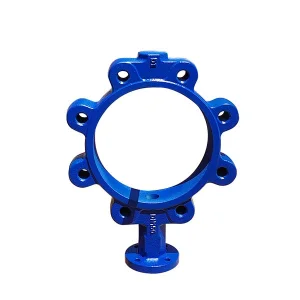
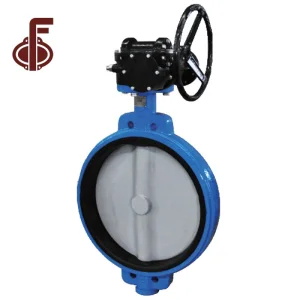
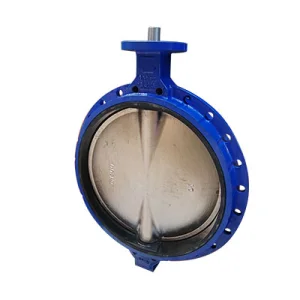
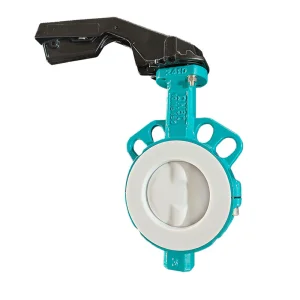
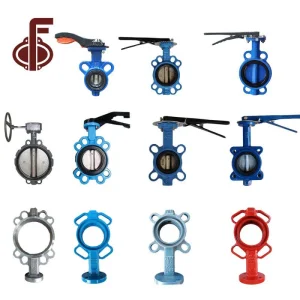
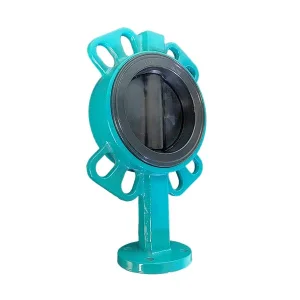
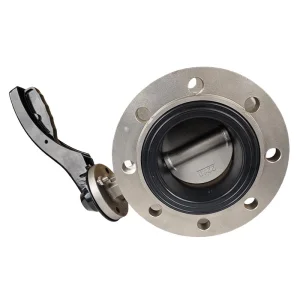
Precision Lug, Lined & Large-Diameter Specialized Flow Control
Advanced corrosion-resistant coatings, fully lugged architectures, and custom multi-standard engineered units.
Request Detailed Datasheets & Fast-Track Quotations
Connect directly with Tianjin Zhongfa Valve's senior application engineering department. We deliver complete CAD drawings, 3D STEP models, torque calculations, and commercial quotation packs within 24 hours.
