Heavy-Duty Flanged & Process Isolation Valves
Explore high-integrity flanged, double-eccentric, and resilient-seated valve configurations engineered to ANSI, DIN, BS, and KS tolerances for critical pipeline infrastructures.
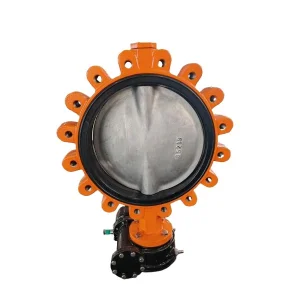
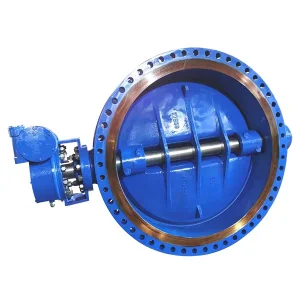
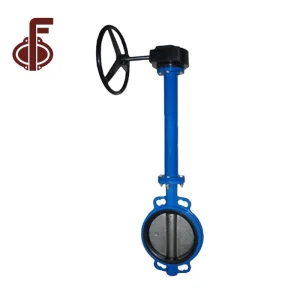
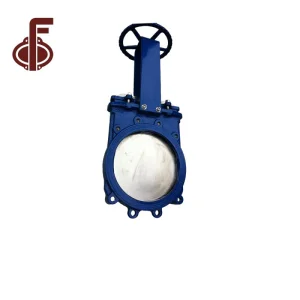
Global Landscape: The Evolution of Flanged Valve Systems
Analyzing structural dynamics, mechanical stress mitigation, and operational longevity in municipal, petrochemical, and power generation facilities.
Stress Dissipation & Bolting Integrity
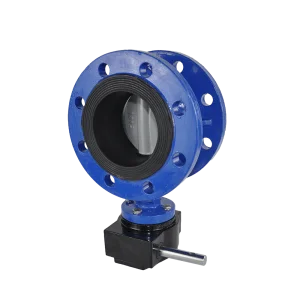
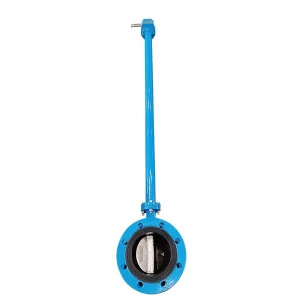
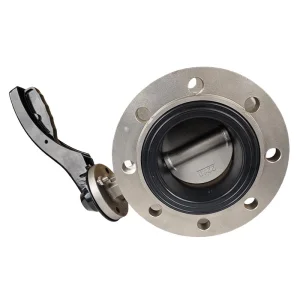
Unlike wafer or standard lugged alternatives, double flanged butterfly valve connection profiles feature standalone bolting matrices for upstream and downstream pipe sections. This configuration absorbs torsional, thermal, and axial piping stresses, preventing seal dislocation.
This dynamic mechanical decoupling protects structural alignment during high-velocity cyclic water hammers and deep thermal transitions common in modern power plants.
Zero Fugitive Emissions & Decarbonization
Stringent compliance with ISO 15848-1 and EPA Class A standards demands zero-leakage shaft seals. Modern flanged butterfly valves leverage live-loaded packing glands and multi-layered graphite/PTFE seals to minimize fugitive greenhouse gas escape.
China-based tier-one production facilities now integrate finite element analysis (FEA) to ensure body-to-flange rigidities overcome high internal surge pressures.
Severe-Service Triple Eccentric Advances
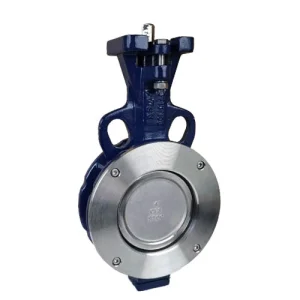
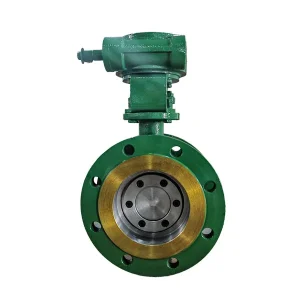
The global push towards triple eccentric designs (Triple Offset Valves - TOV) eliminates seat friction during 90-degree rotary travel. The sealing surface matches Stellite hard-facing against flexible lamellar stainless-steel rings.
The result is bi-directional bubble-tight shutoff (API 598 zero leakage) up to 600°C under ASME Class 150 to Class 600 operating thresholds.
Connection Architecture Comparison: Flanged vs. Wafer vs. Lug
Selecting the optimal connection topology prevents structural deflection, line sagging, and downtime under critical pipeline operating demands.
| Evaluation Parameter | Double Flanged Connection | Lugged Style Connection | Wafer Style Connection |
|---|---|---|---|
| Mechanical Rigidity | Highest; handles large shear, seismic & thermal expansion stresses. | Moderate to High; supports intermediate pipeline anchoring. | Lowest; dependent entirely on cross-flange bolt tension. |
| Dead-End Service Capability | Full rated bi-directional dead-end isolation without blanking flanges. | Yes, down to specified secondary pressure ratings. | Unsuitable; cannot be utilized for terminal dead-end service. |
| Pipeline Maintenance Impact | Downstream piping can be dismantled while upstream remains energized. | Permits single-side pipe disassembly under reduced line pressure. | Total system shutdown & depressurization mandatory for extraction. |
| Size Range Optimization | Standard for DN300 to DN2400 (Large bore distribution networks). | Optimized for DN50 to DN600 intermediate skids and assemblies. | Optimized for compact, low-weight spaces DN50 to DN300. |
| Direct Actuator Mounting | ISO 5211 direct-drive pad standard; eliminates deflection under heavy torque. | ISO 5211 integrated top flange for standard torque loads. | Requires bracketed alignment on elevated hydraulic/pneumatic sets. |
Specialized Regional Field Operations
Deployment methodologies across extreme operational conditions—from deep-sea desalination to Arctic thermal utility distribution.
Middle East Seawater Desalination (SWRO)
Operational Parameters: High salinity, hypochlorite injection, high chloride pitting corrosion.
Valve Solution: Double flanged concentric and double-eccentric valves fitted with Super Duplex Stainless Steel (2507 / UNS S32750) or nickel-aluminum bronze (NAB) discs combined with vulcanized high-grade EPDM liners. Integral flanges eliminate localized crevice corrosion near the pipe-joint interface.
Scandinavian District Energy & Geothermal
Operational Parameters: High continuous flow, cyclic thermal expansions (up to 180°C), strict minimal pumping energy loss.
Valve Solution: Short-pattern and long-pattern double-flanged butterfly valves built with WCB or low-temperature carbon steel (LCC) bodies, hydrodynamic profile discs, and metal-to-metal/graphite seats that provide low torque resistance and negligible pressure drop across pumping loops.
Petrochemical & LNG Flash Facilities (Americas & Asia)
Operational Parameters: Cryogenic conditions down to -196°C, hydrocarbon vapor migration, high burst fire risks.
Valve Solution: Triple eccentric double-flanged valves conforming to API 607 Fire Safe standards, fitted with extended bonnets for cryogenic thermal protection and blowout-proof stems to eliminate hazardous line decompression.
Technical Roadmap: Precision Manufacturing & Digital Valve Twins
How China's leading valve manufacturers are integrating smart diagnostics, automated multi-axis machining, and advanced metallurgical validation.
Advanced Metrology & Quality Protocols
Every double flanged valve casting undergoes Zeiss coordinate measuring machine (CMM) analysis to ensure flange parallelism, bolt-circle true positions, and disc clearance conform to ISO 5752 series limits.
100% radiographic (RT) or ultrasonic (UT) testing on high-pressure cast steel (WCB, CF8M, Duplex) bodies to guarantee zero subsurface shrinkage voids, porosity, or hot tears prior to computer-controlled machining.
Robotic plasma transferred arc (PTA) welding deposits cobalt-based Stellite alloys onto seat contact bands, followed by high-speed CNC finish grinding achieving micro-inch roughness values under Ra 0.4.
The Next Generation: Smart IoT Actuation
Modern flow networks require automated health analytics rather than reactive line checks. Flanged butterfly valves manufactured by leading Chinese facilities are now directly coupled with IIoT (Industrial Internet of Things) positioning units.
- Continuous Torque Signature Mapping: Sensors track opening and closing breakaway torques to detect scale build-up or cavitation wear long before seat failure occurs.
- Real-time Fugitive Sensor Integration: Packing-box sniffer ports integrate with optical hydrocarbon monitors to satisfy low-emission mandates.
- Predictive Cavitation Warning: Acoustic emission sensors mounted on the external body detect flow transition anomalies, dynamically modulating disc travel via PID loop integration.
Engineering Inquiries: Flanged Butterfly Valves
In-depth responses curated by certified chief mechanical engineers to guide EPC contractors and procurement managers.
When must an engineer mandate Double Flanged butterfly valves over Lug or Wafer styles?
A Double Flanged valve should be strictly specified when: (1) Pipe diameters exceed DN300 (12"), where heavy piping weights and thermal stresses risk breaking wafer clamping studs; (2) True dead-end service is necessary to allow down-line system dismantling without holding backpressure with blind flanges; (3) Buried underground or subsea installations where piping cannot flex without causing seal shifts; and (4) Extreme vibration regimes like pump discharge manifolds where independent flanging stabilizes structural alignment.
How do Concentric, Double Eccentric, and Triple Eccentric flanged valves differ mechanically?
Concentric valves have a centered disc and stem relying entirely on the interference fit of an elastomer liner (EPDM/NBR) for sealing, making them economical for water/HVAC up to 16 Bar. Double Eccentric (High Performance) valves offset the shaft from both the disc centerline and body centerline, causing the disc to cam away from the seat instantly to reduce friction—ideal for moderate pressures and temperatures up to 260°C. Triple Eccentric (TOV) adds a third conical geometric offset, eliminating all contact during rotation; metal-to-metal seating delivers frictionless, bubble-tight zero leakage in severe fire-safe, cryogenic, and high-pressure steam environments.
Which face-to-face standard applies to China-manufactured flanged butterfly valves?
Chinese manufacturers supply standard dimensions matching ISO 5752 (Basic Series 13 short pattern or Series 14 long pattern), EN 558-1 Series 13/14, and ASME B16.10. For municipal AWWA installations, valves comply strictly with AWWA C504 face-to-face dimensions. Specifiers must clarify the exact series requirement during RFQ, as "Short Pattern" versus "Long Pattern" dictates overall laying length in the piping layout.
What quality testing reports are provided by Chinese manufacturers for EPC project sign-offs?
Tier-one Chinese valve manufacturers provide EN 10204 3.1 or 3.2 Material Test Reports (MTR) covering chemical spectrometry and mechanical tensile/impact data, 100% Hydrostatic and Pneumatic Shell and Seat Test Certifications per API 598/ISO 5208, Non-Destructive Examination (NDE/NDT) dossiers including Dye Penetrant (PT), Magnetic Particle (MT), and Radiographic (RT) reports, Coating Thickness & Holiday Spark Test logs, and CE/PED compliance declarations.
Can flanged butterfly valves replace traditional gate and ball valves in large pipelines?
Yes. In pipelines exceeding DN200 (8"), double flanged butterfly valves provide significant cost, weight, and footprint reductions compared to massive gate or ball valves. A DN600 double flanged butterfly valve weighs up to 70% less than an equivalent-bore gate valve, requires far smaller actuation torque, operates in quarter-turn 90° intervals for faster emergency trips, and eliminates deep body cavities where slurry or particulate matter can collect and prevent complete closure.
Specialty Flow Control & Flanged Valve Units
Explore dual plate check valves, AWWA centerline units, full-lined options, and high-performance actuation-ready assemblies engineered for plant applications.