Precision Flow Isolation & Throttling Valve Range
Engineered for zero-leakage shutoff, low breakaway operating torque, and seamless drop-in integration across ASME, EN, DIN, and JIS pipeline standards.
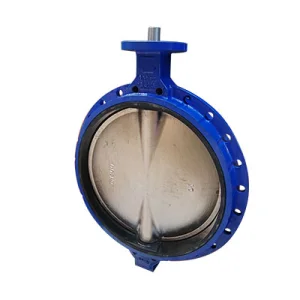
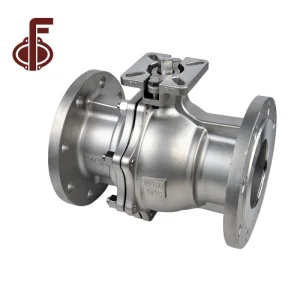
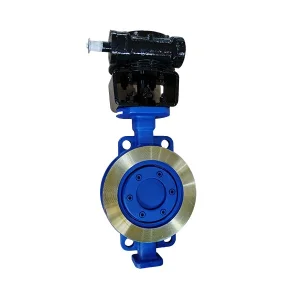
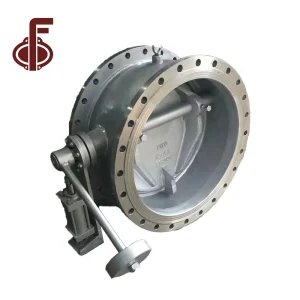
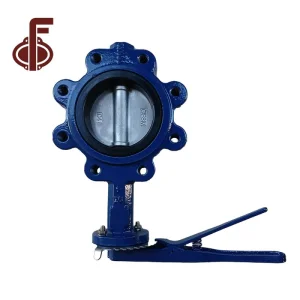
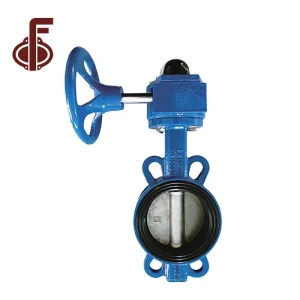
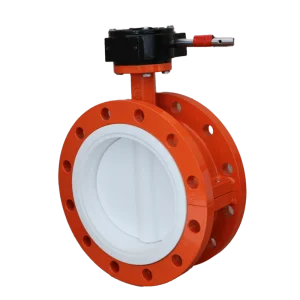
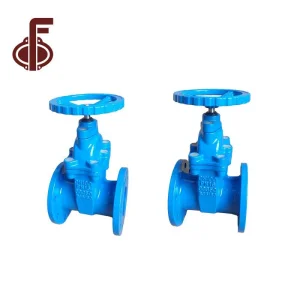
Engineering Fundamentals of Lever-Operated Butterfly Valves
A rigorous examination of 90-degree quarter-turn manual throttling and isolation dynamics, stem deflection limits, elastomer fatigue curves, and torque mitigation physics.
10-Position Throttling Detent Plates
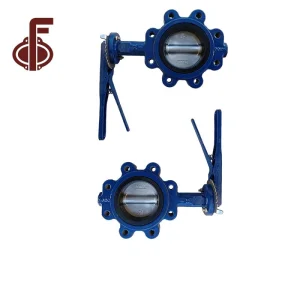
Manual lever mechanisms utilize heavy-duty carbon steel or stainless steel notched throttle plates calibrated from 0° (fully closed) to 90° (fully open) in incremental 10° steps. Integrated spring-loaded trigger locking handles prevent disc drift caused by hydrodynamic flow forces across turbulent piping regimes, ensuring process stability.
Hydrodynamic Torque Mitigation
The asymmetric hydrofoil disc contour is engineered using computational fluid dynamics (CFD) to minimize pressure drop coefficient ($C_v / K_v$) and reduce dynamic torque ($T_{dyn}$). In sizes DN40 through DN200, lever lengths are ergonomically calculated to limit operator rim pull to less than 250 N under maximum differential design pressures ($\Delta P$).
Interference-Fit Seat Resilience
Concentric butterfly valves achieve bidirectional Class VI bubble-tight shutoff through calibrated radial interference between the spherical disc edge and elastomeric seat liner. Our vulcanized and wide-edge bonded designs prevent axial seat displacement, vacuum collapse, and liner bunching during high-cycle lever actuation.
Engineering Cutoff Criterion: Lever vs. Gear Actuation
Under API 609 and EN 593 guidelines, manual lever actuation is strictly recommended for concentric valves up to DN150 (6") at PN16/Class 150 ratings, and up to DN200 (8") at lower operating differentials (≤ 10 bar). For nominal diameters of DN250 and above, breakaway seating torque ($T_s$) combined with high line velocity creates dynamic rotational moments that necessitate enclosed worm gearboxes to guarantee operator safety and prevent hydraulic water hammer.
| Nominal Size (DN/NPS) | Seat Material Options | Operating Torque Range (Nm @ 16 Bar) | Standard Lever Model | Pressure Class Rating | Standard Compliance |
|---|---|---|---|---|---|
| DN40 – DN50 (1.5" – 2") | EPDM / NBR / FKM / PTFE | 11 – 15 Nm | 10-Position Cast Aluminum / SS | PN10 / PN16 / Class 150 | API 609 Cat A, EN 593, ISO 5752 |
| DN65 – DN80 (2.5" – 3") | EPDM / High-Temp EPDM / NBR | 18 – 28 Nm | Stamped Carbon Steel w/ Locking Pin | PN10 / PN16 / Class 150 | API 609, BS EN 593, DIN 3202 |
| DN100 – DN125 (4" – 5") | EPDM / Buna-N / Viton / PTFE | 38 – 65 Nm | Reinforced Ductile Iron Lever | PN10 / PN16 / Class 150 | API 609, MSS SP-67, JIS B2032 |
| DN150 – DN200 (6" – 8") | Peroxide-cured EPDM / NBR / PTFE | 95 – 195 Nm | Extended Heavy-Duty Detent Lever | PN10 / PN16 / 150 PSI Max | API 609, ISO 5208 Rate A, EN 12266-1 |
China Factory 4.0: Supply Chain Resilience & Casting Metallurgy
Bridging traditional foundry craft with digitalized Industry 4.0 manufacturing cells to secure defect-free pressure containment, micron-level machining, and complete metallurgical traceability.
Automated Molding Lines
Disamatic sand casting and resin sand molding minimize blowholes, porosity, and surface irregularities. We cast ductile iron (ASTM A536 65-45-12 / EN-GJS-400-15 / QT450-10) with nodularity verified above 90% via optical metallographic spectrometry.
CNC Multi-Axis Machining
High-precision horizontal machining centers machine stem bores, flange bolt circles, and disc profiles in single clamping setups. Stem-to-disc concentricity is maintained within ±0.015 mm, eliminating uneven seat friction and premature stem gland leakages.
FBE Electrostatic Coating
Automated continuous conveyor lines apply fusion bonded epoxy (FBE) powder coating complying with DIN 30677-2 and AWWA C550. Coating thickness exceeds 250 µm, passing 100% 3kV high-voltage spark porosity testing and 1000-hour salt spray exposure.
End-to-End Traceability
Direct melt-to-shipment tracking links each cast body's heat number to chemical spectrometry logs, Charpy V-notch impact values, yield strength data, and final hydrostatic test charts according to EN 10204 Type 3.1 inspection certification.
Macro-Industry Solutions & Fluid Process Architectures
Configured specifically to counter cavitation, galvanic degradation, microbiological corrosion (MIC), and chemical attack across harsh civil and industrial installations.
Municipal Potable Water & Desalination
For municipal drinking water grids and reverse osmosis (SWRO) desalination plants, our lever butterfly valves utilize WRAS, ACS, and NSF/ANSI 61 certified non-toxic EPDM liners. Paired with Aluminum Bronze (ASTM B148 C95400/C95800) or Duplex SS 2205 discs, they resist chloride crevice pitting and seawater biofouling without elastomer embrittlement.
HVAC, Chilled Water & District Cooling
In central chiller plants, condenser water loops, and air handling units (AHUs), energy conservation demands tight shutoff. Extended neck body patterns accommodate up to 50 mm of rigid thermal insulation lagging. The precision 10-position throttle plate enables fine manual hydronic balance across multi-story commercial distributions.
Chemical Processing & Corrosive Slurries
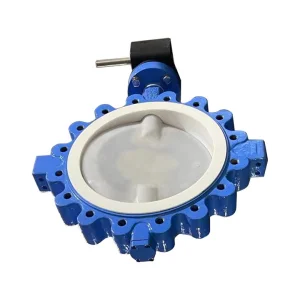
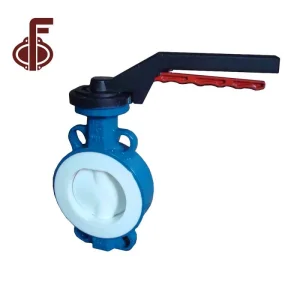
Aggressive inorganic acids, chlor-alkali streams, and bleaching solutions require pure virgin PTFE or PFA encapsulation. Our split-body wafer and lug configurations provide a complete polymeric barrier, completely isolating ductile iron or carbon steel structural bodies from active process media, achieving zero-permeation performance.
Global Procurement Demands: TCO, Standards & QA Protocols
Minimizing Total Cost of Ownership (TCO) through standardized interface mounting, zero-defect acceptance criteria, and comprehensive third-party inspection packages.
Total Cost of Ownership (TCO) Optimization
Initial valve purchase cost represents less than 15% of total lifetime operational expense in mission-critical process plants. By standardizing on blowout-proof stem retention mechanisms, dual O-ring secondary shaft barriers, and cartridge-style field-replaceable elastomeric liners, our lever butterfly valves eliminate unplanned shutdown downtime, reducing 10-year life-cycle maintenance costs by up to 42%.
Universal Cross-Standard Compatibility
Engineering procurement contractors (EPCs) operate under disparate regional codes. Our valve bodies incorporate universal locating holes and multi-standard flange bolt patterns matching ASME B16.1 Class 125, ASME B16.5 Class 150, EN 1092-2 PN10/PN16, and JIS B2239 10K. Top flanges strictly follow ISO 5211 (F05/F07/F10), enabling fast field retrofit from manual lever to pneumatic or electric actuator.
Hydrostatic & Pneumatic Factory Acceptance Testing (FAT)
Every individual butterfly valve undergoes strict automated pressure testing conforming to ISO 5208 Rate A and API 598 prior to export crating. The shell is pressurized with water to 1.5 times the nominal working pressure (24 bar for PN16), proving pressure boundary structural integrity. The resilient seat undergoes bidirectional testing at 1.1 times nominal pressure (17.6 bar hydrostatic) and low-pressure air testing at 6 bar with zero permissible bubble leakage.
Technical Roadmap: 2025–2035 Valve Innovation
Anticipating future regulatory mandates, intelligent monitoring demands, and next-generation composite material advancements in manual fluid flow control.
IoT Smart-Lever Digitalization
Integration of passive RFID and low-power micro-encoders directly into manual detent levers, broadcasting real-time open/closed percentage status to centralized SCADA systems without requiring motorized actuators.
Nanocomposite Seat Elastomers
Implementation of carbon-nanotube reinforced EPDM and fluoroelastomer matrices to resist explosive decompression, eliminate swelling in hydrocarbon blends, and extend mechanical flexing life past 100,000 continuous cycles.
Circular Decarbonized Casting
Transition of ductile iron foundry melting to 100% green-hydrogen induction furnaces, achieving near-zero Scope 1 & Scope 2 carbon footprint per ton of valve casting output to satisfy EU CBAM border regulations.
Self-Diagnostic Gland Sealing
Integration of micro-strain optical fiber sensors within the stem packing assembly to monitor fugitive emissions and detect micro-deflections prior to any visible external media weeping.
Frequently Asked Questions by Valve Engineers & Buyers
In-depth engineering answers addressing manual actuation limitations, elastomer compatibility, installation practices, and international export documentation.
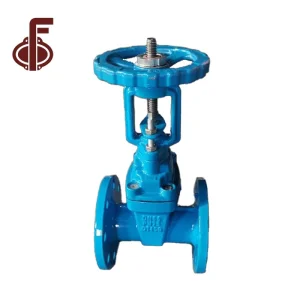
Engineered Butterfly, Gate, Ball & Check Valves
Direct factory export configurations engineered to precise metallurgical grades, custom dimensions, and OEM branding for distribution networks worldwide.