
Engineered Gate Valves & Flow Control Actuation Solutions
Integrate our precision limit switch enclosures with factory-machined mounting kits designed specifically for cast steel, ductile iron, and alloy valve bodies manufactured to international pressure ratings.
Engineering Paradigm: The Crucial Role of Gate Valve Position Monitoring
In process plants and high-consequence fluid transport systems, confirming the absolute physical position of an isolating gate valve is vital to plant safety, operational uptime, and regulatory compliance.
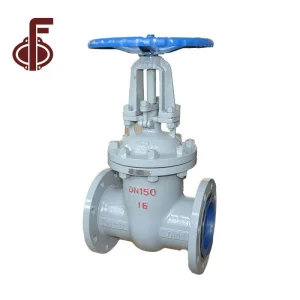
Unlike 90-degree quarter-turn ball or butterfly valves, multi-turn gate valves operate via linear stem displacement driven by an ACME threaded lead screw. This design requires purpose-built mechanical linkages or specialized linear transducer brackets to convert long strokes (from 50mm up to 1200mm) into precise electrical switch actuation without mechanical backlash.
Our Tianjin factory manufactures precision cam-track linkages and heavy-gauge 304/316 stainless steel mounting hardware that entirely prevents positional hysteresis, ensuring the supervisory system registers true open/closed states even under turbulent line pressures.
Severe line vibrations caused by pump cavitation, pipeline hammer, and turbulent fluid velocity often induce false alarms in poorly designed limit switch boxes. We incorporate spring-loaded roller rocker arms, magnetic detents, and dual-contact microswitches with high contact pressure.
These robust internal mechanisms absorb high-frequency vibrational noise, ensuring that signals transmitted to the supervisory SCADA/DCS indicate verified physical disc seating rather than momentary mechanical chatter.
Our heavy-duty limit switch boxes are cast from marine-grade, copper-free aluminum alloy or investment-cast CF8M stainless steel. Precision-machined flame paths safely contain internal ignitions without sparking explosive external atmospheres.
Certified according to ATEX, IECEx, and NEMA 7/9 protocols for Class I, Division 1 & 2, Zone 1 & 2 installations, our enclosures provide fail-safe verification across hazardous oil refineries, gas pipeline pigging stations, and offshore drilling vessels.
Gate Valve Limit Switch Configurations & Stem Kinematics
Gate valve designs vary significantly between rising stems, non-rising stems, and sliding knife gate blades. Our specialized mounting kits provide customized position feedback across all mechanical formats.
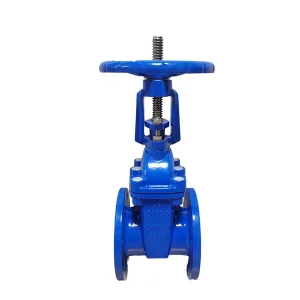
Outside Screw and Yoke (OS&Y) valves feature a stem that moves upward through the handwheel or actuator hub as the gate opens. Our bracketed supervisory limit switch mounts to the yoke legs and engages a precision groove or target collar clamped directly to the rising stem.
This design is universally preferred for municipal fire safety sprinkler systems (NFPA 13 & 72 compliance), oil storage depots, and high-pressure steam utility boilers where immediate visual and electrical verification of open or closed status is mandatory.
Non-Rising Stem (NRS) gate valves keep the stem threaded inside the wedge, meaning the stem only rotates without moving vertically. For these valves, our engineers use gear-driven revolution counter switches or internal collar magnetic tracking mechanisms.
By counting total rotations from the fully closed position (where the resilient seat wedges against the pocket) to fully open, the limit switch accurately signals end-of-travel states on underground water mains, vessel ballast lines, and space-constrained marine utility spaces.
Knife gate valves operate via pneumatic cylinders or bevel gear drives, sliding a sharpened blade through abrasive slurries, fly ash, or pulp paper stock. Standard mechanical switches can quickly become jammed by external slurry buildup.
We supply non-contact inductive proximity sensors (PNP, NPN, or Namur intrinsically safe types) mounted to heavy slotted bracket channels. The stainless steel blade directly trips the magnetic induction field, providing reliable feedback immune to dust, wet pulp, and abrasive build-up.
Critical Engineering Note on Switch Hysteresis & Differential Travel
In high-pressure wedge gate valves (such as Class 300, 600, or PN40/63), thermal expansion and hydraulic thrust can shift the final wedge seating position by 1.5mm to 4.2mm over operating cycles. Our limit switch housings feature micro-adjustable cam assemblies with micrometric locking screws. This mechanical design prevents false alarms caused by thermal expansion, ensuring that the supervisory circuit only signals closure when the wedge forms an effective bubble-tight seal.
Localized Applications: Solving Harsh Operational Challenges Worldwide
Operating environments place distinct electrical and mechanical stresses on limit switch mechanisms. Our export-ready product series delivers specialized engineering for distinct regional and industrial conditions.
Operating Challenge: Continuous exposure to saltwater spray, high humidity, and combustible hydrocarbon gases (Zone 1/Zone 2) causes galvanic corrosion and short circuits in unsealed electrical enclosures.
Factory Solution: We provide 316L stainless steel limit switch enclosures featuring double O-ring silicone seals (rated IP68 at 10 meters for 72 hours). Internal terminals are coated with anti-fungal, moisture-proof conformal lacquer, and all exterior linkages undergo marine passivated pickling to survive ISO 12944 C5-M extreme marine environments.
Operating Challenge: High ambient process temperatures combined with volatile hydrogen, ethylene, and benzene vapors demand certified explosion mitigation and thermal stability.
Factory Solution: Our Ex d IIC T6 flameproof enclosures feature extended flanged flame paths designed to quench hot escaping combustion gases. We use solid ceramic terminal strips and high-temperature Viton internal seals rated for continuous operation from -40°C to +120°C, fully compliant with IECEx and ATEX directives.
Operating Challenge: Temperatures down to -50°C cause internal condensation, ice formation on mechanical microswitches, and seal brittleness leading to switch failure.
Factory Solution: We integrate PTC self-regulating internal anti-condensation space heaters (5W–10W) directly into the switch cavities. Stem linkages are manufactured from cryogenic-grade austenitic stainless steel to prevent low-temperature ductile-to-brittle transitions.
Operating Challenge: Heavy slurries, coal dust accumulations, and intense pressure washdowns (IP69K requirements) lead to jammed lever arms and electrical shorting.
Factory Solution: We provide fully encapsulated solid-state inductive proximity switches with polyurethane wiper scrapers mounted on the yoke brackets. The sensor surfaces detect blade presence magnetically through dust layers without requiring mechanical physical contact.
Gate Valve Limit Switch Sensor Technologies Compared
Selecting the optimal internal switching mechanism requires balancing electrical loads, explosive atmosphere ratings, target stroke speeds, and overall lifecycle requirements.
| Sensor Mechanism Type | Operating Voltage & Load | Hazardous Area Suitability | Mechanical Life Expectancy | Primary Industrial Use Case |
|---|---|---|---|---|
| Mechanical Microswitch (SPDT / DPDT Silver-Gold Alloy) |
125/250V AC up to 16A 24/125V DC up to 0.6A |
Ex d Flameproof Class I, Div 1/2 |
5,000,000 cycles (mechanical) 100,000 cycles (full electrical) |
Motor control centers (MCC), direct solenoid trips, pump interlock systems. |
| Inductive Proximity Sensor (P+F / IFM 2-Wire NAMUR) |
8.2V DC (NAMUR) 10–30V DC (3-Wire PNP/NPN) |
Ex ia Intrinsic Safety Zone 0, Zone 1 |
Virtually infinite (Solid-state, no contacts) |
Petrochemical DCS loops, intrinsically safe I/O racks, high-cycling knife gates. |
| Hermetically Sealed Reed Switch (Inert Rhodium/Ruthenium Gas) |
24V DC / 120V AC Up to 3A current rating |
Non-Incendive / Ex nA Zone 2, Div 2 |
10,000,000 cycles | Corrosive chemical processing plants, fertilizer acid units, offshore marine skids. |
| Potentiometric / Magnetostrictive (Continuous 4–20mA + Digital Limits) |
18–32V DC Loop-powered HART Protocol compatible |
Ex ia / Ex d Dual Rated | Solid-state magnetics (Contact-free linear rod) |
Throttling gate valves, flow modulation, continuous digital position logging. |
The Chinese Factory Advantage: Integrated Metallurgy, Precision CNC & Agility
Procuring gate valve limit switches and automated assemblies directly from our Tianjin manufacturing plant combines integrated supply-chain cost efficiencies with world-class quality verification.
Our operations leverage Tianjin’s established industrial base for valve body casting, high-grade iron and steel foundries, and surface finishing. By maintaining localized supply chains for raw materials and machining, we reduce production bottlenecks and buffer against global market disruptions.
This geographic consolidation reduces internal transport overhead and allows complete oversight from raw ingot casting to final hydrostatic and electrical testing.
Unlike regional distributors that simply rebrand third-party assemblies, our factory manages end-to-end production under an ISO 9001 quality system: in-house aluminum die-casting, 5-axis CNC machining, electrostatic powder coating, wiring harness termination, and functional verification.
Direct oversight allows for flexible custom bracket fabrication and custom conduit thread patterns (NPT 1/2", NPT 3/4", M20x1.5, or PG13.5) with minimal lead-time penalties.
Every switch enclosure batch undergoes 1,000-hour ASTM B117 neutral salt spray corrosion testing, helium leak detection for ingress validation, and automated micro-switch contact resistance checks (sub-50 milliohm thresholds).
Every automated valve assembly is dispatched with complete traceability dossiers, including EN 10204 3.1 material test certificates, CE conformity documentation, and pressure test logs.
Technology Roadmap: Smart Switch Enclosures, IIoT & Predictive Diagnostics
The valve automation landscape is moving beyond simple dry contacts toward fully digitized smart flow control. Our R&D engineering program integrates edge-intelligence sensing into heavy-duty gate valve limit switches.
Our smart monitoring boxes integrate WirelessHART and ISA100.11a protocols, allowing remote gate valves located in expansive tank farms or remote water pump stations to securely broadcast position status and battery health without the high installation costs of physical conduit trenches.
Safety Instrumented Systems (SIS) mandate regular validation of Emergency Shutdown (ESD) valves. Our advanced switch boxes incorporate integrated PST micro-controllers that stroke high-pressure wedge valves 10%–15% without interrupting main process line throughput.
By pairing high-resolution magnetic linear position encoders with actuator motor current monitors, our diagnostics detect packing gland over-tightening, stem bending, or galling long before mechanical binding causes field actuator burnout.
Traditional open/closed flags can fade and degrade under intense UV radiation. We utilize high-impact polycarbonate visual beacons with anti-static and anti-reflective UV stabilizers, providing clear 360-degree, 50-meter visual status verification even in harsh desert or offshore conditions.
Regulatory Compliance & Engineering Assurance Framework
Meeting regulatory standards is essential for project procurement. Our automated gate valve assemblies and limit switch instrumentation strictly comply with leading international quality and safety benchmarks.
Tested and certified under EN/IEC 60079-0, 60079-1, and 60079-11 standards. Our explosion-proof switch enclosures carry Ex d IIC T6 Gb and Ex ia IIC T6 Ga markings, permitting immediate deployment throughout European Union and global IEC territories.
Evaluated according to IEC 61508 protocols with complete failure mode, effects, and diagnostic analysis (FMEDA). Our redundant microswitch arrangements achieve high safe-failure fractions (SFF > 90%), streamlining certification for safety integrity level loops.
Our OS&Y supervisory limit switches comply with UL 346 and FM 1130 requirements for fire protection sprinkler systems. They immediately signal when an OS&Y gate valve moves more than two revolutions away from its fully opened state, maintaining life-safety system readiness.
Frequently Asked Questions for Project Engineers & Buyers
Detailed engineering answers to the most common technical questions regarding gate valve limit switch specification, installation, and field operation.
How do you convert the linear stroke of a rising stem gate valve into rotary switch actuation?
Rising stem gate valves (such as OS&Y patterns) exhibit linear travel ranging from 50 mm (2 inches) up to 1000 mm (40 inches). Standard rotary limit switch boxes are limited to 90 or 180 degrees of shaft rotation. To bridge this difference, our engineering team uses two specialized mechanisms: a linear cam-track bracket and a precision rack-and-pinion transmission.
The linear cam-track uses an adjustable, grooved bracket clamped to the rising stem. As the stem travels, the cam guides a spring-loaded roller arm that actuates internal microswitches at predetermined stroke positions. For ultra-precise applications, our rack-and-pinion system converts vertical stem movement into precise rotary shaft motion, driving adjustable internal switch cams with zero mechanical backlash.
What is the difference between Ex d flameproof and Ex ia intrinsically safe switch enclosures?
An Ex d (Flameproof) enclosure is designed with heavy metallic walls (either cast aluminum or CF8M stainless steel) that can withstand an internal gas explosion without rupturing. The precision-machined joints and threaded entries function as flame paths, cooling escaping hot gases below the ignition temperature of the surrounding atmosphere. Ex d enclosures are ideal for high electrical currents (up to 16A) and do not require intrinsic safety barriers.
An Ex ia (Intrinsically Safe) system limits electrical and thermal energy entering the hazardous zone via Zener diode safety barriers or galvanic isolators. Since the circuit cannot spark or heat up sufficiently to ignite gas (even under double-fault conditions), it uses lighter enclosures. Ex ia is typically paired with 2-wire NAMUR proximity sensors (8.2V DC) operating directly inside DCS automation loops.
Can limit switch boxes be retrofitted onto existing manual gate valves without shutdown?
Yes. Retrofitting is common across legacy chemical tank farms, marine pump rooms, and municipal pump stations. Our universal OS&Y mounting brackets clamp directly onto the yoke legs and valve bonnet flanges without drilling into pressure-retaining parts or breaking the piping seal.
Installation can be safely performed while the pipeline is fully pressurized. The target tracking ring or clamp secures around the exposed portion of the rising stem. Once mounted, the technician adjusts the trip cams to match the seating position. This enables supervisory system upgrades with zero process downtime.
How do you prevent false alarms caused by pipeline vibration and thermal expansion?
Heavy pumps, dynamic fluid hammer, and thermal cycles can create two major problems: switch bounce (momentary signal loss) and positional creep (stem movement due to thermal expansion). We counter these factors using three key design features:
- Contact Mechanical Hysteresis: Our snap-action microswitches use beryllium-copper leaf springs that require verified displacement before snapping over, ignoring minor vibration tremors.
- Integrated Deadband Settings: Cam profiles feature a deliberate 2mm to 4mm mechanical deadband. This ensures minor thermal expansion in steam or hot process lines does not trigger a false "valve open" signal while the wedge remains sealed.
- Dual-Locking Cam Screws: Cam discs lock onto the shaft with splines and dual set-screws, preventing drift even under severe structural vibration up to 5G.
What terminal connection thread standards are supplied for international export?
To support global field wiring practices, our enclosures are cast with multiple conduit entry hubs. We provide NPT threads (ANSI B1.20.1) for North American projects (1/2" NPT and 3/4" NPT) and ISO Metric threads (ISO 965) for European, Middle Eastern, and Asian installations (M20×1.5 and M25×1.5). We also supply PG13.5 and PG16 entries, complete with certified nickel-plated brass or 316SS explosion-proof cable glands and blind stopping plugs.
What supervisory requirements govern fire protection system gate valves under NFPA?
Under NFPA 13 (Standard for the Installation of Sprinkler Systems) and NFPA 72 (National Fire Alarm and Signaling Code), all valves controlling water supplies to automatic fire sprinkler systems must be monitored by supervisory switches. The switch mechanism must signal an off-normal state within the first two revolutions of the handwheel from the fully opened position.
Our supervisory limit switches are engineered specifically to meet this mandate. They trigger a latching supervisory tamper alarm before the wedge can noticeably impede emergency fire sprinkler flow rates.
How does your factory ensure the long-term reliability of non-rising stem (NRS) position monitors?
Non-rising stem gate valves present distinct challenges because the threaded stem does not move vertically outside the body. For buried utility service and marine bilge systems, our factory offers two proven monitoring configurations:
First, a multi-turn reduction gearbox driving a sealed rotary potentiometer or multi-turn limit switch box matched to the exact turn ratio (e.g., 18, 24, or 36 full turns to close). Second, a hermetically sealed magnetic collar assembly located inside the valve bonnet that directly tracks internal wedge movement. Both systems are 100% factory-calibrated and pressure tested before export.
What documentation and quality dossiers accompany international valve shipments?
Every export shipment from our Tianjin factory includes a complete technical document package. This package contains:
- EN 10204 3.1 Material Test Certificates documenting the chemical and mechanical properties of all cast bodies and switch housings.
- Hydrostatic shell and seat leakage test reports in accordance with API 598, EN 12266-1, or ISO 5208.
- ATEX / IECEx Certificates of Conformity and Declaration of Conformity with CE marking.
- Wiring schematics, installation and maintenance manuals (O&M), and dimensional mounting drawings.
Specialty Heavy-Duty Valves & Replacement Components
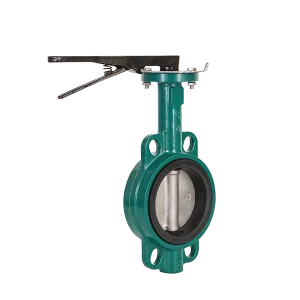
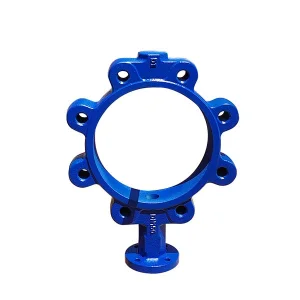
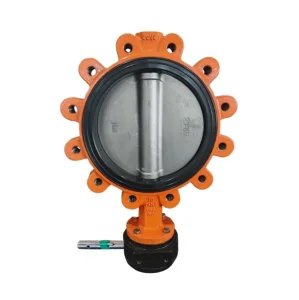
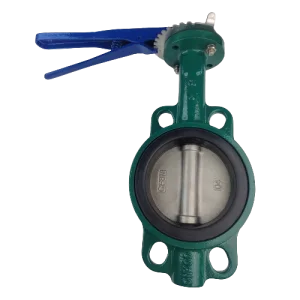
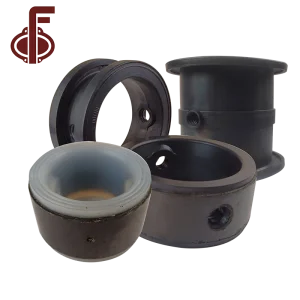
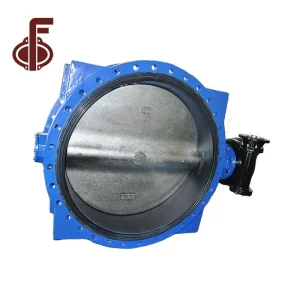
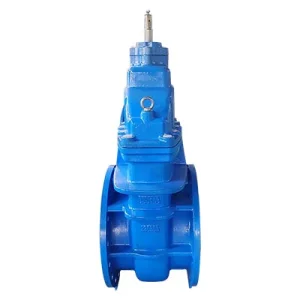
Review our extended line of soft-sealing, metal-seated, large-diameter, and harsh-service valves engineered for seamless factory automation and supervisory position feedback integration.
Custom Engineering, Private Labeling & Global EPC Supply
Whether you require private-label branding, customized stem adapter geometry, special wiring terminal strips, or fast-track project delivery, our application engineering team in Tianjin is ready to assist.
We provide full STEP and IGES 3D digital twins of our valves and mounting bracket assemblies within 24 hours of technical review. This allows your mechanical piping designers to run finite element stress checks and detect interference before fabrication begins.
We welcome third-party inspectors—including SGS, DNV, Lloyd’s Register, and Bureau Veritas—to oversee hydrostatic shell testing, seat leakage verification, and electrical contact resistance checks directly on our factory floor.
All valve bodies and limit switch assemblies are protected with vapor corrosion inhibitor (VCI) bags, desiccant packs, high-density foam supports, and fumigated solid timber crates built to ISPM 15 standards for safe ocean and air transport.
