
Featured Industrial Valves & Pipeline Assemblies (Series I)
Manufactured by Tianjin Zhongfa Valve Co., Ltd. (ZFA) under rigorous metallurgical traceability and multi-standard hydrostatic validations.
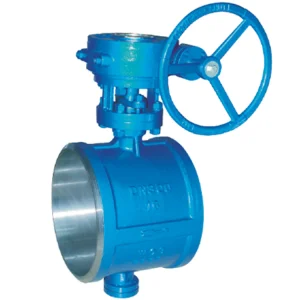
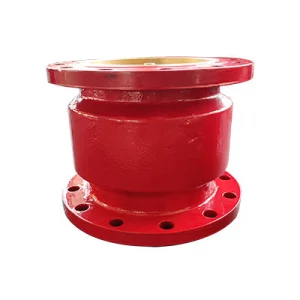
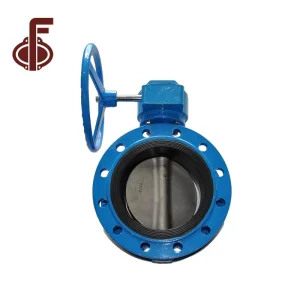
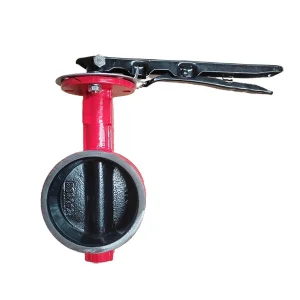
Global Landscape of Stainless Steel Butterfly Valves in Modern Process Industries
An authoritative analysis of technical adoption, macroeconomic demand, and metallurgical trends governing quarter-turn fluid isolation in corrosive, high-purity, and cryogenic operations.
Escalating Demand in Corrosive Fluid Isolation
Across global chemical processing, seawater reverse osmosis (SWRO) desalination, and offshore exploration, conventional cast carbon steels and grey cast irons succumb quickly to localized pitting, galvanic degradation, and crevice oxidation. Stainless steel butterfly valves fabricated from ASTM A351 CF8 (AISI 304 equivalent) and CF8M (AISI 316 equivalent) establish a self-healing passivated chromium oxide (Cr2O3) boundary layer. This micro-barrier fundamentally insulates mechanical assemblies against harsh aqueous chlorides, sulfuric compounds, and oxidizing acids, ensuring leak-tight reliability over extended operational life cycles.
Weight Reduction & Structural Efficiency
Modern marine architectures, modular skid systems, and high-altitude processing facilities place rigorous constraints on structural dead loads and space envelopes. Compared to equivalent-bore rising-stem gate valves or full-bore trunnion ball valves, wafer, lug, and double-flanged stainless steel butterfly valves deliver up to a 70% reduction in physical mass and up to 60% savings in axial face-to-face installation dimensions. This streamlined physical footprint translates directly into lower structural reinforcement expenditure, simplified rigging routines, and lower seismic stress coefficients.
Stringent ESG & Fugitive Emission Compliance
Environmental protection authorities worldwide have instituted stringent thresholds governing fugitive volatile organic compound (VOC) emissions from valve gland packing. Under standards such as ISO 15848-1 Class AH/BH and API 641, stainless steel quarter-turn valves minimize rotary shaft stem scuffing compared to axial rising stems. When paired with live-loaded virgin PTFE or graphite packing rings, stainless steel butterfly valves provide dependable hermetic containment, significantly mitigating accidental hydrocarbon releases and occupational hazards.
Engineering Metallurgy, Offset Geometry & Structural Configurations
Understanding the kinematic interaction between eccentric disc axes and resilient or metal seats is essential for matching valves to precise operating conditions.
Concentric (Zero-Offset) Soft-Seated Valves
In concentric architectures, the stem passes directly through the centerline of the disc and the pipe bore. The elastomeric or PTFE liner acts as both the internal body sleeve and the flange sealing gasket, completely isolating the ductile iron or stainless steel body from the working medium. Concentric butterfly valves excel in bi-directional bubble-tight shutoff (API 598 Rate A) up to PN16 / Class 150 across municipal potable water, HVAC circuits, food production, and moderate chemical distribution lines.
Double Eccentric (High-Performance) Valves
Double eccentric butterfly valves incorporate two deliberate offsets: Offset 1 displaces the shaft axis behind the sealing plane, while Offset 2 shifts the shaft away from the pipe center axis. This cam-like geometric rotation allows the disc to lift immediately off the seat during the initial degrees of opening. By eliminating abrasive seat scuffing across 85° of rotation, double eccentric valves with PTFE, RTFE, or Fire-Safe metal seals deliver long-term sealing integrity in higher pressure ranges (PN25 to PN50 / Class 300).
Triple Eccentric (Metal-Seated) Valves
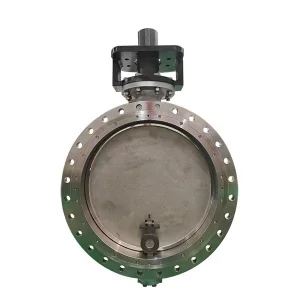
Triple offset butterfly valves (TOVs) add a third geometry: an inclined conical sealing axis that eliminates mechanical rubbing entirely until final wedging engagement. Featuring non-rubbing right-angled rotation, Stellite hardfaced seats, and laminated stainless steel/graphite seal rings, triple eccentric valves provide true bidirectional zero leakage (API 598 / ISO 5208 Rate A). They withstand extreme process conditions, including temperatures from -196°C to +600°C and pressures up to Class 600 and Class 900.
| Casting Alloy Grade | Equivalent Designation | Chemical Composition Profile | Pitting Resistance (PREN) | Recommended Industrial Applications |
|---|---|---|---|---|
| ASTM A351 CF8 | AISI 304 / 1.4308 | 18-20% Cr, 8-11% Ni, ≤0.08% C | PREN ~18-20 | Potable water purification, food processing, breweries, low-salinity industrial HVAC. |
| ASTM A351 CF8M | AISI 316 / 1.4408 | 16-18% Cr, 10-14% Ni, 2-3% Mo | PREN ~23-25 | General chemical plants, marine washwater, mild acids, pharmaceutical synthesis lines. |
| ASTM A351 CF3M | AISI 316L / 1.4409 | Extra low carbon (≤0.03% C), 2-3% Mo | PREN ~24-26 | High-weldability process piping, semiconductor ultra-pure water, intergranular-resistant media. |
| ASTM A890 4A (2205) | Duplex Stainless / 1.4462 | 22% Cr, 5% Ni, 3% Mo, 0.17% N | PREN ~34-36 | Seawater RO desalination facilities, marine ballast treatment, offshore oil & gas skids. |
| ASTM A890 5A/6A (2507) | Super Duplex / 1.4410 | 25% Cr, 7% Ni, 4% Mo, 0.28% N | PREN ≥42 | Hot brine evaporators, subsea manifolds, aggressive chloride hypochlorite dosing headers. |
Seat Material Matrix & Chemical Resistance Guide
Valve service life depends on matching disc and liner elastomers to line media, mechanical cycling, and operational temperature profiles.
| Polymer / Liner Material | Operating Temperature | Mechanical Shore Hardness | Chemical Compatibility Strengths | Contraindicated Environments |
|---|---|---|---|---|
| Food-Grade EPDM | -20 °C to +120 °C | 65 – 75 Shore A | Potable drinking water (WRAS/NSF), diluted alkaline solutions, glycol loops, low-pressure steam. | Aromatic hydrocarbons, gasoline, kerosene, diesel fuels, concentrated mineral acids. |
| Nitrile Rubber (NBR) | -10 °C to +82 °C | 70 – 80 Shore A | Petroleum lubricants, fuel oils, hydraulic emulsions, compressed air, oily industrial wastewater. | Ozone exposure, sunlight weather degradation, chlorinated solvents, strong ketones. |
| Virgin / Modified PTFE | -20 °C to +180 °C | 55 – 65 Shore D | Universal chemical inertness, high-purity pharmaceutical media, aggressive nitric and hydrochloric acids. | Abrasive slurries with heavy particulate, rapid thermal shock cycles, fluorine gas at pressure. |
| Fluoroelastomer (FKM / Viton) | -15 °C to +200 °C | 70 – 80 Shore A | High-temperature hydrocarbons, synthetic hydraulic fluids, concentrated organic acids, biofuels. | Low-temperature cryogenics, polar ketones (MEK, acetone), hot ammonia gas. |
| Stellite / Laminated Metal | -196 °C to +600 °C | 38 – 45 HRC (Cobalt overlay) | Thermal power plants, high-pressure superheated steam, refinery cracking gas, LNG cryogenics. | Sticky polymerizing fluids that build up and block metal-to-metal wedge seating. |
Wafer-Type Mounting
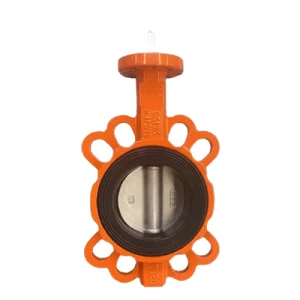
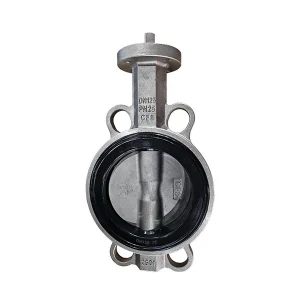
Designed for compact installation between pipe flanges using continuous through-bolts. Wafer bodies offer the most economical material weight, making them ideal for water distribution, modular skids, and HVAC cooling loops. They require operational line depressurization before maintenance.
Lug-Type Flange Attachment
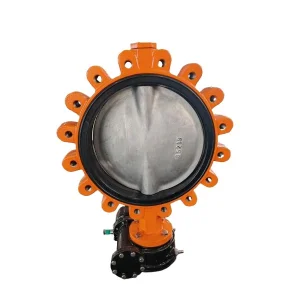
Engineered with threaded blind tapped holes matching standard bolt circles (ANSI, DIN, JIS). This configuration allows each adjacent flange to be bolted independently, enabling dead-end isolation service so downstream pipe segments can be safely maintained or removed without draining the upstream header.
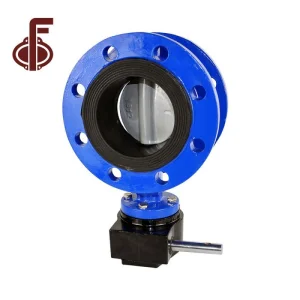
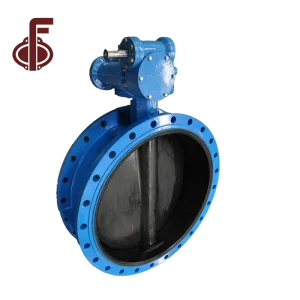
Double Flanged Heavy-Duty Body
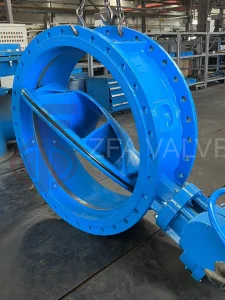
Features integrated flanged ends designed for robust installation in large-diameter municipal water mains, chemical loading docks, and buried pipeline chambers. Double flanged designs eliminate uneven bolting torque transfer onto internal valve seats, providing high structural rigidity.
Five-Stage Precision Production & Metallurgical Quality Protocol
Every valve manufactured at our Tianjin facility undergoes documented quality controls from raw melt verification to final pressure testing.
Direct optical emission spectrometry (OES) inspects all incoming stainless steel ingots and shell castings, verifying compliance with ASTM A351 CF8/CF8M/CF3M chemistry and PREN values before machining begins.
Computer-controlled horizontal machining centers machine critical body seat bores, shaft journals, and flange sealing faces in single-setup operations to ensure precise concentricity, runout control, and tight tolerances.
Precision ground shaft journals are matched to disc bores with interference-fit blind drive pins or heavy-duty polygonal splines, ensuring zero torsional backlash and stable disc positioning during high-torque actuation cycles.
100% of manufactured valves undergo shell pressure testing at 1.5× rated working pressure and seat integrity testing at 1.1× rated pressure with air/water to ensure zero leakage in compliance with API 598 and ISO 5208.
Finished stainless assemblies undergo chemical pickling and passivation to remove trace free iron and rebuild the passive oxide layer, followed by flange masking and reinforced seaworthy export packaging.
Macro-Industry Solutions & Localized Application Engineering
From Middle Eastern seawater desalination plants to high-latitude cryogenic liquefaction hubs, ZFA stainless steel valves deliver dependable fluid control worldwide.
Seawater Reverse Osmosis & Marine Scrubber Systems
Operating Environment: Ambient to +45 °C seawater with chlorinity exceeding 20,000 ppm, paired with high operating pressures and marine growth. Standard austenitic alloys can experience rapid crevice corrosion under stagnant flange connections.
ZFA Engineering Solution: Heavy-duty lug and flanged butterfly valves with ASTM A890 Grade 4A (2205 Duplex) or 5A (2507 Super Duplex) discs, combined with vulcanized high-grade EPDM liners. The passive chromium/molybdenum matrix prevents micro-pitting in marine ballast and exhaust gas scrubber washwater systems.
Petrochemical Distillation & Acid Recovery Skid Units
Operating Environment: Concentrated sulfuric, nitric, and acetic acid process loops operating between +80 °C and +260 °C, with frequent operational cycling and aggressive organic solvents.
ZFA Engineering Solution: Double eccentric high-performance valves featuring investment-cast CF8M bodies and solid RPTFE or PEEK flexible seat rings. The double-offset disc reduces seat rubbing, maintaining bubble-tight shutoff through thousands of thermal cycles with low operating torque.
Cryogenic Industrial Gases & LNG Regasification
Operating Environment: Liquid nitrogen, oxygen, and liquefied natural gas (LNG) service temperatures down to -196 °C, where structural embrittlement and thermal stem contraction can compromise pressure containment.
ZFA Engineering Solution: Butt-welded and flanged triple offset butterfly valves built with extended cryogenic bonnets conforming to BS 6364. The vapor column insulates the stem packing from cryogenic process temperatures, while resilient metal-to-metal seating maintains tight isolation without thermal freeze binding.
Technology Roadmap: Intelligent Automation & Smart Diagnostics
The convergence of industrial IoT monitoring, predictive maintenance algorithms, and direct digital actuation is redefining plant operations.
Automated Partial Stroke Testing (PST) Integration
For critical safety instrumented systems (SIS) up to SIL-3 requirements, modern stainless steel butterfly valves are paired with smart digital electro-pneumatic positioners. Integrated partial stroke testing executes an automated 10-15% rotational stroke test during normal line operations without disrupting process flow. This diagnostic routine confirms mechanical stem freedom, measures breakthrough torque trends, and verifies actuator spring integrity, extending mandatory proof-test intervals.
Standardized ISO 5211 Actuator Interfaces
Our valves are engineered with integrated top-mounting flanges complying with ISO 5211 dimensions, combined with standardized double-D or square shaft drives. This universal mechanical platform enables seamless field retrofitting with multi-turn electric gear operators, scotch-yoke pneumatic cylinders, hydraulic emergency shut-down (ESD) packages, or manual declutchable worm gear handwheels without custom fabrication.
Digital Quality Dossiers & Smart Traceability
In step with Industry 4.0 documentation standards, each high-performance stainless steel valve includes an etched QR code on its stainless body tag. Field technicians can scan the code to instantly access certified EN 10204 Type 3.1 material test reports (MTR), third-party NDT examination radiograms, hydrostatic inspection logs, and technical installation and maintenance manuals.
Featured Industrial Valves & Pipeline Assemblies (Series II)
Comprehensive flow control solutions manufactured to ANSI, DIN, JIS, and BS standards for water networks, fire safety systems, and process industries.
Frequently Asked Technical & Procurement Questions
Detailed guidance on materials, testing protocols, actuation torque, and standards compliance for piping engineers and EPC contractors.
Which international valve design and testing standards do ZFA stainless steel valves comply with?
What is the practical distinction between ASTM A351 CF8, CF8M, and CF3M casting grades?
How do you prevent galling between stainless steel valve shafts and body bearings?
What quality certifications and material inspection records accompany export shipments?
Can ZFA manufacture custom OEM valve components and proprietary branded assemblies?
How do operating media and pipeline pressure affect dynamic sizing torque for actuators?
What are the primary operational failure modes of wafer butterfly valves, and how can they be avoided?
What engineering considerations govern butterfly valve performance in high-velocity throttling?
How quickly does the ZFA engineering team process technical enquiries and formal tender bids?
Partner directly with a certified Chinese valve manufacturer. Get factory-direct pricing, complete material traceability, and dedicated engineering support for your upcoming bids and project specifications.
