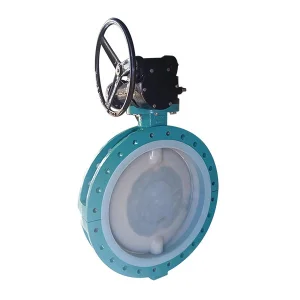
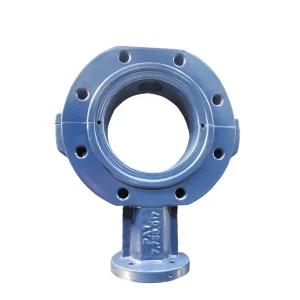
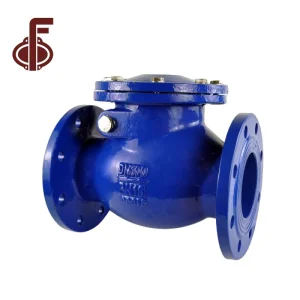
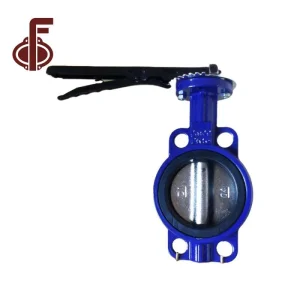
Precision Flow Systems & Butterfly Valve Solutions (Part I)
Explore our foundational series of high-integrity quarter-turn valves, gate valves, and check assemblies designed for severe duty operating regimes.
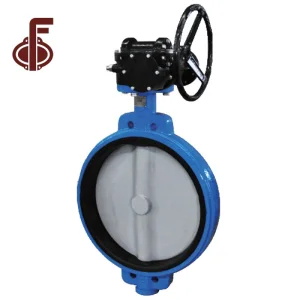
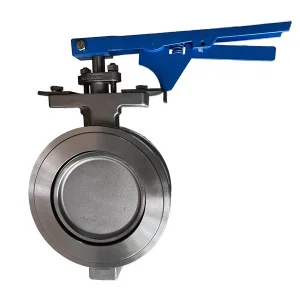
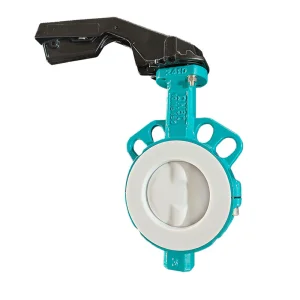
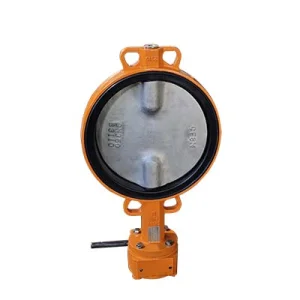
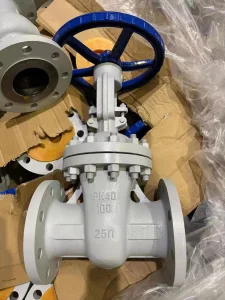
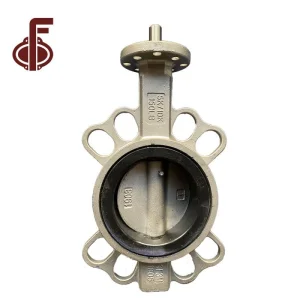
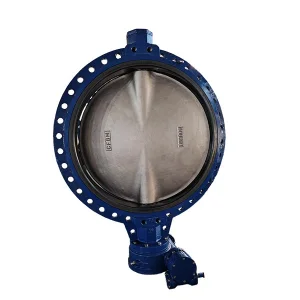
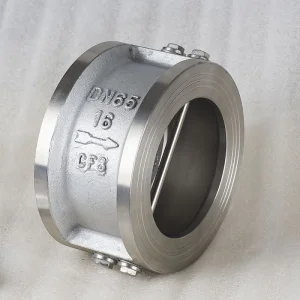
Metallurgy of Aluminium Bronze: Solving Seawater Degradation
Unlike standard ductile iron or austenitic stainless steels, Nickel-Aluminium Bronze (NAB) forms an adherent, self-healing copper oxide-alumina passivation film that withstands severe marine stress.
Passivation Dynamics & Film Regrowth
Aluminium Bronze alloys (ASTM B148 C95800 / EN 1982 CuAl10Fe5Ni5) synthesize a sub-micron surface layer of cuprous oxide (Cu2O) reinforced by aluminum oxide (Al2O3). When abraded by high-velocity entrained sand or marine debris, this passivation film spontaneously self-repairs within milliseconds in oxygenated aqueous environments, neutralizing crevice corrosion and pitting propagation.
Mitigation of De-aluminification
Improperly heat-treated bronzes can suffer from phase separation, where the continuous γ2 (gamma-2) phase forms, causing rapid selective leaching of aluminum. As a specialized OEM factory, our vacuum-monitored induction melting and continuous temperature annealing cycles ensure the formation of protective kappa (κ) phases (κI, κII, κIII, κIV), locking aluminum within the stable copper-nickel matrix.
Cavitation Erosion Resilience
In high throttling conditions common to cooling discharge and pump bypass headers, localized micro-jets caused by imploding vapor cavities erode ordinary CF8M/CF3M stainless steels. Aluminium bronze exhibits exceptional work-hardening characteristics under cyclical dynamic shock waves, absorbing mechanical impact and extending seat-ring service life up to 400% compared to cast iron.
| Material Designation | Tensile Strength (MPa) | Yield Strength (MPa) | Elongation (%) | Corrosion Rate (Seawater mm/yr) | Target Valve Application |
|---|---|---|---|---|---|
| ASTM B148 C95800 | ≥ 585 | ≥ 240 | ≥ 15 | < 0.025 (Quiescent) | Naval seawater cooling, desalination intake, SWRO brine split |
| ASTM B148 C95400 | ≥ 515 | ≥ 205 | ≥ 12 | < 0.050 (Moderate) | General industrial chemical piping, wear plates, valve stems |
| EN 1982 CC333G (AB2) | ≥ 640 | ≥ 250 | ≥ 13 | < 0.020 (Dynamic) | Offshore platform firewater headers, FPSO ballast handling |
| Ductile Iron + Ni-Resist | ≥ 400 | ≥ 250 | ≥ 7 | > 0.150 (Accelerated) | Low-salinity potable lines, non-critical municipal filtration |
Global EPC & Procurement Demands Across Critical Sectors
Global engineering consortia require verified material traceability, precise torque repeatability, and zero downstream leakage under varying salinity profiles.
Seawater Reverse Osmosis (SWRO)
Modern SWRO plants concentrate feed salinity to upwards of 70,000 ppm TDS in high-pressure brine reject channels. Aluminium bronze butterfly valves prevent pitting under stagnant conditions during clean-in-place (CIP) and system shutdowns, where duplex stainless steels risk localized crevice attack beneath biofilm deposits.
FPSO & Commercial Marine Ballast
Ballast Water Treatment Systems (BWTS) subject piping to biocides, chlorination, and electro-catalytic oxidants. Our vulcanized concentric and high-performance double-offset NAB butterfly valves maintain bubble-tight shutoff (API 598 Class A) despite biological sedimentation and aggressive chemical dosing cycles.
Offshore Deluge & Fire Protection
Safety-critical fire suppression systems rely on static seawater pressurization. NAB valves mitigate galvanic bonding failures with copper-nickel (Cu-Ni 90/10 or 70/30) piping networks, ensuring low opening breakaway torque even after decades of continuous immersion in North Sea and Persian Gulf installations.
Architectural Structural Integrity: Concentric vs. Offset NAB
Tianjin Zhongfa Valve Co., Ltd. (ZFA) engineers provide OEM customizations across three mechanical configurations, optimizing weight, torque efficiency, and fluid resistance:
- Concentric Resilient-Seated: NAB disc with vulcanized EPDM or Viton seat; zero fluid-to-body contact; rated up to PN16/PN25.
- Double Offset High-Performance: Cam-action disc separation drastically eliminates seat wiping, extending lifecycle in frequent throttling.
- Triple Offset Metal-to-Metal: Friction-free conical sealing for extreme thermal transients, fire-safe compliance (API 607), and zero leakage.
Engineering Selection Parameter Checklist
Ensure the following parameters are detailed in your project tender datasheets:
- Operating & Design Pressure (ASME Class 150/300, PN10-PN40)
- Fluid Media Chemistry (Chlorides, hypochlorite, sulfur content)
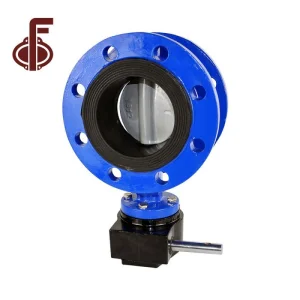
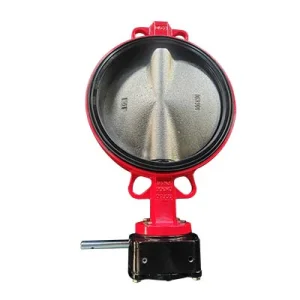
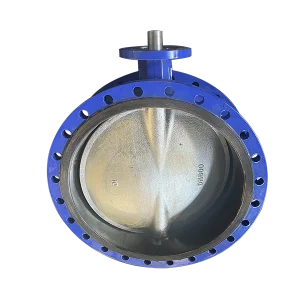
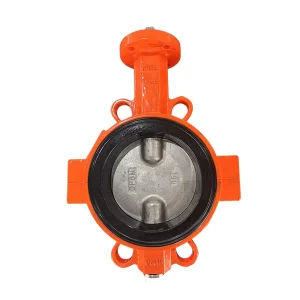
- End Connection Style (Wafer, Fully Lugged, Double Flanged EN/ASME)
- Shaft Retention & Blowout Proofing to API 609 Category B
- Actuation Interface ISO 5211 with Monel K500 / NAB disc pins
End-to-End Quality Architecture & Certified Assurance
Operating under certified ISO 9001 and European CE frameworks, ZFA enforces stringent verification checkpoints from raw ingot melt through CNC machining to hydro-testing.
Optical Emission Spectrometry (OES)
Every melt batch undergoes direct-reading spectrometer analysis to verify elemental composition against ASTM B148 and EN 1982 standards. Nickel, iron, and manganese ratios are held within narrow tolerances (Ni 4.0-5.5%, Fe 3.5-5.3%, Al 8.5-10.0%) to prevent phase instability and secure EN 10204 3.1 / 3.2 inspection certification.
Hydrostatic & Low-Pressure Pneumatic Testing
100% of finished valves undergo shell testing at 1.5x design pressure rating and bi-directional seat testing at 1.1x rating under ISO 5208 Rate A (zero allowable leakage) and API 598. Low-pressure pneumatic testing (0.6 MPa air under water) verifies micro-porosity resistance across high-stress body-to-shaft journal junctures.
NDT & Ultrasonic Wall Verification
Liquid Penetrant Testing (PT) confirms the absence of surface cracks and porosity on critical sealing faces and disc journals. Ultrasonic Testing (UT) and Radiographic Testing (RT) per ASME Section VIII Division 1 are deployed on high-pressure cast components intended for deepwater subsea isolation and critical offshore topsides.
Technological Roadmap: 2025–2035 Innovations in NAB Flow Control
The industrial valve sector is evolving rapidly toward digitalized automation, circular alloy sustainability, and severe cryogenic/deepwater operational envelopes.
IoT Smart Diagnostic Valve Integration
Integration of wireless acoustic and torque monitoring nodes into the actuator interface, providing real-time data on seat wear, cavitation onset, and stem packing leakage.
Wire-Arc Additive NAB Trim Systems
Deployment of Wire Arc Additive Manufacturing (WAAM) for low-run complex internal NAB trim geometries, cutting prototyping cycle times by 60% with enhanced density.
Subsea Deep-Ocean Electrification
Engineered zero-emission electric actuators paired with hyperbaric-tested C95800 triple offset valves for direct seabed seawater injection headers down to 3,000 meters.
Sustainable Lead-Free Ultra-Low Cavitation Alloys
Formulation of advanced eco-compliant, bismuth-modified copper-aluminum matrices tailored to exceed strict global drinking water lead leach standards while maintaining 100% tensile strength.
Engineering FAQ: High-Spec Aluminium Bronze Applications
Direct technical answers to common queries submitted by piping designers, procurement managers, and mechanical integrity specialists.
Why is ASTM B148 C95800 preferred over Super Duplex Stainless Steel (2507) for seawater intakes?
How does ZFA prevent galvanic corrosion when installing NAB valves into steel or titanium pipelines?
What are the mechanical and sealing benefits of pinless shaft designs in NAB butterfly valves?
Which international flange standards are supported by ZFA's Aluminium Bronze product lines?
What documentation is standardly provided with OEM valve shipments?
Heavy-Duty Process Valves & Engineered Systems (Part II)
Review our extended series of flanged butterfly, check, and industrial isolation valves engineered for high-uptime processing infrastructure worldwide.