
Precision Manufactured Butterfly & Utility Valves
Explore our core API 609, AWWA C504, and EN 593 compliant butterfly valves and cast components directly engineered in our advanced OEM manufacturing facilities.
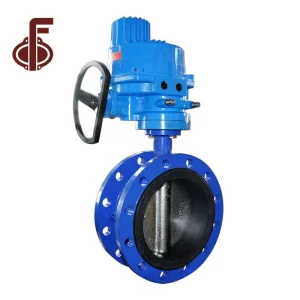
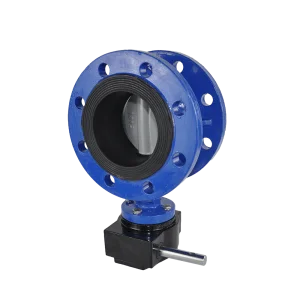
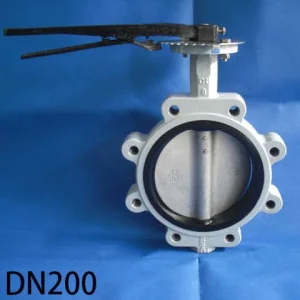
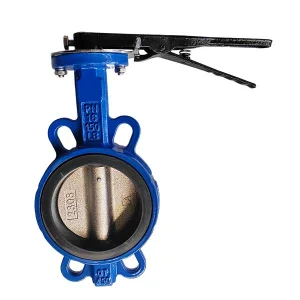
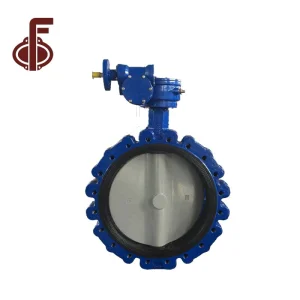
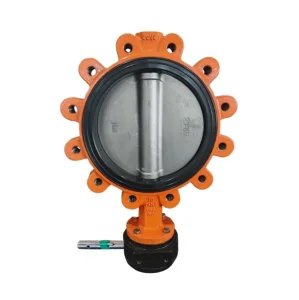
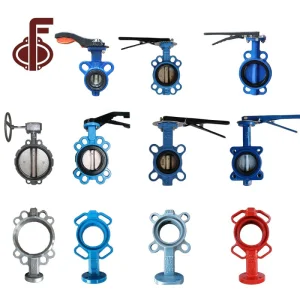
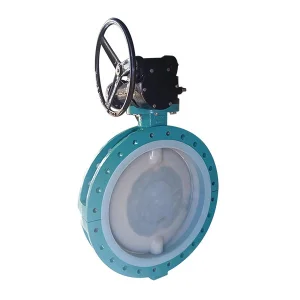
Lug Vs. Wafer Butterfly Valve: Engineering Dissection
A rigorous structural analysis contrasting bolt shear loads, gasket seating stress, face-to-face dimensions, and dead-end pipeline isolation physics.
Wafer-Type Body Geometry
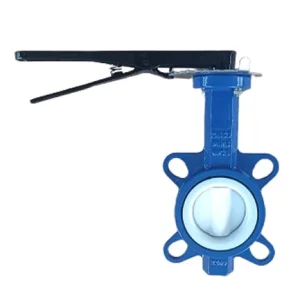
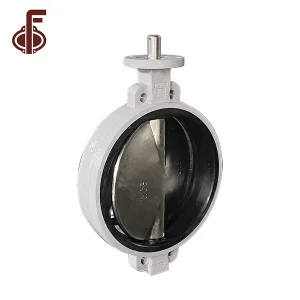
The wafer-style butterfly valve is designed with a flangeless, ultra-compact profile engineered strictly to be sandwiched between companion pipe flanges (ANSI Class 125/150, PN10/16, or JIS 10K). Long, continuous studs or machine bolts span the entire distance between the pipeline flanges, clamping the valve body in compressive axial loading.
- Minimalist Mass & Weight: Requires up to 40% less raw metal cast weight compared to lug configurations, significantly lowering piping structural support requirements and freight expenditure.
- Face-to-Face Compactness: Built to API 609 Category A and ISO 5752 Basic Series 20 short face-to-face dimensions, facilitating high-density modular skid piping installations.
- Critical Operational Constraint: Cannot provide dead-end isolation. Loosening or unbolting one pipeline flange inevitably breaks the seal on both sides, requiring complete line depressurization and drainage before maintenance.
Lug-Type Body Geometry
The lug-style butterfly valve incorporates integral threaded or tapped bolt holes around the entire circumference of the valve body casting. Instead of using through-bolts, each companion pipe flange fastens independently to the valve using separate sets of shorter machine bolts threaded directly into the body's internal female threads (UNC or Metric).
- Full Dead-End Service Capability: Engineered to withstand upstream design differential pressure while the downstream pipeline section is entirely unbolted and removed for maintenance or pump replacement.
- Enhanced Piping Structural Integrity: Rigidly anchored to both pipeline flanges, preventing axial pipe misalignment and offering resistance against hydraulic water hammer and piping thermal stress.
- Manufacturing Precision Factor: Demands multi-axis CNC drilling and precision tapping with strict thread tolerance control (Class 2B / 6H) to prevent thread galling under cyclic bolt torquing.
Thermal Bolt Expansion & Gasket Compression Mechanics
From an applied fluid mechanics and piping stress perspective, the primary technical differentiator between wafer and lug valves lies in bolt elongation physics during operational thermal excursions. Because a wafer butterfly valve relies on extended through-bolts spanning the body plus two pipe flanges, thermal expansion of the stud material ($\Delta L = \alpha \cdot L \cdot \Delta T$) results in significantly greater absolute elongation than shorter lug bolts. In elevated temperature systems (such as steam condensate or district heating loops operating at 90°C to 130°C), this elongation decreases compressive seating load on the elastomer liner, potentially generating fugitive atmospheric stem or joint leaks.
Conversely, lug butterfly valves utilize independent shorter studs threaded directly into the ductile iron or carbon steel casting. The localized thermal expansion matches the valve body mass much closer, preventing flange seal degradation. Furthermore, in critical fire safety systems (NFPA 13 / 24 compliance), lugged bodies prevent catastrophic blowout if downstream piping fails or melts under structural building collapse.
Engineering Decision & Specification Matrix
Comparative technical breakdown for piping designers, EPC specification writers, and plant procurement managers.
| Evaluation Parameter | Wafer Butterfly Valve (Concentric) | Lug Butterfly Valve (Concentric / Offset) | OEM Engineering Standard |
|---|---|---|---|
| Dead-End Isolation Capability | Not Permitted (Requires downstream flange) | Full Rated Capability (Bidirectional ΔP shutoff) | API 609 / EN 593 / MSS SP-67 |
| Face-to-Face Dimension | Compact (API 609 Cat A / ISO 5752 Series 20) | Identical Face-to-Face to Wafer (Interchangeable) | ISO 5752 / ASME B16.10 |
| Bolting Mechanism | Continuous full-length through-studs & nuts | Independent dual-ended machine bolts / cap screws | ASME B1.1 / DIN EN ISO 898 |
| Weight & Material Efficiency | Minimal cast weight; 30%–45% lighter than lug | Moderate weight; extra body mass for tapped ears | ASTM A536 / EN 1563 |
| Downstream Maintenance Downtime | High (Must drain and isolate whole pipe section) | Near Zero (Line unbolting downstream while holding pressure) | OSHA 1910 Lockout/Tagout |
| Fire Protection Skid Suitability | Restricted to non-terminal piping lines | Mandatory for manifold drops and pump headers | UL 1091 / FM 1112 / NFPA |
| Casting & Machining CapEx | Lower manufacturing cost; fast CNC cycle times | Higher casting cost + precision CNC thread tapping | ISO 9001 / Lean Automation |
| Fugitive Emission & Stem Retention | Anti-blowout stem design (ISO 5211 direct mount) | Heavy-duty dual blowout retention (API 609 compliant) | ISO 15848-1 / API 641 |
China Factory 4.0: Foundry Automation & Quality Control
How state-of-the-art Chinese manufacturing centers leverage vertical supply integration, automated green sand molding, and computerized metrology to drive global cost-performance leadership.
Molding & Metallurgy Control
Our Tianjin and regional foundries operate automated DISA green sand and resin-bonded sand molding lines. Spectral optical emission spectrometers analyze every heat of Ductile Iron (QT450-10, ASTM A536 65-45-12, GGG40/50) and Stainless Steel (CF8, CF8M, CF3M).
- Nodularity verified >90% per ASTM A247.
- Chemical heat traceability with 3.1 MTRs.
- Zero internal sand porosity via real-time X-ray.
5-Axis CNC Precision Machining
Lug and wafer bodies, discs, and one-piece blowout-proof stems are finished on high-speed CNC machining centers. Multi-spindle drilling heads machine and tap all lug threads in a single indexing setup to eliminate angular pitch deviation.
- Spherical disc sealing edge mirror-polished to Ra 0.2 µm.
- Lug hole positioning accuracy held within ±0.05 mm.
- Automated ISO 5211 actuator mounting flange facing.
Automated Shell & Seat Hydro-Testing
Every single valve produced undergoes double-sided pressure testing on computerized testing benches. We test shell integrity at 1.5x PN and resilient seat sealing at 1.1x PN under digital transducer recording, eliminating operator bias.
- 100% compliant with API 598 and ISO 5208 Rate A.
- Low-pressure pneumatic air seat test (6 bar).
- Barcode traceability linked to digital pressure logs.
Macro Industry Applications & Valve Selection Strategy
Specific application parameters determining the selection of lugged vs. wafer valve architecture across major process and utility sectors.
Municipal Water, Desalination & Wastewater
In large-scale seawater reverse osmosis (SWRO) facilities, high-salinity brine induces catastrophic crevice corrosion if metallurgy is mismanaged. We configure wafer and lug valves with Nickel Aluminum Bronze (C95800), Duplex 2205, or Super Duplex 2507 discs paired with vulcanized high-density EPDM seats.
Selection Rule: Wafer valves are standard across continuous underground main distribution manifolds to minimize CapEx. Lug valves are strictly mandated at pump discharges, dual-strainer headers, and intake filter isolation banks where pump servicing must occur without draining high-volume pipelines.
Commercial HVAC & District Cooling Plants
District cooling networks operating with chilled water supply (4°C–7°C) demand absolute condensation prevention and low operating torque. Ductile iron wafer valves fitted with nylon-coated discs and aluminum bronze trims deliver exceptional longevity and ultra-low hydraulic friction head losses ($C_v$ optimization).
Selection Rule: Modular chiller rooms employ wafer valves along central run piping. However, for chiller evaporator connections, cooling tower risers, and primary pump suction diffusers, lugged valves are mandatory to permit isolated seasonal cleanouts and motor overhauls.
Chemical Processing & Corrosive Solvents
Chemical reagent plants processing concentrated sulfuric, hydrochloric, or phosphoric acids rely on virgin PTFE / PFA fully-lined concentric butterfly valves. Our bodies feature silicone energizers beneath the 3 mm thick isostatic molded PTFE seat, ensuring elastomeric memory under severe thermal cycling.
Selection Rule: Lined lug valves are widely preferred over wafer valves in aggressive chemical plants to eliminate the risk of external piping misalignment that could pinch or deform the fragile polymer seat flange faces, leading to toxic fugitive emission leaks.
Marine, Shipbuilding & Offshore Ballast Systems
Naval architects and marine EPC contractors require DNV, ABS, and Lloyd's Register type-approved valves for ship ballast water management, fuel bunkering, and bilge pumping systems. Valves must resist structural vibration, roll, pitch, and saline deck atmospheres.
Selection Rule: Lug butterfly valves with tapped holes conforming to JIS 5K/10K or DIN PN10/16 are almost exclusively specified for double-bottom ballast tanks and bulkhead penetrations. A wafer valve is legally prohibited through structural collision bulkheads due to failure risks if companion piping detaches.
Smart Flow Control: IIoT Actuation & Next-Gen Materials
The evolutionary trajectory of industrial butterfly valves from passive mechanical components to digitized, real-time diagnostic flow endpoints.
Edge-Sensing Intelligent Actuators
Integration of non-intrusive smart electric actuators equipped with Modbus, Profinet, and WirelessHART telemetry. Embedded Hall-effect sensors log precise stroke profiles, dynamic breakout torque signatures, and seat friction curves to identify impending seal wear before leakage happens.
Advanced Tribological Disc Coatings
Moving beyond standard electro-nickel plating, our OEM R&D incorporates High-Velocity Oxygen Fuel (HVOF) applied Tungsten Carbide (WC-Co-Cr) and Diamond-Like Carbon (DLC) nanocomposites. These provide rockwell hardness values >68 HRC, enduring severe abrasive sand slurry and cavitation.
Low-Emission Fugitive Sealing
To comply with stringent methane abatement and chemical emission targets, new valve revisions implement triple O-ring secondary stem containment and live-loaded dynamic PTFE chevron packing rings, rigorously tested and certified to ISO 15848-1 Class AH and API 641.
Global Regulatory Compliance & Localized Technical Engineering
Comprehensive international certification frameworks ensuring our OEM valves pass every third-party inspection, site audit, and pipeline safety standard worldwide.
Pressure Equipment Directive (PED)
Full CE Marking compliance per EU Directive 2014/68/EU Module H. Complete full quality assurance certification covers design, manufacturing, inspection, and final hydrostatic testing of all pressure-retaining bodies.
Drinking Water Potability
Elastomer liners (EPDM, Silicone) and epoxy coatings independently verified for direct potable contact under WRAS (UK), NSF/ANSI 61 & NSF 372 lead-free requirements, ACS (France), and DVGW (Germany) test standards.
Fire-Safe Integrity
Qualified designs certified to API 607 7th Edition and ISO 10497. Even after direct exposure to high-temperature flame enveloping the resilient seat, our secondary metal-to-metal backup seals prevent critical fluid release.
Localized Engineering Desk
We provide global clients with 24-hour CAD/SolidWorks drawing turnaround, detailed finite element analysis (FEA) stress reports, actuator torque sizing graphs, and localized distributor warehouse inventory support.
Global Enterprise Procurement Matrix: TCO & RFQ Architecture
A strategic methodology for evaluating total lifecycle cost of ownership and issuing bulletproof engineering data sheets to OEM manufacturers.
Total Cost of Ownership (TCO) Formulation
Astute engineering procurement looks far beyond the initial quote invoice. A valve's true lifetime economic impact is dictated by the standardized industrial TCO equation:
TCO = Initial CapEx + Installation & Bolting Cost + (MTBF Operating Interventions × Downtime Cost) + Pumping Head Loss Energy Dissipation
While wafer butterfly valves minimize initial CapEx and shipping weight, specifying them at critical pump discharges or dead-end manifolds can cost facilities hundreds of thousands of dollars during unscheduled outages because an entire piping header must be drained just to unbolt the valve. In these mission-critical nodes, investing in lug-type butterfly valves with bidirectional isolation drastically lowers TCO across a 15-to-20-year plant operational lifecycle.
The Essential OEM RFQ / Specifying Checklist
To eliminate delays, costly rework, and misinterpretations, ensure your valve requisition packets clearly specify the following six engineering criteria:
- Flange Standard & Drilling: ASME B16.1 Class 125, ASME B16.5 Class 150, EN 1092-2 PN10/PN16, or JIS B2239 10K. For lug valves, state thread standard (UNC vs. Metric).
- Elastomer / Seat Compound: EPDM (Potable water / HVAC, -20°C to 120°C), NBR (Oils, fuels, hydrocarbons, -10°C to 82°C), FKM (High-temp chemicals, up to 180°C), or PTFE (Aggressive acids).
- Disc Substrate & Coating: CF8 (SS304), CF8M (SS316), Ductile Iron with Nylon 11 coating, Aluminum Bronze (C95400/C95800), or 1.4462 Duplex Stainless Steel.
- Stem Drive & Connection: Double D, square drive, or keyed shaft according to ISO 5211 top flange dimensions for universal pneumatic/electric actuator mounting.
- Testing & Certification Requirements: Specify EN 10204 Type 3.1 Material Test Reports (MTRs), hydrostatic test graphs, NDT dye penetrant on welds, and third-party inspection agencies (SGS, TÜV, BV).
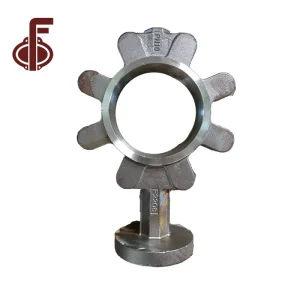
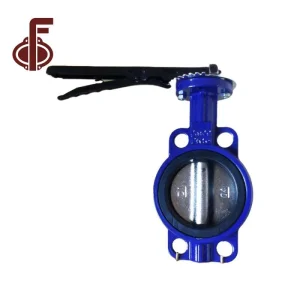
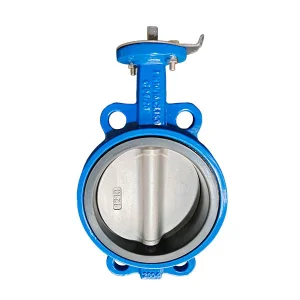
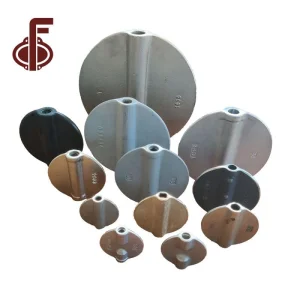
Heavy-Duty Castings & High-Performance Valve Series
Direct supply for valve distributors, stockists, and assembly plants requiring verified OEM valve bodies, discs, resilient centerline, and high-performance valves.
Frequently Asked Engineering Questions (FAQ)
In-depth technical clarifications addressing fluid dynamics, mechanical specifications, and OEM supplier auditing.
