Metal Seal Gate Valve Manufacturer & Exporter for New York
Precision-engineered ASME B16.34, API 600, and AWWA C500 metal-to-metal seating solutions. Purpose-built for Manhattan district steam systems, NYC DEP subterranean water trunk mains, and regional petrochemical processing.
High-Integrity Gate Valves for New York Industrial Infrastructure
Configured specifically to satisfy the stringent requirements of New York state civil engineering tenders, municipal pressure boundaries, and district heating plants.
Municipal & Steam
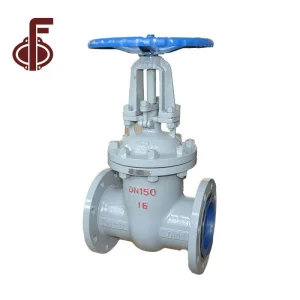
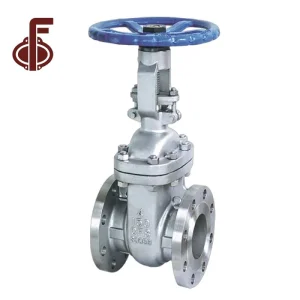
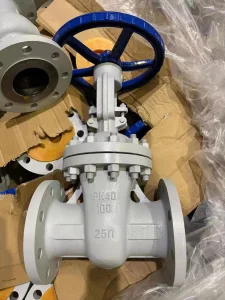
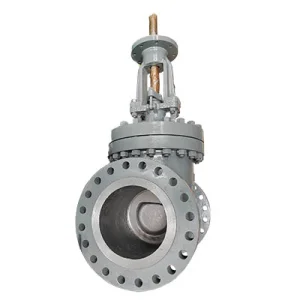
New York Standard 150LB / 300LB WCB Cast Steel Gate Valve
Rugged carbon steel gate valve featuring hardfaced Stellite 6 trim. Engineered for Manhattan district steam loops and heavy municipal fluid control.
The Thermodynamic Realities of New York's Industrial & Municipal Infrastructure
The state of New York, and particularly the metropolitan core of New York City, presents one of the world's most demanding physical landscapes for severe-service isolation valves. Operating underneath Manhattan lies the world's largest commercial district steam network—comprising over 105 miles of buried pipelines operated under high thermodynamic stress. Subterranean distribution systems carry superheated steam at operating pressures reaching 400 psig (28 bar) and temperatures up to 450°F to 750°F (232°C to 400°C).
Under these severe thermal expansion cycles and the constant risk of condensate-induced hydraulic shock (water hammer), traditional resilient or soft-seated valves fail within months due to polymer extrusion, elastomer degradation, and vulcanization hardening. Metal seal gate valves, constructed in accordance with API 600, ASME B16.34, and Con Edison engineering requirements, remain the single reliable defense against catastrophic steam line blowouts beneath dense urban centers.
Manhattan District Steam Compatibility: Full-bore design minimizing line pressure drop, fitted with hardfaced Stellite 6 trim to resist severe high-velocity steam erosion.
NYC DEP Water Trunk Line Fortification: Heavy cast steel and ductile iron wedge gate valves engineered for City Water Tunnel No. 3 and regional aqueduct flow interception.
Sub-Sidewalk Vault Optimization: Compact Outside Screw & Yoke (OS&Y) and Non-Rising Stem (NRS) variants designed for extremely tight roadway vaults and utility manholes.
Critical Demands of NYC Municipal Engineering
Major infrastructure projects managed by agencies such as the New York City Department of Environmental Protection (NYC DEP), the MTA, and the Port Authority of New York and New Jersey enforce zero-tolerance thresholds for uncontained leakage and premature gate seizure.
Our factory manufactures every valve strictly in line with ASTM A216 Grade WCB, ASTM A351 CF8M, and ASTM A352 LCC metallurgy, ensuring that tensile strength, Charpy impact toughness, and sulfur purity limits match ASTM standards to prevent brittle fracture during freeze-thaw cycles common to Northeastern winters.
Global Industrial Landscape & Supply Chain Resilience
A global shift from soft-seated isolation valves to advanced metal-to-metal seating architecture is transforming industrial energy grids, LNG export hubs, and chemical manufacturing.
Fugitive Emissions Mitigation
With international regulatory bodies mandating strict compliance with ISO 15848-1 and API 641, global valve manufacturers are phasing out outdated packing designs. Live-loaded graphite packing arrangements with controlled surface finishes on valve stems (Ra ≤ 0.4 μm) prevent toxic and VOC leaks across continuous cycles.
Laser Cladding & Hardfacing Tribology
Manual oxyacetylene torch weld overlays are rapidly being replaced by robotic High-Velocity Oxygen Fuel (HVOF) and precision laser-cladded Stellite 6, Stellite 21, and Colmonoy 5 alloys. This creates a dense metallurgical bond with near-zero porosity and iron dilution below 5%, eliminating thermal micro-cracking.
Supply Chain Diversification
Global supply disruptions have compelled EPC procurement directors across North America to look beyond regional tier-1 distributors. Working directly with certified manufacturing facilities in Tianjin provides complete Mill Test Reports (EN 10204 3.1) and transparent quality control while circumventing domestic markups.
A deep engineering overview of material selection, mechanical clearances, and wedge geometry essential for preventing galling, thermal binding, and high-differential pressure blow-by.
Component
Material Specification
Hardness / Treatment
Target Temperature Limit
Primary NY Infrastructure Application
Body & Bonnet
ASTM A216 Grade WCB (Cast Carbon Steel)
Normalized / Stress Relieved
-29°C to 425°C (-20°F to 800°F)
ConEd High-Pressure District Steam Lines, Header Isolation
Cryogenic / Low Temp Body
ASTM A352 Grade LCC
Quenched & Tempered
-46°C to 345°C (-50°F to 650°F)
Sub-Zero Freeze-Thaw Municipal Water Mains & Aqueducts
High-Alloy Body
ASTM A351 Grade CF8M (316 Stainless)
Solution Annealed
-196°C to 538°C (-320°F to 1000°F)
Harbor Chemical Terminals & Newtown Creek Wastewater Digesters
Torsion-Resistant OS&Y Rising Stems for High-Torque Actuation
Stem Packing
Die-Formed Flexible Graphite + Inconel Wire
Pre-Compressed Rings
Up to 650°C (1200°F) non-oxidizing
Fire-Safe API 607 Certified Fugitive Emission Containment
Mitigating Thermal Binding & Wedge Sticking in Severe Service
One of the most persistent operational hazards in high-temperature steam distribution is thermal binding. When a conventional solid wedge gate valve is closed while a steam line is hot, the subsequent cooling of the valve body causes the parallel seat faces to contract inward against the wedge faces. When operators attempt to reopen the line, the stem often shears, or the electric actuator trips on over-torque.
Tianjin Zhongfa Valve solves this thermodynamic phenomenon by integrating precision-cast flexible wedge architectures across all cast steel gate valves. The flexible wedge features a machined annular groove cut deeply around the perimeter between the seating faces. This engineered geometry allows the two disc halves to flex independently, absorbing mechanical strain from thermal contraction and line bending stresses without pinching or galling.
Additionally, for liquid services subjected to line heating (such as hydrocarbon lines along New York Harbor), an internal equalizing bypass hole or bonnet pressure-relief tube is incorporated on the upstream side of the wedge. This prevents catastrophic internal hydraulic over-pressurization caused by trapped liquid flashing into vapor inside the bonnet cavity.
Zero-Galling Hardfaced Trim Tribology
Unlike soft-seated gate valves that rely on elastomeric deflection for bubble-tight sealing, metal-to-metal seating requires absolute micro-flatness. Our manufacturing facility uses multi-axis computerized CNC lapping machines to grind the wedge and body seat rings to an optical flatness within 2 to 3 light bands (monochromatic sodium light test), achieving a surface roughness of Ra ≤ 0.2 μm.
To eliminate adhesive wear (galling) caused by high unit seating stresses, a differential hardness of at least 50 HB (Brinell) is maintained between the seating surfaces, or both faces are cladded with non-galling cobalt-base Stellite 6. This alloy provides exceptional hot-hardness, preventing seat deformation even when microscopic pipeline scale and welding slag pass through the seat orifice during line blowdowns.
Targeted Engineering Deployments
Localized New York Case Applications & Field Engineering
Examining field-proven valve integration points across civil infrastructure, district utilities, and industrial processing zones throughout New York.
Underground PRV vaults located between Grand Central Terminal and the Financial District experience extreme temperature swings and high acoustic vibration. Standard valves succumb to seat chattering and packing blowouts.
ZFA Engineering Solution: ASME Class 300 WCB Rising Stem Gate Valves equipped with API 600 heavy wall casting, Stellite 6 trim, and live-loaded Belleville spring packing glands. These units provide continuous shutoff capability during annual summer maintenance shut-downs without requiring in-situ repacking.
Municipal Civil Works
NYC DEP City Water Tunnel No. 3 Interconnection Vaults
Water transmission beneath the Bronx, Manhattan, and Queens operates at elevated hydrostatic heads exceeding 250 psi. Valves must maintain integrity against deep-subterranean groundwater ingress and heavy pipeline water hammer.
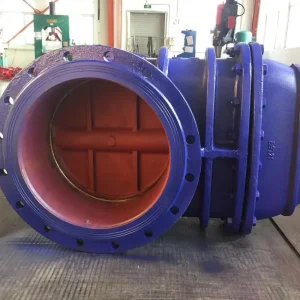
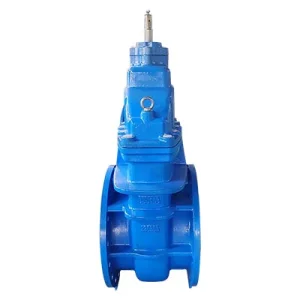
ZFA Engineering Solution: Heavy-diameter AWWA C500/C515 compliant metal-seated gate valves and full-flanged gate units. Epoxy-coated bodies with bronze or stainless steel internal trims resist calcification, galvanic corrosion, and silt abrasion over 30-year design cycles.
Maritime Petrochemical
New York / New Jersey Harbor Tank Terminals
Bulk liquid storage facilities along Staten Island and the Arthur Kill waterway handle diverse hydrocarbons, biofuels, and marine bunkering fluids. Strict environmental oversight by the NYS Department of Environmental Conservation (DEC) necessitates zero ground emissions.
ZFA Engineering Solution: API 600 cast steel and forged steel gate valves featuring dual-containment stem seals, fire-safe design certified to API 607, and bi-directional tightness conforming to API 598 zero-bubble standards for critical hydrocarbon transfer manifolds.
Semiconductor & Clean Energy
Upstate New York Advanced Tech Facilities
From the Albany NanoTech Complex to upstate clean-tech corridors, ultra-pure water (UPW) cooling loops and thermal oxidizers require high-purity fluid boundaries that cannot shed elastomeric particles into process lines.
ZFA Engineering Solution: ASTM A351 CF8M (316 SS) and CF3M metal-seated gate valves featuring electropolished internals and precision PTFE/graphite fugitive emission stems, preventing particulate shedding and ionic contamination in secondary thermal loops.
Total Lifecycle Management
Reducing Total Cost of Ownership (TCO) for Civil Contractors
In high-density civil construction such as NYC road reconstruction, the cost of excavating a failed underground valve vastly exceeds the purchase price of the valve itself.
The Economic Equation of Subterranean Infrastructure
To replace a single leaking gate valve beneath a major New York thoroughfare requires DOT street opening permits, noise mitigation systems, traffic diversion plans, trench shoring, and hazardous materials abatement (asbestos insulation removal on legacy steam mains). The associated civil costs routinely exceed $150,000 for a valve that may have cost less than $3,000 at initial procurement.
Tianjin Zhongfa Valve engineers our gate valves with an emphasis on Extended Mean Time Between Failures (MTBF). By increasing body wall thickness by 10% to 15% above the absolute ASME B16.34 minimums, utilizing precision CNC-cut multi-thread ACME stems, and applying cobalt-base hardfacing, our metal seal valves maintain mechanical tightness across decades of service, reducing lifecycle replacement costs to near zero.
100% Factory Hydrostatic Testing: Every valve undergoes high-pressure shell testing (1.5x PN) and dual-direction seat testing (1.1x PN) in accordance with API 598.
Complete Metallurgical Traceability: Every casting is traceable back to the ladle pour with EN 10204 3.1 chemical and mechanical inspection certificates.
Zero-Dispute Export Packaging: Seaworthy heavy timber crating with vapor-corrosion-inhibiting (VCI) linings to guarantee rust-free arrival at the Port of New York and New Jersey.
Pre-Shipment Quality Protocol
Our quality assurance department enforces strict non-destructive testing (NDT) steps prior to releasing valves for international container shipping:
• PMI Testing: Positive Material Identification via XRF spectrometry.
Frequently Asked Questions on Metal Seal Gate Valves
Direct technical answers addressing engineering standards, design considerations, and logistical workflows for New York project deliveries.
What is the allowable leakage rate for a metal seated gate valve under API 598?
Under API 598 (Valve Inspection and Testing), metal-to-metal seated gate valves are not subjected to the absolute zero-bubble criteria applied to soft-seated elastomer valves. API 598 specifies an allowable leakage rate based on nominal pipe size (NPS) for liquid tests (typically measured in drops per minute) and gas tests (measured in standard cubic feet per hour). However, for critical New York district steam and boiler feed applications, our factory performs precision micro-lapping on both the wedge and seat rings, frequently achieving Class V or zero-detectable-leakage shutoff under hydrostatic conditions, substantially exceeding standard API 598 minimums.
How do your valves address stem expansion in 750°F superheated steam lines?
At operating temperatures of 750°F (399°C), linear thermal elongation of the valve stem can apply immense compressive loads against the wedge and seat rings, potentially bowing the stem or cracking the bonnet yoke. We engineer our rising stems utilizing high-strength martensitic stainless steels (such as ASTM A276 Type 410 or precipitation-hardened 17-4PH) with tightly calculated thermal expansion coefficients. The stem threading and thrust bearing yoke are calibrated to accommodate thermal growth, while flexible graphite packing with Belleville live-load springs maintains constant compression without stem binding.
What is the difference between OS&Y (Rising Stem) and Non-Rising Stem (NRS) for NYC vaults?
An OS&Y (Outside Screw & Yoke) valve has external stem threads that move upward through the handwheel as the valve opens. This provides immediate visual confirmation of valve position and isolates the stem threads from internal media corrosion, which is required by fire protection (NFPA) and high-temperature steam codes. Conversely, Non-Rising Stem (NRS) valves have internal threads where the wedge travels up the stem inside the bonnet. NRS designs are frequently specified for tight underground utility chambers beneath NYC streets and sidewalks where vertical clearance is severely limited.
Can your valves be customized to comply with NYC DEP and Port Authority specs?
Yes. We regularly manufacture valves tailored to municipal specification addendums. This includes custom face-to-face dimensions conforming to legacy municipal installations, specialized multi-turn bevel gearing, ISO 5210 actuator mounting pads for Rotork or Auma electric actuators, floor stands, extended stem extensions for deep subterranean trenches, and third-party witnessed testing (SGS, TUV, Bureau Veritas) before container loading.
Why is Stellite 6 preferred over 13Cr (Type 410) for wedge and seat hardfacing?
While 13Cr (API Trim 1) is acceptable for non-corrosive, low-pressure utility service up to 700°F, it is prone to galling under frequent cycling and lacks sufficient hardness against high-velocity cavitation or abrasive particulates. Stellite 6 (API Trim 5, cobalt-base alloy) retains outstanding hardness (38-44 HRC) at red-heat temperatures (exceeding 1200°F) and provides exceptional resistance to sliding friction wear, droplet erosion, and chemical corrosion, dramatically prolonging service life in severe steam throttling and isolation.
What are the lead times and shipping logistics to the Port of New York and New Jersey?
Standard production runs for standard ANSI Class 150/300/600 WCB and CF8M gate valves typically require 25 to 40 days, depending on order volume and NDT testing schedules. Ocean transit from Tianjin Port (direct marine terminal proximity to our facility) to the Port of New York / Newark Container Terminal takes approximately 28 to 35 days. We coordinate full CIF, DDP, or FOB shipping arrangements, providing clean Bills of Lading, packing lists, Mill Test Certificates, and customs documentation for seamless US clearance.
Are mill test reports (MTR) provided in accordance with EN 10204 3.1?
Every shipment is accompanied by comprehensive EN 10204 Type 3.1 inspection certification. This documentation includes quantitative heat-by-heat chemical composition analysis (carbon, manganese, phosphorus, sulfur, chromium, nickel, molybdenum), tensile strength, yield strength, elongation, Charpy V-notch impact test results, hydrostatic test reports, and non-destructive examination (NDE) logs signed by our certified QA director.
Comprehensive Inventory
Complete Flow Control Portfolio for New York Civil & Industrial Projects
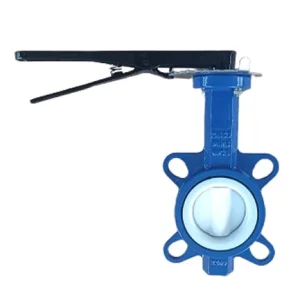
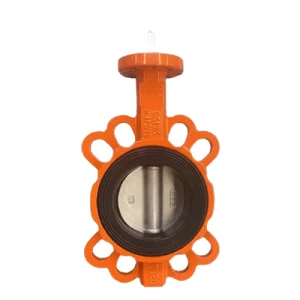
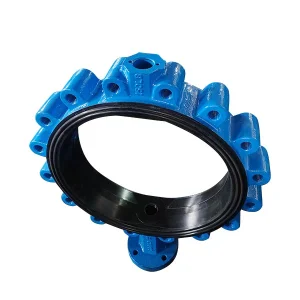
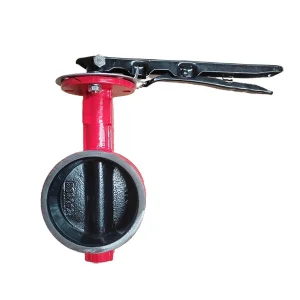
A multi-disciplinary range of metal seal gate valves, high-pressure forged valves, and specialized butterfly valves designed for total pipeline isolation.
Forged High-Pressure
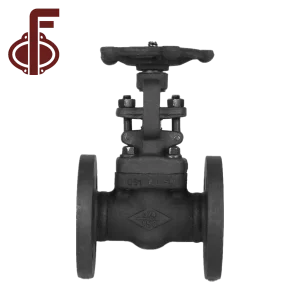
Class 1200 Heavy Forged Steel High-Pressure Gate Valve
Compact forged body (A105 / F22) designed for extreme pressure boundaries in power generation, boiler headers, and heavy district heating loops.
Need Engineering Submittals, CAD Models, or a Competitive Quote?
Our Tianjin factory sales engineering team collaborates directly with New York consulting engineers, municipal contractors, and industrial distributors. Submit your line sizes, pressure classes, temperature limits, and media characteristics for comprehensive datasheets and quote proposals within 24 hours.