
China Butterfly Shut Off Valve Factory & Global OEM Hub
Tianjin Zhongfa Valve Co., Ltd. (ZFA Valve) provides engineering-grade bi-directional isolation, high-integrity zero-leakage resilient and metal-seated butterfly valves built strictly to API 609, EN 593, and ISO 5752 international standards.
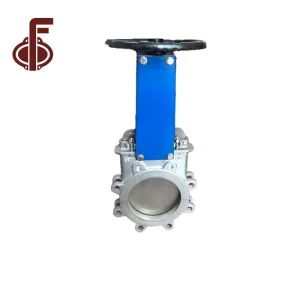
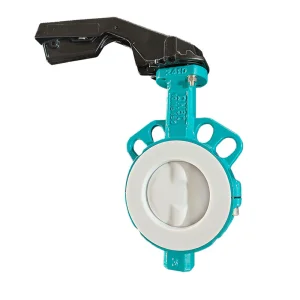
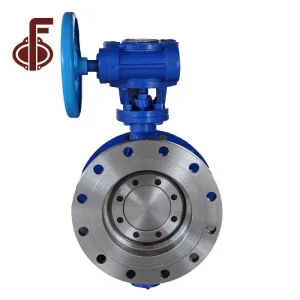
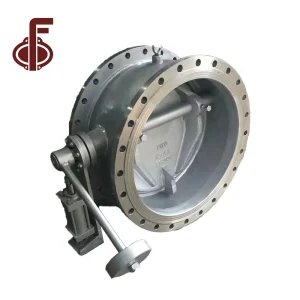
High-Performance Butterfly & Knife Gate Valves
Engineered for rigorous bi-directional bubble-tight shut-off, aggressive slurries, and demanding process isolation.
Global Industrial Demands & Butterfly Shut Off Dynamics
Strategic fluid-handling architectures are transitioning to lightweight, quarter-turn shut-off geometries for lower lifecycle costs and zero fugitive emissions.
Total Cost of Ownership (TCO)
Global procurement teams prioritize concentric and eccentric butterfly valves over traditional gate and globe designs. Butterfly valves reduce structural weight by up to 70%, lower foundation load stresses, simplify line retrofitting, and decrease automated actuation energy profiles.
Zero Fugitive Emissions Mandates
With aggressive global environmental policies (EPA Method 21, ISO 15848-1), plant operators require valve stems with enhanced packing rings, live-loaded spring washers, and polished sealing surfaces to virtually eliminate volatile organic compound (VOC) leakage.
Extreme Media & Temperature Spans
From cryogenic liquefied natural gas (-196°C) to superheated industrial steam (>450°C), modern process loops require elastomeric-free sealing architectures, including double and triple eccentric configurations engineered with metal-to-metal and stellite-hardfaced trims.
Macro-Industry Solutions & System Integration
Delivering domain-specific shut-off solutions across water transmission, power generation, chemical, and building infrastructure.
Municipal Water & Desalination
Concentric EPDM-lined wafer and flanged butterfly valves resist bio-fouling and cavitation. High-grade duplex stainless steel (2205/2507) discs ensure chloride and pitting corrosion immunity in seawater reverse osmosis (SWRO) facilities.
Chemical & Petrochemical Processing
Fully fluoropolymer-lined (PTFE/PFA) butterfly valves isolate aggressive acids, caustics, and chlorinated solvents. Mechanically bonded linings prevent delamination under vacuum conditions while providing zero-reactivity containment.
HVAC, District Energy & Power Generation
Double eccentric high-performance valves handle rapid thermal cycling and high-velocity chilled or hot water lines. Fire-safe designs ensure emergency isolation in commercial facilities and turbine cooling circuits.
Offset Geometries & Engineering Selection Matrix
Selecting the optimal sealing topology based on line pressure, differential head, and media abrasiveness.
| Valve Topology | Offset Geometry | Typical Seating Material | Pressure Range | Optimal Working Conditions |
|---|---|---|---|---|
| Concentric Resilient | Zero-offset; centered disc shaft | EPDM, NBR, Viton, PTFE | Class 125 to 150 / PN10-PN16 | Potable water, HVAC, non-corrosive wastewater, low-pressure air lines |
| Double Eccentric (High-Performance) | Shaft offset from centerline & plane | Reinforced PTFE, RPTFE, Metal | Class 150 to 300 / PN16-PN40 | Steam lines, hydrocarbons, utilities requiring low breakout torque |
| Triple Eccentric (TOV) | Double offset + conical seat axis angle | Laminated SS/Graphite, Stellite hardfaced | Class 150 to 600 / PN16-PN100 | Extreme temperature, critical isolation, abrasive slurries, fire-safe zones |
| PTFE/PFA Full-Lined | Centric disc encapsulated with lining | Isostatic Virgin PTFE, PFA | Class 150 / PN10-PN16 | Concentrated sulfuric acid, wet chlorine, semiconductor ultrapure liquids |
Smart Actuation & Industry 4.0 Valve Roadmap
The convergence of predictive maintenance telemetry and automated digital monitoring across automated flow loops.
Continuous Torque Signature Profiling
Integrated intelligent electric actuators continuously record torque draw over travel arcs. Changes in seating torque flag early seat swelling, crystallization, or line scale buildup prior to operational failure.
Wireless IoT Mesh Telemetry
Battery-assisted, self-healing wireless sensor clusters transmit cycle counts, packing gland temperature, and micro-vibrations over LoRaWAN or WirelessHART backbones directly to central DCS architectures.
Digital Twin Hydrodynamic Profiles
By simulating localized turbulence, cavitation margins (sigma values), and dynamic pressure drops with parametric CFD models, we optimize disc contours to eliminate vortex shedding and reduce head loss across the assembly.
Manufacturing Excellence, Testing & Global Compliance
Every casting, stem, and elastomer undergoes non-destructive and hydro-pressure verification in full compliance with international standards.
EN 10204 3.1 Traceability
Complete metallurgical records including optical emission spectrometer (OES) chemical breakdowns, tensile data, and Charpy impact tests for every heat number.
Pressure Proofing (API 598)
Hydrostatic shell testing conducted at 1.5x nominal pressure rating; high- and low-pressure bi-directional pneumatic seat testing ensuring API 598 zero visible leakage.
Non-Destructive Testing
Magnetic Particle Inspection (MPI), Dye Penetrant Testing (PT), and Radiographic Testing (RT) options ensure subsurface casting integrity on critical high-pressure bodies.
Anti-Blowout Stem Architecture
Integrally machined retention shoulders conform to API 609 criteria, preventing stem ejection under extreme hydrostatic pressure surges or packaging failure.
Precision Industrial Valves & Cast Components
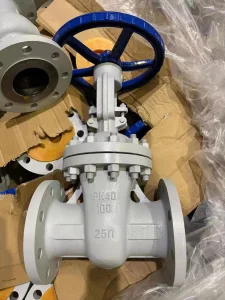
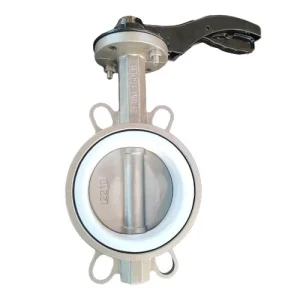
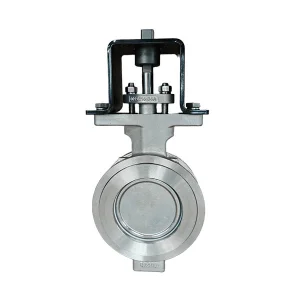
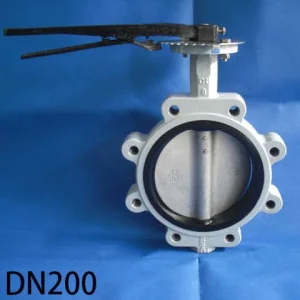
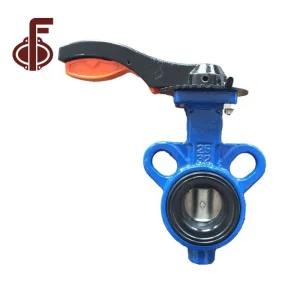
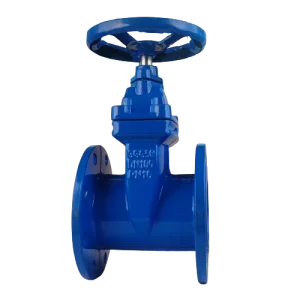
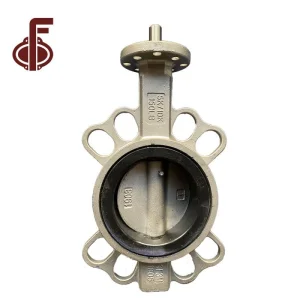
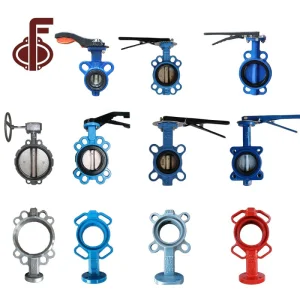
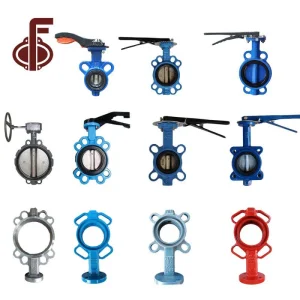
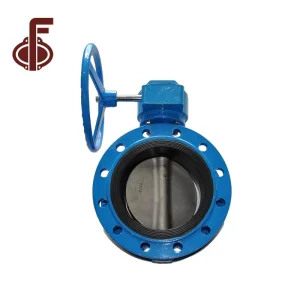
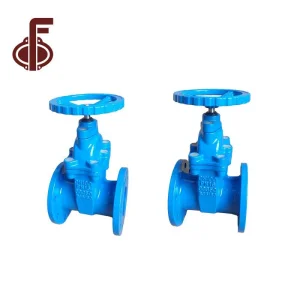
Comprehensive array of wafer, lug, double-flanged, and non-rising stem valves for direct factory procurement.
Engineering FAQ: Butterfly Shut Off Valves
Technical guidance for EPC project engineers, plant managers, and procurement specialists.
Complete Catalog Reference & Product Cross-Directory
- Ball Valve Solutions
- Butterfly Valve Range
- Butterfly Valve Parts
- Check Valve Systems
- Double Eccentric Butterfly Valve
- Fire Butterfly Valves
- Flange Type Butterfly Valve
- Gate Valves Series
- Knife Gate Valve Products
- Lug Type Butterfly Valve
- Metal Seal Gate Valve
- Soft Seal Gate Valve
- Pipeline Strainers
- Triple Eccentric Butterfly Valve
- Wafer Type Butterfly Valve
- Global Field Service
- Request Technical Catalog
- Direct Engineering Contact
