
Precision Flow Isolation Equipment Lineup (Series I)
Direct supply from Tianjin manufacturing facilities matching international dimensional standards including ASME, DIN, JIS, and BS.
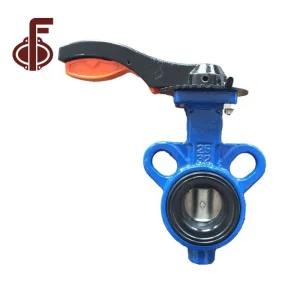
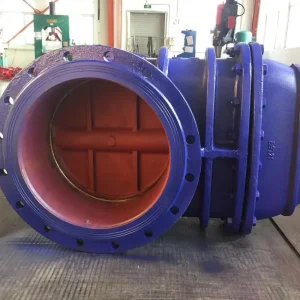
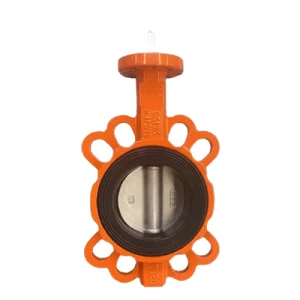
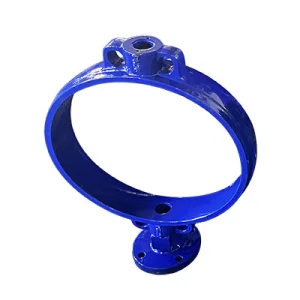
The Global Shift Toward Triple Offset Butterfly Valve (TOV) Architecture
An in-depth perspective on high-integrity isolation infrastructure navigating aggressive thermal cycles, corrosive compounds, and carbon neutrality obligations.
Fugitive Emissions Mitigation
Global environmental mandates (such as EPA Subpart W and ISO 15848-1) require plant operators to minimize fugitive VOC and greenhouse gas leaks. Triple eccentric butterfly valves eliminate rubbing wear on stem packings, providing certified hermetic containment in severe hydrocarbon systems.
Replacement of Bulky Gate & Ball Valves
Engineering, Procurement, and Construction (EPC) consortiums increasingly replace oversized gate valves and ball valves with triple offset butterfly valves. TOVs achieve identical bi-directional zero-leakage isolation while reducing structural payload weight by up to 70% and structural footprint by over 60%.
Cost-Optimized Capital Procurement
Sourcing directly from advanced Chinese engineering hubs allows international EPCs and industrial distributors to optimize capital expenditure without compromising testing regimens. Rigorous adherence to ASTM, ASME B16.34, and EN 12266 guarantees seamless plug-and-play installation.
Kinematic Engineering of the Triple Eccentric Geometry
Understanding how angular non-rubbing mechanical movement eliminates friction, preventing seat wear and achieving bubble-tight bidirectional shutoff.
First Offset: Shaft Axis Behind the Sealing Plane
The stem axis is positioned behind the sealing surface plane of the disc and seat, permitting an uninterrupted 360-degree continuous sealing boundary across the entire circumference without mechanical stem break-throughs.
Second Offset: Shaft Axis Displaced from Pipe Centerline
The valve shaft centerline is offset laterally from the center of the valve bore. This arrangement creates a cam-like opening and closing trajectory, completely separating the seal ring from the body seat within the first 1-3 degrees of disc rotation.
Third Offset: Conical Axis Inclination (Cone-in-Cone Geometry)
The conical sealing geometry axis is inclined relative to the pipe centerline. This geometric design transforms the rotation into an angular, purely mechanical wedging action. Friction, galling, and binding are engineered out, ensuring contact occurs only at the final point of closure.
| Performance Characteristic | Concentric Butterfly Valve | Double Offset High-Performance | Triple Offset Metal-Seated (TOV) |
|---|---|---|---|
| Sealing Principle | Elastomeric Interference Fit | PTFE/Polymer Dynamic Seal | Torque-Assisted Conical Metal Seal |
| Seat Rubbing Contact | Continuous over 90° rotation | Limited to first 10°-15° of travel | Frictionless: 0° contact until final closure |
| Operational Temp Spectrum | -20°C to +120°C | -50°C to +200°C | -196°C (Cryogenic) up to +825°C |
| Pressure Capability | PN10 / PN16 / Class 150 | Class 150 to Class 300 | ASME Class 150 / 300 / 600 / 900 |
| Shutoff Integrity Level | ISO 5208 Rate A (Resilient) | ANSI FCI 70-2 Class IV / V | API 598 & ISO 5208 Rate A Zero-Leakage |
Mission-Critical Global Industrial Deployments
Field-proven performance across aggressive processing facilities, severe district utility corridors, and heavy resource extraction complexes.
Refining & Petrochemicals
Thermal cracking, hydrotreater isolation, flares, tail gas treating, and catalyst handling where coking, abrasives, and volatile thermal swings destroy soft-seated alternatives.
LNG & Cryogenic Terminals
Liquid natural gas transport, regasification terminals, and cold boxes working down to -196°C, equipped with extended bonnets to keep gland packing clear of cryogenic flash boiling.
Superheated Steam & Power
High-pressure boiler feed steam, turbine extraction loops, combined cycle heat recovery systems (HRSG), and district energy networks enduring water hammer and high delta-P.
Desalination & Marine Offshore
Super Duplex and Nickel Aluminum Bronze triple eccentric assemblies resisting high-velocity seawater erosion, pitting corrosion, and brine crystallization in reverse osmosis skids.
Localized Engineering Support & Compliance Assurance
Stringent factory acceptance testing regimes, material certification, and international compliance documentation guaranteed for worldwide shipment.
Material Traceability (EN 10204 3.1)
Every structural casting—from ASTM A216 WCB to A351 CF8M, CF3M, Hastelloy, and Monel—comes with complete heat lot traceability, positive material identification (PMI), and mechanical test certificates.
Pressure & Fire-Safety Testing
100% hydrostatic shell testing, high- and low-pressure gas seat testing per API 598 and EN 12266-1. Certified fire-safe configurations verified strictly according to API 607 7th/8th Edition and ISO 10497 standards.
Turnkey Actuation Automation
Integrated ISO 5211 direct-mount actuator flanges supporting custom-engineered pneumatic scotch-yoke actuators, smart digital fieldbus positioners (HART/Profibus), and multi-turn explosion-proof electric drives.
Engineering Roadmap: Digitalization & Material Frontiers
Anticipating next-generation engineering requirements for the global hydrogen transition, smart industrial facilities, and ultra-high-temperature processing.
Phase 1: Pure Hydrogen and Carbon Capture (CCUS) Sealing
Developing optimized dynamic graphite-free, low-molecular-weight seals engineered specifically to mitigate hydrogen embrittlement and high-pressure supercritical CO2 decompression failures.
Phase 2: IoT Embedded Condition Monitoring
Integrating embedded piezoresistive acoustic emission and thermal sensors directly into the seat backing ring, delivering real-time predictive wear analytics straight to cloud-based SCADA plant systems.
Phase 3: Additive Manufacturing of Exotic Graded Alloys
Utilizing multi-metallic direct laser deposition to apply satellite and ceramic composite overlays to internal valve surfaces, cutting lead times on exotic alloys by up to 50% while improving abrasion tolerance.
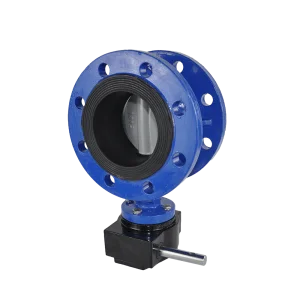
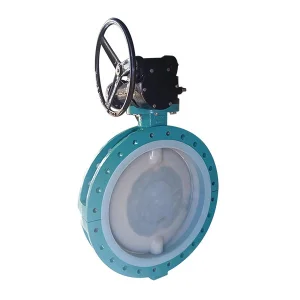
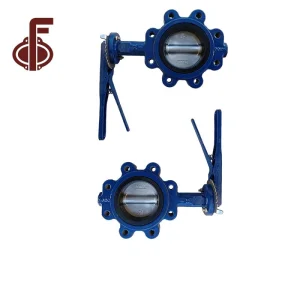
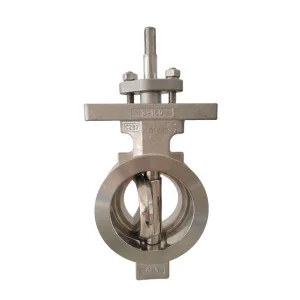
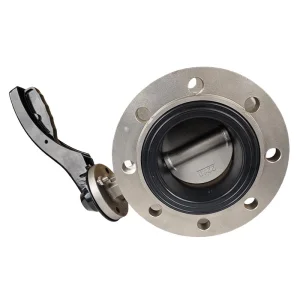
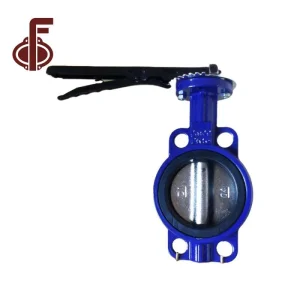
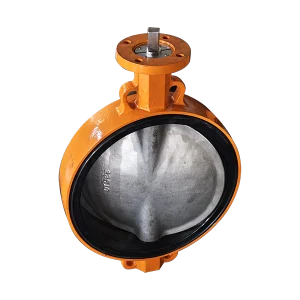
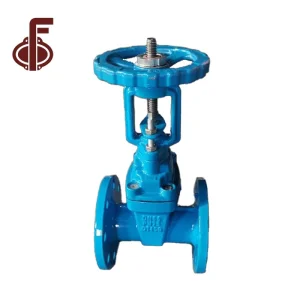
Comprehensive Flow Isolation Equipment Lineup (Series II)
Engineered for high reliability across water distribution, chemical infrastructure, marine installations, and automated process lines.
Frequently Asked Questions on Triple Eccentric Valves
Comprehensive engineering insights clarifying design, standards compliance, and performance expectations for piping designers and procurement engineers.
What makes a triple eccentric butterfly valve truly "bidirectional zero leakage"?
Unlike conventional valves that rely on elastic material deflection to seal, a Triple Offset Valve utilizes torque-assisted metal-to-metal seating. The cone-in-cone angular geometry ensures that line pressure in either direction actually assists in wedging the disc seal ring into the laminated or solid metal body seat, routinely meeting API 598 and ISO 5208 Rate A zero-bubble requirements.
How do laminated seats compare to solid metal seats in TOV configurations?
Laminated seats—consisting of alternating layers of high-grade stainless steel and flexible graphite—provide slight mechanical compliance, compensating for thermal expansion shifts and minor pipeline flexure up to roughly 450°C. Solid metal seats (Stellite overlays) are selected for severe slurry lines, abrasive catalyst flows, or extreme thermal services reaching up to 825°C where graphite erosion can occur.
Can triple offset valves be used for throttling as well as isolation?
Yes. Because the disc breaks cleanly away from the seat within the first few degrees of movement without dragging or rubbing, TOVs are suitable for throttling applications. They maintain balanced torque characteristics and predictable flow control coefficients (Cv) across a 15° to 75° travel window without chatter or localized seat scour.
What testing protocols verify fire-safe performance for petrochemical applications?
Valves are qualified under API 607 / ISO 10497 testing procedures. During these tests, the valve body is subjected to a burn box flame reaching 750°C–1000°C for 30 minutes under pressure. Following a controlled water-quench cooldown, the external gland and internal seat are checked for leakage to verify they stay well below allowable fire-safe limits.
What end connections are available from Chinese triple eccentric valve manufacturers?
Valves are supplied in Wafer, Lug, Double Flanged (short and long pattern according to ISO 5752 and ASME B16.10), and Butt-Weld configurations. Butt-weld end valves are commonly specified in high-pressure steam utility circuits and cryogenic pipelines to completely eliminate flanged leak points.
