
Featured OEM Wafer & Lug Butterfly Valves
Engineered to ASTM, ANSI, DIN, BS, JIS, and GOST tolerances. Direct factory export offering custom face-to-face dimensions, specialized disc coatings, and integrated actuation packages.
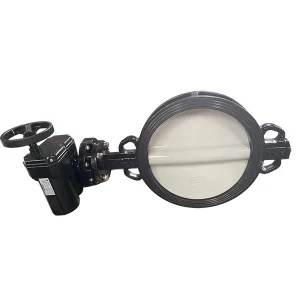
OEM Nylon Disc Wafer Type Honeywell Electric Butterfly Valve
Configure & Inquire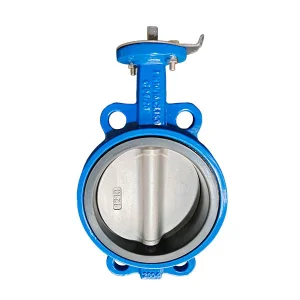
OEM Universal Wafer Butterfly Valve (PN10/16, Cl150, JIS 10K)
Configure & Inquire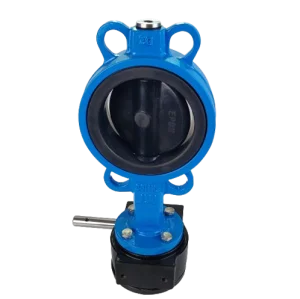
OEM EPDM Fully Lined Seat & Disc Wafer Butterfly Valve
Configure & Inquire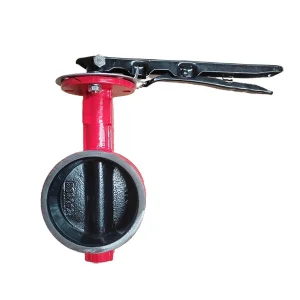
OEM Grooved Type Fire Protection Butterfly Valve (UL/FM)
Configure & Inquire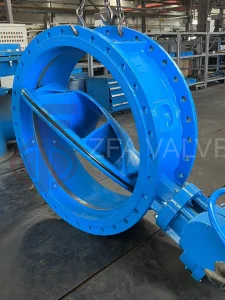
OEM Double Flanged Double Offset High-Performance Butterfly Valve
Configure & Inquire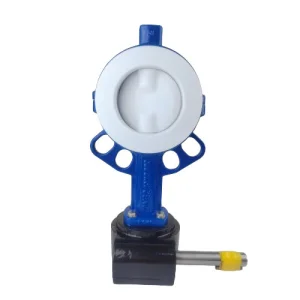
China DN80 Split Body PTFE Full Lined Chemical Butterfly Valve
Configure & Inquire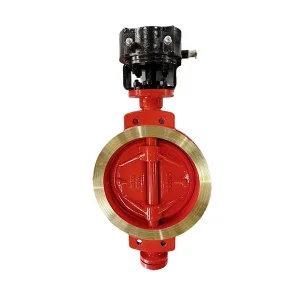
OEM 150LB WCB Wafer Triple Eccentric Metal Seated Butterfly Valve
Configure & Inquire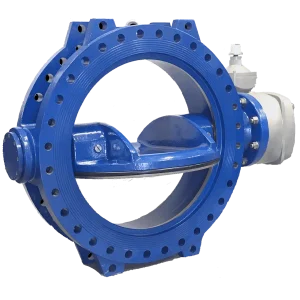
OEM AWWA C504 Municipal Waterworks Double Eccentric Valve
Configure & InquireGlobal Flow-Control Market Architecture & Commercial Realities
An authoritative analysis of the shift from gate valves to quarter-turn wafer and lug butterfly solutions across international engineering, procurement, and construction (EPC) conglomerates.
CAPEX & Structural Weight Reduction
Modern industrial installations are increasingly moving away from heavy linear gate and globe valves toward concentric and high-performance butterfly valves. In nominal diameters exceeding DN200 (8 inches), a wafer-style butterfly valve reduces piping payload weight by up to 72% compared to an equivalent cast iron wedge gate valve. This drastically reduces pipe-rack structural requirements, lowers shipping freight tariffs, and accelerates installation turnaround times.
Global Nearshoring & Casting Integrity
Geopolitical turbulence and post-pandemic supply chain restructuring have forced Tier-1 EPC contractors to scrutinize foundry capabilities. As a core manufacturing nexus based in Tianjin, China since 2006, Tianjin Zhongfa Valve Co., Ltd. (ZFA) leverages automated electric induction furnaces, resin sand casting, and computerized spectrometer analysis. This guarantees defect-free cast ductile iron (ASTM A536) and carbon steel (WCB) pressure boundaries free of porosity and cold-shut defects.
Stringent Methane & Fugitive Standards
The tightening of global environmental directives (such as the EPA Clean Air Act and EU Methane Emissions Regulations) has elevated testing protocols. Valve specifiers demand compliance with ISO 15848-1 Class AH/BH and API 641. Resilient seated butterfly valves with secondary stem O-rings and triple-offset metal seated valves with live-loaded dynamic graphite packing provide fugitive emission rates below 50 ppmv, essential for chemical and gas applications.
Body Style Engineering: Wafer vs. Lug Body Mechanics
Specifying between Wafer and Lug bodies represents 80% of project selection queries. Misapplication directly affects line safety during turnaround operations.
Wafer Type Butterfly Valves (Sandwich Design)
Wafer body valves feature unthreaded universal locating holes or centering lugs. The valve body is sandwiched directly between two companion pipe flanges using long continuous threaded studs that span the width of the valve body.
- Economic Efficiency: Lowest raw material mass, lowest manufacturing machining cost, optimal for budget-conscious large diameter projects.
- Universal Compatibility: Drilled centering ears engineered to match ASME B16.5 Class 150, EN 1092-1 PN10/PN16, and JIS 10K bolt hole patterns simultaneously.
- Dead-End Service Limitation: Cannot be used for dead-end piping or downstream vessel maintenance. Disassembling downstream bolts eliminates the clamping torque on the valve body, releasing pipeline fluid upstream.
Lug Type Butterfly Valves (Tapped Lug Design)
Lug body valves feature protruding metal ears containing precision machine-tapped female threads matching the specific companion flange specification (UNC for ASME or metric for DIN/EN).
- Independent Bolting: Independent sets of bolts are threaded into each side of the valve body without nuts, securing each flange independently.
- Full Dead-End Isolation: Certified for dead-end service. Plant technicians can completely disconnect and remove downstream pipe segments for pump/tank servicing while maintaining full operating pressure upstream.
- Thermal Expansion Stability: Eliminates continuous long stud stretch caused by line thermal cycling, reducing the probability of flange gasket blowouts.
| Evaluation Parameter | Concentric Wafer Valve | Concentric Lugged Valve | Double Offset High-Performance | Triple Offset Metal-Seated (TOV) |
|---|---|---|---|---|
| Pressure Rating Scope | PN6 / PN10 / PN16 / Class 150 | PN10 / PN16 / Class 150 | Class 150 / Class 300 / PN25-PN40 | Class 150 to Class 900 (Up to PN160) |
| Temperature Range | -20°C to +130°C (Elastomer bound) | -20°C to +130°C (Elastomer bound) | -50°C to +260°C (PTFE / R-PTFE) | -196°C to +550°C (Cryogenic to Superheated) |
| Shut-Off Leakage Rate | EN 12266-1 Rate A (Zero Bubble) | EN 12266-1 Rate A (Zero Bubble) | ISO 5208 Rate A / API 598 | API 598 / Firesafe API 607 Bubble-Tight |
| Disc-to-Seat Kinematics | Continuous interference wipe | Continuous interference wipe | Eccentric camming, lifts off seat at 15° | True non-rubbing 90° conical engagement |
| End-of-Line Piping Capability | Not Permitted | Permitted (Up to rated differential) | Permitted in Lug / Flanged Body | Standard in Lug / Flanged Body |
Seat Elastomers, Disc Metallurgy & Chemical Tribology
Fluid control reliability relies entirely on the chemical compatibility between the process medium and the elastomeric or fluoropolymer liner. ZFA provides traceable material testing reports (MTR) according to EN 10204 3.1.
EPDM (Ethylene Propylene Diene)
Peroxide-cured virgin EPDM engineered for potable water (WRAS compliant), treated municipal effluent, low-pressure steam, and commercial HVAC hydronic loops. Demonstrates exceptional resistance to ozone, polar solvents, and UV weathering. Working temperature spans -20°C to +120°C. Incompatible with petroleum oils, aromatic hydrocarbons, or diesel fuels.
NBR (Acrylonitrile Butadiene)
Formulated with 38% acrylonitrile polymer content to maximize volumetric swell resistance against aliphatic hydrocarbons, kerosene, transformer mineral oils, hydraulic fluids, and compressed oily air lines. Operates continuously from -15°C to +85°C. Highly vulnerable to ozone cracking, ketones, and concentrated nitric acids.
PTFE / R-PTFE / PFA Linings
Pure virgin high-molecular-weight PTFE and PFA split-body fully lined valves for aggressive acidic and alkaline streams. Chemically inert across pH 0 to 14, including fuming sulfuric acid, hydrofluoric acid, and chlorine gas. Operating thermal envelope extends from -30°C to +180°C. Molded over an elastic silicon/EPDM energizing backup ring to prevent plastic creep.
Disc Substrate Metallurgy & Performance Surface Treatments
The valve disc represents the direct kinetic barrier against line flow. ZFA employs rigorous ultrasonic testing (UT) and positive material identification (PMI) on all cast discs:
High tensile strength (min. 400 MPa), spheroidal graphite matrix preventing brittle fracture. Finished with Nylon 11 electrostatic fluidized bed dip coating (min. 250 µm) for seawater and demineralized water service.
Austenitic alloy containing 2.0–3.0% Molybdenum, providing superior defense against chloride pitting and crevice corrosion. Mirror electro-polished disc edges minimize dynamic friction against EPDM/NBR seats.
Nickel-aluminum bronze formulation engineered specifically for offshore oil & gas rigs, marine ballast water systems, and desalination brine recirculation where raw seawater causes micro-galvanic pitting in standard alloys.
Super austenitic and duplex grades delivering PREN (Pitting Resistance Equivalent Number) > 35. Ideal for flue-gas desulfurization (FGD) scrubbers, wet chlorine processing, and high-pressure acidic leaching circuits.
Customized Engineering for Strategic Process Applications
Flow-control requirements change drastically across differing municipal, industrial, and high-hazard sectors. Discover how ZFA OEM wafer and lug butterfly valves meet localized engineering codes.
Smart HVAC & District Cooling
Configured with universal wafer bodies and Honeywell/Belimo modulating actuators. Deployed across chilled water primary/secondary headers, cooling towers, and heat exchanger bypass loops. Nylon-coated discs ensure ultra-smooth Cv characteristics, minimizing pumping energy losses across massive commercial developments in Southeast Asia and the Middle East.
Seawater Reverse Osmosis (SWRO)
Desalination high-chloride environments destroy standard carbon steel valves in weeks. ZFA supplies split-body PTFE fully lined valves and Duplex 2205 / C95800 lug butterfly valves capable of enduring raw intake ocean water and hyper-saline reject brine at pressures reaching 64 bar without stress corrosion cracking.
UL / FM Fire Protection Systems
Specialized grooved-end and lugged wafer butterfly valves certified to UL 1091 and FM 1112 standards for fire suppression risers. Built with internal supervisory tamper switches connected directly to building fire alarm monitoring panels, providing positive electrical confirmation of 100% open flow availability.
Chemical & Corrosive Refining
For caustic soda, hydrochloric acid regeneration, and pesticide synthesis plants, ZFA DN80 split-body virgin PTFE lined wafer valves prevent metallic contact completely. Two-piece shaft sealing ensures zero external leakage under severe thermal cycling conditions up to 180°C.
AWWA C504 Municipal Waterworks
Large diameter double-eccentric valves engineered for potable water distribution mains and wastewater pumping stations. Built with 316SS weld-overlay seat rings, continuous mechanically locked EPDM seal rings, and IP68 submersible worm gearboxes designed for underground vault burial.
Thermal Power & Steam Condensate
Triple offset metal-to-metal wafer valves with Stellite hard-faced seats for turbine steam isolation, boiler feedwater treatment, and cooling canal pump check duty. Frictionless 90° rotation prevents galling and guarantees tight shutoff under rapid thermal shocks.
Hydrodynamic Sizing, Cv Sizing & Cavitation Mitigation
Improperly sized butterfly valves lead to localized choked flow, severe acoustic noise exceeding 95 dBA, and rapid cavitation erosion of the disc tail.
Flow Coefficient (Cv / Kv) Control Limits
A concentric butterfly valve exhibits an inherent equal-percentage flow profile between 20° and 70° disc opening. Never specify a butterfly valve to operate throttled at angles below 15°:
Where: Q = Flow (GPM), P1 = Inlet Pressure (psi), P2 = Outlet Pressure (psi), SG = Specific Gravity
At openings under 15°, fluid velocity across the disc edge accelerates exponentially, stripping vulcanized EPDM seat liners via hydrodynamic shear stresses. ZFA engineering algorithms recommend selecting nominal valve diameters that operate between 45° and 75° during nominal system flow demands.
Cavitation Index (σ) Calculations
When process liquid passes through the narrow vena-contracta zone formed between the disc profile and valve liner, local static pressure drops below the liquid's vapor pressure ($P_v$). Vapor bubbles form and collapse violently downstream:
Safe Operation: σ > 2.5 | Incipient Cavitation: 1.5 < σ ≤ 2.5 | Choked Cavitation: σ < 1.0
For lines exhibiting incipient cavitation conditions, ZFA custom manufactures anti-cavitation perforated trim plates or supplies double-offset hydrofoil discs that split turbulence into micro-vortices, shifting micro-jet implosions away from pressure boundary walls.
Technical Roadmap: Smart Valve Automation (2025–2035)
The convergence of Industrial IoT, additive manufacturing, and automated robotic coating is redefining performance expectations for industrial valve exports.
Embedded Sensorization & Edge Health
Integration of low-power piezo-electric dynamic torque sensors and acoustic emission microphones directly inside the ISO 5211 mounting bracket. Real-time predictive analytics flag mechanical disc binding, seat hardening, or stem packing leakage up to 90 days before functional failure, feeding operational telemetry directly into plant SCADA via Modbus/HART/WirelessHART.
Topology Optimization & DMLS Discs
Application of Direct Metal Laser Sintering (DMLS) 3D titanium and Hastelloy alloy printing for thin-profile lattice-core butterfly valve discs. Computational Fluid Dynamics (CFD) algorithmic synthesis yields discs with 35% higher flow coefficients ($Cv$) and 40% reduced mass, minimizing actuator breakaway torque requirements.
Autonomous Self-Healing Nanopolymers
Development of microencapsulated fluoropolymer seat liners that release cross-linking curing chemistry when subjected to abrasive particle scratching. This extends seat operational longevity in severe abrasive tailings and coal slurry transport pipelines by up to 300% without human mechanical intervention.
Stringent Quality Assurance & Factory Acceptance Testing (FAT)
Tianjin Zhongfa Valve Co., Ltd. executes documented quality verification at every node of production under ISO 9001 and CE Pressure Equipment Directive (PED 2014/68/EU Module H).
1. Shell Hydro Test
Conducted at 1.5x PN rating using pure municipal water inhibited with rust preventatives. Body walls are held under peak hydrostatic pressure for 60 to 300 seconds (per valve size) with zero structural weeping or permanent deformation.
2. High-Pressure Seat
Differential pressure applied across the closed disc at 1.1x PN. Leakage measured precisely against EN 12266-1 Rate A and API 598. Zero detectable bubbles are permissible for resilient seated wafer/lug valves.
3. Low-Pressure Air Test
Submerged pneumatic testing at 6 bar gauge pressure. Detects micro-pinhole porosity in casting skins and elastomer seating faces that high-viscosity hydro testing might bridge over.
4. Spark Holiday Testing
High-voltage spark testing (15–20 kV) across fully PTFE/PFA lined discs and bodies to ensure no micro-crack discontinuities in the fluoropolymer lining that could expose ductile iron cores to aggressive acids.
Frequently Asked Technical & Procurement Questions
Direct answers from our senior chief valve engineers addressing sizing, bolt patterns, actuation torque, and export customization.
Severe Service, Specialty Alloy & Check Flow Catalog
Engineered specialty valve lines including split-body fluoropolymer chemical butterfly valves, heavy hammer check systems, and GOST pipeline isolation valves.
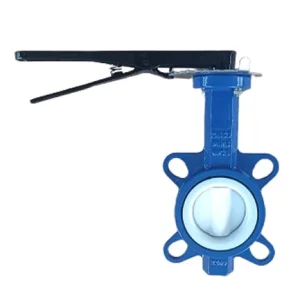
OEM PTFE Seat & Disc Wafer Centerline Butterfly Valve
Configure & Inquire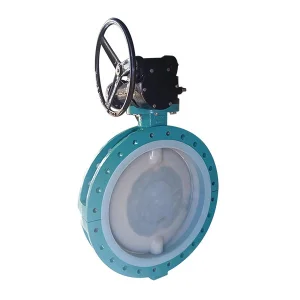
China U-Type 2-Piece Body Silicone Rubber Flanged Valve
Configure & Inquire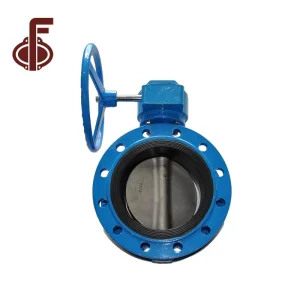
China Ductile Iron SS304 PN10/16 Double Flanged Valve
Configure & Inquire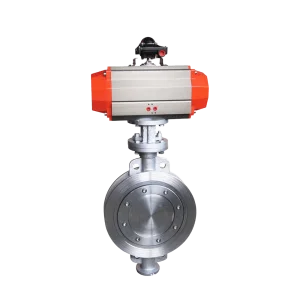
China Pneumatic Wafer Triple Offset Butterfly Valve
Configure & Inquire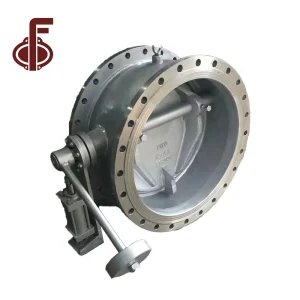
OEM Butterfly Non-Return Check Valve with Counterweight Hammer
Configure & Inquire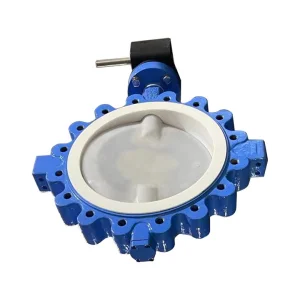
China Split-Body PTFE Lined Silicone Lug/Flange Butterfly Valve
Configure & Inquire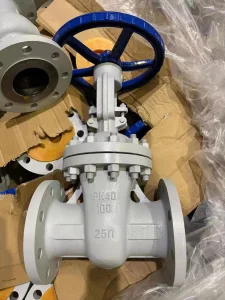
OEM 30s41nj GOST 12820-80 PN16/PN40 Carbon Steel Gate Valve
Configure & Inquire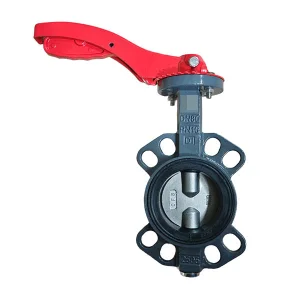
OEM PN16 DN80 CF8 Double-Shaft Wafer Butterfly Valve
Configure & InquireAccelerate Your Flow-Control Distribution Pipeline
Partner directly with Tianjin Zhongfa Valve Co., Ltd. (ZFA). Eliminate intermediary broker markups, obtain comprehensive 3.1 material traceability certification, access dedicated CAD/BIM drawing configuration support, and secure factory-direct OEM pricing on premium wafer, lug, and flanged butterfly valves built to global ASTM, EN, and JIS standards.
Engineering Technical Support
Our valve application engineers provide detailed datasheets, torque calculations, and CAD models within 24 hours.
Submit Technical RFP