
Mission-Critical Check Valves for Iraq Infrastructure
Engineered for high back-pressure shutoff, zero water-hammer slamming, and severe media tolerance across Basra, Baghdad, and Kirkuk pipeline corridors.
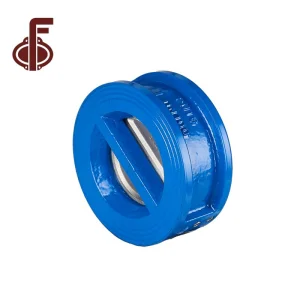
OEM DI CI SS304 Dual Plate Check Valve for Iraq Basra Projects
OEM DI CI SS304 Dual Plate Check Valve Manufacturer, Exporter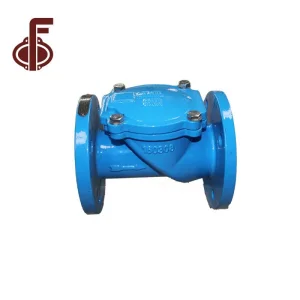
Ductile Cast Iron Rubber Flap Check Valve for Tigris-Euphrates Lines
China Ductile Cast Iron Rubber Flap Check Valve Factories, Exporter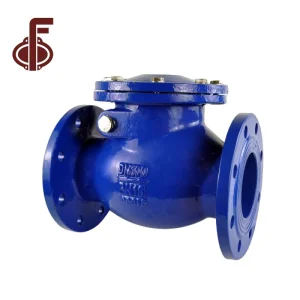
OEM Ductile Iron SS304/SS316 Non-Return Swing Check Valve for Iraq
OEM Ductile Iron SS304 SS316 Non-return Swing Check Valve Manufacturer, Manufacturers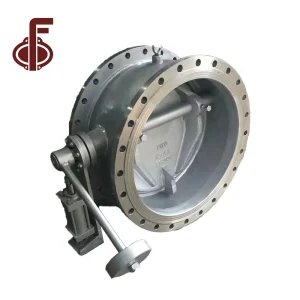
Butterfly Check Valve with Counterweight & Damper for Major Iraq Mains
OEM Butterfly Check Valve with Heavy Hammer Manufacturers, FactoryIraq’s Flow-Control Renaissance: Industrial Reconstruction & Upstream Demands
A rigorous examination of fluid mechanical vulnerabilities, raw seawater injection demands, and the critical need for qualified check valve manufacturing partners.
Southern Upstream Oilfield Pressures (Basra, Missan, Dhi Qar)
The Iraqi hydrocarbon basin—anchored by super-giant fields including Rumaila, West Qurna 1 & 2, Majnoon, and Zubair—operates under aggressive reservoir characteristics. Produced crude contains escalating volumetric water cuts (frequently exceeding 35%), high hydrogen sulfide concentrations (sour crude with H2S exceeding 40,000 ppm), and abrasive formation sand. Check valves in separation trains, gathering centers, and booster stations face rapid cavitation and sulfide stress cracking (SSC). Standard castings fail prematurely, requiring rigorous metallurgical adherence to NACE MR0175/ISO 15156, dual-certified duplex stainless steels (UNS S31803 / 2205), and Stellite-welded hardfaced seat interfaces.
Hydraulic Transients in Municipal & Injection Megaprojects
Iraq's critical civil works, including the Basra Desalination Program, the Tigris-Euphrates River Water Intake networks, and the landmark Common Seawater Supply Project (CSSP), traverse hundreds of kilometers of flat, high-ambient-heat desert terrain. When massive multi-stage vertical turbine pumps trip during routine grid outages, severe hydraulic deceleration triggers high-amplitude surge waves (water hammer). Check valves without precision dynamic response slam violently, cracking cast iron bodies and destroying expensive impellers. Iraqi state bodies (Ministry of Water Resources, BOC, SCOP) now mandate dual-plate spring-assisted and axial nozzle non-slam valves with rapid closure times under 0.20 seconds.
The Environmental Reality: Ambient Extremes & Particulate Ingestion
Operating fluid control equipment in Iraq is unlike any North American or European installation. Ambient summer temperatures regularly reach +55°C (131°F), creating extreme surface skin temperatures on above-ground pipelines that degrade synthetic elastomer seals like standard Buna-N. Simultaneously, pervasive silt from southern alluvial riverbeds and severe shamal dust storms induce silt accretion inside valve cavities. Check valve factories serving the Iraqi market must engineer internal shaft geometries with double O-ring seals, PTFE/graphite thrust washers, and self-cleaning hinge configurations that prevent mechanical seizing under dense silt loads.
Engineering Non-Return Flow Dynamics: Valve Architectures Compared
Matching dynamic valve response, head loss profiles, and metallurgical selection to Iraq's operational conditions.
| Valve Architecture | Applicable Standards | Dynamic Response Time | Primary Iraqi Operating Application | Recommended Metallurgy (Iraq Environment) |
|---|---|---|---|---|
| Dual Plate Wafer Check | API 594, ASME B16.34 | Fast (0.15s – 0.25s) | Offshore crude loading (Basra Oil Terminal), cooling loops, refinery utility water | Body: WCB / CF8M; Disc: SS316 / 2205 Duplex; Spring: Inconel X-750 |
| Axial Flow Silent Check (Nozzle) | API 6D, ASME B16.34 | Ultra-Fast (< 0.10s) | High-pressure gas compression (Basra Gas Company), multiphase pump discharge | Body: A352 LCC / A216 WCC; Disc: 13Cr / F51 Duplex; Spring: Inconel 718 |
| Rubber Flap Flex Check | BS EN 12334, AWWA C508 | Moderate (0.30s – 0.45s) | Tigris & Euphrates raw water river intakes, wastewater, municipal slurry | Body: Ductile Iron GGG50 (QT450-10); Flap: EPDM / NBR full encapsulation |
| Counterweight Hydraulic Check | BS EN 12334, ISO 5208 | Controlled (Dual Stage) | Large-diameter municipal supply, desalination pumping headers (DN500–DN2000) | Body: Ductile Iron GGG40/50; Disc: CF8; Dashpot: High-grade hydraulic cylinder |
| Resilient Seated Swing Check | API 6D, BS EN 16767 | Standard (0.40s – 0.60s) | Low-velocity oil gathering lines, terminal storage tank drain isolation | Body: Cast Carbon Steel A216 WCB; Disc: SS304/SS316 with Viton / FKM O-ring |
Dynamic Deceleration & Anti-Slam
When liquid velocity decays in pumping headers, conventional swing discs remain suspended until reverse flow accelerates, slamming the disc against the seat with explosive force. ZFA Valve incorporates torsion springs wound with high-tensile Inconel X-750 into dual-plate designs. This ensures the valve plates close precisely at the zero-velocity instant ($v = 0$ m/s), eliminating shock wave propagation through ductile iron pipe walls.
Sour Gas Metallurgy & NACE Compliance
In Iraqi hydrocarbon processing facilities (e.g., Halfaya, Garraf), the presence of wet $H_2S$ triggers Hydrogen Induced Cracking (HIC) and Sulfide Stress Corrosion Cracking (SSCC). We engineer valves with strict metallurgical controls: casting hardness restricted to maximum 22 HRC, carbon equivalents strictly controlled below 0.43%, and disc pin retaining plugs featuring weld overlay seals to ensure zero fugitive emissions.
Hydraulic Flow Coefficients & Pressure Drop
Pumping energy across extensive Iraqi pipeline runs is a major operational expense. ZFA check valves undergo rigorous computational fluid dynamics (CFD) modeling to streamline internal contours. Our dual-plate and axial designs provide an expansive net free cross-sectional flow area, reducing pressure drop ($ΔP$) by up to 28% compared to traditional swing check profiles, directly lowering pump operational fuel costs.
Iraq Market Access: COSQC Standards, VOC Clearance & Port Logistics
Ensuring frictionless procurement, customs processing through Umm Qasr Port, and project audit acceptance by Iraqi State Entities.
Verification of Conformity (VOC) Protocol
Exporting industrial equipment into federal Iraq requires absolute compliance with the Central Organization for Standardization and Quality Control (COSQC) pre-import scheme. Shipments arriving without a legalized Certificate of Conformity (COC) face severe demurrage or port rejection.
- Authorized Third-Party Inspection: Comprehensive liaison with Bureau Veritas (BV), TUV Rheinland, or SGS for physical factory audits and witnessing hydrostatic testing.
- Full MTR Traceability: Issuance of EN 10204 3.1 inspection certificates including heat numbers, chemical spectrograms, and mechanical tensile/Charpy V-notch impact tests.
- Legalization Channels: Direct coordination with the Iraqi Embassy and commercial attachés for document authentication and Chamber of Commerce stamps.
Logistical Corridor: Umm Qasr & Northern Gateways
Supply chain predictability is vital for major EPC contractors operating in Iraq (e.g., CPECC, Petrofac, Eni, TotalEnergies). ZFA Valve utilizes well-established shipping lanes to guarantee vessel arrival schedules and smooth land transit.
- Southern Entry (Maritime): Direct breakbulk and containerized shipments arriving at Umm Qasr Port (Basra), the primary conduit for the southern oilfields and regional water projects.
- Heavy-Duty Packaging: Export crates built from IPPC-stamped ISPM-15 heat-treated timber with moisture-barrier vacuum foil lining to withstand Arabian Gulf maritime humidity.
- Transit Protection: Flange faces protected by full-diameter heavy plastic covers with internal anti-corrosive VCI desiccant packs to prevent dust and coastal salt corrosion during laydown storage.
Technology Roadmap: Next-Generation Non-Return Systems for Iraq
Addressing the shifting engineering landscape: digitalization, extreme wear resistance, and lifecycle optimization in remote installations.
Acoustic & Wireless Health Monitoring
In remote gathering manifolds scattered across the Western Desert and Maysan marsh borders, routine manual inspection is logistically complex. Our forward roadmap includes clamp-on acoustic emission sensors that detect internal back-leakage down to 0.05 L/min without pipeline penetration, transmitting diagnostic health via LoRaWAN to centralized SCADA control rooms.
Advanced Ceramic & HVOF Nanocoatings
Raw Tigris river water carries sharp silica sands that erode bronze and rubber flap seats within months. We are pioneering High-Velocity Oxygen-Fuel (HVOF) tungsten carbide cladding on check valve seating faces and disc edges. This achieves a surface hardness exceeding 68 HRC, extending operational maintenance cycles from 18 months to over 6 years under heavy silt-slurry conditions.
Additive Manufacturing for Exotic Trims
Emergency valve spare parts for Iraqi turnarounds often carry prohibitive 26-week lead times for exotic alloys like Monel K-500, Hastelloy C276, or Inconel 625. Our precision additive manufacturing cell now produces certified, HIP-treated (Hot Isostatic Pressed) replacement springs, hinge pins, and custom disc inserts in under 14 days, minimizing catastrophic plant downtime.
Specialized Check Valve & Flow Control Portfolio for Iraq
Manufactured strictly according to international dimensional, metallurgy, and pressure integrity criteria for long-term field reliability.
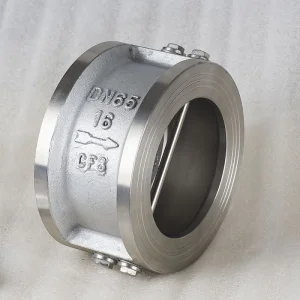
OEM SS2205 Dual Plate Check Valve for Sour Gas & Injection Lines
OEM SS2205 Dual Plate Check Valve Exporter, Exporters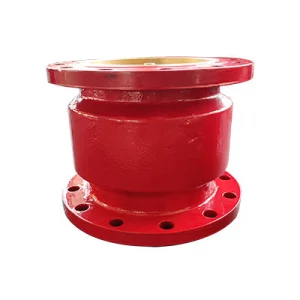
High-Pressure Silencing Check Valve for Iraqi Urban Booster Plants
China Silencing Check Valve Non Return Valve Manufacturers, Factory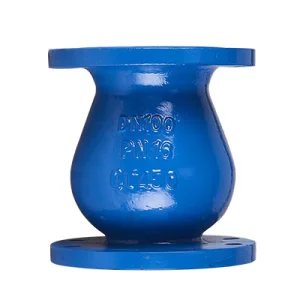
OEM Axial Flow Silent Check Valve for High-Velocity Natural Gas
OEM Axial Flow Silent Check Valve One Way Flow Non Return Valve Manufacturer, Exporter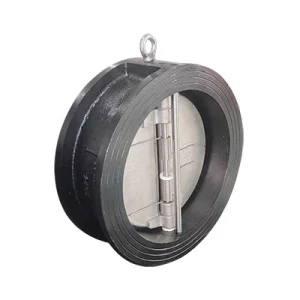
Ductile Iron Body CF8M Disc Dual Plate Check Valve for Coastal Iraq
China Ductile Iron Body CF8M Disc Dual Plate Check Valve Manufacturer, Factories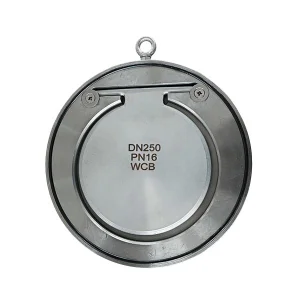
Stainless Steel / WCB Single Disc Check Valve PN16 for Erbil Industry
OEM Stainless Steel Body WCB Single Disc Check Valve PN16 Manufacturer, Factories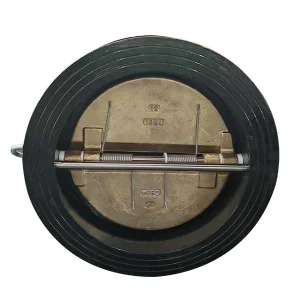
Double Doors C594 Disc Non-Return Valve DN300 12-Inch for Baghdad Utilities
China Double Doors C594 Disc One Way Valve DN300 12INCH Factory, Exporter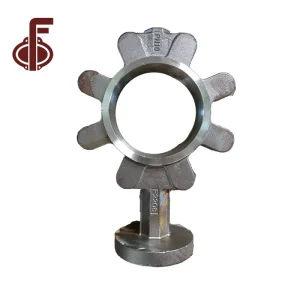
OEM Lug Type Butterfly Valve Body for Downstream Pipeline Maintenance
OEM Lug Type Butterfly Valve with Body Factory, Exporter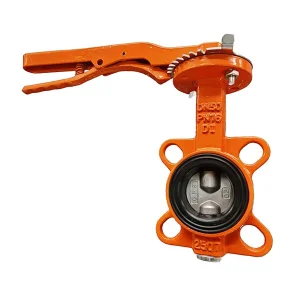
OEM DN50 Dovetail Seat Double Shaft Wafer Valve PN16 for Iraq Utility Lines
OEM DN50 Dovetail Seat Double Shaft Wafer Butterfly Valve PN16 Factory, ExportersFrequently Asked Questions by EPCs & Procurement Engineers in Iraq
Direct technical guidance on material selection, anti-slam performance, compliance, and shipping logistics.
Why is dynamic check valve selection critical for preventing water hammer in Iraq's water transport lines?
In Iraq, water transport pipelines often cover long distances over flat terrain with low static head and high kinetic momentum. When pumping stations shut down suddenly, fluid velocity decelerates rapidly. Traditional swing check valves have high inertia and take up to 0.6 seconds to close, by which time reverse flow has already gained significant velocity ($v_r$). When the disc finally impacts the seat, this reverse flow is stopped instantly, generating massive pressure spikes according to the Joukowsky equation ($\Delta P = \rho \cdot c \cdot \Delta v$). ZFA's spring-assisted dual-plate and axial nozzle check valves close in under 0.15 seconds, seating precisely as fluid velocity reaches zero, thus preventing the hydraulic surge wave before it initiates.
What specific materials do you recommend for sour crude oil service in southern Iraqi fields like Rumaila and Zubair?
Southern Iraqi crude contains significant concentrations of dissolved $H_2S$ and carbon dioxide ($CO_2$), alongside saline formation water. For sour service, standard carbon steel castings are susceptible to Sulfide Stress Cracking (SSC). We recommend ASTM A216 WCC or A352 LCC body materials with post-weld heat treatment, strictly adhering to NACE MR0175/ISO 15156 limits (maximum Rockwell hardness of 22 HRC). For internal discs and trim, we supply UNS S31803 (2205 Duplex Stainless Steel) or ASTM A351 CF8M with hardfaced Stellite 6 seating surfaces. Disc hinge pins and springs must be manufactured from Inconel X-750 or Inconel 718 to resist hydrogen embrittlement.
How does ZFA Valve manage the Iraq Verification of Conformity (VOC) inspection process?
We maintain direct operating procedures with authorized international inspection agencies operating in China, including Bureau Veritas (BV), TUV Rheinland, Intertek, and SGS. For every Iraq-bound order, we handle application submission, test report verification, coordinate factory physical inspection (covering visual quality, dimensional check, shell hydrostatic test at 1.5x PN, and seat leakage test at 1.1x PN per API 598/ISO 5208), and secure the final Certificate of Conformity (COC) needed for direct customs clearance at Umm Qasr Port or Baghdad International Airport.
Can dual plate check valves be installed vertically in upward flow pipelines?
Yes. Dual plate check valves can be installed in vertical lines with flow moving upward. The internal torsion spring design mechanically drives the dual plates to the closed position regardless of gravity. However, installation in vertical lines with flow moving downward is strictly prohibited, as gravity prevents the plates from sealing reliably against backflow. For horizontal installations, the valve shaft must always be oriented vertically to ensure equal distribution of plate mass and wear.
How do high ambient desert temperatures (+55°C) affect valve seat elastomer selection?
Under Iraqi desert conditions, surface pipeline temperatures frequently exceed +70°C (+158°F) due to direct solar radiation. Standard Nitrile (Buna-N) elastomers degrade and harden rapidly under prolonged exposure to these temperatures combined with hydrocarbon contact. For hydrocarbon services, we mandate Viton-A (FKM) or HNBR, which retain elasticity up to +200°C. For municipal water and desalination services, we specify high-grade sulfur-cured or peroxide-cured EPDM rated for continuous operation from -20°C to +120°C, providing superior ozone, weather, and thermal resistance.
What are the transit lead times and shipping routes from your factory to Umm Qasr Port?
Standard manufacturing lead times for engineered dual plate and swing check valves range from 20 to 35 business days depending on size and metallurgy. Ocean freight transit from Tianjin Port or Shanghai Port directly to Umm Qasr Port typically requires 22 to 28 days via primary Middle East liner services (e.g., COSCO, Maersk, CMA CGM). Breakbulk arrangements are available for project orders involving large-diameter valves (up to DN2000). Full documentation packs (Bills of Lading, Legalized Commercial Invoices, Packing Lists, Certificates of Origin, and BV VOCs) are dispatched via courier ahead of vessel discharge to facilitate early customs pre-clearance.
Do you manufacture check valves according to both ANSI/ASME and DIN/EN flange drilling?
Yes. Our foundry patterns and CNC machining centers support all major international flange standards. We routinely manufacture check valves with flange faces drilled to ASME B16.5 (Class 150, 300, 600, 900), EN 1092-1 / BS 4504 (PN10, PN16, PN25, PN40), as well as JIS and GOST specifications. Wafer and lug body patterns are frequently cast with multi-standard alignment bolt holes to simplify piping adaptation on Iraqi projects where legacy European and newer American equipment coexist.
What testing and inspection documentation accompanies each check valve order?
Every valve delivery is backed by a comprehensive Quality Dossier containing: EN 10204 3.1 Material Test Reports (MTRs) for pressure-containing castings, stems, and internals; API 598 / ISO 5208 hydrostatic shell and seat pressure test logs; Non-Destructive Examination (NDE) certificates (Radiographic, Ultrasonic, Magnetic Particle, or Dye Penetrant testing based on specification); paint dry film thickness (DFT) reports; and third-party VOC inspection certificates.
